Robbie Thain
Founder, CEO

Estimate incremental sampling sales with clearer baselines, comparison stores and promotion records, without mistaking a busy activation for proof.
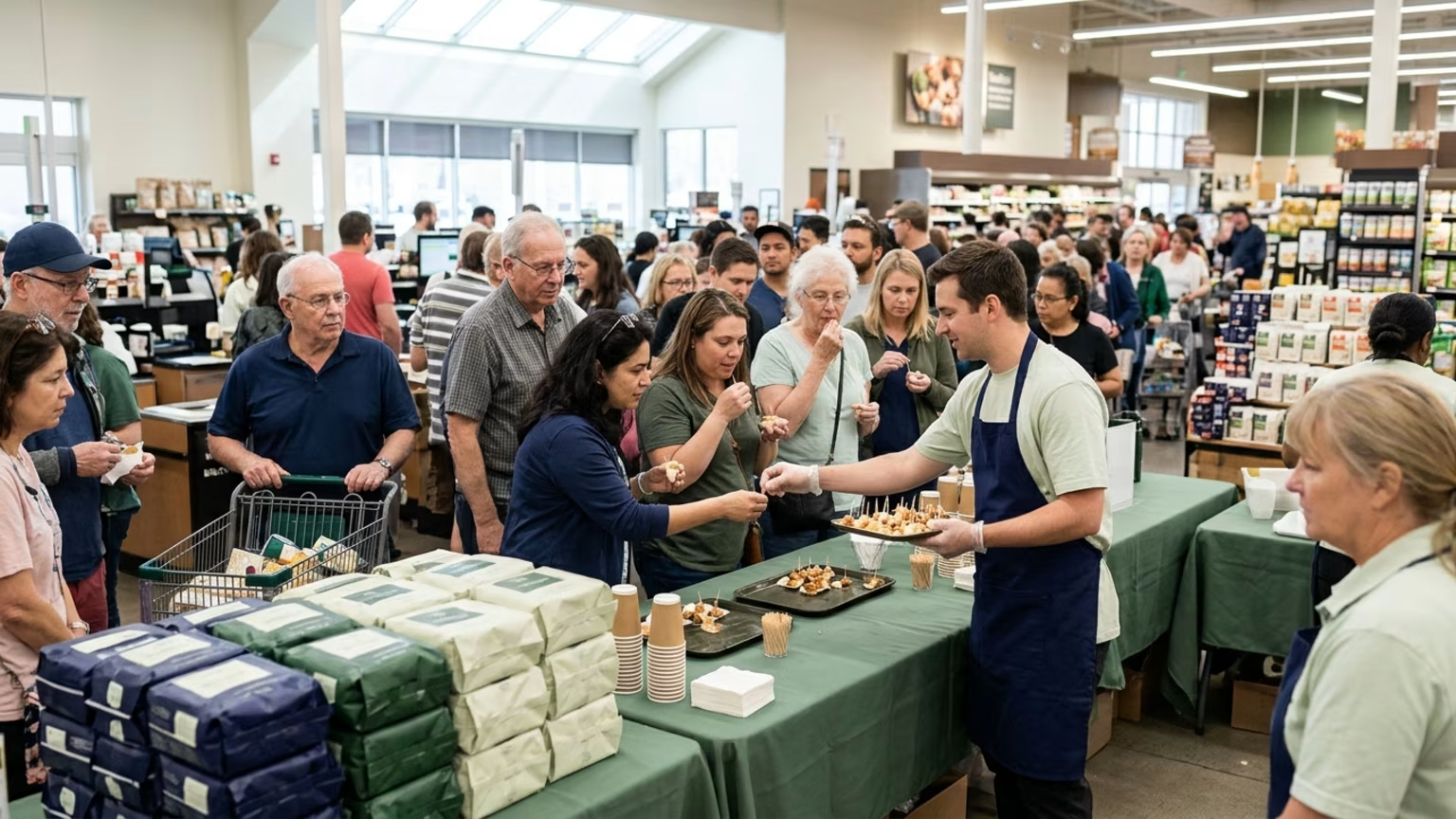
A packed sampling table is not proof of incremental sales. Treating a busy demo as evidence of commercial success is brand theater with a spreadsheet attached. The display can look excellent while the sales question remains unanswered.
That question is not whether shoppers accepted a sample. It is whether the activation contributed to purchases beyond what might have happened without it. A photo of an enthusiastic crowd cannot settle that argument.
For CPG marketing leaders, this is where creative ambition meets budget accountability. The nightmare is a six-figure activation that leaves no qualified pipeline or credible sales evidence to defend. We believe the answer is not less human connection. It is more disciplined execution paired with a sales comparison that deserves the name.
The mainstream approach fails when it treats visible activity as its own justification. Count the interactions, celebrate the crowd and put the strongest photographs in the recap. That sequence can document an event without answering whether the spending contributed to the business.
Even a sales increase leaves another question open: what else changed? Product availability, price changes and concurrent promotions are all factors the research identifies for teams to document. Differences between locations also deserve attention before an event gets credit for the entire movement in sales.
A secondary account of a 2017 Journal of Retailing study describes research across four snack categories. It reports immediate and longer-term sales effects and says repeated sampling sustained effects for longer. A separate practitioner guide reports a 475% event-day sales lift from a 2009 study commissioned by sampling company PromoWorks.
These are secondary reports, and the vendor-commissioned headline is not a universal forecast. The underlying materials retrieved do not establish a validated matched-store protocol or quantify how to adjust for concurrent promotions. A before-and-after comparison alone does not establish causation, and snack-category findings should not automatically stand in for another product or retail setting.
The practical response is to make the comparison explicit. A marketing leader should be able to explain what changed at activation locations and what comparison supports the interpretation. “The table was busy” belongs in an execution recap. It should not carry the burden of proving incremental sales.
At Makai, our view is that aloha-style warmth and operational precision belong in the same conversation. A welcoming product interaction gives trial a human purpose. Operational discipline keeps the experience connected to the product and the commercial objective. We believe that combination gives trial a better chance of supporting conversion than aesthetics alone.
We specialize in retail demos, product sampling programs and roadshows that bring brands face to face with their audiences. Our programs are designed to drive trial and build consumer relationships while supporting retail velocity across multiple locations. That is the commercial purpose behind the experience, not a substitute for evaluating its results.
Our retail demonstrations use trained brand ambassadors for real conversations and product trials. We also store sampling product and event gear, then ship and track those materials while coordinating delivery nationwide. Human engagement and physical execution are both part of the work.
For us, the operator mentality means refusing to treat logistics as background decoration. The sample needs to be available before a shopper can try it. The product conversation needs to connect with something the shopper can actually purchase. Those are basic conditions worth documenting alongside the sales result.
This is why we favor welcoming conversations backed by disciplined execution. Precision is not the enemy of emotional connection. It gives the experience a practical foundation while giving the brand team clearer information about what happened in the field.
The goal should shift from collecting impressions to evaluating a defined commercial outcome. Samples distributed to intended shoppers describe trial activity. Unit sales, revenue and repeat purchasing answer different business questions. Agreeing on those distinctions before launch gives brand and retail teams a shared basis for discussing the result.
The following recommendations are planning options supported by the research summary, not a prescribed testing formula.
Start with the business question rather than the recap template. Is the evaluation about purchases during the activation or purchasing afterward? Is the outcome unit sales or revenue? The answer should determine which sales information the teams bring into the comparison.
Agree before launch on the event period and the comparison period. Review sales patterns before the activation so the baseline is visible rather than selected after the result arrives. Keep the dates and locations attached to the analysis.
A useful discussion of connecting product trials with added store sales begins with that distinction between observed sales and the comparison used to interpret them. A baseline is a reference point, not an automatic estimate of what would otherwise have happened.
Where retailer data and operating constraints permit, locations without the activation can provide another comparison. Check whether their sales patterns were reasonably comparable with activation locations beforehand. The point is to understand the relationship between the groups before interpreting differences afterward.
As a design option, examine sales movement at activation locations alongside movement at locations without sampling. Ask whether the activation locations changed differently, rather than merely whether their sales went up.
Do not let the phrase “matched stores” do the analytical work. The report should explain what made the locations suitable for comparison and identify meaningful differences. That explanation gives retail partners something concrete to assess beyond a polished lift headline.
Prices and promotions belong beside the sales data. So do product availability and execution details. These records help brand and retail teams interpret the comparison rather than reconstruct conditions from memory after the activation.
A practical record can include:
The purpose is not to invent an adjustment factor for every complication. It is to make the conditions visible. When conditions differ, the discussion should explain how those differences affect confidence in the interpretation.
Keep event-day results separate from later purchasing outcomes. The reported sampling research distinguishes immediate effects from effects that continue afterward. A single combined sales total would hide that distinction.
Choose the periods in advance with the retail team and label them clearly in the report. Describe event-period sales as event-period sales. Describe later purchasing as a separate outcome. That keeps the question about immediate response distinct from the question about what happened after the table came down.
This also gives teams a clearer basis for deciding what the next evaluation should investigate.
A useful report makes the reasoning inspectable. State the observed sales difference and identify the comparison used. Include the dates and locations covered, then explain the main limitations of the estimate.
The language should match the design. “Sales increased during the activation period” describes an observation. “Estimated incremental sales” makes a stronger claim about what might have happened without the activation. Use the stronger label only when the comparison supports it.
Keep execution results visible without turning them into sales attribution. Product trials can show that the activation reached people. Sales comparisons address a different question. Our perspective on separating activity from commercial impact starts with giving each measure a clear job.
That clarity is useful to both sides of the retail relationship. The brand team can explain its interpretation. The retail team can assess whether the comparison reflects the conditions in its stores. Neither has to accept a crowd photograph as the final argument.
Demand execution before aesthetics and evidence before attribution. A warm sampling experience deserves disciplined product delivery and a clearly defined commercial purpose. An incremental-sales estimate deserves an explicit baseline, a defensible comparison and an honest account of the conditions involved. The strongest activation recap is not the one that makes the event look busiest. It is the one that helps brand and retail teams make a better decision about what to repeat.
Sampling programs need product and event gear in place before face-to-face engagement can begin, making delivery coordination part of the commercial plan. Makai stores sampling product and event gear, then ships and tracks those materials while coordinating delivery nationwide for CPG marketers and food and beverage teams managing regional or national campaigns.

30 Years Experiential & Retail Activation Partner for CPG & Beverage Brands | Multi-Market Demos, Roadshows & Costco/Club Programs That Actually Sell