Robbie Thain
Founder, CEO

Sephora Australia’s local campaign offers a planning lesson for CPG teams: connect product trial, field execution and retail measurement beyond launch day.

On November 5, 2026, Inside Retail reported on Sephora Australia’s locally developed approach to beauty retail. Its “Only at Sephora” campaign brought exclusive brands into a shared retailer proposition. The broader strategy connected that message with physical stores and customer experiences extending beyond launch day.
George Tsoukalas, general manager of Sephora ANZ, told the publication that the retailer’s work continued through sampling and creator partnerships as well as store experiences. He cited the Merit launch as an example of bringing global brand awareness into physical retail.
Inside Retail described “Only at Sephora” as the retailer’s first Australian-concepted and locally shot campaign. Its focus was the exclusive beauty assortment presented together rather than as separate brand launches. Tsoukalas said the local approach was intended to resonate with Australian consumers and spotlight that assortment.
Trade coverage in B&T and Campaign Brief adds the execution context. The campaign was developed with Australian creative and production agency Hatrik House. It spanned paid media and social and digital channels as well as Sephora’s app and stores. Campaign Brief reported that the national campaign ran through the end of October.
The distinction matters for field teams. The campaign provided a retailer-wide message while Tsoukalas described a broader customer strategy involving physical product interaction. Sampling and creator partnerships belonged to that wider account of how Sephora brings brands into the market.
For U.S. CPG operators, the useful connection is between the reason someone pays attention and the experience available when that person reaches a product. Our reading is that local creative and physical trial deserve a shared planning conversation. They should not become separate assignments with no clear handoff.
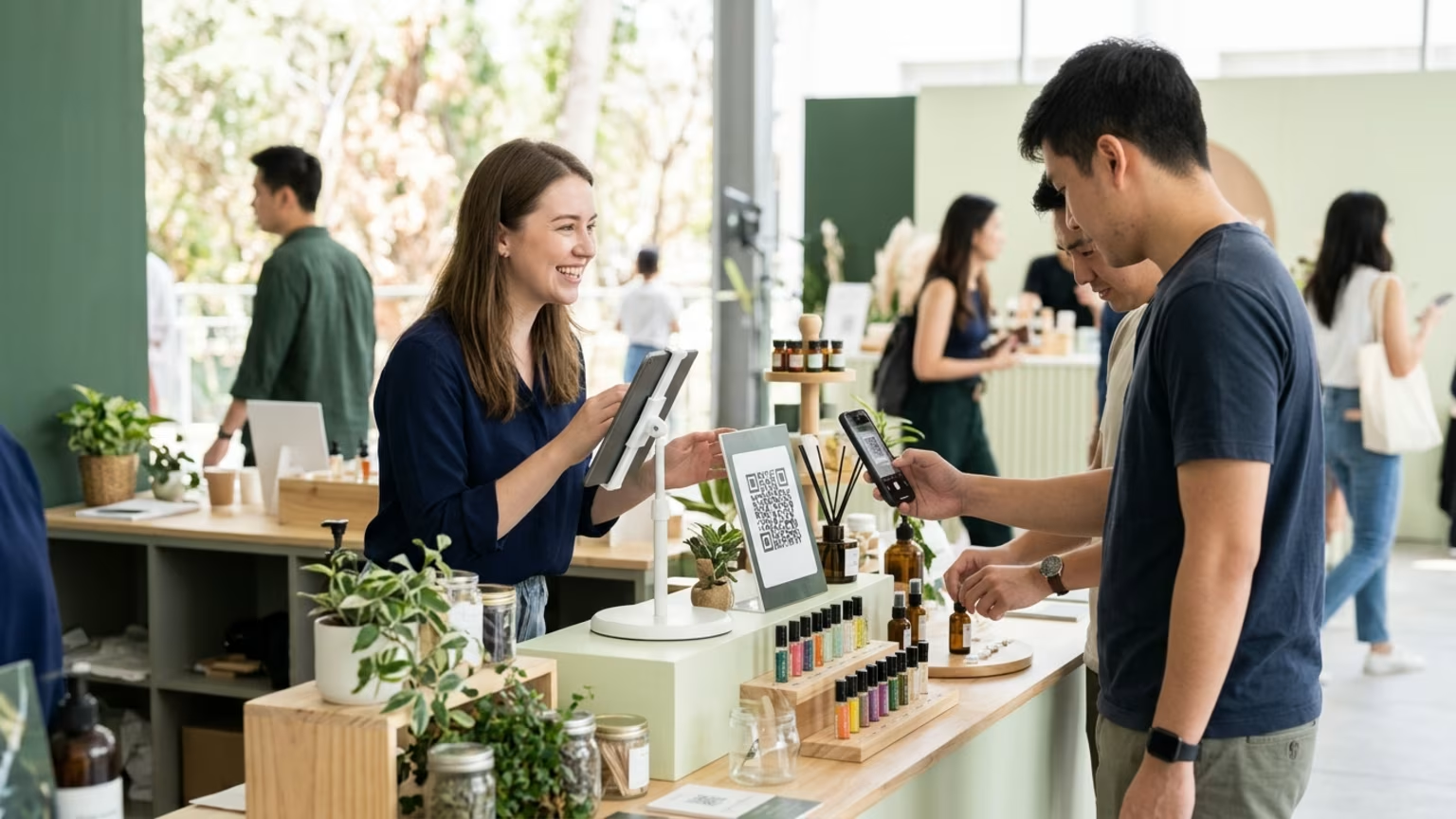
Makai’s stance is straightforward: welcome people warmly and give the interaction a clear purpose. Local relevance can provide the invitation. The live encounter should help someone understand the product and take an appropriate next step toward purchase. A friendly experience and commercial discipline are partners rather than competing priorities.
Our retail demonstrations use trained brand ambassadors to support in-store sales through real conversations and product trials. That is where this story overlaps with our work. The ambassador is not simply repeating campaign copy. In our view, the value of the encounter is helping a shopper connect the product promise with something they can experience directly.
We also design mobile activations and roadshows to accelerate consumer trial and build trust during 90-day product launch windows. That longer view shapes our reaction to Sephora’s approach. A launch is more than an arrival date. It is an opportunity to connect initial interest with sustained consumer confidence and retail performance.
There is relevant U.S. context for taking physical interaction seriously. In a 2026 Harris Poll survey reported by P2PI, 85% of respondents said seeing or touching or trying products was important to their confidence when shopping in stores. The survey covered 2,004 U.S. adults.
The evidence has a clear boundary. The event coverage provides strategic descriptions rather than staffing plans or measured campaign outcomes. It reports no sales lift, conversion or Return on Investment for the campaign or Merit activation. The U.S. survey records attitudes rather than observed purchasing.
Our takeaway is therefore a testable planning hypothesis: connect the message with the trial and give that trial an observable commercial purpose. For food and beverage teams, linking product trial with a purchase decision is a more useful assignment than treating launch attention as the finish line.
The downstream implications concern staffing and the relationship between the live encounter and the purchase path. These are our planning recommendations for adapting the idea to U.S. CPG programs. They are not a reconstruction of Sephora’s field operations.
The staffing priority is the product conversation rather than the campaign appearance alone. A locally relevant message gives ambassadors something meaningful to carry into the interaction. The field brief should connect that message with the product trial and the intended customer action.
For a beverage or snack brand, we would evaluate coverage against the experience the team wants to deliver. A welcoming introduction and a useful product conversation serve different purposes from simply distributing samples. The staffing discussion should reflect that distinction without assuming that more people automatically mean better execution.
This is also a question of continuity. If the program extends beyond launch day, the quality of the shopper encounter remains part of the assignment. Our view is that carrying strategy into field execution deserves attention throughout the program rather than only during the opening moment.
The same logic applies to a trade show footprint or consumer event. Makai plans and manages trade show spaces to attract attention and begin conversations that can lead to customers. For this kind of adaptation, we would judge the space by how clearly it connects attention with participation and a next action.
A sampling area should have a defined role in that sequence. Is the intended experience a brief product introduction or a more substantial conversation? The answer belongs in the planning brief because it describes what the space is meant to support. It also gives the staffing discussion a clearer purpose than filling an attractive footprint.
The goal is not to reproduce a beauty store inside a food or beverage activation. It is to carry the same product promise through the encounter. Campaign recognition matters less if the live experience has no clear relationship to what the brand is asking people to try.
Physical trial also puts product and event gear into the planning conversation. Makai’s storage and logistics services cover storage, shipping, tracking and nationwide delivery coordination. Those capabilities relate directly to the practical work behind a live product experience.
Our recommendation is to discuss the campaign promise alongside the materials available to support it. Product trial should be part of the activation plan rather than an accessory added after the creative is approved. The useful operational question is whether the physical experience can carry the message the campaign has established.
For a program extending beyond opening day, that discussion should cover the full planned experience. This follows the longer launch-window perspective in our roadshow work: the product encounter remains relevant after the first burst of attention.
Measurement belongs in the brief before launch. The research supports defining observable outcomes and using an appropriate comparison where feasible. For a U.S. team adapting this approach, those outcomes can include:
These measures answer different questions. A sample count does not become purchase evidence because it appears in the same report. A useful measurement plan identifies the outcome the activation is intended to influence and keeps activity separate from commercial behavior.
Qualified leads also matter when the live setting includes a business-development objective. Makai’s experiential campaigns and trade show activations are designed to turn consumer interactions into qualified leads for premium CPG brands. The reporting goal should match that purpose rather than defaulting to whichever count is easiest to collect.
The broader planning task is connecting live experiences with retail sell-through. That means treating trial as part of a purchase path and evaluating the evidence at the appropriate point along it.
The next useful move is to bring the campaign owner and field-execution owner into the same planning discussion. The local message should have an identifiable role in the live encounter. The trial should have an intended next action. The reporting should distinguish participation from purchase behavior.
Sephora Australia’s reported approach began with a retailer-wide promise rather than isolated launches. For U.S. teams, the strategic test is whether that continuity survives once the message reaches a store or event floor.
As CMO or VP of Marketing, how will you carry your next local campaign from the screen to the shelf with a trial experience and measurement plan that last beyond launch day?
A locally relevant campaign still needs an in-store product conversation that connects its message with a shopper’s chance to try and buy. Makai supports that handoff through retail demonstrations led by trained brand ambassadors who use product trials and real conversations to support in-store sales.

30 Years Experiential & Retail Activation Partner for CPG & Beverage Brands | Multi-Market Demos, Roadshows & Costco/Club Programs That Actually Sell