Robbie Thain
Founder, CEO

Learn how structured in-store sampling and retail demos increase trial rates, lift basket size, and turn brand experiences into measurable CPG sales.
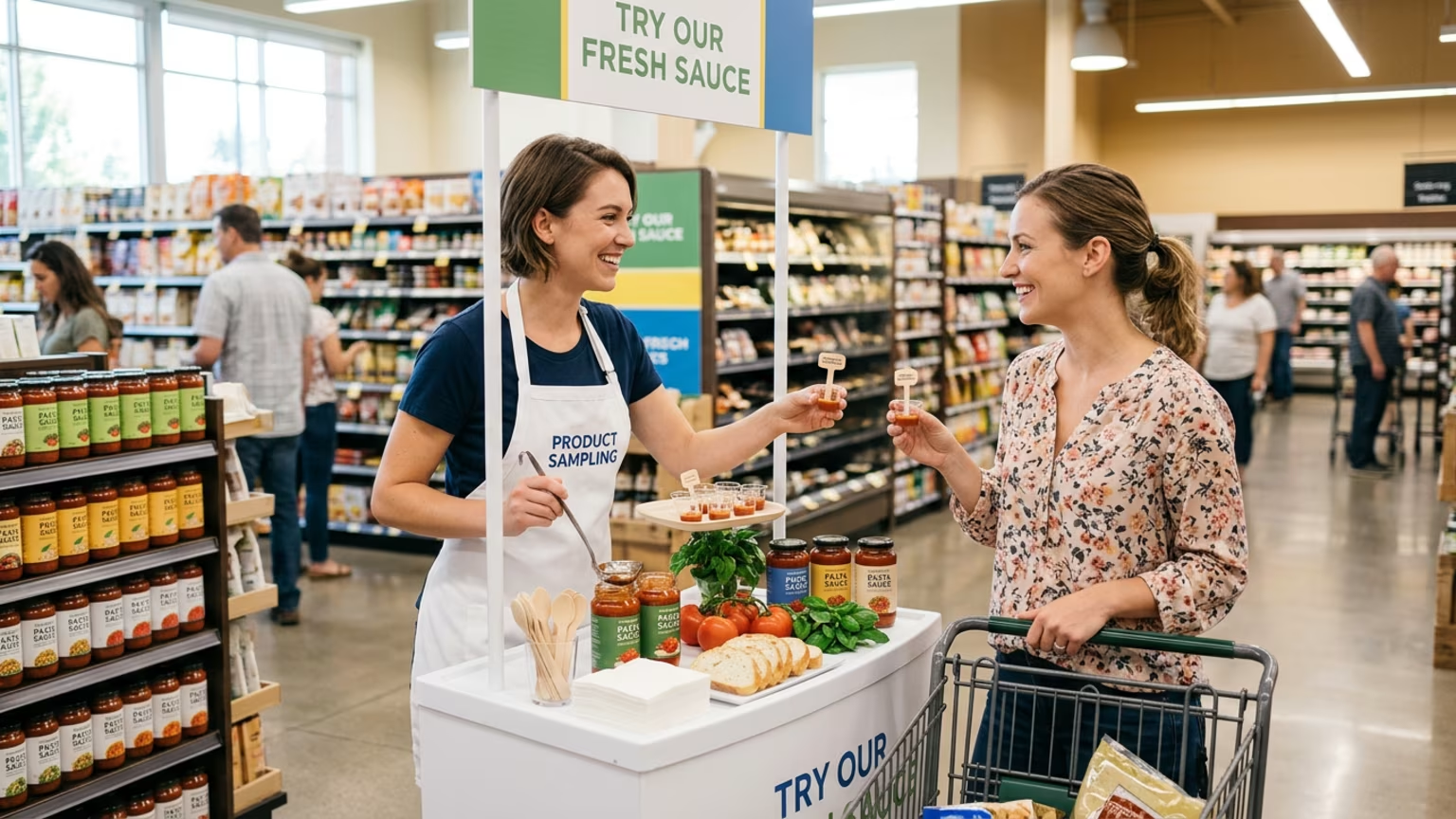
Shopper marketing analysis from Hangar 12 shows that structured retail sampling remains one of the most effective trial drivers for consumer packaged goods today. Disciplined execution transforms these live brand moments into a measurable commerce engine that lifts basket sizes and builds retailer confidence.
Many field marketing managers know the familiar pain of an uncoordinated in store demonstration. You walk into a grocery retailer and find a bored brand ambassador standing behind a folding table. They hand out expensive product to shoppers who have zero intent to buy. The display lacks context, the pitch lacks conviction, and the resulting data is a complete void.
This approach creates traffic without meaningful trial among likely buyers. Retailers notice this lack of discipline immediately. A busy demo table is not the same as a successful activation. The main distinction is whether the event produces clear sales or basket impact.
Field marketing managers often spend weeks coordinating logistics for a single weekend activation. You secure the permits, ship the staging materials, and hire local talent for the event. The execution falls apart when unvetted staff fail to articulate the core brand message. Shoppers grab a free bite and walk away without ever looking at the packaging.
Category buyers monitor these activations closely to judge product velocity. When a demonstration fails to move units off the shelf, the retailer loses confidence in your market fit. A weak activation tells the store manager that your brand brings no incremental value. This poor performance directly threatens future shelf space allocations and regional distribution expansions.
Corporate leadership often views experiential marketing as an unquantifiable expense. When the field team cannot prove direct sales lift, they face brutal budget cuts during the next fiscal quarter. The marketing director is left defending a program that produced nothing but vague brand awareness. You cannot pay the bills or secure future funding with good vibes alone.
We need a fundamental shift in how consumer packaged goods brands approach physical retail activations. The overarching goal is not just physical presence. The goal is treating the live sample as a trackable commerce activation. Current trade commentary notes that brands must prioritize precision over pure volume.
Shopper marketing experts at Hangar 12 point out that brands should not sample random mall traffic. Field teams must target high value shoppers who match the ideal buyer profile. This level of targeting integrates physical trials directly into the broader retail media ecosystem. Analysts at Tinuiti note that tactics like sampling and coupons are now digitized, scaled, and trackable.
When you pair a physical taste test with a digital follow up, you build a clear path to purchase. Brands must stop viewing these activations as isolated events. They are valuable touchpoints that require operator grade discipline. Integrating physical trials with digital strategy creates a complete feedback loop. For teams planning an integrated approach, companies integrating live taste tests with digital retention strategies see higher returns.
We are seeing a massive shift away from the old street team mentality. Modern experiential marketing requires treating the grocery aisle like a highly targeted digital landing page. You would never pay for digital clicks from users who fall completely outside your target demographic. The same strict logic must apply to how you distribute premium product samples.
Effective trial programs rely heavily on advanced audience segmentation before the event even begins. Marketing leaders must analyze store level purchasing data to identify optimal activation zones. Matching the geographic footprint to the buyer persona eliminates ninety percent of your trial waste.
Turning a physical interaction into a trackable purchase requires a strict operational process. Marketing leaders must build their campaigns around the right store, the right time, and the right shopper.
Measuring the success of a retail sampling program requires looking beyond raw headcount. You must track both the leading indicators of engagement and the lagging indicators of revenue. Leading metrics include total samples distributed, active conversations, and immediate coupon redemptions. Lagging metrics focus on the true Return on Investment by measuring post event sales lift and repeat purchase rates.
We provide clear reporting on reach, trials, leads, and sales to guide next steps in campaign optimization. Our measurement approach tracks awareness, engagement, and conversion, turning brand moments into actionable data that demonstrates business impact. This level of tracking proves to retail buyers that your product actually moves off the shelf.
Raw data only becomes valuable when you extract clear operational insights from it. If your sample distribution is high but your conversion rate is low, the product might have a pricing issue. If shoppers refuse the sample entirely, your booth presence or initial hook needs immediate revision. Monitoring these specific ratios helps marketing operators diagnose field execution problems in real time.
Sharing these metrics with your retail partners builds immense institutional trust. Store managers love vendors who can mathematically prove their activations drive incremental foot traffic. You secure better placements and endcap opportunities when you present a clear scorecard of your results. Teams looking to establish this standard should focus on establishing a rigorous measurement framework for field events.
Let us look at how data rich sampling transforms standard food marketing. Industry coverage from Box Genie frames modern sample boxes as a powerful method to boost trial and conversions. When a premium snack brand targets specific high traffic retailers, they can completely bypass the noise of a standard aisle walk. By deploying trained ambassadors at locations with high category affinity, the brand actively filters out unqualified shoppers.
They intercept their ideal customers, hand them a targeted sample, and capture instant feedback on the flavor profile. This approach turns an ordinary Saturday shopping trip into a measurable sales event. Food brands are completely transforming their marketing by adopting these data rich approaches. You can replicate this exact physical box strategy within a live retail environment.
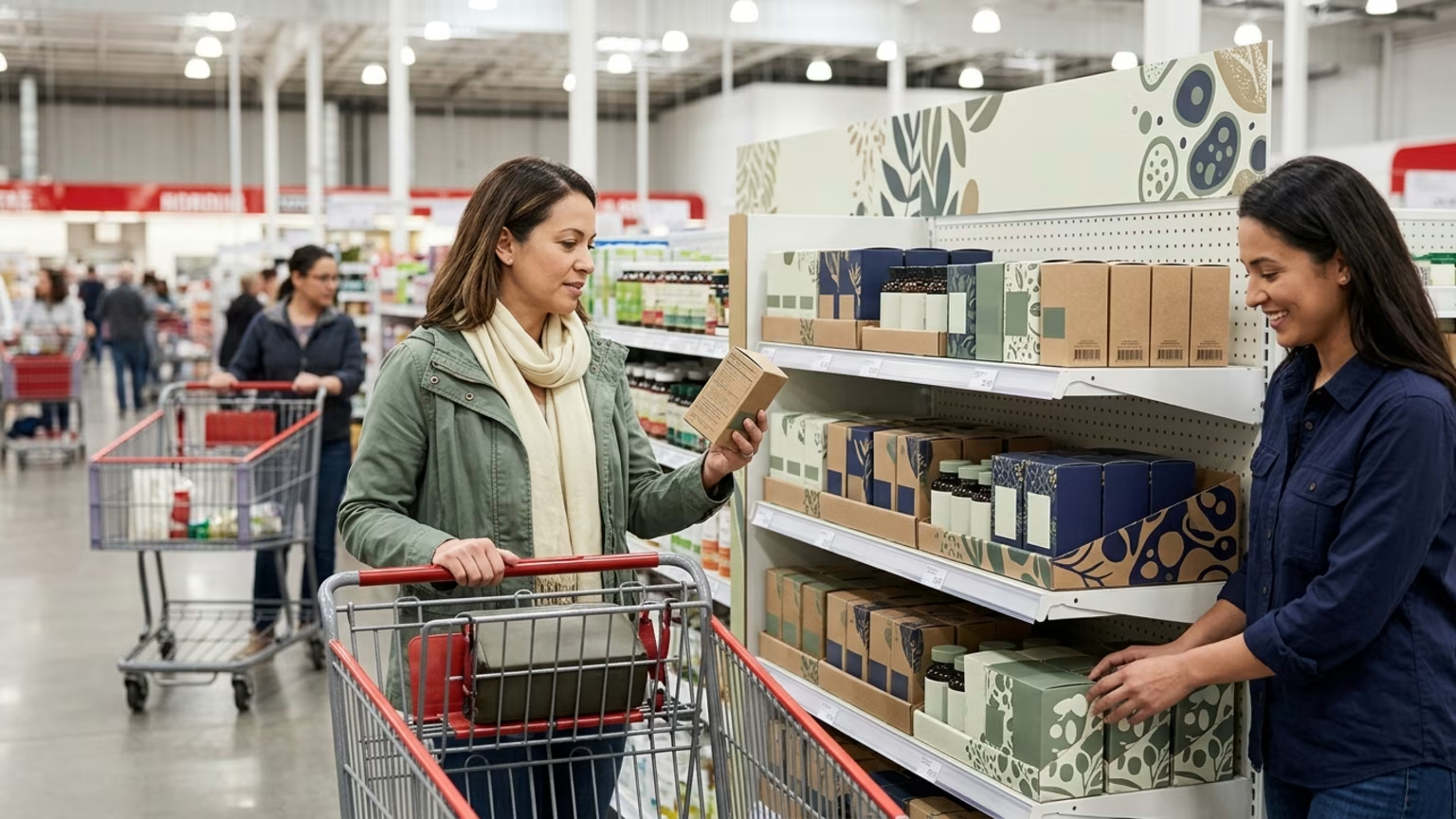
Consider a regional beverage company trying to expand their footprint into national club stores. They cannot afford to waste product on shoppers who exclusively buy budget water brands. Instead of setting up generic stations, they design a highly specific trial experience for premium wellness buyers. The brand ambassador focuses entirely on the unique functional benefits of the beverage.
This focused interaction generates immediate curiosity and prompts the shopper to buy a bulk case. The company tracks exactly how many sample cups translate into sealed box purchases at the register. By treating the club store like a controlled testing environment, they validate their entirely new market entry. This operational rigor is exactly how beverage brands use mobile sampling vehicles to drive predictable retail velocity.
Another compelling scenario involves a legacy food brand attempting to launch a new flavor profile. They face immense skepticism from loyal customers who prefer the classic original product. A targeted in store demonstration provides a risk free environment for these hesitant buyers to experiment. The ambassador gently guides the loyalist through the new flavor notes and secures the immediate upsell.
We live in an era where every marketing dollar demands a proven return. Physical retail remains a fundamentally human environment where a single taste can overwrite months of digital advertising. The brands that win the shelf are the ones that respect the complexity of the live environment. They bring order to the chaos through disciplined targeting and rigorous measurement.
When a product physically lands in a shopper's hand, the entire supply chain fulfills its quiet promise. Your logistics, branding, and field operations all culminate in that singular moment of truth. Treat that moment with the operational respect it deserves. The result is a repeatable sales engine that actively drives your commercial growth.

30 Years Experiential & Retail Activation Partner for CPG & Beverage Brands | Multi-Market Demos, Roadshows & Costco/Club Programs That Actually Sell