Robbie Thain
Founder, CEO

Learn how targeted mobile sampling tours turn physical product trial into measurable retail sales. Read our framework to drive ROI at your next event.
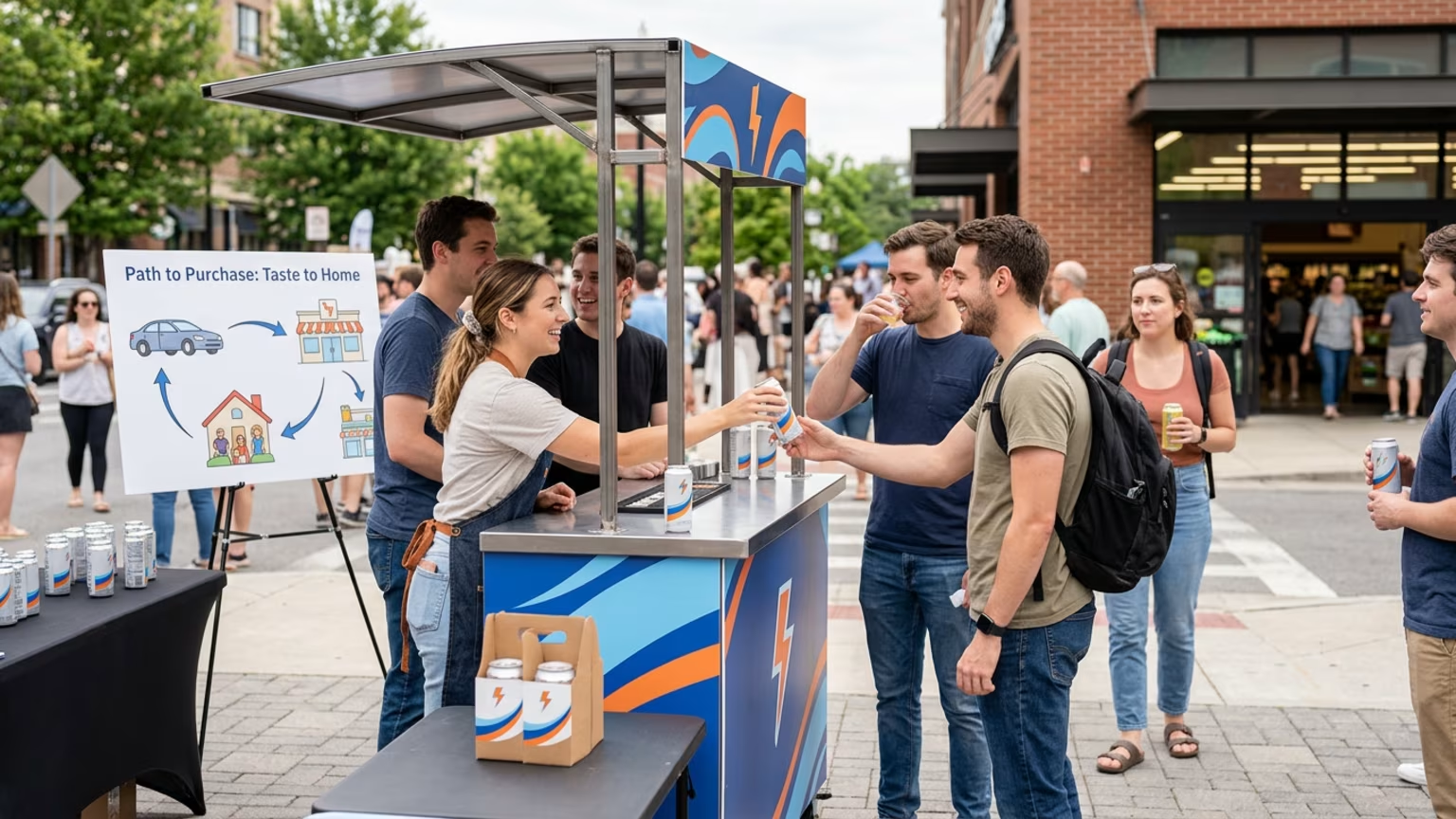
Industry research shows that 65 percent of consumers buy a product after attending a well executed brand event. This conversion rate matters tremendously for marketing leaders facing intense shelf competition, shrinking profit margins, and rising digital acquisition costs. This framework details how to design a mobile sampling campaign that connects physical product trial directly to measurable retail sales pipeline.
Consider the typical scene at a massive wellness expo or regional fitness festival. Brand ambassadors blindly hand out warm energy drinks to anyone walking past the crowded booth. Confused attendees grab free samples and immediately walk away without learning a single detail about the brand. Exhausted staff members struggle to articulate functional benefits over the noise of the massive crowd.
Marketing leaders return to headquarters with empty coolers and thousands of distributed cans. They have zero proof that the local activation generated a single retail transaction. This fragmented execution wastes budget and severely damages trust with major retail partners. We see consumer brands treat live events as pure brand theater rather than a structured sales channel.
The primary focus often remains on distributing inventory rather than capturing valuable first party data. Without a clear plan to route foot traffic to a specific point of purchase, the event becomes a beautiful disaster. The missing link is operational discipline and measurable tracking. Live experiences must convert consumer attention into measurable retail velocity to justify the initial budget.
We see field marketing teams throw significant capital at massive trade show footprints with no real conversion plan. They hire temporary event staff who lack proper product knowledge and simply want to finish their afternoon shift. These disconnected workers pass out expensive sample units to people who have zero intention of ever buying the brand. The operation lacks any mechanism to follow up with the consumer after the physical taste test concludes.
You need a highly structured approach to turn temporary consumer attention into repeatable retail sales. The framework starts by aligning the physical event footprint with high priority distribution channels. Brands must design the entire activation around the target buyer and their immediate purchasing environment. This means placing consumer activations within a tight radius of key grocery locations.
Your field team then uses targeted digital offers to connect the physical sip to a digital transaction. This integrated method guarantees that every sample distributed has a direct mechanism for Return on Investment measurement. A VP of Marketing in the CPG beverage category told us: 'Robbie, your leadership and vision turned our campaign into something truly special. The Makai team brought our new drink to life with energy, creativity, and flawless execution. Thanks to you, our brand isn't just tasted, it's remembered.' Our team's approach transformed their product launch into a memorable brand experience.
We build these sampling programs on the strict reality that experiential marketing requires operator grade precision. You cannot rely on blind hope as a strategy for long term shelf velocity. The goal is to merge the emotional impact of live brand interactions with hard performance data. This robust system turns fleeting consumer engagements into lasting retail purchasing habits.
Many companies treat sampling as a basic awareness play rather than an aggressive customer acquisition channel. A truly integrated method requires mapping out the exact path from the physical booth to the grocery store checkout lane. You have to remove all friction for the consumer to win their loyalty. When the sampling experience aligns perfectly with local store promotions, the entire marketing spend becomes highly efficient.
You must build an operational machine to maintain quality control across multiple regional markets. To successfully run a consumer tour that drives trial, follow these exact ground level steps.
Select locations based on target audience density and proximity to key retail partners. A fitness festival near a major grocery chain provides the perfect setting for an energy drink promotion. You must avoid generic venues that lack a high concentration of your ideal buyer profile. Strict location criteria will dramatically lower your cost per engaged lead and boost conversion.
Equip your brand ambassadors with a tight and compelling 20 second pitch. They must clearly explain the functional product benefits before scanning any digital discount offers. We recommend standardizing all field playbooks to prevent inconsistent brand messaging across different cities. Good training prevents your staff from acting like simple vending machines and turns them into confident brand educators.
Set up fast QR codes at the sampling counter to deliver retailer specific coupons immediately. This step captures consumer contact data and links the physical interaction to a future retail purchase. You want to offer meaningful discounts that remove the financial friction of buying an unproven new product. Mobile tech integration transforms a physical sample into a trackable digital path.
Communicate all tour dates with regional distributors to guarantee fully stocked store shelves. Driving eager buyers to an empty store shelf ruins the entire consumer relationship. You need robust contingency planning frameworks to handle sudden supply chain hiccups smoothly. Operational alignment keeps the retail buyer happy and your initial sales momentum fully intact.
Do not wait until the end of the month to review your field data. Implement mobile reporting tools so your headquarters can monitor daily sample volume by specific location. This visibility allows management to fix local inventory issues or retrain underperforming staff before the weekend rush hits. Immediate feedback loops separate amateur event teams from professional field marketing organizations.
Marketing operators must transition from counting cheap brand impressions to measuring actual business outcomes. The primary lead metric to track is the daily engagement rate at the activation booth. This measurement includes the total number of qualified interactions and the exact percentage of visitors who scan a digital offer. Cost per engaged lead provides immediate visibility into the financial efficiency of the local event.
Lag metrics reveal the long term financial impact of your physical sampling tour. You must track coupon redemption rates at participating retail chains over a rolling 30 day window. Analysts look for incremental unit sales and overall dollar lift in the local zip codes surrounding the event. By combining these hard figures, you can confidently calculate your true mobile sampling tour ROI without relying on fuzzy math or guesswork.
These data points give you extreme advantage during future retailer negotiations. You can prove exactly how many new buyers your field marketing efforts drove into their specific store locations. Brands that measure these numbers consistently secure better shelf placement and much stronger promotional support. You stop asking for favors and start presenting undeniable performance evidence to your distribution partners.
Another critical metric involves tracking the number of new consumer profiles added to your internal CRM database. First party data gives you the distinct power to run highly targeted remarketing campaigns long after the truck leaves town. You can send follow up text messages with new flavor announcements or exclusive merchandise offers. This focused strategy turns a simple one time sample into a loyal brand advocate with high lifetime value.
The recent multi city mobile tour from Celsius perfectly illustrates this high performance field execution. Following explosive revenue growth, the company needed to support its expanding retail distribution with massive consumer trial. They launched a targeted roadshow built entirely around their new fitness energy drink line. Instead of parking trucks at random busy intersections, the brand activated directly at popular gyms and outdoor wellness events.
These strategic locations attracted health focused consumers who actively seek functional beverages. The on site experience paired smart product education with digital offers to push immediate repeat purchases at key retail partners. Market data confirms that this type of targeted beverage sampling can drive significant sales lift during a targeted launch window. The brand protected its premium market positioning by creating a highly relevant interaction rather than just pushing free product.
This disciplined field approach allowed them to capture market share highly efficiently. They understood that their target audience values authentic experiences within their own tight knit fitness communities. By showing up exactly where their core buyers sweat and socialize, they built massive consumer trust and immediate retail demand.
Industry analysts note that energy drinks represent a fiercely competitive category where taste and functional benefits dictate long term success. Consumers are heavily trading away from high sugar products toward clean energy options that actively support healthy lifestyles. Celsius capitalized on this massive consumer shift by bringing their product directly to the exact point of sweat. They effectively bypassed crowded supermarket aisles to intercept buyers in environments where daily hydration and energy matter most.
This focused strategy aligns perfectly with modern experiential marketing trends. Brands that invest in highly targeted sponsorship activations and events see much higher direct conversion rates than those relying on static billboards. The physical presence of a branded truck at a popular gym signals true authenticity and deep community support. It proves to the consumer that the brand actually understands the daily routine of its core demographic.
Let us return to that crowded wellness expo floor. Instead of chaotic lines and wasted promotional inventory, imagine a highly streamlined booth where every visitor receives a cold drink and a targeted digital coupon. The brand ambassadors speak clearly and capture valuable consumer data with every single interaction. This massive operational transformation turns a massive logistical headache into a highly profitable sales engine.
The real world remains the most powerful place to build a premium CPG brand. You simply need the operational discipline to connect those physical interactions to your financial bottom line. If you want to build this kind of predictable machine for your next major product launch, book a strategy call with our operations team today.

30 Years Experiential & Retail Activation Partner for CPG & Beverage Brands | Multi-Market Demos, Roadshows & Costco/Club Programs That Actually Sell