Robbie Thain
Founder, CEO

Stop relying on vanity metrics. Use this precise framework of unique QR codes and incrementality testing to measure true mobile tour and roadshow sales lift.

Physical interactions are the most expensive marketing channels you can buy. Most brands treat them like an unmeasurable branding exercise. That mindset is exactly why consumer brands hemorrhage budgets on mobile tours that yield fog instead of pipeline.
Measuring Return on Investment for mobile tours requires shifting from counting foot traffic to tracking hard pipeline velocity. A disciplined framework of unique QR codes, localized promotions, and clear attribution windows turns fleeting interactions into undeniable sales lift.
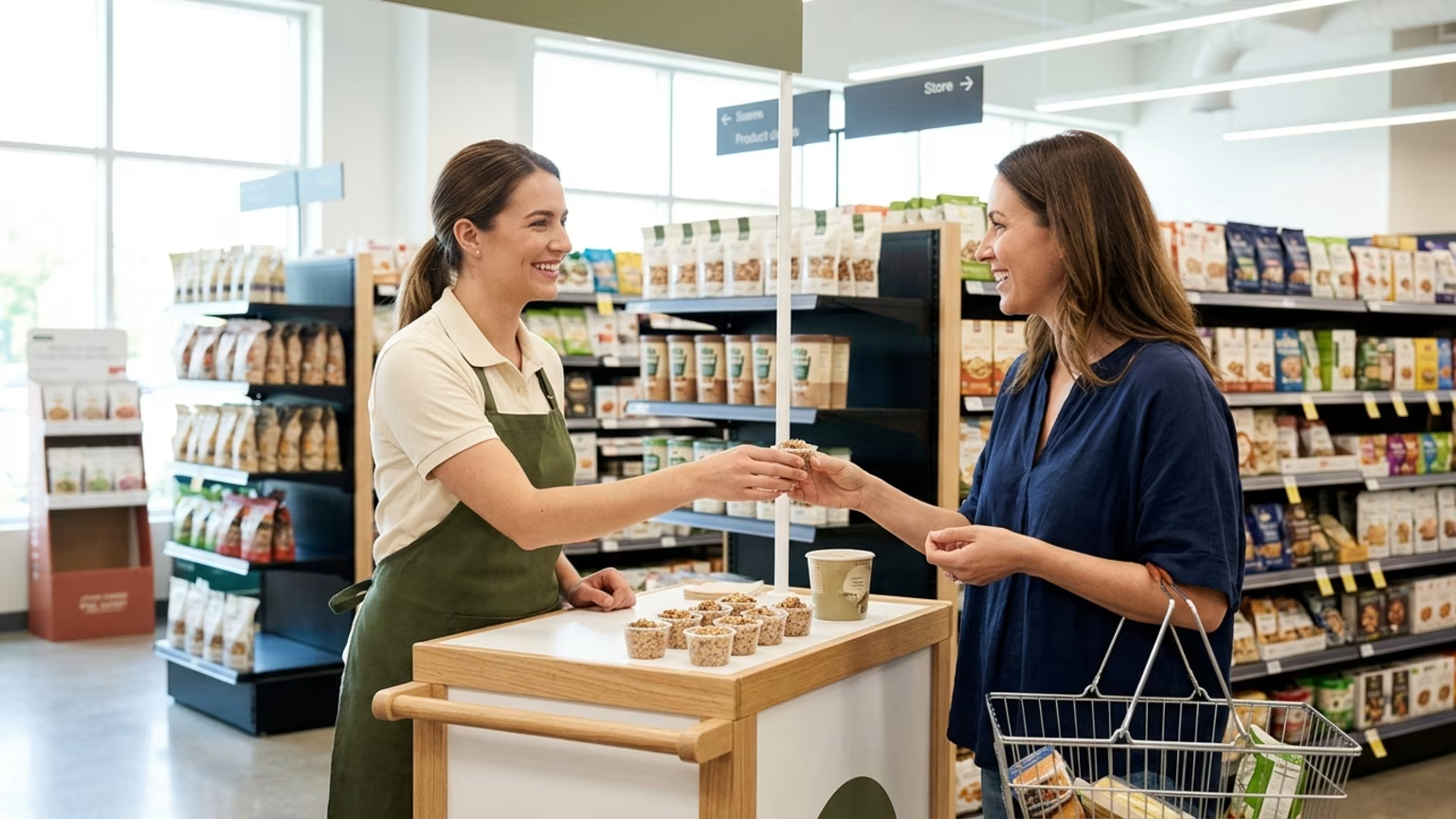
Your mobile sampling rig looks spectacular under the weekend sun. Brand ambassadors hand out thousands of premium beverages to a crowd of eager consumers. The line stretches around the block. You feel an immediate sense of victory.
Then Monday morning arrives. The Chief Marketing Officer asks for the weekend sales numbers. Your experiential team hands over a spreadsheet showing total samples distributed and photos of smiling faces. According to Forrester research, only 38 percent of experiential programs feature closed-loop tracking, proving you cannot improve what you refuse to measure.
The lack of financial accountability creates a dangerous disconnect between field activity and business impact. Retailers demand undeniable proof of sell-through before they commit to expanding your shelf space. When you hand them vanity metrics like dwell time alone, your activation appears as a massive expense rather than a revenue driver. Crowds look great on a recap slide deck, but they correlate weakly with actual financial outcomes.
The chaotic nature of a trade show floor exacerbates this problem. Visitors grab a product sample and disappear back into the aisles. You might scan a badge, but that data rarely connects directly to a recorded purchase down the line. This broken chain leaves field marketing directors scrambling to justify their budgets at the end of every fiscal quarter.
Experiential sampling achieves a 28 percent trial rate compared to just 9 percent for digital ads. The problem is not the effectiveness of the medium itself. The problem is a lack of rigorous, automated data extraction. You must bridge the gap between a handed-out sample and a scanned barcode at the cash register.
Modern measurement relies on AI-powered marketing mix modeling to complement standard linear attribution. This allows marketing teams to generate stable revenue estimates from unified event data streams. If you want experiential marketing reporting that produces clean data, you have to plan for it before the truck ever leaves the warehouse. Industry experts suggest allocating a strict 10 percent of your total activation budget to measurement technology.
Most legacy systems rely on manual data entry that creates dangerous reporting lags. By the time you analyze a multi-city tour, the data is too old to be actionable. Modern platforms reverse this dynamic. By utilizing AI-powered marketing mix modeling, analysts can spot real-time purchasing trends across different geographic territories. This immediate insight allows for rapid course correction if a specific tour stop underperforms.
This operational shift requires abandoning subjective observations in favor of hard financial indicators. Mary Rybalchenko of Windsor.ai notes that raw performance metrics like clicks or views are insufficient on their own. They must prove they actively drive real financial outcomes. By integrating event data systems directly into your CRM platform, you can reduce manual reporting time by 75 percent.
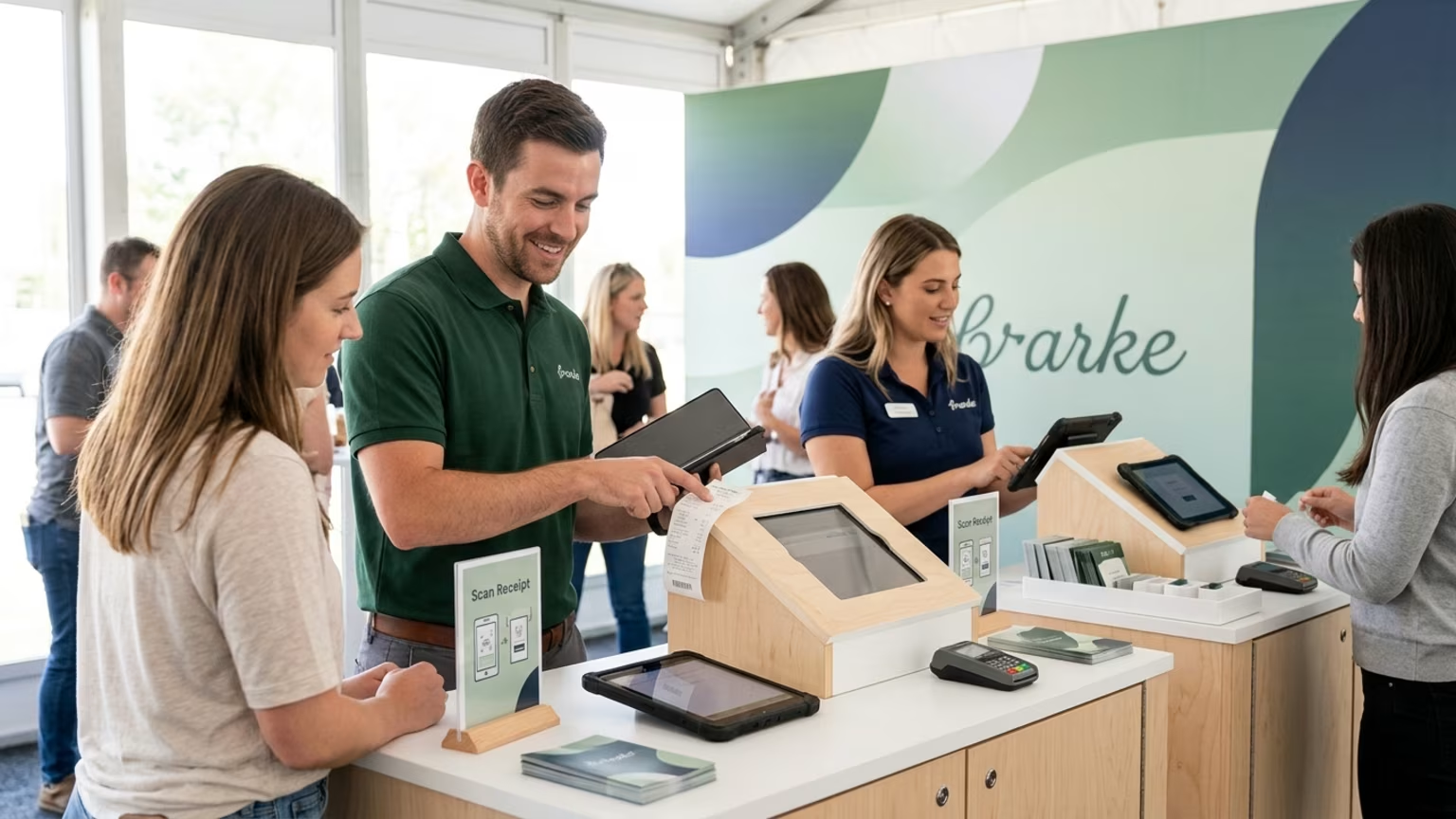
Your strategy must isolate the true impact of the physical activation from organic sales trends. You do this through automated incrementality testing. By running localized A/B tests to quantify sales lift from roadshows, you can confidently report the net new revenue generated strictly by the event.
You cannot patch a leaky data bucket after the event ends. You need a systematic approach to mobile sampling tours to secure undeniable proof of purchase. Follow this operational sequence to eliminate measurement gaps.
The measurement crisis in field marketing stems from confusing physical activity with business achievement. Moving from activation metrics to actual sales lift requires tracking the numbers that dictate revenue growth. Focus your quarterly reporting strictly on cost-per-qualified-lead, cost-per-sell-through, and repurchasing frequency.
Lead indicators like dwell time and digital opt-ins show that your ambassadors are doing their jobs on the floor. Lag indicators prove that the brand footprint is actually expanding. Makai Insights research shows that sampling events yield a 57 percent purchase rate within seven days among active participants. You need the infrastructure to prove that exact statistic for your own product line.
Too many teams rely entirely on the volume of samples handed out. They ignore the harsh reality that poorly trained brand ambassadors often give multiple samples to the same uninterested person. This inflates your perceived engagement while completely destroying your cost metrics. You have to filter out the noise. A true lead is someone who leaves the physical footprint and takes a measurable digital or financial action.
When connected to clean point-of-sale data, beverage samplings generate a staggering 4:1 Return on Investment. Business-to-business trade shows routinely produce high-intent leads at a $75 to $150 cost per lead. Compare those hard figures directly to your digital ad spend to justify the physical activation costs to your executive team.
Consider a regional beverage brand preparing for a major warehouse club expansion initiative. Instead of launching a massive national tour immediately, they shifted to highly targeted neighborhood micro-events. They tested distinct sampling concepts in five to ten high-density locations first. This conservative approach de-risked the scaling process and allowed them to perfect their eventual pitch.
They deployed demo-specific promo codes and tracked localized point-of-sale data over a strict 30-day window. The localized tests revealed precisely which product messaging drove the fastest cart additions. Armed with undeniable proof of unit lift, they secured vast retailer buy-in for a national rollout. Presenting data that proves roadshow effectiveness changes the conversation from a requested favor to a mutual business opportunity.
Retail buyers face immense pressure to optimize every square foot of their store layouts. They hear promises of massive sales lift from countless vendors every single week. You break through that noise by speaking the language of incrementality testing. Show them exactly how your pre-event baseline compares to the post-activation sales velocity.
You can operationalize these exact same tactics to secure larger marketing budgets and prime retailer floor slots. Stop settling for vanity metrics and start building a mathematical case for your field programs. Book a strategy call with our team to map out a precise measurement plan that satisfies your most demanding stakeholders.
Data transforms a fleeting brand interaction into permanent institutional knowledge. The best activations leave a quiet, undeniable paper trail. When the noise fades, the math remains.

30 Years Experiential & Retail Activation Partner for CPG & Beverage Brands | Multi-Market Demos, Roadshows & Costco/Club Programs That Actually Sell