Robbie Thain
Founder, CEO

Business events generated $1.3 trillion in 2025. Learn how experiential marketers can turn trade show chaos into measurable retail pipeline and sales lift.

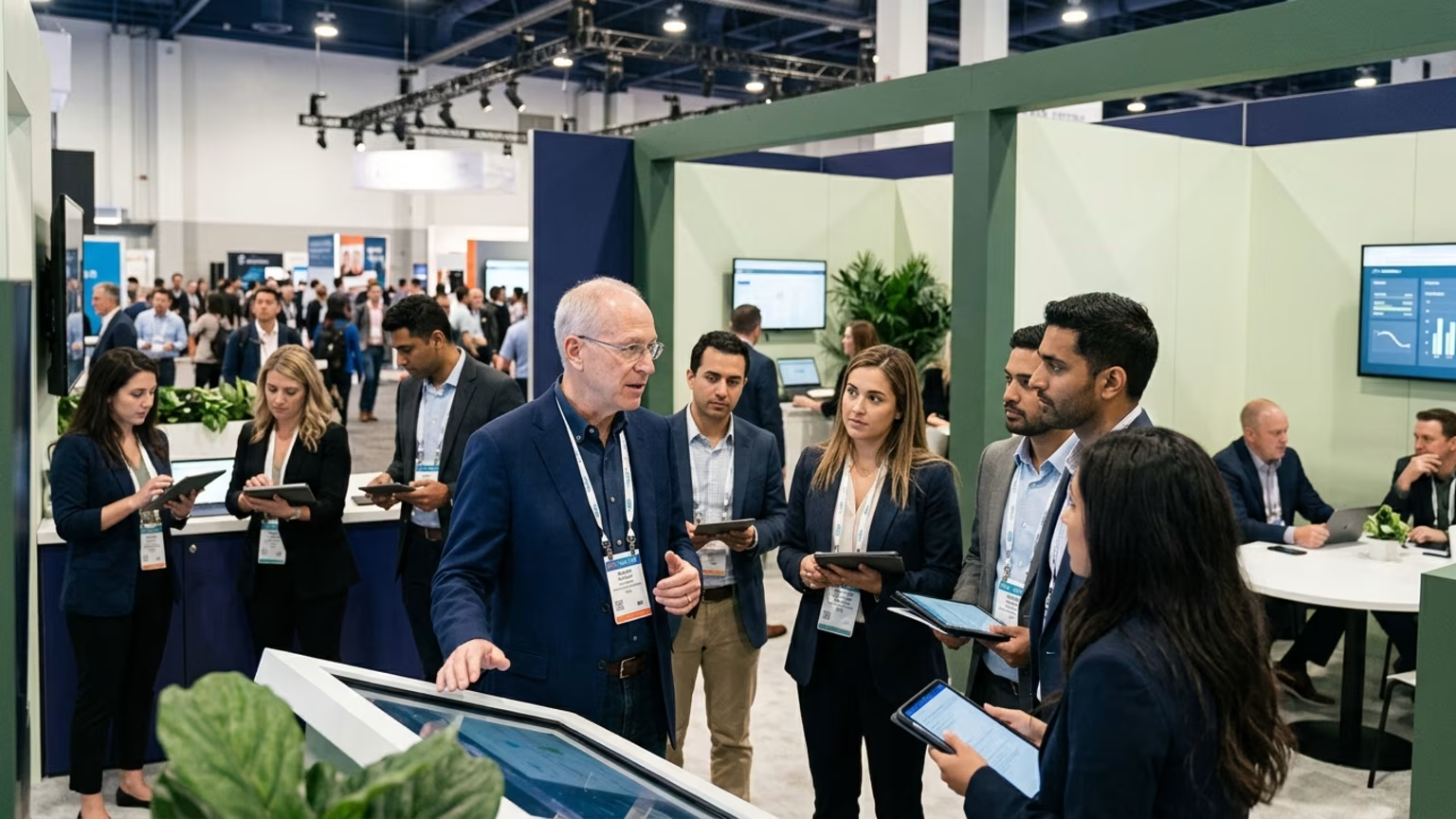
A Field Marketing Director stands at the edge of a massive expo hall. Her phone buzzes with an email from the CFO asking for early pipeline numbers. The booth is packed, but she wonders how much of this noise will actually turn into revenue.
Live events have officially roared past their pre pandemic peaks to generate a massive 1.3 trillion dollars in direct spending globally. This data proves that physical brand activations are no longer optional line items but highly efficient sales channels.
The reality of consumer and trade events is often a masterclass in organized chaos. Marketers spend months shipping product, training brand ambassadors, and building elaborate physical structures. Once the doors open, thousands of attendees swarm the aisles. People grab free samples, drop their business cards in fishbowls, and move rapidly to the next shiny object.
For many fast moving consumer goods and food brands, this translates to high foot traffic but zero measurable pipeline. Executives look at the massive expense report and struggle to see the Return on Investment. The connection between a great physical interaction and a retail purchase gets lost in the noise. This disconnect creates massive pressure on marketing leaders who must justify every dollar spent.
The underlying value of these events is undeniable and rapidly growing. According to the Events Industry Council, business events generated 1.3 trillion dollars in direct spending in 2025. This sector now supports an estimated 3.1 trillion dollars in total business sales worldwide, according to research from ALHI. As noted by Meeting Media Group, if events were a standalone country, their 1.8 trillion dollar GDP impact would rank sixteenth globally.
Recent studies from ALHI indicate that in North America alone, business events generated 488 billion dollars in direct spending with 336 million participants last year. The industry is now decisively bigger than pre pandemic in monetary terms. With the stakes this high, treating a trade show like a basic hospitality exercise is a massive missed opportunity. Brands must adapt to capture this growing pool of commercial value.
To capture real value, you must stop viewing trade shows as simple brand theater. The strategic shift requires treating the show floor like a high converting retail environment. The goal is no longer maximizing badge scans or handing out the most merchandise. The focus shifts to designing interactions that lead directly to qualified sales outcomes.
Data from Micebook shows that average spend per participant rose eleven percent to 785 dollars compared with 2019. This means the people showing up are serious buyers with real budgets. To convert them, you need a system that captures data at the exact point of engagement. The event industry now generates more direct economic activity than aerospace and air transport, according to Meetings and Conventions Asia.
Marketers must actively connect their event presence to broader sales objectives. For consumer packaged goods companies, this means anchoring major consumer events to imminent retail pushes. If your product hits store shelves next month, your sampling activation must drive immediate awareness in that exact territory. You can co create retailer promotions that you promote directly at the event. This approach validates your financial investment and proves to your retail partners that your brand drives targeted foot traffic.
We provide clear reporting on reach, trials, leads, and sales to guide next steps in campaign optimization. Our measurement approach tracks awareness, engagement, and conversion, turning brand moments into actionable data that demonstrates business impact. Leaders who build a data backed business case for their roadshow investments consistently secure more budget. The framework requires standardizing your staffing, data capture, and post event follow up protocols.
Turning a busy booth into a revenue machine requires strict operational discipline. You cannot rely on hope and good energy to drive retail sell through. The global events sector is still lean on direct labor, creating real threats of service gaps on the floor, as ALHI research points out. Follow this precise playbook to take control of your next major trade show or consumer expo.
Brands that implement these steps routinely see much higher sales lift from their field marketing. You can read more about how experiential leaders connect trade show attention directly to sales pipeline for maximum impact. Micebook reports that Oxford Economics forecasts direct business events spending will reach 1.6 trillion dollars by 2028, proving this channel will only grow in importance.
Proving commercial value requires separating vanity numbers from actual business drivers. To capture real Return on Investment, you must track both the early indicators of success and the final revenue outcomes. Lagging indicators tell you what happened historically, and leading indicators tell you what to fix right now. Skift Meetings notes that corporate events are prioritizing measurable outcomes and revenue influence heavily. You cannot rely on assumptions when reporting back to your executive team.
For lead metrics, monitor your cost per interaction and the percentage of qualified sales conversations. Track the number of scheduled buyer meetings versus casual walk ups to the booth. Watch your sampling throughput closely to confirm your staff is moving at the right velocity. You should monitor the conversion rate from a physical product trial to a digital email signup. These early signals reveal if your messaging is resonating with the target audience.
For lag metrics, the focus must remain strictly on generated pipeline and closed sales. Measure the incremental revenue driven by event specific promotions or retail lift in the local market. Calculate the overall cost per acquired customer to validate the budget spend. Track the number of new retail doors opened as a direct result of buyer conversations on the floor.
When you measure correctly, you can clearly prove retail sampling return on investment beyond simple headcount. Strong data attribution turns a massive expense into a predictable growth engine. Request for proposal activity in the sector reached 102 percent of 2019 levels by late 2025, according to Travel Daily News. This sustained demand proves that companies are actively funding events that deliver hard numbers.
Consider a rapidly growing energy drink company facing a massive retail expansion phase across the country. They booked a large footprint at a national food and beverage expo to support a highly anticipated new product line. Instead of just handing out cold cans, they engineered a specific conversion path for retail buyers. The brand needed to prove to wholesale distributors that their product had high consumer demand. They knew that raw foot traffic would not impress a cynical retail buyer.
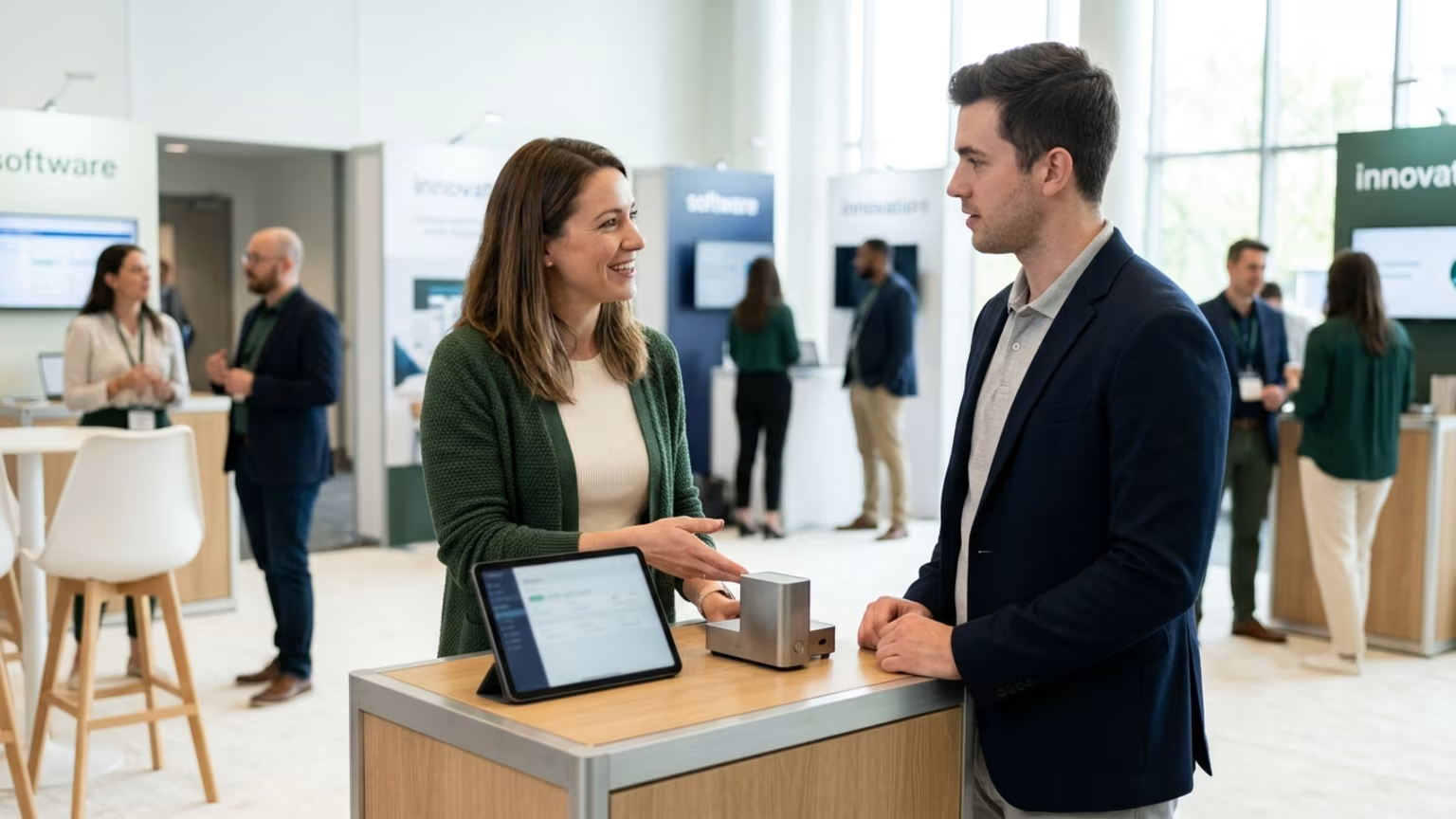
The brand trained their ambassadors to identify regional distributors and store managers quickly. Every sample came with a scannable code that unlocked a wholesale discount for their first order. The team logged every buyer conversation into a mobile CRM app right on the floor. This tight execution eliminated the common problem of lost contacts and forgotten follow ups entirely.
By the end of the three day event, they tracked thousands of samples directly to newly opened accounts. The data proved the event generated significant pipeline, justifying a much larger budget for the next quarter. If you want to replicate this level of precision for your next campaign, you should book a strategy call with our team. We help consumer brands turn live interactions into lasting retail success.
The business events sector has rebounded into a massive economic engine. Marketers who adapt their strategies to focus on measurable outcomes will dominate their categories.
Review your event calendar today and assign a strict revenue target to your next upcoming activation.

30 Years Experiential & Retail Activation Partner for CPG & Beverage Brands | Multi-Market Demos, Roadshows & Costco/Club Programs That Actually Sell