Robbie Thain
Founder, CEO

See how PepsiCo uses mobile roadshows to scale experiential marketing. Master the operational framework to turn event traffic into measurable retail sales lift.

The physical marketing environment requires brands to bridge the gap between local market relevance and national scale. A modular roadshow strategy turns fleeting event traffic into measurable retail lift and localized data capture.
Imagine a crowded summer music festival or a loud regional sports arena. The ground is uneven, the weather is unpredictable, and thousands of distracted fans are walking past your footprint. Brand teams often struggle to adapt a rigid booth design to these varying venue layouts. This lack of flexibility leads to bottlenecks, broken technology, and missed opportunities for meaningful consumer engagement.
When logistics fall apart, field marketers are left managing chaos instead of driving product trial. Staff members scramble to fix power issues or manage overflowing lines. The brand loses control of the narrative in the exact moments that matter most. Instead of collecting qualified leads, the team packs up with nothing but leftover inventory and unproven Return on Investment (ROI).
The stakes are incredibly high for consumer packaged goods companies. Delivering a flawless product sample requires strict temperature controls, precise inventory management, and timely supply chain coordination. A delay at the loading dock can derail an entire weekend of planned sampling operations. Field operators face intense pressure to keep the experience looking premium and fight the gritty reality of outdoor venues.
The technology disconnect presents another major hurdle for regional marketing teams. Venues often suffer from overloaded cellular towers and unreliable internet connections. Brand ambassadors struggle to load digital capture forms, which frustrates consumers and creates massive data gaps. Without a reliable way to capture consumer information, the activation becomes an expensive billboard rather than a conversion engine.
Winning in the field requires a highly adaptable approach to physical brand structures. The core strategy shifts away from one-off event builds toward standardized, modular assets that can travel efficiently. This framework allows marketing operators to adjust their physical footprint based on the exact constraints of each venue. A flexible pavilion can expand for massive festival grounds or shrink for tight stadium concourses.
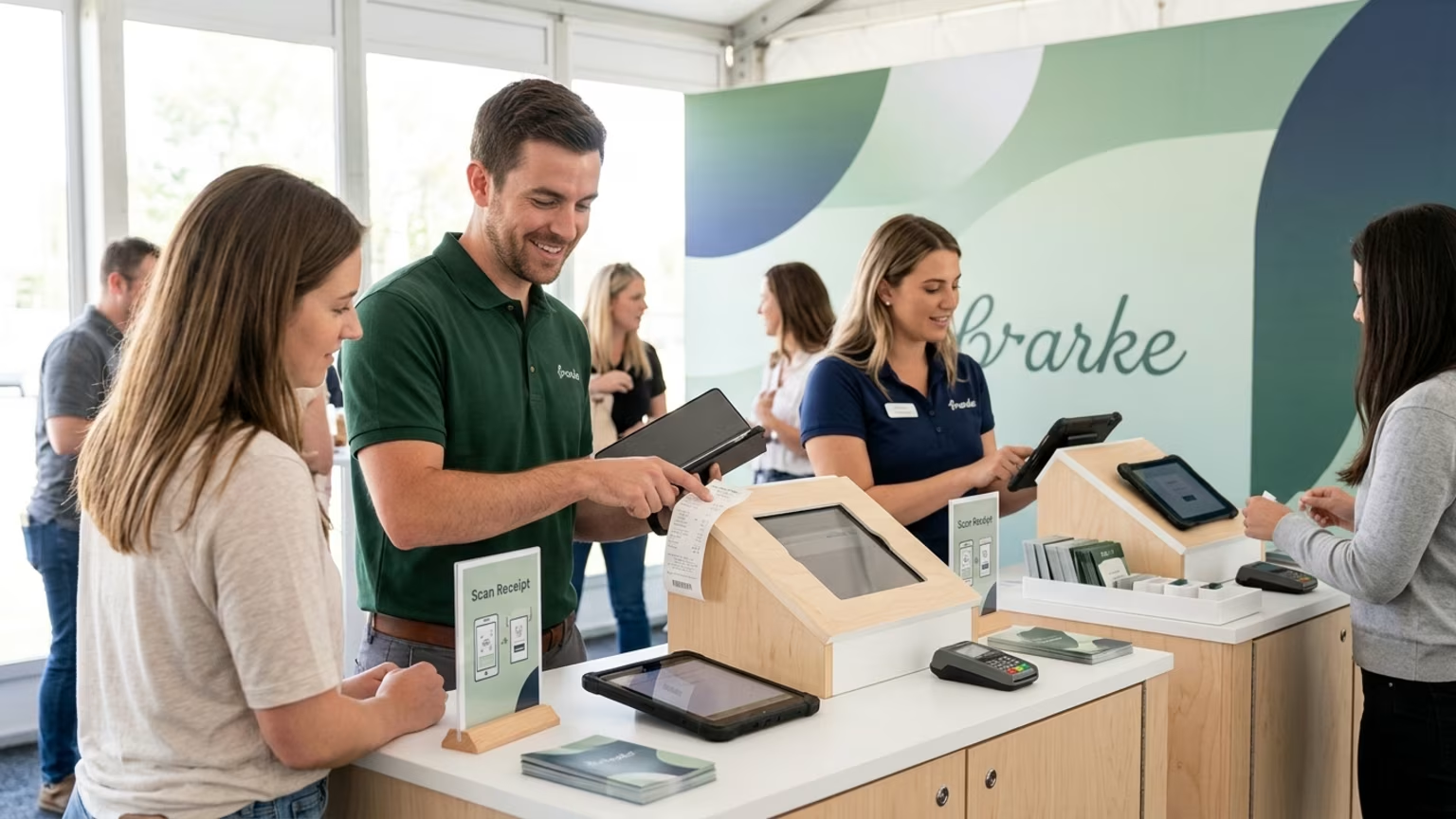
We blend physical and digital experiences by integrating QR codes, mobile technology, and real-world activations into a cohesive layer across retail, event, and tour experiences. This digital integration is not a standalone service but an upgrade we apply to many types of experiential work to drive connected results. This integrated methodology guarantees that every consumer interaction feeds directly into your marketing database.
By standardizing the core structure, brands eliminate the friction of starting from scratch at every single stop. Marketing leaders gain the ability to test different messaging across various regional markets rapidly. The operations team can focus entirely on perfect execution rather than redesigning the wheel. The result is a consistent brand standard that scales seamlessly from city to city.
A unified touring approach drastically simplifies the frustrating permitting and compliance process. Health department approvals and fire marshal inspections become much easier when using standardized, pre-approved blueprints. Teams save countless hours of administrative work by submitting identical structural plans to local authorities. This predictability protects the budget from unexpected union labor fees or last-minute venue surcharges.
This strategy transforms the physical activation into a powerful real-world testing laboratory. Brand managers can run different creative campaigns in distinct geographic zones and compare the performance data. A modular setup allows teams to swap out signage, digital media, and product displays overnight. This rapid iteration helps brands find the most effective messaging long before rolling out a national retail campaign.
When you centralize the design of your touring assets, you centralize the training of your field staff simultaneously. A standardized footprint means brand ambassadors know exactly where inventory is stored, how the technology operates, and where the sampling stations sit. This familiarity breeds confidence, which translates into much better consumer interactions on the floor. Consistency in the physical environment directly supports a consistent brand voice.
Deploying a successful mobile roadshow demands operator-grade discipline and clear communication. You need a reliable playbook to guide your team through the complexities of nationwide event logistics. Every stop on the tour must run like a well-oiled machine. Before you can expect strong conversions, you must establish an unshakeable operational foundation.
Moving heavy physical assets across the country introduces significant transportation risks. Operators must manage driver schedules, strict Department of Transportation regulations, and unpredictable weather patterns. A delayed truck completely ruins the carefully planned activation schedule. Working with dedicated logistics partners guarantees that your pavilion arrives safely, on time, and ready for deployment.
Executing this playbook requires a dedicated team that understands both the creative vision and the gritty physical reality. Brands that skip these demanding planning steps often find themselves bleeding money on the road. Operational excellence is the only true way to protect your physical marketing investments. Book a strategy call with our team to map out your next roadshow.
Field marketing requires concrete evidence to justify the budget allocation. Operators must track specific lead and lag metrics to validate their live activations properly. The focus must remain on numbers that prove actual consumer intent and sales impact. Vanity metrics like foot traffic or social media mentions do not satisfy the rigorous demands of modern commerce.
Lead metrics provide immediate feedback during the live event itself. You should measure total product samples distributed, digital kiosk opt-ins, and the rate of QR code scans. These data points tell your team if the on-site messaging is actually resonating with the festival crowd. High engagement numbers indicate a strong immediate connection between the brand and the target consumer.
Lag metrics determine the long-term financial success of the mobile campaign. Track the redemption rates of digital coupons distributed during the roadshow to measure direct consumer action. Measure the distinct sales lift at retail locations near the event venue over the following month. For brands scaling their mobile tour operations, these indicators bridge the gap between temporary experiences and permanent pipeline growth.
The data captured on the road only holds value if you use it effectively after the event. Marketing teams must design automated email and SMS follow-up sequences to nurture the leads generated at the pavilion. A well-timed message thanking the consumer for visiting the booth keeps the brand top of mind. Including a location-specific offer in these messages drives immediate foot traffic to local retail partners.
Reporting frequency matters just as much as the metrics you choose to track. Field teams should generate comprehensive performance dashboards at the conclusion of every tour stop. This regular cadence allows marketing directors to spot declining conversion rates and correct course immediately. Consistently aligning field data with your central CRM system turns isolated events into a powerful, unified sales engine.
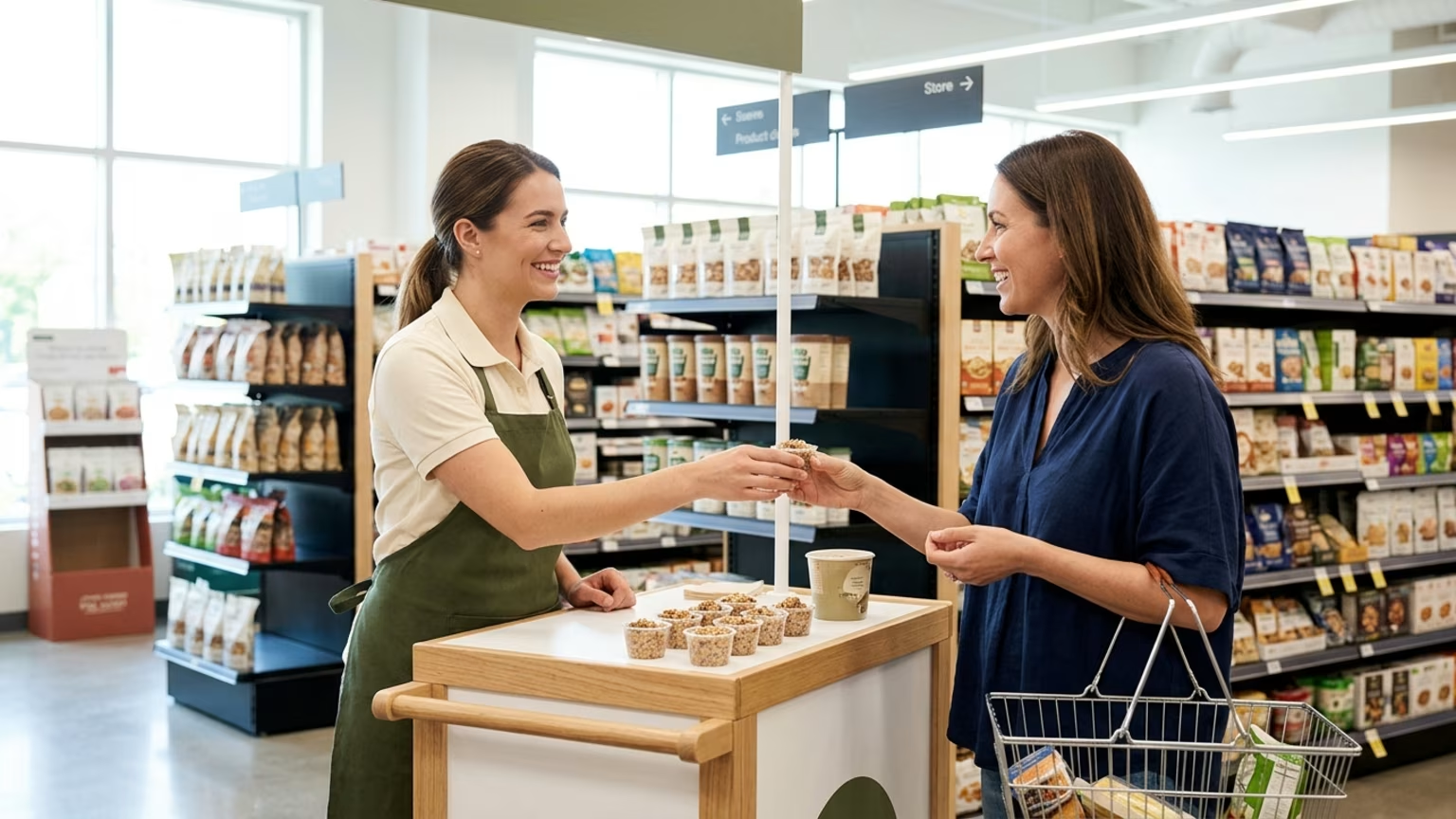
PepsiCo recently activated a highly effective mobile experience pavilion for its festival and sports marketing circuit. The brand built a traveling footprint that integrates product tastings, interactive LED content, and targeted data capture kiosks. This agile setup allows the team to test creative concepts and messaging rapidly across different local markets. The company recognized that physical agility is just as important as a strong digital presence.
The roadshow format empowers the operations team to quickly scale or adapt the layout based on the specific venue. A large outdoor music festival receives the full expanded pavilion complete with multiple tasting stations. A smaller indoor arena receives a condensed version that still delivers the exact same premium brand experience. This modular approach maximizes audience reach without constantly rebuilding custom assets for every single location.
PepsiCo ties its performance metrics directly to verifiable consumer actions and retail outcomes. The brand heavily monitors localized opt-ins and the redemption rate of digital coupons distributed at the activation site. Marketing leadership actively measures nearby retail lift to validate the direct financial impact of the touring pavilion. This systematic approach proves the immense value of integrated brand activations in physical spaces.
The brand effectively proved that taking a disciplined, data-driven approach to physical marketing yields massive dividends. They successfully replaced chaotic guesswork with a structured framework that scales easily across the entire country. Field operations require serious logistical mastery, clear measurement standards, and a deep understanding of consumer behavior. We specialize in bringing this level of precise execution to brands that demand measurable retail outcomes.

30 Years Experiential & Retail Activation Partner for CPG & Beverage Brands | Multi-Market Demos, Roadshows & Costco/Club Programs That Actually Sell