Robbie Thain
Founder, CEO

Discover how CPG brands abandon isolated tastings for sequenced retail demo roadshows to turn product trial into sustained sales velocity and repeatable growth.
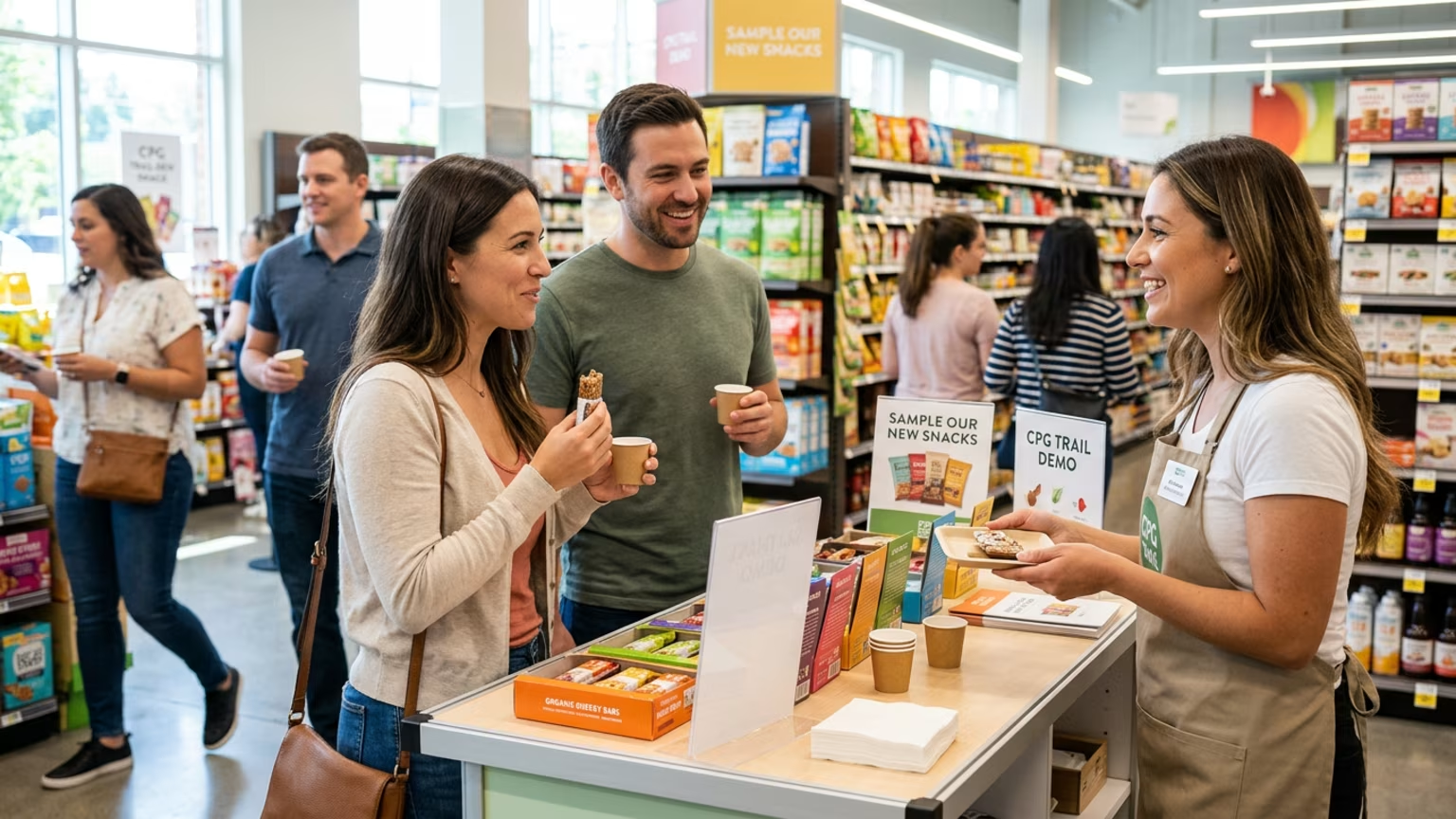
The single largest waste of field marketing budget is the isolated product tasting. Modern snack and beverage brands are abandoning one-off events for sequenced retail campaigns that stack street sampling and store demos into one measurable conversion path.
Imagine a standard Saturday afternoon inside a massive grocery chain. Your field team sets up a folding table near the dairy aisle with high hopes and a stack of paper coupons. The store manager barely knew they were coming today. The brand ambassador hands out four hundred small paper cups over a four-hour shift.
Shoppers smile, take the free sample, and walk away without a second thought. By Tuesday afternoon, the regional sales data shows absolutely zero lift in category velocity. This isolated approach burns through precious budget and leaves marketing leaders with no clear evidence of impact. You get a nice photo of a smiling staff member for the recap deck.
The actual Return on Investment remains a complete mystery to the executive team. Retail buyers want to see sustained movement off the shelf, not just a busy afternoon. When field marketing operates in an isolated silo, consumers experience a fleeting moment rather than a lasting memory. The connection evaporates the moment the paper cup hits the trash can.
Brands cannot afford to treat physical trials like random lottery tickets anymore. The market is too crowded and shelf space is far too expensive to waste on uncoordinated tactics. A fragmented strategy creates an illusion of progress. Field teams confuse frantic activity with actual business growth.
Treating demonstrations as isolated events is a massive structural failure for growing brands. The new operational standard requires field marketing leaders to view consumer engagement as a strictly sequenced campaign. This means stacking retail demos with mobile roadshows to surround a key market completely. A consumer might try the product at a local festival on Friday afternoon.
That same consumer sees an in-store demo on Sunday morning. This approach builds multiple physical touchpoints within a single zip code over a defined period. The strategy relies on concentrating resources rather than spreading single events across a massively fragmented map. By layering shopper marketing efforts with physical trials, the brand creates a temporary but inescapable local presence.
To execute this correctly requires a total shift in operational thinking. Brands must completely abandon random store assignments based on simple geographic convenience. They need a precise sampling strategy that targets high-priority retail chains and exact distributor regions. Geographic density forces the consumer to recognize the packaging and triggers the physical impulse to purchase.
The goal is to create a sense of momentum that the retail buyer can actually feel in their numbers. When a roadshow rolls into a territory, the entire regional team should operate from the same playbook. The marketing push becomes a unified front that drives people straight to the register. This eliminates the guesswork and replaces hope with a calculated business process.
Transitioning from random tastings to a sequenced market push requires strict operational discipline. Follow this step-by-step guide to implement a multi-tiered roadshow in any priority region.
You cannot manage a regional takeover without tracking the exact numbers that prove performance. Stop relying on estimated foot traffic and start measuring actual pipeline velocity immediately. Clear reporting separates a successful campaign from a completely chaotic spending spree. The executive team expects hard data to justify the ongoing field budget.
For lead metrics, you must relentlessly track total samples distributed per hour and the active conversation rate. You must monitor coupon redemption numbers within the first forty-eight hours of the weekend push. These early indicators show if your traveling team is successfully stopping shoppers and creating real consumer interest. Low engagement rates signal an immediate need to adjust the ambassador talking points.
Lag metrics provide the true measure of your campaign success and validate your corporate spending. Look closely at the thirty-day regional sales lift compared to baseline movement in non-activated stores. Track retailer reorder rates and the sustained repeat purchase velocity over the following business quarter. This data is what you present to buyers to secure national retail expansion.
Connecting these data points gives you a complete picture of campaign health. It allows you to calculate the precise customer acquisition cost for every new household reached. Brands that measure these outcomes consistently never have to guess if their roadshow actually worked. They possess the receipts needed to scale the operation confidently.
A rising national beverage brand recently stopped funding random weekend tastings to test this exact sequenced approach. They selected a priority midwestern market where retail velocity had completely stalled out over the winter. Instead of spreading ten demos across an entire state, they clustered them around one major city over a three-week push. The leadership team wanted to overwhelm an exact zip code with product trial opportunities.
We specialize in creating retail demos, product sampling programs, and roadshows that bring brands face to face with their audiences. Each program is designed to drive trial, build consumer relationships, and accelerate retail velocity across multiple locations. For this beverage client, our traveling team hit college campuses on weekdays and targeted exact grocery chains on weekends. The constant visibility made the brand feel much larger than its actual market share.
This concentration of effort resulted in a massive spike in localized coupon redemptions. The brand saw a clear and undeniable lift in monthly store sales across the target region. They finally had the data needed to secure expanded shelf space during their next major buyer meeting. Using local roadshows to maintain momentum is a proven way to keep the cash register ringing.
When you need to turn scattered regional trials into measurable sales data, it is time to Book a strategy call with our operations team. The difference between a struggling promotion and a massive retail success is pure operational discipline. Stop guessing and start running campaigns that produce undeniable evidence of growth.
A single interaction is rarely enough to change a daily consumer habit. Real product loyalty requires deep patience, fierce persistence, and the willingness to show up more than once. When a brand decides to stop chasing scattered impressions, the work becomes grounded in genuine connection. The focus shifts from handing out cups to building a reliable audience.
Trust is built slowly over time, one measured interaction at a time. A sequenced approach respects the shopper and gives them space to make a decision. The quiet rhythm of repeated exposure eventually turns a curious stranger into a lifelong customer. It is a slow build that yields a permanent reward.

30 Years Experiential & Retail Activation Partner for CPG & Beverage Brands | Multi-Market Demos, Roadshows & Costco/Club Programs That Actually Sell