Robbie Thain
Founder, CEO

Learn how the Cathedral City cheese roadshow proves the power of mobile sampling tours. We break down route planning, cold chain logistics, and field ROI.
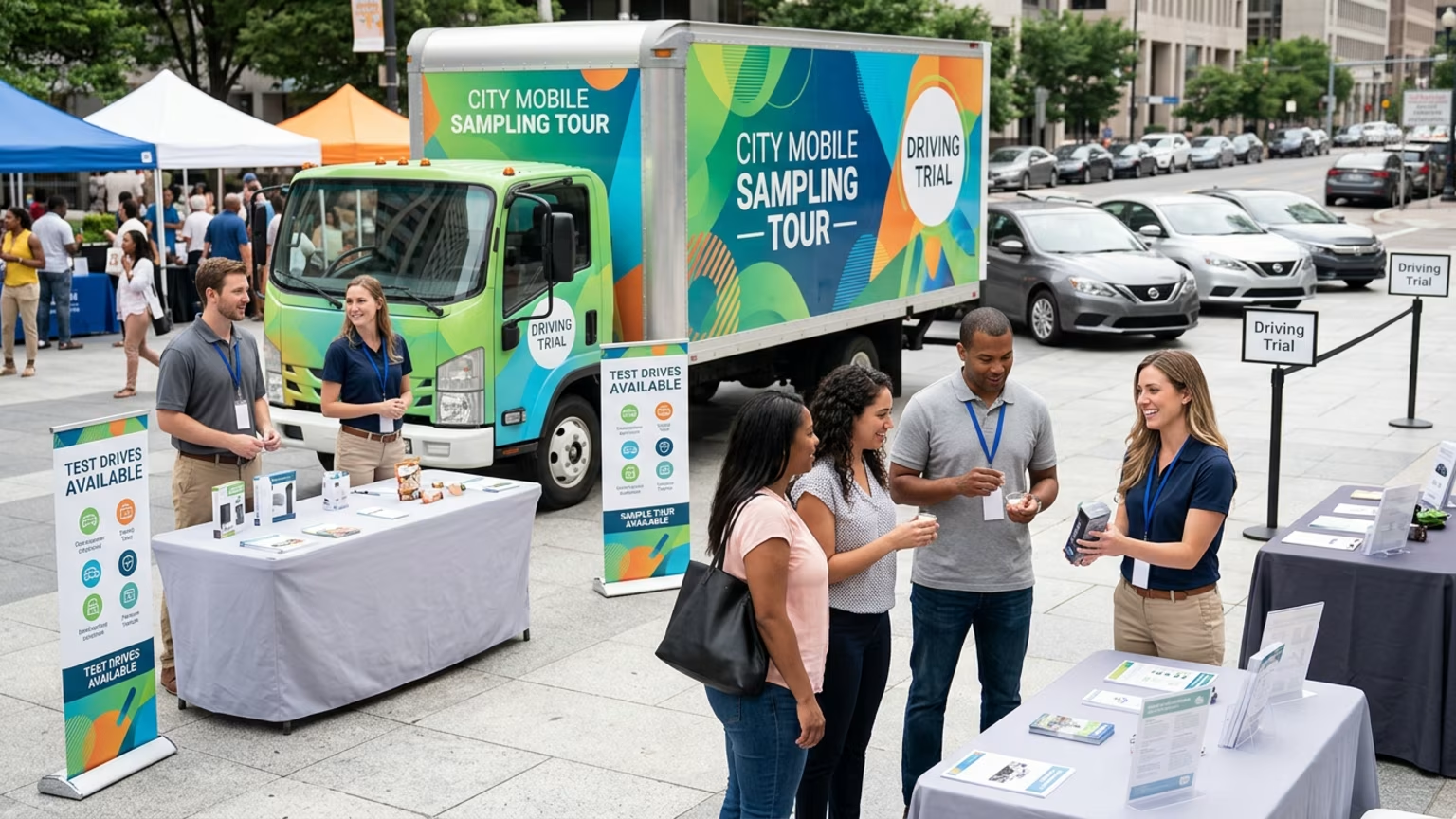
The refrigerated truck idles quietly in the early morning fog of a city square. Inside the trailer sits a massive inventory of premium cheddar blocks awaiting distribution. Brand ambassadors stack sampling trays. Nearby, a project manager finalizes local health department permits.
The recent four-city experiential roadshow for Cathedral City cheese demonstrates exactly how targeted mobile sampling can turn passive consumers into active buyers. This analysis breaks down the operational mechanics of a multi-city tour and provides a systematic framework to build your own revenue generating field activation.
Many food and beverage brands rely entirely on standard retail promotions to win market share. Buyers walk past static endcaps without a second glance. The retail environment is noisy, crowded, and heavily constrained by store manager preferences. Brands that depend on passive shelf placement often fail to generate the necessary trial volume.
Our team knows this struggle intimately. We have executed over 1000 campaigns across all 50 states, bringing brands to life in every major U.S. market. From retail demos in Seattle to roadshows in Miami and events in Honolulu, our teams activate brands wherever our clients' audiences are located. In our experience, waiting for the consumer to find your product is a losing game.
Food brands face unique logistical hurdles in static retail environments. Store managers often dictate tight windows for sampling and restrict the physical space allowed for your display. You are competing with hundreds of other brightly colored packages for a fraction of consumer attention. Taking a product directly to the consumer eliminates these retail barriers entirely.
Cheese and perishable goods require strict temperature controls, specialized handling, and precise inventory management. When a campaign lacks operational discipline, product spoils and budgets vanish. Field marketing leaders must move from chaotic passive sampling to highly controlled active distribution. A controlled mobile environment gives you complete authority over the brand presentation.
A successful mobile sampling program requires a systematic approach to route planning and consumer engagement. The core strategy centers on intercepting target demographics in high traffic areas. Instead of hoping people stumble upon a booth, you place the brand directly in their daily path. This method relies on data driven location selection and aggressive timeline management.
First, marketing directors must define the exact geographic footprint needed to support regional sales goals. The cities you select must directly map to your target retail partners. If you are expanding shelf space in regional grocers, the tour stops must align with your retail distribution network. Activating in a market where your product is unavailable completely destroys the return on effort.
Second, the operation requires a centralized command structure for staffing and logistics. Managing local teams across multiple cities demands rigorous oversight. You need a dedicated project manager who tracks routing sheets, daily inventory levels, and local weather patterns. This person serves as the bridge between the field team and corporate marketing objectives.
Route planning is not just about driving distances. It requires deep analysis of consumer behavior and traffic patterns. You want to intercept people when they have the mental bandwidth to try something new. Catching commuters at a busy train station requires a vastly different approach than engaging families at a weekend food festival.
The location context dictates the entire pacing of the brand interaction. A poorly planned route drains budget through wasted travel time and hotel costs. Moving a commercial fleet across the country requires precision scheduling. Route optimization guarantees your brand spends maximum time in front of active buyers.
Yet the physical footprint of the activation must balance mobility with visual impact. A compact setup allows for rapid deployment across town squares, office parks, and transit hubs. At the same time, the footprint must remain bold enough to attract immediate attention from distracted pedestrians. Blending setup speed with heavy branding creates a highly effective consumer intercept.
Taking a perishable product on a multi-stop tour involves intense operational coordination. A beautiful brand concept will collapse without flawless field logistics. You cannot plan a national tour hoping that every local market operates the same way. To keep the operation moving smoothly, follow this step by step field guide.
Before the first truck is packed, your team must run a full dress rehearsal of the activation. Set up the entire footprint in a warehouse to test structural integrity and assembly speed. This practice run reveals missing hardware, confusing instructions, and ergonomic issues at the sampling counter. Fixing these problems before you hit the road saves countless hours of frustration.
Beyond setup, the physical maintenance of the tour assets must be planned daily. Custom vehicle wraps get dirty, tents tear in high winds, and coolers malfunction. A professional roadshow team carries spare parts and cleaning supplies for every major component. Your brand presence must look just as immaculate on day thirty as it did on day one.
These steps form a rigid operational backbone for any serious field campaign. When teams follow a standardized process, they avoid the scattered execution that ruins many regional tours. Consistency across different cities is the primary goal for any field marketer. For those focused on preventing logistical breakdowns on the road, rigid documentation is mandatory.
Field managers must prepare contingency plans for inevitable disruptions. Vehicles break down, severe weather strikes, and local venues sometimes revoke permits at the last minute. Having a backup location for every stop keeps the tour moving forward. Operational resilience separates amateur promo runs from professional field marketing.
Experiential marketing requires clear financial accountability. Generating buzz is useless if you cannot track the Return on Investment to the dollar. Marketers must build a measurement framework before the tour buses ever leave the warehouse. A mix of immediate indicators and long term results provides the true picture of success.
Lead metrics give your team real time visibility into campaign health. You must track daily samples distributed, active consumer engagements, and total coupon redemptions. Measuring the average interaction time helps determine the quality of each consumer intercept. These daily numbers tell your project managers if the current location is actually working.
Your team must capture qualitative data directly from the field staff. Brand ambassadors hear raw, unfiltered feedback from consumers tasting the product for the very first time. Tracking this sentiment helps brand managers understand regional flavor preferences and messaging resonance. This immediate feedback loop is impossible to replicate with digital ads.
Lag metrics reveal the actual business impact weeks after the tour concludes. Track the retail sell through velocity at grocery stores within a five mile radius of the activation. Monitor geographic spikes in website traffic and digital brand searches. When these localized sales metrics rise, the mobile tour has officially done its job.
A prime example of this methodology is the recent experiential initiative led by Cathedral City cheese. Industry reporting notes that their specialized agency delivered a nationwide experiential roadshow to boost direct consumer interaction. The campaign took the cheese brand on a highly coordinated four-city tour. This direct sampling approach placed premium cheddar right into the hands of the target demographic.
By moving away from static displays, Cathedral City created memorable brand moments in busy urban centers. The activation combined high visual impact with immediate product gratification. Passing consumers received a premium sample, a memorable interaction, and a direct push toward local retailers. This strategy turns a simple snack into an active purchasing decision.
Taking a food brand on the road requires immense trust in the field staff. The ambassadors representing Cathedral City acted as the physical face of a premium product. Their ability to deliver a consistent, hygienic, and enthusiastic sampling experience drove the success of the tour. High volume sampling only works when the human element is perfectly dialed in.
This four-city model proves that brands do not need a massive fifty-stop tour to see results. A tightly routed, highly targeted roadshow can generate massive lift in key retail markets. By focusing on deep market penetration rather than broad national reach, brands can maximize their experiential budgets. It is a formula built entirely around measurable field action.
When you are ready to stop wasting budget on invisible retail promotions, it is time to act. If your team is planning a mobile sampling tour, you need an operator who understands both strategy and cold chain logistics. Book a strategy call with our experiential logistics team today.

30 Years Experiential & Retail Activation Partner for CPG & Beverage Brands | Multi-Market Demos, Roadshows & Costco/Club Programs That Actually Sell