Robbie Thain
Founder, CEO

Prevent activation failures before load-in. Learn how to manage permits, field logistics, event staffing, and CRM routing for high-impact experiential marketing.
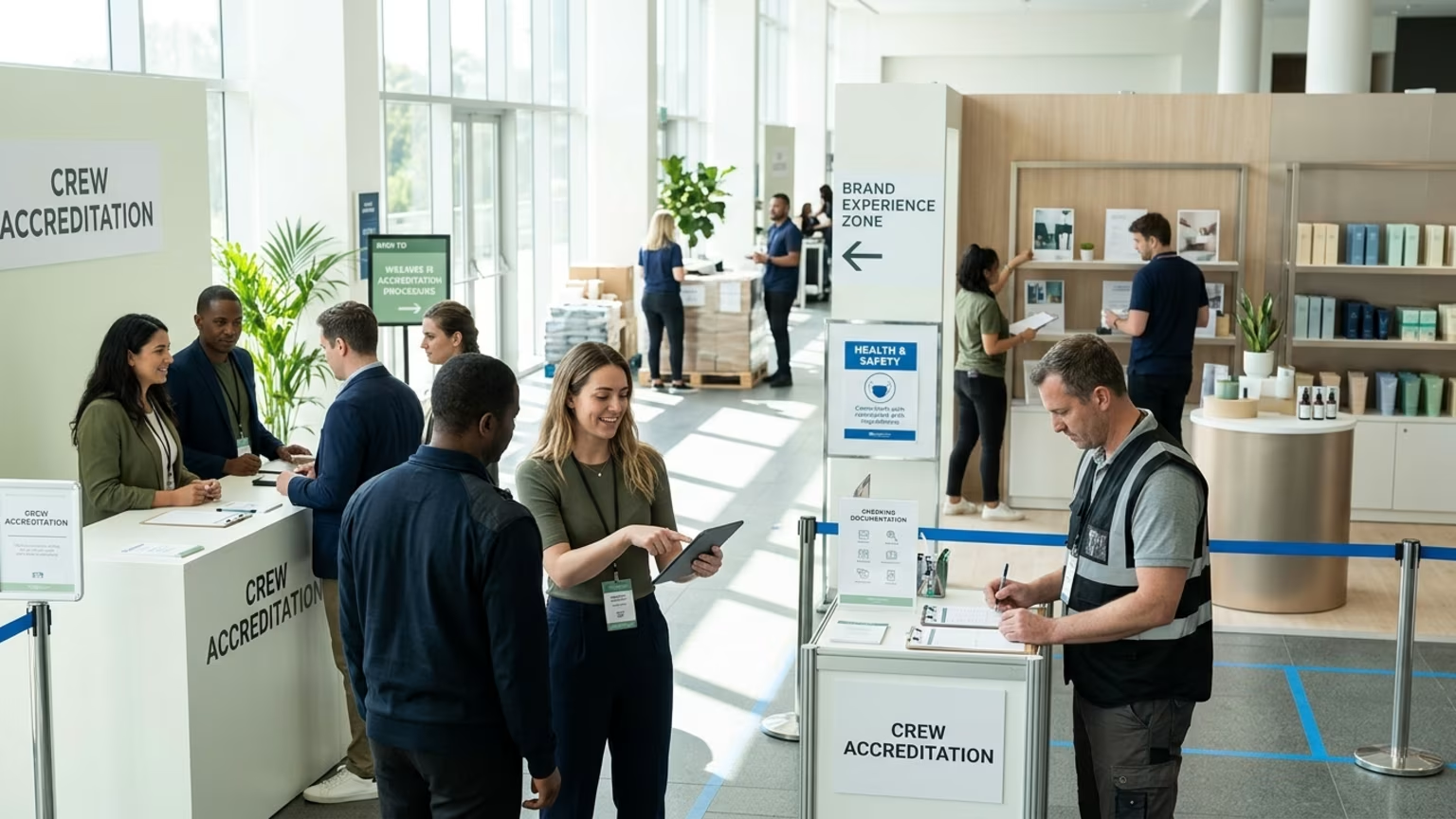
National Experiential, citing PQ Media, reports $138.94 billion in global experiential spending in 2025. This massive investment shows brands expect physical events to drive real commercial outcomes. You cannot afford to treat the execution phase as an afterthought.
Marketing leaders constantly ask how to prevent predictable activation failures before load-in. The answer is a rigorous preflight checklist that treats logistics as a core part of the event design. Field logistics covers permits, transport, setup, and crew supervision. American Guerrilla Marketing notes that managing field problem-solving is also a critical requirement for successful execution. This article outlines the exact process to secure approvals, prepare staff, and capture data before the first guest arrives.
Securing a venue contract does not guarantee your activation is actually legal or operational. Local requirements change your production timeline and dictate what you can build. Cal Poly’s guidance shows that some temporary structures trigger permits and that plans may need to be submitted at least 30 days ahead. You must build a jurisdiction-specific compliance matrix well before load-in.
Your footprint design directly impacts the regulatory hurdles you will face. Asheville’s event guidance illustrates how crowd size and production features such as tents, generators, mobile vending, and open flames can trigger local review. A tent, a large generator, or a mobile unit can completely change your insurance requirements and production calendar. Planners must verify these constraints during a documented site survey.
A venue is not fully confirmed just because a contract is signed. The field team must complete a rigorous site survey. This survey must document:
Crowd management requires similar foresight to avoid dangerous bottlenecks. An OSHA enforcement record emphasizes preplanned crowd management, trained crowd managers, customer information, and reliable employee communications. The record involved approximately 2,000 customers, but its operational lesson applies to any sized activation. You must plan queue capacity, ingress routes, and escalation procedures before opening to the public.
A great physical footprint means nothing if the team running it lacks operational discipline. Staffing should be based on specific tasks and guest throughput rather than merely the size of your footprint. We run experiential and engagement programs coast to coast with local crews, smart logistics, and permit expertise that let us launch fast and maintain quality consistency in every region, from major metros to smaller markets. Our nationwide infrastructure enables us to activate brands wherever their audiences are located.
Training must transform temporary staff into an active extension of your brand. A field team needs our signature aloha-style approachability paired with operator-grade discipline. This human-centric methodology ensures brand ambassadors guide visitors through a structured journey that ends in a measurable action. They need comprehensive training on the product proposition, data-consent language, and emergency procedures.
Sampling protocols require strict oversight and precise execution on the floor. FDA maintains food and dietary-supplement guidance and regulatory materials, but the applicable requirements depend on the product and operating context. You must check local health department rules and train staff thoroughly. Teams must master allergen information, proper hand-washing processes, and safe waste disposal.
Measurement should be designed before the activation rather than reconstructed afterward. Global Capital Network recommends defining the objective before booking and tracking fully loaded cost alongside qualified conversations, 90-day pipeline, 12-month revenue, and relationships. You cannot simply count badge scans and expect to prove Return on Investment. You need a data workflow that moves a physical handshake into a digital record.
You must translate your business problem into an observable action. Before production begins, the team should document:
Every digital touchpoint on the floor must connect directly to your marketing infrastructure. Ulala recommends tagging digital touchpoints before the event, setting the attribution window in advance, and reporting hard revenue separately from softer brand measures. This structured approach allows consistent reporting on experiential activations without confusing brand awareness with actual sales.
The technology must support the intended guest journey from arrival to conversion. Your registration systems, lead forms, and digital consent waivers need strict testing before load-in. You must map the journey from discovery to the final conversion action. If your capture system fails, your field team loses the ability to prove their commercial impact.
Even the best plans encounter friction on the event floor. A missed delivery, a broken tablet, or a sudden weather event can derail your entire campaign. You need a preflight dashboard that checks critical dependencies and establishes clear workarounds. If an item shows a red status, the team must assign an owner and implement a backup solution immediately.
Technology should always be treated as a vulnerable dependency. Every digital interaction requires a tested manual alternative. If your point-of-sale system loses its cellular signal, your staff must know how to switch to an offline mode or a printed capture form. You cannot let a localized Wi-Fi outage pause your experiential retail activations.
Proper supply chain management prevents logistical bottlenecks from reaching the customer. Transportation planning should treat logistics as a timed chain of custody. You must verify pickup addresses, dock booking times, overnight storage conditions, and emergency replacement options. A truck arriving exactly at the start of load-in is already late if you ignore security checks and venue delays.
Use an inventory register to track every single asset. You should separate your inventory into clear operational categories:
The most important step is moving critical decisions out of the event-day crisis window. You need a formal preflight approval process where all critical items must show a green status. This stops unresolved dependencies from hiding behind vague promises. Your team must test the accessibility route, verify insurance certificates, and confirm staff rosters before any trucks leave the warehouse.
Global experiential marketing is a massive space because real-world interactions deliver powerful outcomes. National Experiential forecasts 10.3% growth in 2026, signaling that competition will only increase. Do not risk that investment on loose operational planning. Your next step should be auditing your current planning sequence and demanding a formal venue constraint document before signing any new contracts.
Transitioning from manual lead collection to automated CRM routing requires flawless data execution, which is where Makai takes ownership of your event logistics. We eliminate inefficient post event follow up and CRM routing by deploying our core Consumer Events capability. We design memorable live experiences that bring brands and people together through interaction, emotion, and engagement.

30 Years Experiential & Retail Activation Partner for CPG & Beverage Brands | Multi-Market Demos, Roadshows & Costco/Club Programs That Actually Sell