Robbie Thain
Founder, CEO

Learn how leading grocery retailers counter digital distraction with in-aisle experiential activations, live tastings, and retailer data to boost sales.

Interactive in-store brand activations generate ten times more engagement than static shelf signage alone. This powerful data proves that fighting digital distraction requires physical experiences that command attention. Marketing leaders who merge live product trials with shopper data will turn passive aisles into measurable sales engines. This approach represents the future of retail media performance.
The typical grocery run has become an exercise in fractured attention. Shoppers push their carts with one hand and scroll list apps with the other. They are constantly looking down at notifications and text messages. The physical retail space has turned into a mere backdrop for their digital lives.
Shoppers are completely overwhelmed by the sheer volume of choices available. A typical supermarket carries tens of thousands of individual items on its shelves. Brands fight a brutal war for a single glance from a passing consumer. The modern buyer wants to get in and out of the store quickly.
This rush leaves very little room for spontaneous brand interactions. A shopper might walk right past a premium end-cap display without blinking. They are too busy searching for digital coupons to notice new products. Digital distraction has effectively blinded people to traditional retail marketing tactics.
This environment creates a massive problem for consumer packaged goods companies. Brands spend heavily on retail media networks to reach buyers at the shelf. Static shelf talkers and basic aisle signs simply fade into the background noise. Retailers are finally realizing that passive formats cannot compete with a smartphone screen.
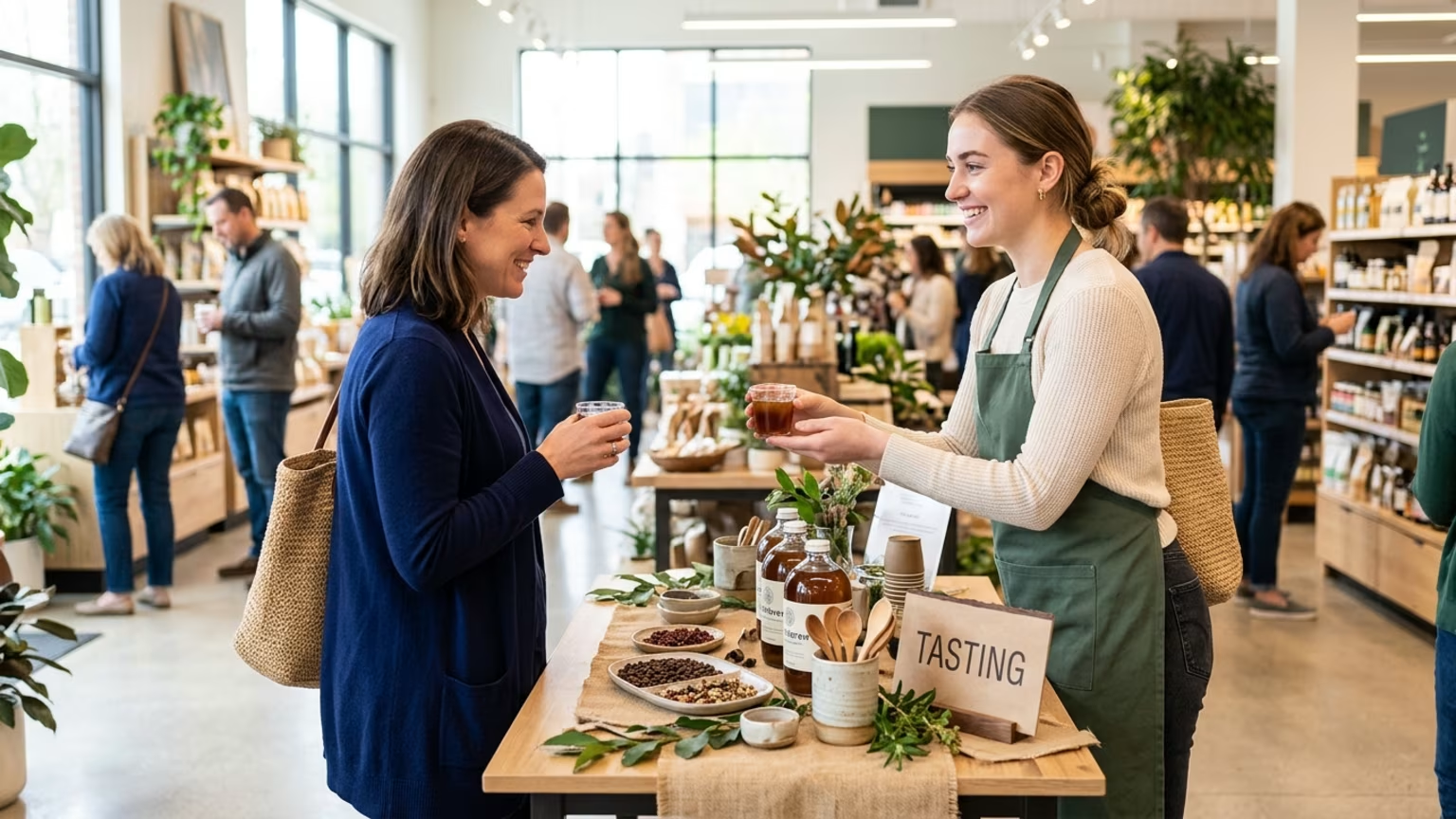
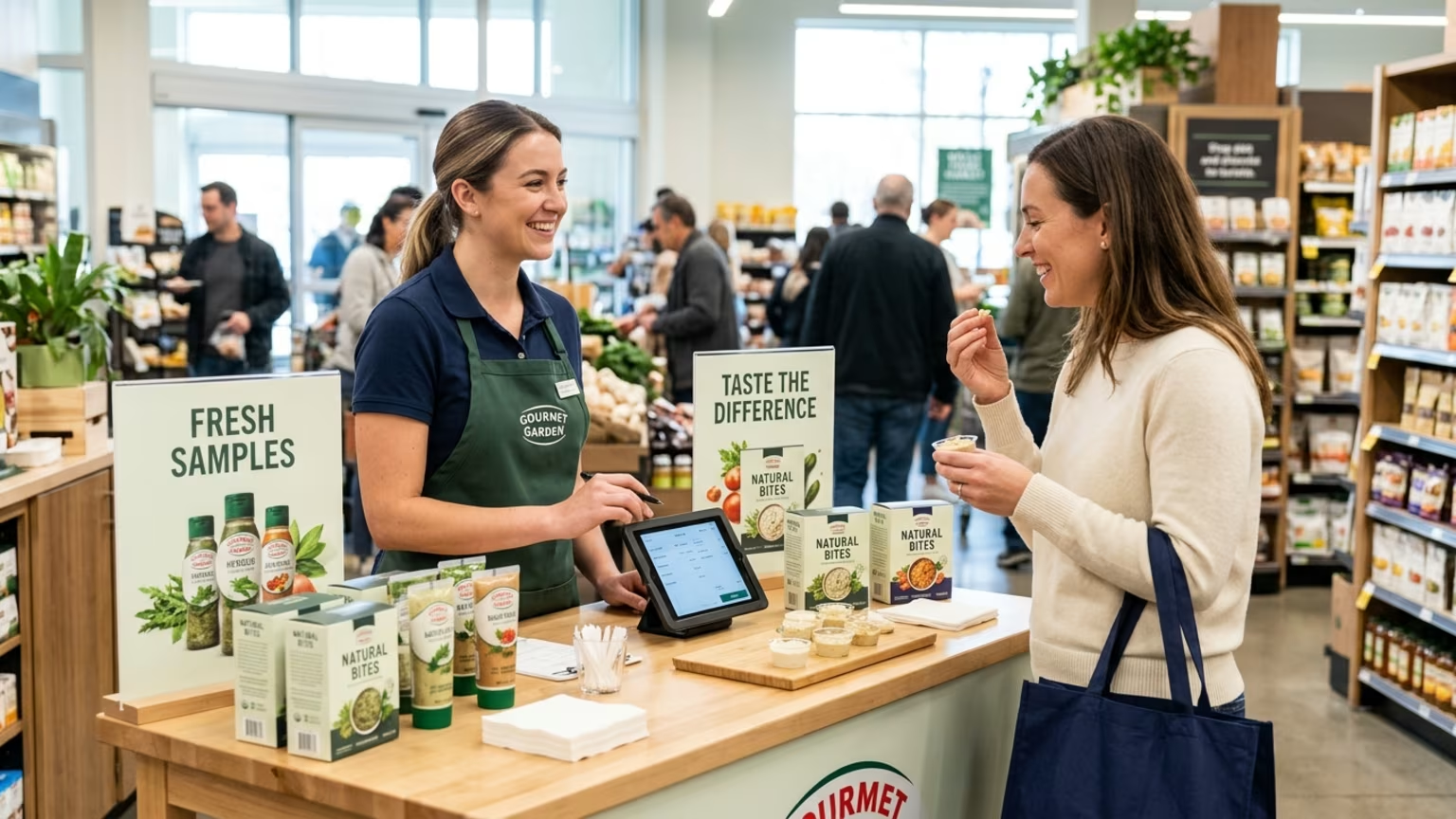
Leading grocers are shifting their budgets toward live tastings and guided product tours. These activations physically stop shoppers and force them to look up. Brands that unify retail media and in-store experiential marketing capture real attention. A multisensory moment creates a lasting impression that digital ads cannot match.
The solution requires a complete shift in shopper marketing philosophy. Brands must stop treating retail networks as purely digital advertising platforms. They need to merge their digital targeting capabilities with live product trials. This hybrid approach bridges the gap between online awareness and physical purchase.
Recent research from The People Platform outlines the blueprint for modern in-store monetization. Retail media experts advise marketers to prioritize placements with high dwell times. The fresh food, snack, and beverage aisles offer the perfect environment for these interactions. Shoppers naturally slow their pace when browsing these exact power departments.
We create experiential marketing programs built to connect emotion with action. Our process blends creativity, strategy, and data to make certain every brand interaction drives measurable results. We craft experiences that engage all five senses, helping people not just see brands, but feel them, turning moments into meaningful business outcomes. This operational discipline is exactly what modern grocers demand from their partners.
Augmented reality is adding another powerful layer to this physical strategy. Shopper marketing case studies from Hovarlay reveal that interactive displays generate massive consumer engagement. Buyers actively participate in the brand story rather than passively viewing a sign. This physical and digital blend drives a substantial uplift in product consideration.
This strategic framework treats the grocery aisle as a performance marketing channel. First-party retailer data informs exactly where and when the activation should happen. Brands pre-target the locations that show the highest concentration of their ideal buyers. The sampling experience is tailored to match the exact audience profile of each store.
Launching a national sampling tour requires military-grade operational precision. Poorly planned field events quickly become expensive logistical nightmares for brand directors. Brands must adopt a standardized approach to scale their field operations effectively. Every step needs careful coordination to protect the brand image and secure retailer trust.
Executing a massive program demands an operator mindset from the very beginning. A single missing health permit can ruin an entire weekend of planned events. Marketing teams must treat field operations with the same rigor as digital ad buying. Consistency across every single store is the ultimate goal of any great campaign.
Marketers should follow a strict step-by-step playbook to maintain quality control. This systematic guide prevents the common failures associated with live brand activations.
Chief Financial Officers demand clear evidence that marketing investments actually generate revenue. The era of tracking fuzzy metrics like smiles and high-fives is officially over. Modern grocery environments now offer robust tools for strict closed-loop measurement. Brands can directly tie their physical activations to immediate and long-term sales lifts.
You must track both lead and lag metrics to prove Return on Investment. Lead metrics show how well the local activation performs in real time. These indicators help field managers adjust their approach on the fly. Lag metrics reveal the final financial impact weeks after the event concludes.
The most critical lead metrics include daily sample distribution and average dwell time. High sample volumes indicate that the physical display is effectively capturing attention. Dwell time measures how long shoppers linger at the booth to ask questions. Retail studies show longer dwell times strongly correlate with significantly larger basket sizes.
Lag metrics focus entirely on incremental unit movement and long-term brand recall. Analysts compare the activated stores against a carefully matched control group. This test methodology isolates the true impact of the live retail demonstration. Data experts at Osmos report that targeted campaigns often yield a sixfold Return on Investment.
The best brand activation services build these measurement frameworks before the tour begins. Clear data visualization helps marketing directors optimize their budgets across different retail partners. Teams can quickly identify which product variations generate the highest trial rates. This rigorous analysis turns fleeting consumer interactions into a highly reliable sales pipeline.
The most successful grocers already treat their aisles as experiential retail destinations. The U.S. Chamber of Commerce notes that retailers like Aldi use offline moments perfectly. They deploy exciting pop-ups and live tastings to build deep community connections. These strategic activations convert everyday micro-indulgences into highly anticipated repeat store visits.
This strategy turns standard replenishment trips into exciting product interaction missions. Industry experts refer to this exact phenomenon as modern grocery tourism. Shoppers actively seek out these locations just to see what new items are sampling. They put their smartphones away to fully engage with the physical store environment.
Trader Joe’s has built a massive retail empire on this exact premise. Their constant rotation of new items demands physical participation from their shoppers. Consumers trust the live recommendations from friendly store employees and sample stations. The emotional connection created by this hands-on approach is incredibly powerful and profitable.
Mid-market consumer packaged goods brands can replicate this success in any retail environment. You do not need to own the actual store to create a memorable brand day. You just need a focused field strategy and a highly reliable execution partner. A single well-run retail pop-up can completely change how local shoppers perceive your product.
To learn more about experiential marketing agencies, marketers should look for teams that prioritize hard data. A strong agency will link their field operations directly to your main sales goals.
The grocery aisle remains the ultimate proving ground for any new physical product. Digital ads might secure a spot on a digital shopping list. The final purchase decision almost always happens right there in the store. A shopper looking strictly down at their phone is a massive missed opportunity.
You must give the consumer a compelling reason to look up and interact. Shopper marketing studies continually prove that experiential activations deliver serious financial results. Combining first-party retailer data with multisensory product trials creates an unbeatable marketing formula. Marketers can now track every live interaction straight to the company bottom line.
It is time to treat physical events as true performance marketing channels. Think back to that distracted shopper pushing a cart blindly through the aisles. A bright digital screen will not break their deep phone trance. The smell of a fresh sample and a friendly greeting will stop them instantly.
Book a strategy call with our team to turn your next retail rollout into a measurable success. We will help you build a program that captures attention and drives real volume.

30 Years Experiential & Retail Activation Partner for CPG & Beverage Brands | Multi-Market Demos, Roadshows & Costco/Club Programs That Actually Sell