Robbie Thain
Founder, CEO

The FSA found 28.5% non-compliance in sampled foods. Learn how CPG brands can tighten retail demo hygiene, train staff, and secure their sales pipeline.
Recent retail market inspections revealed that 28.5 percent of 800 sampled food products failed to meet strict compliance standards, according to research shared by the Food Standards Agency. This data sends a clear warning to marketing operators managing physical activations. Brands must now enforce rigorous hygiene and labeling protocols or risk losing both retailer trust and consumer confidence. Marketing leaders will learn how to systemize field training to protect brand reputation and continue driving measurable retail pipeline.
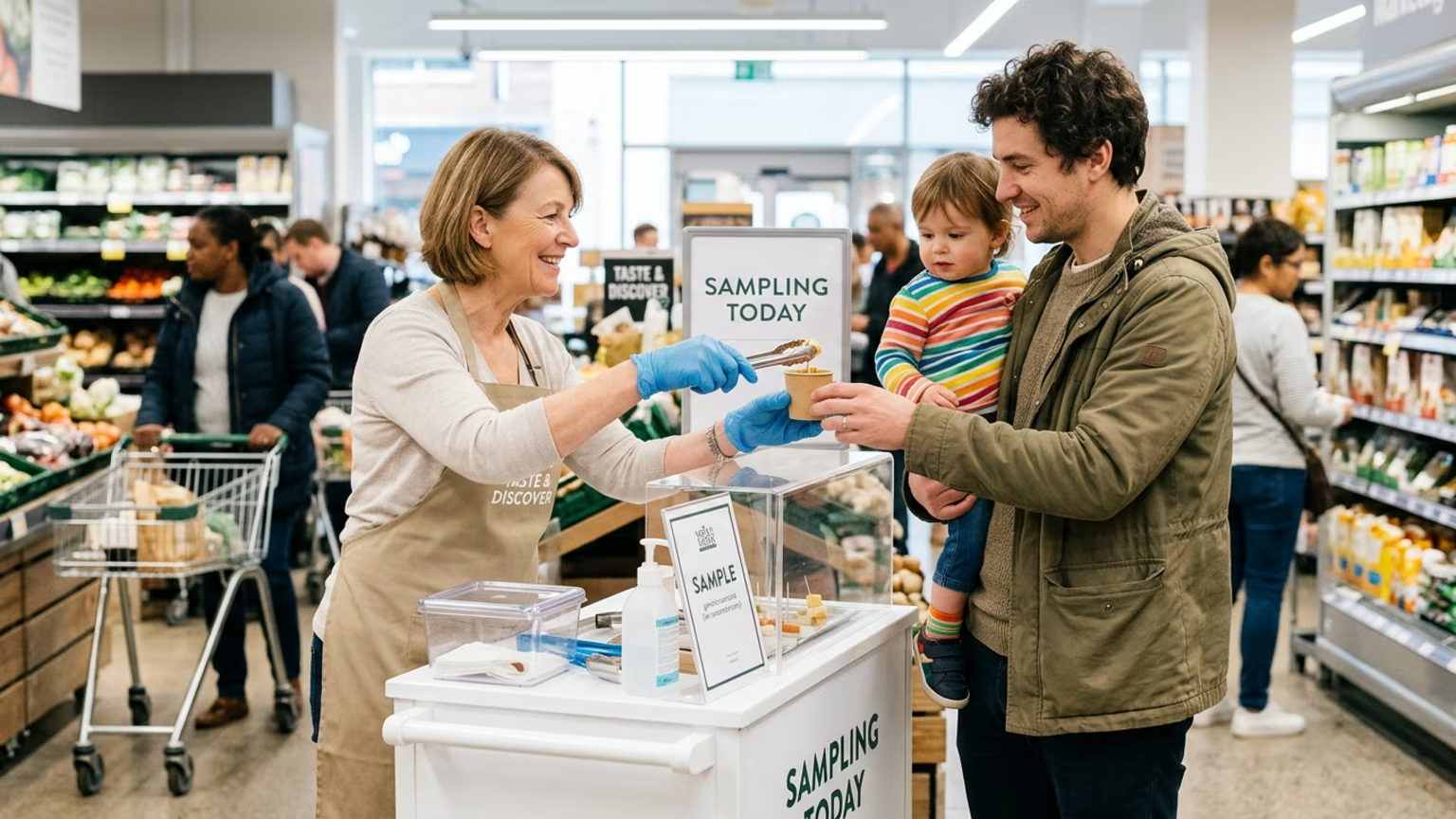
It is a Saturday afternoon at a high traffic grocery location. Your brand ambassador is managing a steady stream of shoppers eager to try a newly launched snack product. The printed allergen warning card slips behind a display, and a shopper asks a detailed question about gluten cross contamination. The ambassador hesitates, gives a vague answer, and serves a sample without absolute certainty.
Multiply this exact scenario across fifty retail locations nationwide. When event logistics and staff training break down, a simple product trial becomes a significant liability. Store directors quickly lose patience with disorganized field teams. Brands that run these programs manually often discover these failures weeks later.
This lack of operational control turns an expensive activation into an unmeasured risk. Shoppers expect an immaculate presentation when tasting new items. If the sampling table looks messy or the ambassador seems unsure about basic sanitation rules, potential buyers will walk away entirely. Leaving compliance to chance guarantees inconsistent execution and puts your retail relationships in immediate jeopardy.
You cannot scale an activation program on good intentions and brief talking points alone. To solve this problem systematically, brands need an operator grade framework that treats food safety as the baseline for performance. We specialize in creating retail demos, product sampling programs, and roadshows that bring brands face to face with their audiences. Each program is designed to drive trial, build consumer relationships, and accelerate retail velocity across multiple locations.
The framework starts with standardizing digital compliance checks before any product hits the sample table. Every field staff member must complete verified digital training modules tailored exactly to the product allergen profile. By digitizing these touchpoints, you eliminate the guesswork and create a trackable record of readiness. This proactive approach turns a standard in-store event into a highly controlled brand experience.
Clear communication channels must connect the brand directly to the field staff. Ambassadors need immediate access to updated product specification sheets on their mobile devices. When operators treat compliance as an integrated part of the brand experience, shoppers feel safe trying new products. The entire marketing team must view field sanitation not as an administrative burden but as a primary sales driver.
The gap between corporate planning and field execution often stems from a lack of realistic training scenarios. Marketing teams create beautiful brand guidelines that completely ignore the physical constraints of a busy grocery aisle. Field ambassadors face noisy environments, limited storage space, and constant interruptions from busy shoppers. Your training curriculum must address these exact conditions to be effective.
Relying on basic product summaries will leave your staff entirely unprepared for the actual retail floor. Effective training protocols focus heavily on situational readiness and immediate problem resolution. We build realistic role playing exercises into our ambassador preparation processes. Staff members practice answering difficult questions about cross contamination and food sourcing under pressure.
This hands on preparation guarantees that they project authority and confidence when interacting with cautious consumers. A well trained ambassador does far more than hand out free food. They act as a knowledgeable extension of your brand identity. By investing in comprehensive preparation, you turn a simple sample station into a powerful educational touchpoint.
Turning this strategy into a live event reality requires strict adherence to a documented process. Field marketing managers must give brand ambassadors the exact tools they need to succeed in chaotic retail environments. This playbook outlines the necessary steps to secure consistent compliance across all physical locations.
The ultimate goal of any sampling initiative is generating a solid Return on Investment. You cannot accurately measure that return if poor hygiene or sloppy execution depresses your conversion rates. Tracking the right data points transforms vague event reporting into actionable pipeline visibility. Marketing operators must monitor specific lead and lag metrics to validate their strategy.
Lead metrics provide early warning signals during the execution phase. Track the percentage of pre shift compliance quizzes passed and the on time completion rate of station setup photos. Monitor the ratio of required temperature logs submitted versus shifts worked. These leading indicators tell you if your real world interactions are happening safely before the sales numbers come back.
Lag metrics confirm the overall financial success and retailer impact of your campaign. Measure the direct sales lift at the location during the activation compared to a non event baseline. Track the rate of repeat purchases over the following thirty days using loyalty card data if available. Analyzing these figures alongside your compliance scores proves that disciplined execution drives predictable revenue.
A national snack brand recently struggled with inconsistent demo execution across several major grocery chains. Their field teams were failing to display proper signage, and regional sales managers were fielding complaints from store directors. The brand paused their entire program to implement a rigorous digital compliance checklist. They realized that their previous manual tracking methods were completely inadequate for a national rollout.
They deployed a new system requiring every brand ambassador to log setup photos and allergen details through a mobile platform. Store managers immediately noticed the improved professionalism and strict adherence to sanitation protocols. Ambassadors felt more confident answering detailed customer questions about dietary restrictions. Within two months, the brand restored retailer confidence and saw a measurable increase in unit movement during live shifts.
This disciplined pivot saved their retail pipeline and strengthened their market position. The marketing team finally had hard data to present to their retail buyers during quarterly reviews. Proving compliance capabilities gave them leverage to secure premium floor space in new geographic markets.
The 28.5 percent failure rate in recent compliance checks is not just a regulatory statistic. It is a direct reflection of the operational vulnerabilities hiding inside physical retail activations. When you equip your brand ambassadors with strict protocols, the Saturday afternoon rush transforms from a liability into a highly profitable interaction. Managing large scale food demos requires relentless attention to detail and a commitment to operational excellence.
Shopper trust is difficult to earn and incredibly easy to lose in a live event setting. Marketing leaders who prioritize rigorous field execution will consistently outperform competitors who rely on hope and guesswork. By implementing a systematic approach to compliance and staff training, your brand can scale its sampling programs with absolute confidence.
If you are ready to build a high converting sampling program that protects your brand, you need an expert operator. Book a strategy call with our team to start planning your next compliant retail activation.

30 Years Experiential & Retail Activation Partner for CPG & Beverage Brands | Multi-Market Demos, Roadshows & Costco/Club Programs That Actually Sell