Robbie Thain
Founder, CEO

Learn how a major U.S. grocer uses AI scheduling and point of sale data to optimize retail demos, increase CPG trial rates, and boost measurable sales.
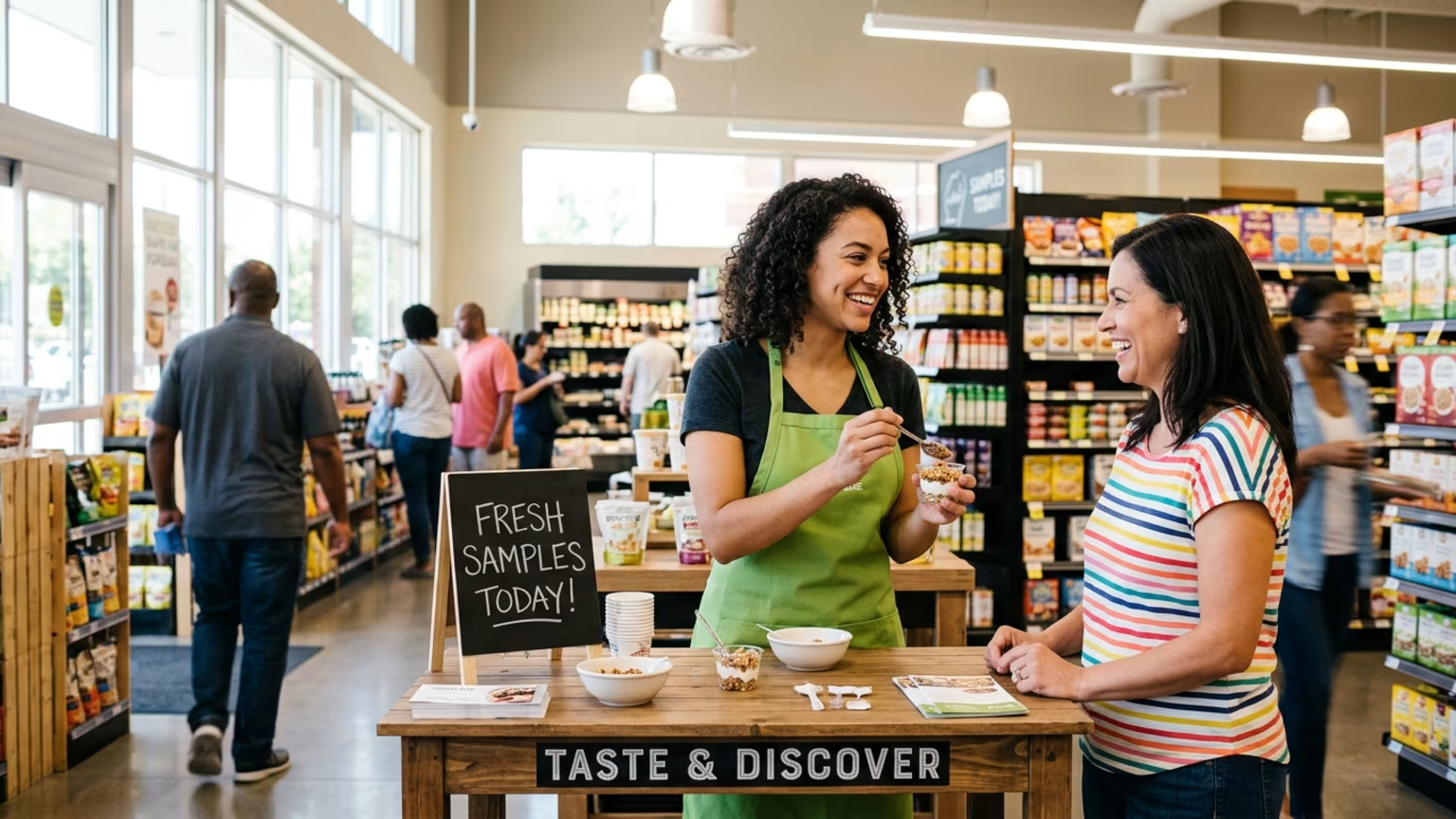
Most retail sampling campaigns are planned on hope and executed in the dark. When brands align their demo schedules with point of sale data, trial rates climb and measurable sales follow.
Let us look at a typical Saturday on the grocery floor. A premium beverage brand sets up a beautiful sampling station near the front doors at nine in the morning. The ambassador is fully trained, the ice is fresh, and the presentation is perfect. The only problem is that the target demographic for this particular energy drink does not shop until three in the afternoon.
This timing mismatch happens constantly across the field marketing industry. Brands spend thousands on logistics, staffing, and product allocation based on generic weekend traffic assumptions. The result is a tired ambassador handing out expensive samples to shoppers who have zero intent to buy the category. Retail marketing teams end up frustrated when the final sales report shows minimal lift.
The operation looks busy to a casual observer, but the actual conversion rate remains entirely flat. Store managers walk by and see cups being handed out. They assume the promotion is working flawlessly. The reality is that the brand is burning through inventory without generating a single new loyal customer.
Bad scheduling creates a massive drain on field marketing budgets over a full fiscal year. You pay hourly wages to staff who are standing in empty aisles. You pay shipping costs to transport demo kits for events that yield no pipeline value. This financial leak forces brands to cut back on total activations rather than fixing the underlying operational flaw.
The solution to this scheduling problem requires a complete shift in methodology. A major regional grocer recently tested an automated scheduling tool to fix this exact issue. This system uses historical point of sale data and foot traffic patterns to dictate when a product actually needs a staffed presence. Instead of guessing, brands can deploy ambassadors precisely when their ideal buyers are walking the aisles.
This systematic approach changes everything about field execution. It removes the emotional component of selecting shift times and relies purely on mathematics. If the data shows that a new organic pasta sauce sells best between four and seven on Thursdays, that is when the demo happens. This precision guarantees that every dollar spent on staffing goes toward the highest probability of conversion.
We have executed over 1000 campaigns across all 50 states, bringing brands to life in every major U.S. market. From retail demos in Seattle to roadshows in Miami and events in Honolulu, our teams activate brands wherever our clients' audiences are located. Through these thousands of activations, we see firsthand that timing is just as critical as the product itself. When you match your physical footprint to actual consumer behavior, you stop hoping for foot traffic and start capturing real demand.
Adopting a data driven model forces marketing teams to abandon their traditional playbooks. You no longer book shifts based on ambassador availability or generic store hours. The algorithm looks at category velocity, local store demographics, and even seasonal purchasing trends. This level of insight allows a beverage company to sample heavy stouts on cold evenings and crisp seltzers during sunny afternoon peaks.
The mathematical approach creates a predictable pipeline for field marketing leaders. You can forecast your exact return on spend before a single sample cup is poured. This predictability changes the conversation with retail buyers during annual planning meetings. When you promise a specific lift based on algorithmic scheduling, buyers will grant you prime floor space without hesitation.
Transitioning from generic scheduling to a data backed model requires strict operational discipline. You cannot just buy a software tool and expect it to fix bad field management. The process relies on a tight alignment between retailer data, field marketing leaders, and the local brand ambassadors. Every stakeholder must understand the new rules of engagement.
Here is the exact framework to run this strategy in a live retail environment:
This framework shifts your entire operation from a passive presence to an active sales engine. Your staff will experience shorter but vastly more productive shifts on the floor. This intensity requires a different type of training. Brand ambassadors must be prepared to deliver their pitch rapidly and close sales in a crowded aisle.
If your current execution feels fragmented and lacks this level of precision, it might be time to rethink your approach. You can easily book a strategy call with our team to map out a more effective deployment model.
A smarter schedule demands a smarter approach to measurement. You need to establish metrics that prove your new timing strategy actually works. The focus must shift from counting total interactions to measuring the efficiency of those interactions. This means tracking both the leading indicators of engagement and the lagging indicators of revenue.
The most critical lead metrics center on immediate consumer behavior during the active shift. You should monitor the sample conversion rate, which measures how many passing shoppers accept a trial. You must track the active engagement duration to see if shoppers are actually listening to the brand message. High engagement during these optimized windows proves that the scheduling model successfully targeted the right demographic.
Another critical lead metric is the product depletion rate relative to active foot traffic. This number tells you exactly how fast your samples are moving during a targeted rush hour. If the depletion rate drops despite high traffic, your messaging or product presentation might need immediate adjustment. Capturing this data in real time allows field managers to correct issues before the shift ends.
Lag metrics will define the Return on Investment for your new scheduling program. The primary lag metric is same day sales lift compared to an average non demo day in that exact store. You must evaluate measuring more than just passing foot traffic by tracking category share growth over the following four weeks. If the scheduling model is accurate, you will see a sustained increase in baseline sales long after the ambassador leaves the floor.
Executives demand this level of granular reporting to justify field marketing budgets. You cannot walk into a board meeting and talk about smiles or basic brand awareness anymore. You must present a clear dashboard showing exactly how an optimized schedule reduced customer acquisition costs. Connecting these precise metrics to broader corporate goals secures long term funding for your experiential programs.
The recent pilot program by a major U.S. grocer provides concrete evidence that this methodology works. They rolled out an advanced sampling optimization tool across a select group of high volume stores. This system tied point of sale data directly to their scheduling calendar for CPG partners. The results immediately validated the shift away from intuitive planning.
Early data from the pilot showed a massive increase in conversion rates for new product launches. By placing staff on the floor exactly when historical data predicted peak interest, brands captured significantly more intent. The grocer recorded stronger overall sell through on promoted items across multiple departments. This proves that initial trials impact long term purchasing when the timing aligns with consumer readiness.
The pilot solved a major pain point for the supply chain teams at these grocery locations. Predictable sampling schedules meant that store managers could order the exact right amount of backup inventory. Brands no longer faced the embarrassment of selling out of a product halfway through a successful shift. Every department stayed perfectly aligned from the warehouse to the sampling table.
Shopper feedback from these pilot locations mirrored the strong quantitative data. Consumers reported feeling less annoyed by aggressive sampling tactics in empty aisles. They appreciated encountering relevant products during their natural shopping routines. This natural alignment creates a more premium brand perception and builds deeper trust with the retail partner.
The success of this pilot sets a new standard for grocery and CPG partnerships moving forward. Retailers will increasingly require brands to use predictive data before approving any in store activations. Brands that refuse to adapt will be relegated to low traffic corners and undesirable time slots. The competitive advantage now belongs entirely to operators who adopt this analytical rigor.
The retail environment is unforgiving to those who rely on outdated habits. When data dictates the schedule, the noise fades, and the actual consumer takes center stage. A quiet floor at noon is no longer a failure, but a calculated pause before the evening rush begins. In the end, the smartest brands know that timing is the unseen architecture of every successful sale.

30 Years Experiential & Retail Activation Partner for CPG & Beverage Brands | Multi-Market Demos, Roadshows & Costco/Club Programs That Actually Sell