Robbie Thain
Founder, CEO

Physical sampling outperforms digital ads for CPG products. Learn how to deploy in-store retail demos to drive trial, secure shelf space, and boost sales.
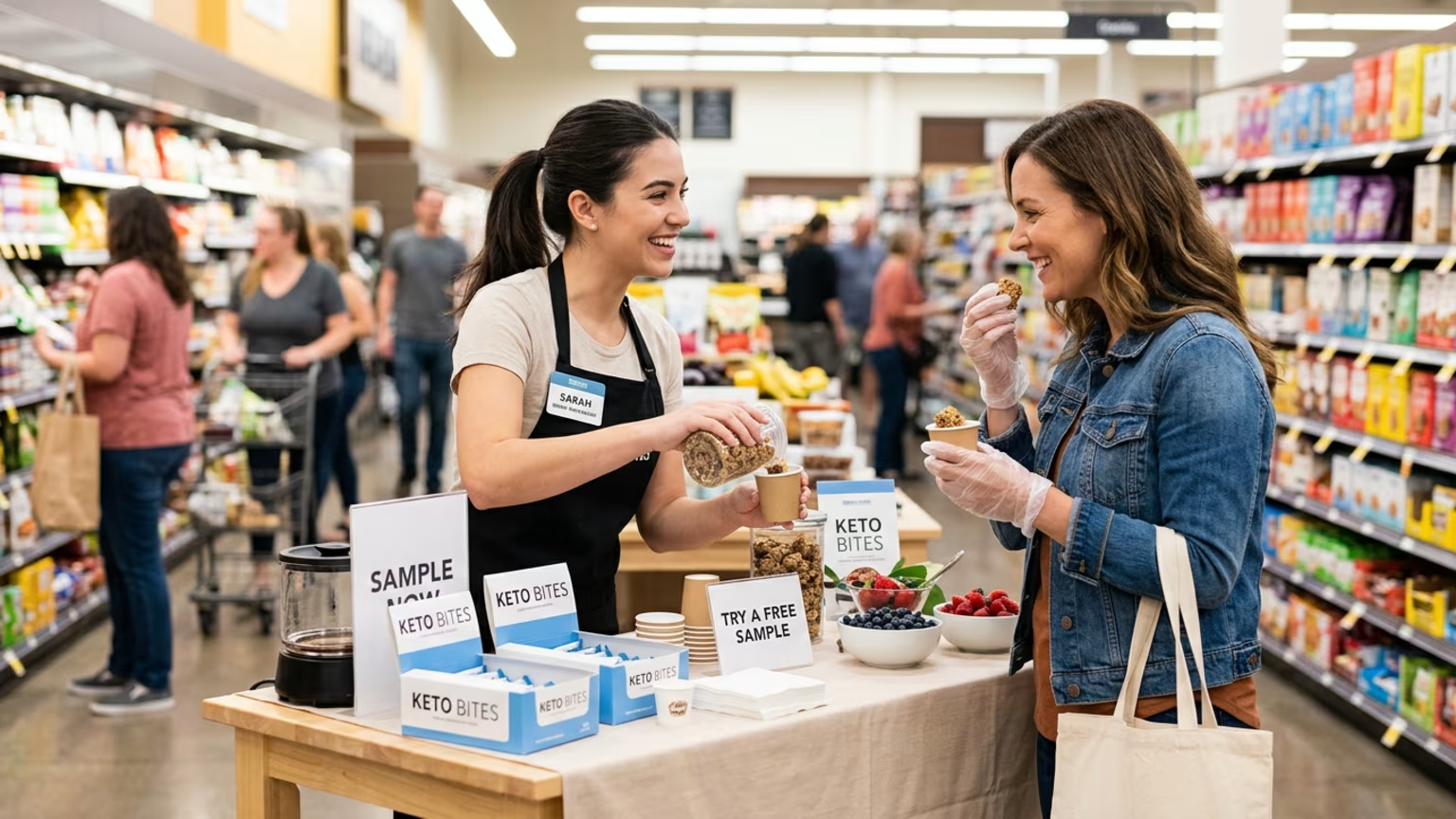
Recent market research confirms that physical experiences at retail deliver unmatched trial and repeat purchase rates for new consumer packaged goods. Brands must deploy structured product sampling during the first twelve weeks of a launch to secure shelf space and accelerate sales velocity.
The pallets of new functional beverages sit untouched in the back room of a regional grocer. A brand manager stares at a dashboard showing millions of digital impressions but flatline store velocities. The launch window is closing fast. Retail buyers are already asking for a hard reason to keep the product on the shelf.
Many marketing teams pour their entire budgets into social media ads and influencer campaigns. They expect digital awareness to magically translate into physical retail sales. Shoppers walk right past the new product on their weekly grocery run. The disconnect between online hype and real world buying behavior is a massive problem.
New products routinely fail to gain traction in the critical early months. Brands need a reliable way to turn curious onlookers into guaranteed buyers. A beautiful digital campaign cannot overcome the hesitation of a shopper staring at an unfamiliar price tag. You need a physical intervention to change their buying habits on the spot.
Industry analysts report that in store sampling and live demos are among the top three drivers of trial for new innovations. This is particularly true in refrigerated goods, beverages, and snack categories. The first thirteen weeks of a product launch are a critical trial and traction phase. Shoppers need a sensory experience to break their habitual buying patterns.
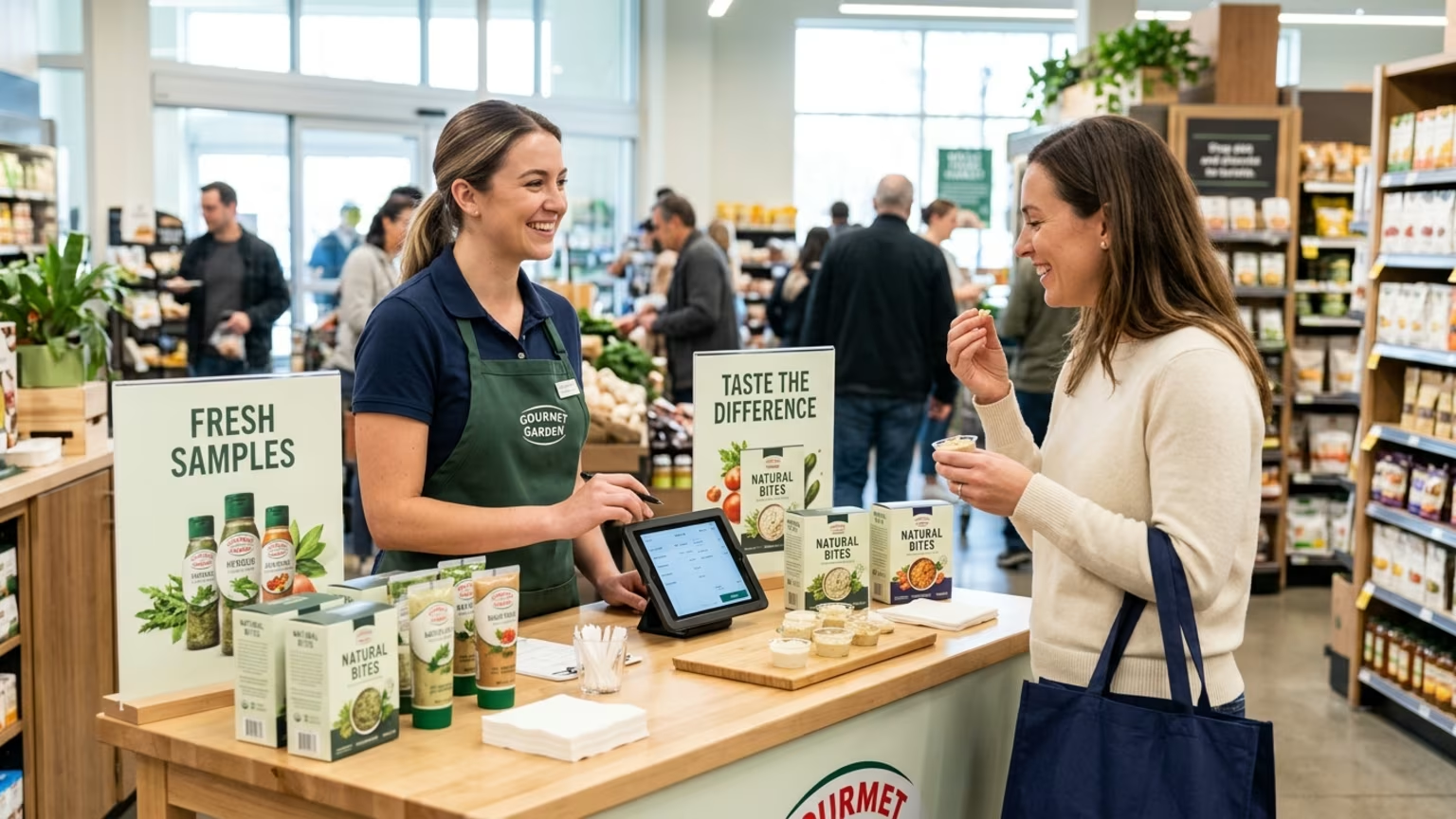
Taste and texture are the main barriers for unknown brands. Circana data consistently shows that physical trial combined with smart placement drives significant incremental sales. In store product demonstrations typically deliver average sales lifts of 150 to 300 percent for featured items during the promotion period. Some grocery snack demos report that up to 25 percent of samplers buy the product on the spot.
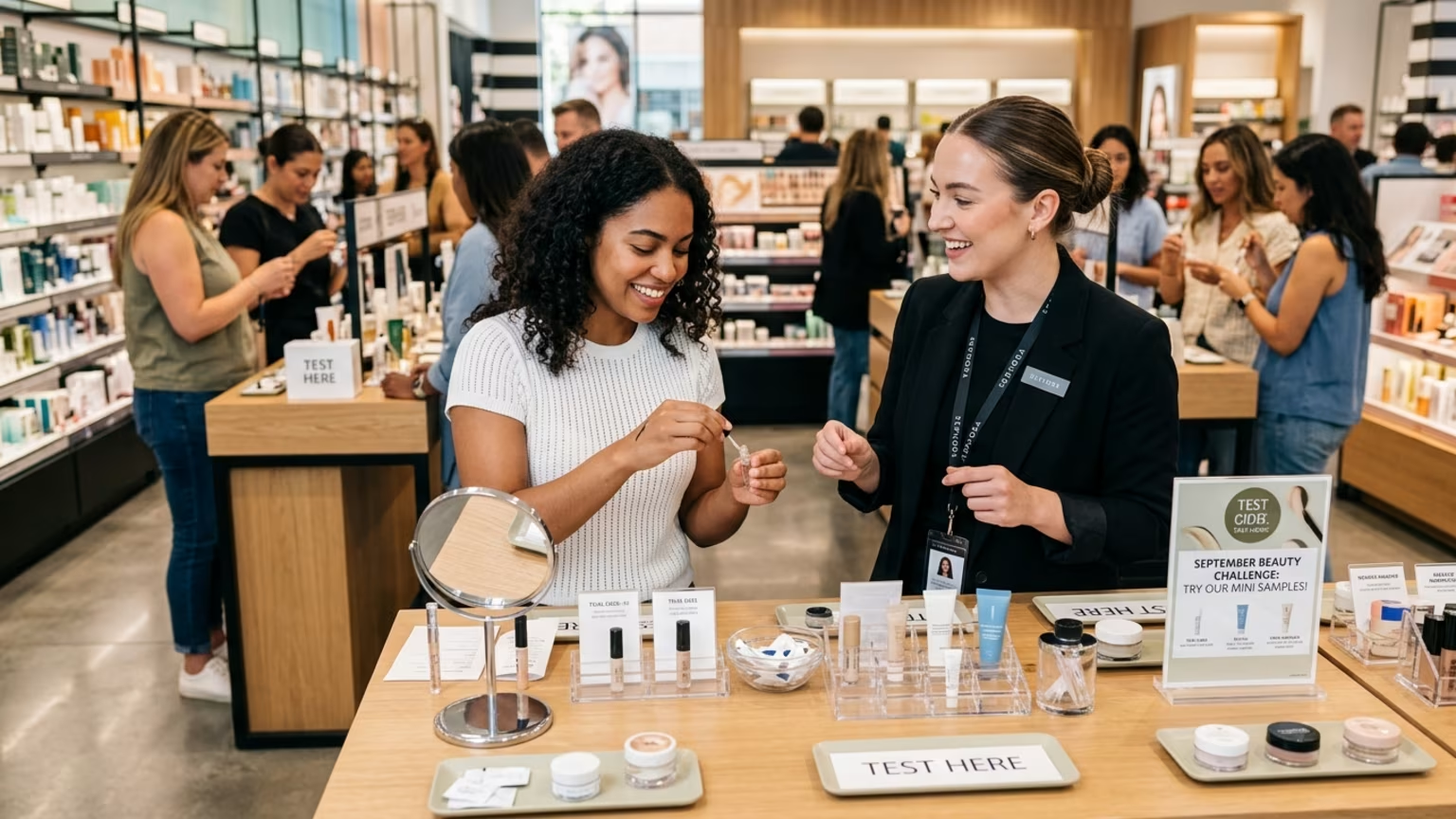
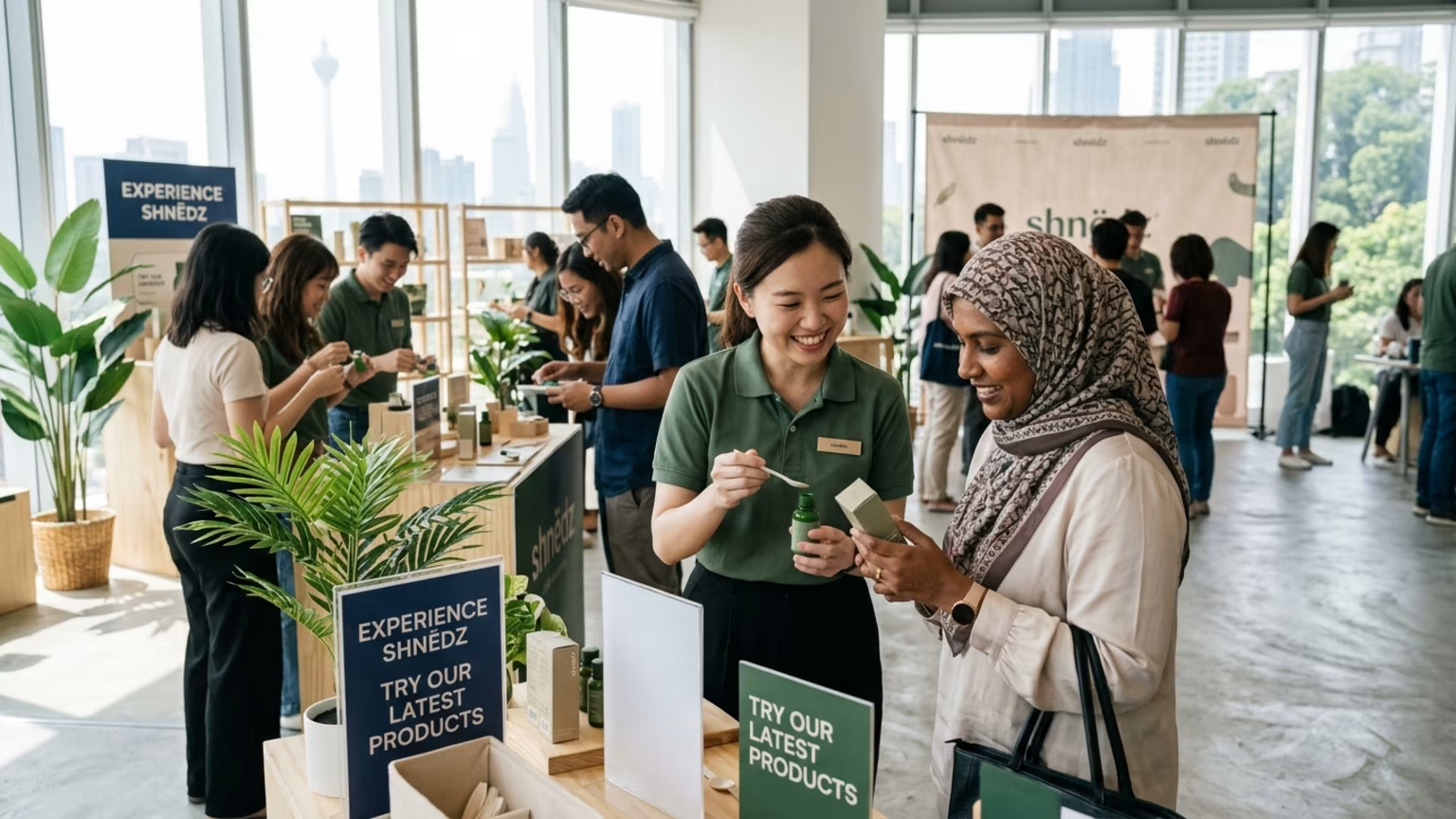
Shoppers who try a product via sampling are significantly more likely to repurchase than those exposed only to media. We specialize in creating retail demos, product sampling programs, and roadshows that bring brands face to face with their audiences. Each program is designed to drive trial, build consumer relationships, and accelerate retail velocity across multiple locations. We help brands choose between retail demos, roadshows, and tours to match their specific launch goals.
The most effective campaigns frontload these physical experiences during the critical launch window. This aggressive approach provides retailers with hard evidence of incrementality. A well executed trial program proves that the product brings new dollars into the category. It shifts the conversation with retail buyers from a defensive plea to a confident negotiation.
Rising media inflation and privacy constraints have eroded the efficiency of performance marketing. Digital campaigns are excellent for broad targeting, but they struggle to close the final gap to purchase. Retailers are putting more pressure on brands to bring physical activation into their stores. Joint business plans increasingly demand in store events and sampling days to support new product listings.
Winning at the shelf requires operator grade discipline and clear processes. A brand cannot just hand out free food and expect a massive Return on Investment. You need a structured playbook to turn a brief interaction into a loyal customer. The goal is measurable conversion.
The execution phase is where many promising campaigns fall apart. Poor staffing, inconsistent brand presentation, and stockouts can ruin the consumer experience. You need a dedicated field management team to oversee the logistics and maintain strict compliance. Every single location must deliver the exact same high quality interaction.
Every field activation needs a detailed run of show document to align all stakeholders. This document outlines the exact talking points, the setup instructions, and the required daily reporting metrics. Brand managers must review these reports daily to catch any operational hiccups before they derail the campaign. Strict oversight turns a chaotic event floor into a highly controlled sales environment.
You must budget for these activations upfront as a core launch line item. Treat experiential marketing as a primary growth engine rather than a secondary thought. Many successful launches allocate up to thirty percent of their activation spend to physical trial. We always recommend that teams book a strategy call early in the planning process to align on objectives.
A successful campaign requires a rigorous framework to measure trial, intent, and actual retail lift. You must track both leading and lagging indicators to justify the marketing spend. Retailers want to see a clear story backed by reliable point of sale data.
Lead metrics provide real time feedback on the health of your activation. Track the total number of samples distributed per day to gauge store traffic and staff efficiency. Monitor the immediate conversion rate by comparing daily unit sales against the number of engaged shoppers. A strong activation should convert 15 to 35 percent of samplers into immediate buyers.
Tracking these numbers allows you to adjust staffing or messaging on the fly. If conversions are low, the team can quickly pivot their pitch or move the sampling station. Lag metrics prove the long term financial viability of your retail program. Look at the baseline units sold per store per week before the event.
Compare that baseline to the sales velocity during the activation and in the weeks following. You must track repeat purchase rates among new buyers acquired during the demo. Brands must rely on loyalty card data and control store comparisons to prove retail sampling return on investment. A proper test design involves comparing fifty demo stores against fifty matched control stores.
You should establish clear benchmarks for success long before the first demo table is set up. Discuss these targets with your retail partners to confirm everyone agrees on what constitutes a winning campaign. A transparent reporting process builds immense trust with key category buyers. They will gladly support future product expansions when you consistently deliver verifiable sales growth.
Modern marketers are tying these sampling metrics directly to retail media networks. This closed loop measurement shows the true incremental revenue generated by the physical activation. When you can prove that every dollar spent on demos yields three dollars in new sales, the budget conversations change entirely. Your Chief Financial Officer will finally see the experiential channel as a predictable revenue driver.
Applying this methodology transforms theoretical data into undeniable revenue. Many established food companies have shifted their focus back to structured in-store sampling to defend their shelf space. These brands know that sensory experiences directly reduce the risk of trying a new formulation. A coordinated blitz across target regions can rapidly shift consumer buying habits.
Consider a recent launch of a premium plant based beverage. The brand faced immense competition from established dairy alternatives and heavy digital noise. They deployed a targeted roadshow across fifty regional grocery locations during their first three months. The field team focused on pairing the beverage with a popular complementary snack to create a complete occasion.
This tactic drove a massive spike in same day purchases and secured a permanent endcap position. The resulting sales data proved that physical trials created a loyal customer base much faster than digital ads. Retail buyers saw the sustained lift in velocity and immediately expanded the product into two hundred additional stores.
This is the exact operational excellence that turns a fragile product launch into a lasting commercial success. Shoppers want to touch, taste, and experience your brand before they commit their hard earned money. Delivering that physical experience with precision is the ultimate competitive advantage.
Real world consumer engagement remains the most reliable path to securing retail distribution and driving repeat purchases. Stop relying on passive impressions and start putting your product directly into the hands of your future customers. Plan the work, execute with discipline, and measure the results. See you on the floor.

30 Years Experiential & Retail Activation Partner for CPG & Beverage Brands | Multi-Market Demos, Roadshows & Costco/Club Programs That Actually Sell