Robbie Thain
Founder, CEO

Whole Foods Market expands its in-store sampling program to help emerging CPG brands measure post-demo sales lift and turn weekend tastings into retail revenue.
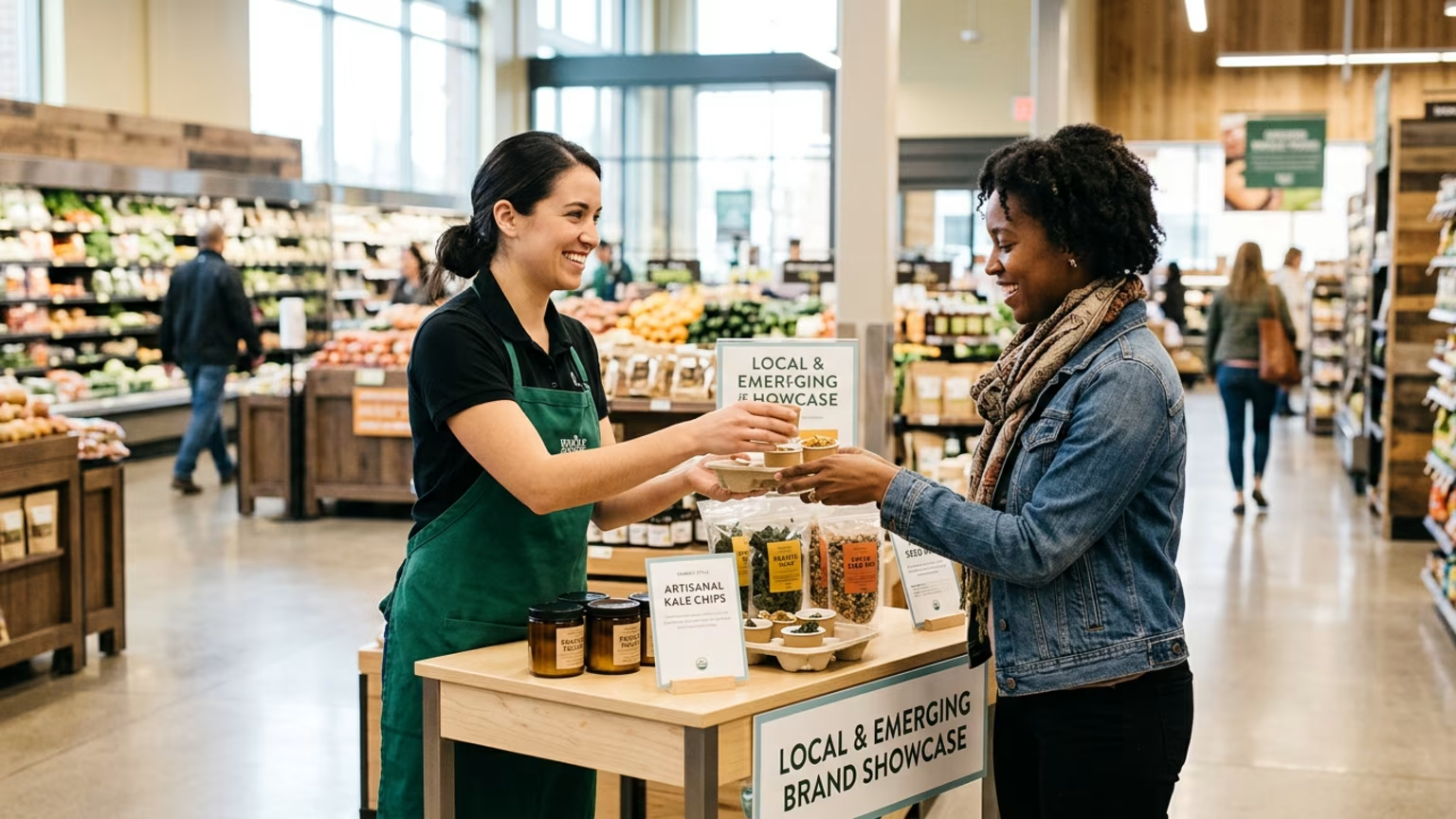
In-store sampling programs consistently drive immediate retail sell-through, giving emerging consumer packaged goods brands the traction they need to secure their shelf space. Whole Foods Market has now expanded its demo initiative to offer targeted weekend blocks and concrete post-demo sales data to prove this trial-to-purchase lift.
Let us look at a typical Saturday on the grocery floor. An emerging snack brand sets up a folding table near the produce section. The brand ambassador is unengaged, the product display looks like an afterthought, and the store manager is busy dealing with weekend crowds. Shoppers happily take a free sample of a better-for-you beverage and walk away.
There is zero connection between that fleeting interaction and the cash register. The field marketing team back at headquarters receives a report stating they handed out four hundred samples. They have no idea if those samples actually drove retail sales or if they just fed hungry browsers. This lack of visibility makes it impossible to justify the expense of retail demonstrations to the executive team.
The problems often start long before the ambassador even arrives at the store. Poor logistics planning leads to damaged sampling booths, missing promotional materials, and delayed product deliveries. A field marketer might show up ready to work, only to find that the necessary inventory is locked in a back room. These minor operational failures compound quickly, turning what should be a profitable weekend into a frustrating waste of resources.
Retail managers despise disorganized product demonstrations as much as the brands do. A messy tasting table creates a hazard in the aisle, frustrates regular shoppers, and reflects poorly on the store itself. Grocers want reliable partners who can execute flawlessly and improve the overall shopper experience. When a brand fails to deliver this level of professionalism, they risk losing their valuable demo slots entirely.
Many brands looking to understand how to turn a first taste into repeat sales struggle with this exact scenario. They spend thousands of dollars on product giveaways without capturing any meaningful data. The staff members on the floor lack the training to close a sale. They act as passive sample distributors instead of active brand advocates.
When you operate without a clear measurement system, your experiential budget drains quickly. The lack of standardized reporting leaves marketing directors guessing about their field performance. You cannot scale an operation that relies entirely on hope and unverified foot traffic. This disconnected approach is exactly why the new Whole Foods data-sharing initiative changes the entire dynamic of retail marketing.
The new Whole Foods initiative gives suppliers access to post-demo sales performance data. To capitalize on this information, brands must treat their in-store sampling as a disciplined operational mission. You can no longer rely on casual marketing tactics. This new environment requires a strategy that connects the emotional appeal of a product tasting with rigid data capture.
Whole Foods Market focuses this new initiative strictly on emerging better-for-you snacks and beverages. These categories thrive on trial and new experiences. A consumer might hesitate to buy a premium functional beverage without tasting it first. When a brand provides a guided sampling experience, that hesitation disappears completely.
Your strategy must prioritize precise logistics alongside creative engagement. You need a dedicated operations team to handle the physical storage, shipping, and delivery of your event gear. When your ambassador arrives at the grocery store, they should focus entirely on the consumer. They should not waste their morning tracking down a missing pallet of sample cups.
We understand this delicate balance deeply. We create experiential marketing programs built to connect emotion with action. Our process blends creativity, strategy, and data to guarantee every brand interaction drives measurable results. We craft experiences that engage all five senses.
This sensory engagement helps people feel the brand rather than just see it. This deep emotional connection turns brief moments into meaningful business outcomes. By aligning our approach with the new data-sharing capabilities from Whole Foods, we give brands total clarity on their Return on Investment. We treat every tasting block as a specialized activation that demands operational excellence.
Brands that run mobile pop-up tours and roadshows for retail expansion know that consistent execution is the only path to predictable growth. You must build a framework that accounts for inventory management, ambassador training, and live reporting. The goal is to move the consumer from curiosity to transaction in a matter of seconds. When you combine a highly trained field team with retailer-provided sales data, you create a powerful engine for revenue generation.
Winning on the floor requires more than just showing up with free snacks. You need a step-by-step guide to turn those new weekend demo blocks into hard sales. You must execute this playbook with absolute precision to maximize your field marketing spend.
You must audit the store inventory thoroughly before the activation begins. Verify that the retailer has enough product on the shelf to support a massive surge in demand. You will lose the sale if the customer walks to an empty shelf after a great tasting experience. An empty shelf turns a successful demonstration into a frustrating consumer experience.
Your field staff must know the core benefits of the product inside and out. They need to understand how to overcome common objections about price or taste. The team should memorize a short, punchy script that highlights exactly what makes the item unique. A confident brand ambassador can easily turn a skeptical shopper into a paying customer.
You have to control the traffic flow around your tasting station. Position your setup where shoppers naturally slow down, such as endcaps or transition zones. You want to intercept them smoothly without blocking the main grocery aisles. A clean, organized presentation immediately builds trust with the approaching consumer.
Every interaction must include a clear, direct call to action. Tell the consumer exactly which aisle the product is located in to prompt an immediate purchase. Hand them a physical coupon to lower the financial barrier for their first trial. The goal is to move the product off the shelf right then and there.
You must log every single conversation, sample distributed, and shopper reaction during the event. This detailed logging allows you to compare your field numbers against the provided sales data later. Use a mobile CRM tool to keep your field reports organized, accessible, and accurate. Clean data capture separates professional campaigns from amateur sampling efforts.
With Whole Foods sharing post-demo performance, your measurement strategy must be razor sharp. You have to track the exact lead and lag metrics that validate your field marketing spend. Brands need a clear system detailing how to quantify sales lift to survive in a strict retail environment.
Lead metrics focus on the immediate activity happening at the tasting station. You should monitor total samples distributed, the number of deep conversations held, and the hourly engagement rate. These numbers tell you if your ambassadors are actively working the floor or just standing around. High sample distribution numbers mean nothing if the engagement rate remains low.
You must track the sentiment of the shopper feedback in real time. Do they find the product too sweet, too salty, or perfectly balanced? This qualitative lead metric helps your product development team refine future offerings. Capturing this feedback instantly gives your brand a massive competitive advantage.
Lag metrics reveal the actual business impact of your campaign. You must track same-day sales lift, the week-over-week revenue growth at that specific location, and the trial-to-purchase conversion rate. When you merge your lead metrics with the lag data from the retailer, you get a complete picture of your success.
Another critical lag metric is the halo effect on your wider product portfolio. A consumer might try a new snack flavor at the table and decide to buy two other flavors. Tracking this cross-selling behavior provides a much deeper understanding of your true Return on Investment. Whole Foods sharing post-demo data makes this level of analysis possible for emerging suppliers.
You should examine the retention rate over a thirty-day period following the demonstration. A successful event does not just spike sales for one single afternoon. It generates loyal customers who return to buy the product during their normal grocery runs. Measuring this long-term impact proves the true value of your experiential marketing investments.
Consider a rising better-for-you beverage brand that struggled to gain traction in regional grocers. They had a great product, but their field teams could never prove that their sampling efforts were moving units. When they shifted to a strictly measured model using weekend demo blocks, everything changed overnight. They decided to overhaul their entire approach to field execution.
They deployed trained ambassadors who used a highly targeted pitch focused on the health benefits of the drink. Instead of passively handing out cups, the staff actively directed shoppers to the beverage aisle to grab a four-pack. By comparing their interaction logs with the store sales data, they proved a massive Return on Investment. They quickly identified which stores yielded the highest conversion rates and aggressively doubled down on those locations.
This strict adherence to data allowed the brand to optimize their staffing schedules and inventory planning. They stopped wasting money on low-performing stores and focused their budget on high-traffic locations. The management team finally had the concrete evidence they needed to justify their experiential marketing budget. This proof of concept paved the way for a successful nationwide rollout.
Brands that execute staffed sampling campaigns to drive retail sales understand the power of this operational discipline. They know that every interaction is a chance to acquire a lifelong customer. When you treat your field marketing as a revenue channel, the results speak for themselves.
That chaotic Saturday on the grocery floor no longer looks like a messy gamble for this brand. It is now a highly controlled environment where every free sample represents a trackable data point. When you apply precision to retail tastings, you stop feeding browsers and start building a profitable pipeline. If you want to refine your field execution, book a strategy call with our team today.

30 Years Experiential & Retail Activation Partner for CPG & Beverage Brands | Multi-Market Demos, Roadshows & Costco/Club Programs That Actually Sell