Robbie Thain
Founder, CEO

Track sales lift from mobile activations with precision. This playbook shows marketing leaders how to capture data and prove experiential ROI to the board.
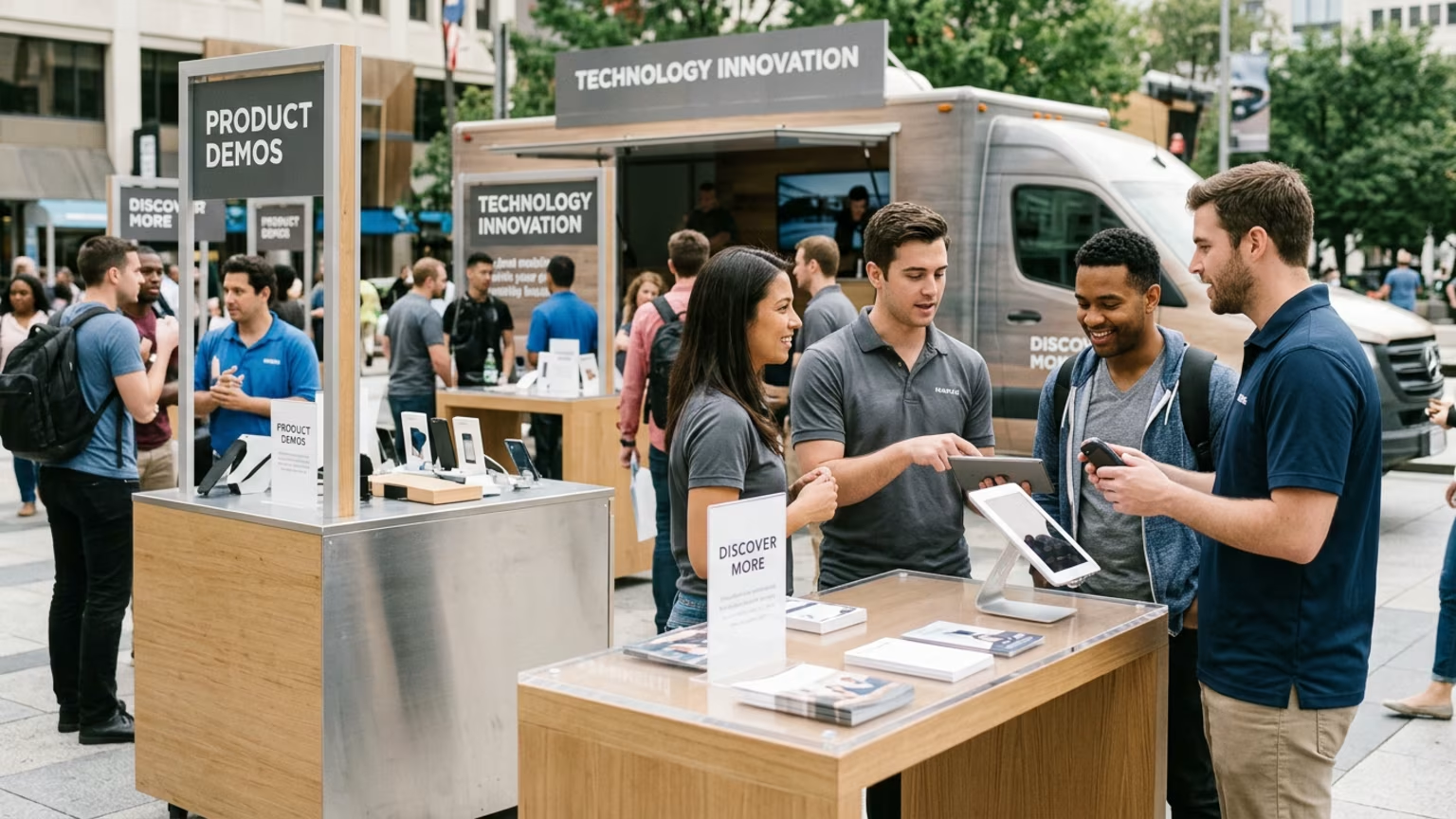
Nearly 75 percent of Fortune 1000 companies increased their experiential marketing budgets in 2025. This massive capital shift demands strict accountability instead of vague brand awareness metrics. This playbook outlines exactly how to capture and report measurable outcomes from field activations. Marketing leaders will learn to track trial-to-purchase conversion and prove concrete retail lift to board-level decision-makers. The era of guessing the impact of your live events is officially over.
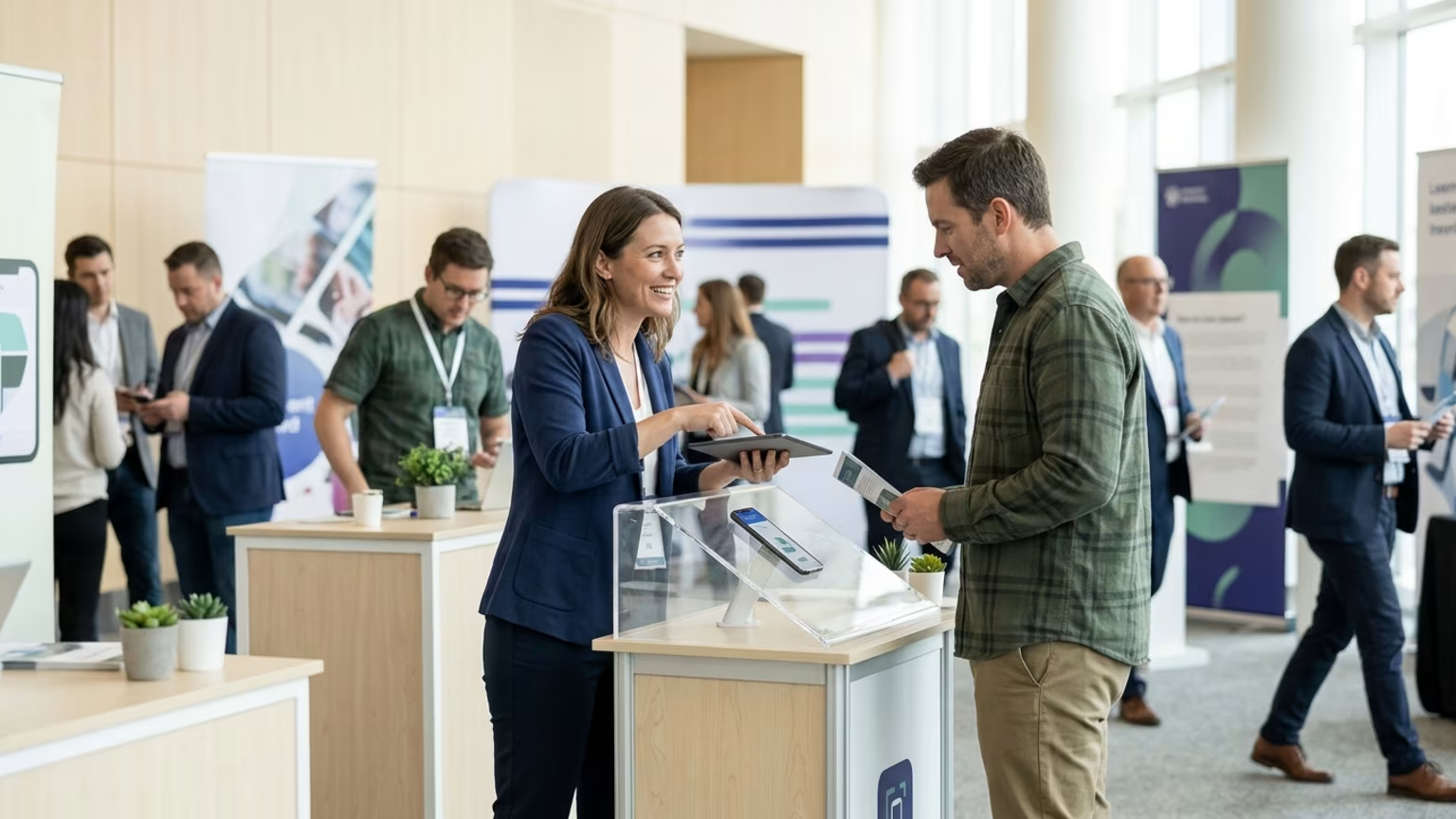
Walk onto any major trade show floor or weekend roadshow setup. You see crowded aisles, long sample lines, and overwhelmed brand ambassadors trying to manage the traffic. Visitors grab products, smile, and vanish into the crowd without leaving a single trace of actionable data. The brand spends hundreds of thousands of dollars on a beautiful physical activation.
The event produces incredible energy but leaves the marketing team with foggy metrics. When Monday morning arrives, the Chief Marketing Officer asks for the Return on Investment. The team presents photos of smiling faces, total sample counts, and estimated foot traffic. Board members frown at these numbers.
They want to see pipeline influence, actual basket lift, and a clear connection between the activation and retail sell-through. Without point-of-sale integration, this busy scene is just expensive theater. A massive sample count means nothing if those samples fail to drive measurable revenue. Executive teams require hard data connecting physical impressions to final cash register rings.
We design mobile activations and roadshows that accelerate consumer trial, build trust, and boost retail velocity during 90-day product launch windows. Our structured approach transforms initial product trial into sustained consumer confidence and retail performance. Proving this requires a rigid framework connecting physical interactions to digital commerce data. Every great activation is actually a first-party data machine.
Brands must connect event platforms directly with customer relationship management software and marketing automation tools. This integration creates a closed-loop system for tracking pipeline influence and deal velocity. Teams need to trace a single consumer from an initial sample to a registered opt-in and finally to a scanned receipt. Without this tracking loop, experiential spending becomes nearly impossible to defend.
According to recent data from Snapbar, physical events generate an 18 to 25 percent uplift in purchase intent compared to digital benchmarks. Proving that uplift requires structured data capture at the exact moment of engagement. The strategy relies on turning passive observers into active participants. Brands must equip brand ambassadors with QR codes, geofenced tracking, and digital rebates.
Tracking foot traffic alone is no longer an acceptable reporting standard. Brands must trace the exact path from a real-world product taste to a measurable retail transaction. Marketers must integrate event tech with point-of-sale data to show executives a clear return over digital spending. This shift in mindset protects marketing budgets during tough economic cycles.
Executing a highly trackable field event requires precise operational discipline. Teams must follow a strict sequence to turn chaotic interactions into structured data points.
Reporting success means separating vanity numbers from true business outcomes. Field marketing teams must track specific lead indicators during the event and lag indicators after the activation. Tracking both sides of the timeline creates a bulletproof reporting structure.
Lead indicators tell you if the activation is functioning properly in real time. First-party data capture rate is the most critical immediate metric. Industry reports from Bizzabo indicate a highly optimized activation captures opt-ins from 65 percent of attendees using interactive tech. You must track the volume of QR scans, digital coupon downloads, and immediate sample redemptions.
Dwell time is another massive factor for activation success. Cognitive studies from Snapbar show design-led experiential content forms neural memories in 0.9 seconds. This translates to 5.5 times faster consumer recall compared to text-heavy digital content. Monitoring how long visitors interact with the booth helps predict future brand recall.
Hourly engagement rates let teams adjust their pitch on the fly. Focusing on dwell time optimization during roadshows directly correlates with higher purchase intent. A steady flow of active participants indicates a healthy activation environment. When dwell time drops, the field manager can immediately change the product messaging.
Lag indicators prove the financial outcome of the campaign in the weeks following the event. Trial-to-purchase conversion is the ultimate proof point for field operations. According to Snapbar case studies, mobile activations and roadshows routinely deliver a 12 to 28 percent conversion rate when tracked accurately. These conversion rates often dwarf standard digital advertising returns.
Basket lift provides another massive data point for consumer packaged goods. Recent retail analytics demonstrate a 15 to 35 percent incremental spend per shopper following localized activations. Point-of-sale uplift measures same-store sales growth compared to baseline weeks. Tracking these metrics turns marketing from a cost center into a proven revenue driver.
Customer lifetime value completes the lag indicator dashboard. A consumer acquired through a high-touch physical activation often shows higher loyalty. Teams can measure repeat purchase rates by tracking the initial activation cohort over six months. This long-term data points to the true compounding value of experiential marketing.
Consider a national beverage brand launching a new sparkling water line across multiple regions. The traditional approach involved sending teams to busy intersections, handing out warm cans, and guessing the impact. The brand shifted to a structured mobile roadshow with strict point-of-sale integration. They parked branded mobile showrooms directly outside key retail partners like Costco.
Ambassadors offered cold samples alongside a direct scan-to-save digital rebate. This activation tracked unique IDs from the initial trial scan straight through to the purchase data. The results replaced foggy assumptions with hard evidence. The integrated approach yielded a 24 percent average sell-through lift at participating retail locations.
Pre and post-activation audits in recent industry benchmarks revealed a 35 percent basket lift among engaged shoppers. The marketing team took these numbers directly to the board. They secured approval for a massive national expansion by proving a clear three dollar return for every dollar spent. Brands that track sales lift metrics during CPG launches consistently outperform their competitors.
This level of tracking completely shifts the relationship between marketing and sales departments. Field marketing transitions from a supporting role into a direct driver of retail revenue. Store managers actively request these activations outside their doors upon seeing the resulting sales volume. Retail buyers grant better shelf space to brands that prove they can generate this kind of localized demand. Measurement turns a temporary physical footprint into long-term commercial power.
Walk back onto that same trade show floor or busy retail parking lot today. The crowds are still thick, and the energy is still high. The difference is the invisible net of data capturing every meaningful interaction. Brand ambassadors no longer hand out products blindly to passing strangers.
They guide targeted buyers through a measurable path from first taste to final purchase. The chaotic scene transforms into a highly calibrated sales machine. Every smile, sample, and conversation translates into a tracked point of data. You can finally show the executive team exact pipeline influence and concrete retail lift. Stop guessing about your field performance and start proving your impact. Book a strategy call with our team to build your measurement playbook today.

30 Years Experiential & Retail Activation Partner for CPG & Beverage Brands | Multi-Market Demos, Roadshows & Costco/Club Programs That Actually Sell