Robbie Thain
Founder, CEO

Transform street activations into quantifiable pipeline generators. Learn to measure experiential marketing ROI and drive retail sales with point-of-sale data.
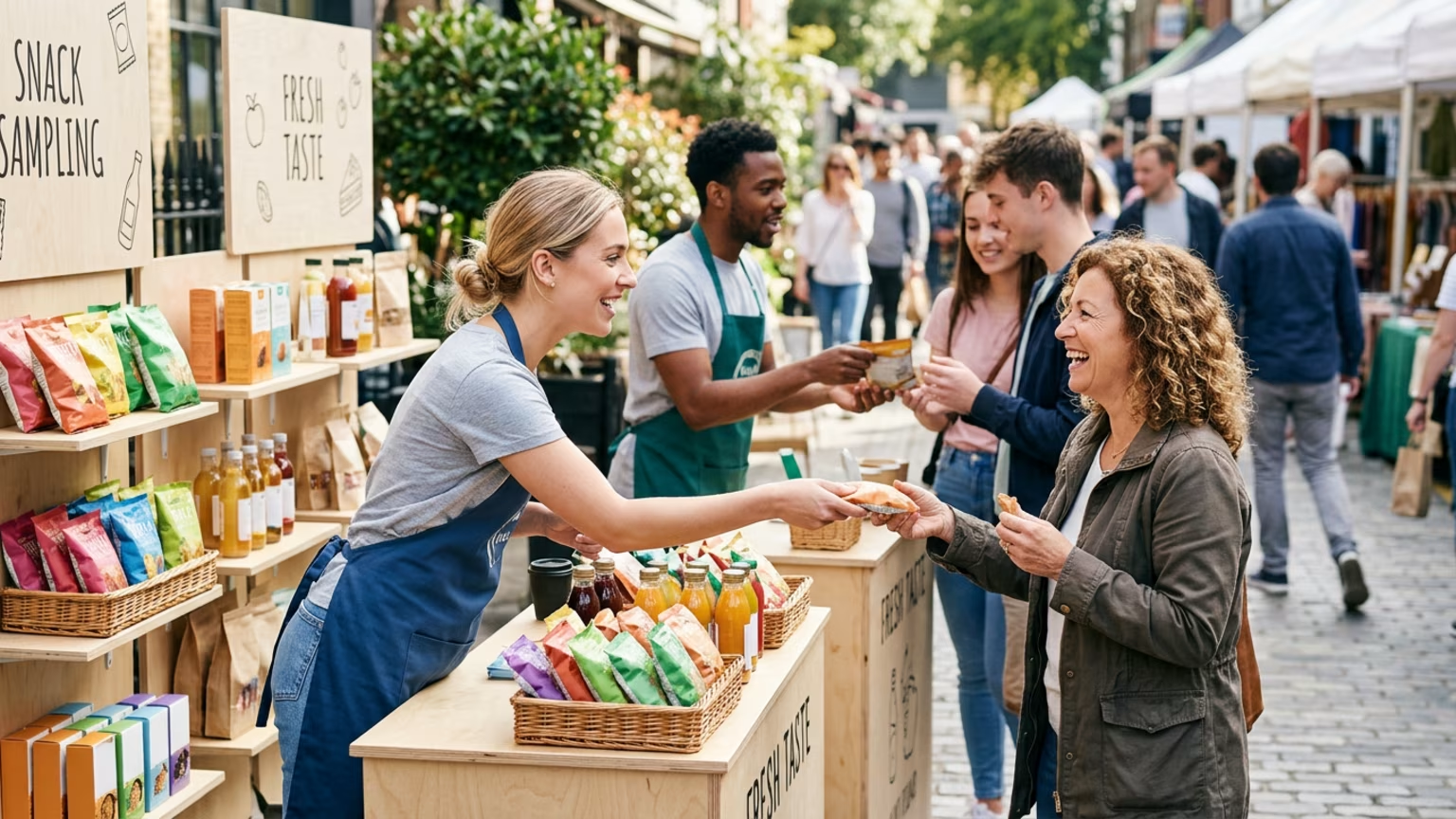
A field marketing manager stands on a hot Chicago pavement holding a clipboard. Thousands of pedestrians take free energy drink samples and walk away smiling. By Monday morning the executive team asks for exact sales figures. The manager stares at a spreadsheet of raw foot traffic with zero proof of actual retail sell through.
Experiential marketing must move past vanity metrics and operate as a quantifiable pipeline generator for consumer packaged goods. By integrating physical activations with retail data systems you transform live street interactions into undeniable revenue drivers.
We see this scenario play out constantly across the food and beverage industry. Brands deploy enthusiastic ambassadors to hand out product samples near major retail hubs. The crowds look impressive and the energy feels incredible. Executives assume this localized buzz translates directly to immediate shelf sweeps.
The truth hits hard when financial analysts review the monthly numbers. They see massive overhead for permits and staffing but zero attribution to nearby retail movement. High variable costs run between five thousand and twenty thousand dollars per activation. If you cannot track the conversion from a free sample to a scanned barcode the entire effort looks like expensive theater.
Market data shows sixty five percent of consumer packaged goods brands are shifting budget away from digital channels. These companies want to escape extreme promotional fatigue and move money into street level trial programs. Yet nearly half of these brands mandate point of sale proof before releasing those funds. According to modern survey data eighty percent of chief marketing officers dismiss activations entirely without this localized uplift data.
Our team knows the frustration of executing a flawless physical experience only to lose the data battle. Without a clear handoff to retail environments these events produce fog instead of evidence. You need concrete proof that your physical presence influences actual buying behavior. Pure foot traffic metrics correlate to less than a five percent sales impact without clear conversion tracking.
We create experiential marketing programs built to connect emotion with action. Our process blends creativity, strategy, and hard data to make certain every brand interaction drives measurable results. We craft experiences that engage all five senses, helping people not just see brands but feel them. This approach turns fleeting moments into meaningful business outcomes.
The framework relies on a direct link between field operations and retail technology. Every street level interaction must feature a digital bridge to a nearby retail partner. You hand the consumer a physical product alongside a scannable retail code. This creates a closed loop where a sample leads directly to a measurable transaction.
We build these campaigns by matching physical activation zones with high priority retail stores. If your consumer packaged goods brand wants to win at a major retailer you position the street team within a precise radius of those doors. You then pre build promotional shells with those retail partners weeks in advance. The live activation serves strictly as an acquisition engine for that highly targeted promotion.
New technology helps teams predict this financial impact before spending a single dollar. Innovative field operations now use artificial intelligence agents to draft street plans and forecast retail lift. Recent industry analysis shows these advanced tools can automate manual compliance checks and potentially drive an eight hundred basis point margin improvement. This systematic method allows brand activations to drive measurable consumer response straight to the cash register.
Transforming a standard sampling event into a revenue machine requires military grade discipline. You must orchestrate the physical logistics alongside the digital tracking mechanisms. Follow this exact sequence to build a street team campaign that converts foot traffic into verifiable retail momentum.
Following these strict procedural steps guarantees your experiential spending ties directly to a verified transaction. This level of internal rigor helps brands turn live event growth into retail sales with undeniable clarity.
Measuring success requires a total departure from traditional event metrics. Vague impressions hold zero weight in modern boardroom discussions. You must speak the language of finance and focus heavily on Customer Acquisition Cost. According to recent analysis by CFO ProAnalytics modern street teams can lower acquisition costs to twenty five dollars per trial.
This localized strategy beats out heavily saturated digital channels that often demand hundreds of dollars per new user. To prove actual Return on Investment you must track the trial to purchase conversion rate over time. Automotive industry data shows that field activations yield an eighteen percent uplift in test drive bookings when tracked correctly. In the food and snack sector trial rates often hit twelve percent among verified samplers.
Wellness brands deploying these physical tactics see a twenty two percent average increase in aided brand awareness following an event. You calculate your baseline spend and track the corresponding sales uplift over a seven day window. Food and beverage brands using these systems report fifteen to twenty five percent average uplift in nearby retail sell through. The data reveals an average return of over four dollars in incremental sales for every single dollar spent.
Lag metrics tell the rest of the story for your financial stakeholders. You want to see the lifetime value of the consumers acquired through the physical activation. We frequently see a multiplier effect when street teams integrate with retail loyalty applications. Target vendor data indicates that experiential linked promotions outperform digital only efforts by a factor of two point five in unit lift.
You combine these hard numbers into a single dashboard to show exactly how much pipeline the physical event generated. When you present executives with a clear ratio of sales generated per dollar spent the conversation shifts entirely. The ability to measure this data is exactly how experiential leaders connect attention to sales pipeline using undeniable facts.
Consider the recent strategic shift within massive retail environments like Target. The retailer expanded vendor led slots for experiential marketing programs tied directly to multiple purchase offers. Proactive consumer packaged goods brands adapted immediately to this new retail environment. They deployed coordinated street teams near store entrances to drive immediate sell through and capitalize on these open slots.
These brands secured pre built promotional slots within the retailer loyalty application weeks in advance. The brand ambassadors offered product samples and directed consumers to scan a code for an immediate deal. The closed loop tracking provided undeniable evidence of success for the brand managers. Brands running these integrated campaigns reported a strong six percent lift in comparable store sales during the active period.
You must rotate your promotional offers constantly to combat consumer fatigue within your target markets. Executing more than four identical events per quarter often leads to rapidly diminishing returns. You should test new engagement structures quarterly to maintain high conversion rates and protect your retail momentum. Sixty eight percent of your measurable lift will occur within the very first week following the event.
In our experience this level of integration completely changes the conversation with retail buyers. You stop asking them to take a chance on your product and start showing them how you generate localized footfall. When you bring foot traffic that converts into larger basket sizes the retailer views you as an indispensable business partner.
Do not let another physical activation end with vague impression reports and wasted budgets. Book a strategy call today to build a measurement framework that turns your next street campaign into proven retail revenue.

30 Years Experiential & Retail Activation Partner for CPG & Beverage Brands | Multi-Market Demos, Roadshows & Costco/Club Programs That Actually Sell