Robbie Thain
Founder, CEO

Turn chaotic trade show activations into predictable sales pipeline. Learn exact event Return on Investment measurement frameworks for CPG and B2B marketers.
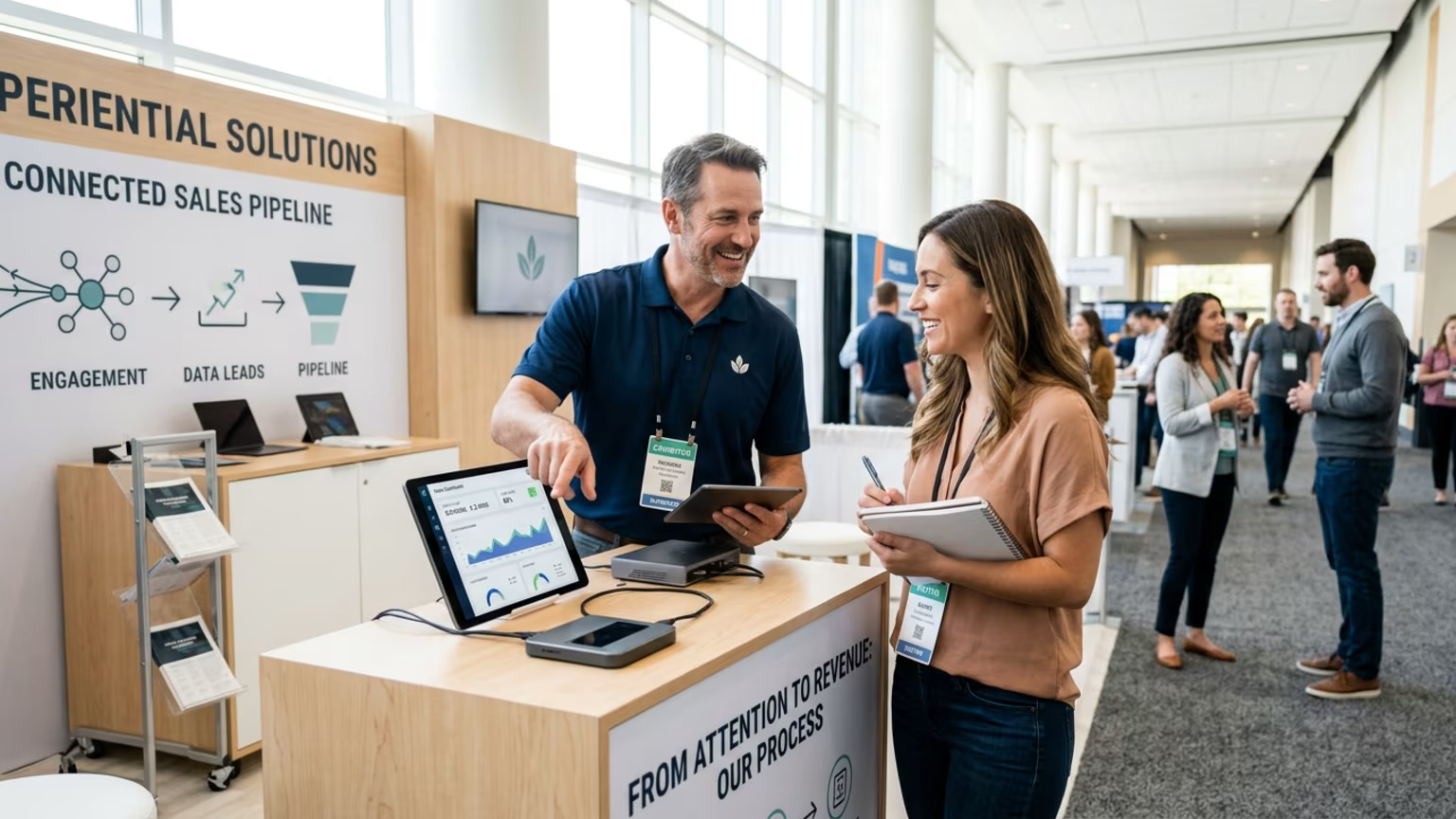
The expo hall lights click on at 6 AM. Your booth staff is still chugging coffee from paper cups. By noon, your team has scanned three hundred badges from people who just wanted free tote bags. You fly home on Sunday with zero clue if any of the chaos actually mattered.
Leading companies are rewriting their job descriptions to treat event marketers as pipeline operators rather than party planners. You will learn how to turn chaotic trade show activations into predictable sales momentum using a strict measurement framework.
Trade show floors breed organized chaos. Your field marketing managers hand out thousands of premium beverage samples to random passersby. The booth is packed with foot traffic from open to close. Your leadership team feels great about the massive crowd gathering around your activation.
Monday morning arrives with a harsh reality check. Sales reps ask for a prioritized list of buyers to call. You hand them a massive, messy spreadsheet of unverified badge scans. According to industry research, only twenty to thirty percent of event leads are sales-qualified without rigorous scoring.
High engagement from the wrong audience simply inflates vanity numbers. A packed booth looks like a wild success on social media. It often produces a beautiful dumpster fire for your CRM manager. Brands desperately need a system that filters out the noise and passes clear intent signals to sales.
The disconnect happens right on the floor. Brand ambassadors are trained to be friendly and approachable. They rarely know how to identify a senior category manager for a major grocery chain. This lack of precision destroys the true value of live consumer events.
The solution requires shifting your focus from isolated metrics to a unified revenue strategy. Recent job postings from top tech and CPG firms highlight this exact pivot. Companies now demand leaders who can build Return on Investment frameworks that track booth interactions straight through to pipeline conversion. The goal is building a predictable revenue engine.
A strong strategy measures event Return on Investment by delivering clear intelligence to your sales team. You must connect the dots between raw attention, buyer intent, and financial outcomes. Research shows that leadership teams care about account growth and pipeline rather than just attendee totals. Moving beyond raw headcounts changes the entire conversation with your executive board.
Replacing single event snapshots with cross-event analytics is a necessary step. One activation provides a limited view of customer behavior. Repeated engagement across multiple touchpoints indicates real momentum. Tracking these trends helps you allocate future budgets to formats that actually perform well.
A framework focused on unified data proves the worth of live activations. Brands that implement cross-event experiential measurement deliver clear intelligence to their internal teams. You can spot the difference between a curious consumer and a serious wholesale buyer. The focus shifts from counting total smiles to tracking verifiable intent signals.
Beverage and automotive brands face unique challenges with tracking physical product trials. Handing out a sample does not map cleanly to digital tracking tools. Without a systematic handoff, retail sell-through numbers get undercounted. Integrating physical engagement with digital lead scoring bridges this critical gap.
Translating this strategy into physical retail environments requires strict operational discipline. You need a standard retail demo checklist that every brand ambassador follows on the floor. Adopting a methodical approach prevents the usual post show data fog.
Following these exact steps keeps your field team aligned with your core sales objectives. If you need help building this operational machine, book a strategy call today. Your next activation should generate measurable pipeline instead of just empty cups. Precision execution sets the standard for modern brand activations.
Proving real impact requires tracking both immediate actions and delayed outcomes. The most frequent mistake is stopping at vanity numbers like total badge scans or cups sampled. You need a layered approach to reporting that satisfies your chief marketing officer. A strict experiential marketing reporting dashboard solves this problem.
Lead metrics tell you if your live activation generated the right type of immediate attention. Track the volume of sales-ready leads captured each day. Monitor company level attendance to see if multiple stakeholders from your target accounts showed up. Measure the percentage of returning attendees to gauge trusted audience growth.
Lag metrics reveal the actual financial success of the campaign over time. Track the conversion rate from booth scan to booked meeting. Monitor the total influenced sales pipeline tied back to the activation. Measure the retail sell-through rate in the target market during the month following your roadshow.
These lagging indicators are notoriously difficult to track perfectly. Deals rarely close immediately after an experiential event. You must build laddered tracking that connects initial intent to follow up actions and final pipeline. Proper data hygiene turns live brand experiences into measurable pipeline assets.
Filtering out the noise from high engagement metrics requires deep analytical discipline. Huge crowds of the wrong audience destroy the integrity of your data. The field marketing manager must apply strict ideal customer profiles to every lead list. Cleaning the data before handing it to sales builds immense cross functional trust.
Consider a regional beverage brand launching a new functional drink at a national trade show. They previously measured success purely by the thousands of cans they gave away. The sales team ignored the resulting lead lists completely. The entire operation was a sunk cost dressed up as marketing.
They shifted to an account based tracking approach for their latest expo presence. The field marketing team flagged repeat attendees from major retail chains right at the tasting station. They categorized visitors as either decision makers, store managers, or general consumers. The new system created absolute clarity across the entire organization.
Sales reps received a list of twenty highly qualified buyers before the show even ended. The brand successfully closed three new regional distribution deals within two months. They connected physical product trial directly to measurable revenue growth. This kind of execution turns a chaotic floor presence into a targeted strike.
The era of unaccountable event spending is completely over. Measure your floor reality with operator grade precision.

30 Years Experiential & Retail Activation Partner for CPG & Beverage Brands | Multi-Market Demos, Roadshows & Costco/Club Programs That Actually Sell