Robbie Thain
Founder, CEO

Recent retail data reveals how live in-store product demonstrations paired with targeted offers drive trial, increase basket size, and boost CPG sales.

Digital impressions will never replace the visceral power of an actual physical taste. Recent retail data analyses prove that live in-store product demonstrations paired with targeted offers remain highly reliable for increasing unit velocity and shopper basket size.
Brands spend heavily on beautiful digital campaigns to support new product launches. Shoppers walk into the grocery store, glance at the new item on the shelf, and walk right past it. Store managers complain about dead inventory sitting untouched under bright lights. Field marketing teams scramble to fix the issue before the retailer pulls the product.
The disconnect happens when marketing teams assume awareness automatically equals a physical trial. Shoppers need a strong physical reason to break their comfortable shopping routine. A bright package design is rarely enough to convince a consumer to risk money on an unproven flavor. They stick to what they know, and they leave the new item behind.
This creates a highly frustrating cycle for ambitious food and beverage companies. The product tastes amazing, but no one stops long enough to try it. Retail buyers demand high sell-through rates to justify the expensive shelf space. The brand needs a reliable method to force a physical interaction in a crowded retail space.
Store aisles are chaotic battlegrounds for consumer attention. Busy shoppers want to get their groceries and get out quickly. They rarely read the small print on back panels or remember the social media ads they saw yesterday. The environment requires a bold intervention to stop them in their tracks.
Retailers are notoriously impatient with slow-moving inventory. If a new beverage or snack fails to hit its velocity targets in the first ninety days, it faces discontinuation. Brands cannot afford to wait for organic discovery to save their retail placements. They must take immediate control of the physical shopping experience to drive trial and clear the shelves.
The solution requires bridging the gap between passive shelf presence and active shopper engagement. Recent industry data analyses show that pairing demonstrations with targeted shelf offers creates a significant sales lift. This targeted approach treats the retail floor as a highly measurable activation channel rather than a storage facility. Teams must intentionally design these live moments to interrupt shopper autopilot.
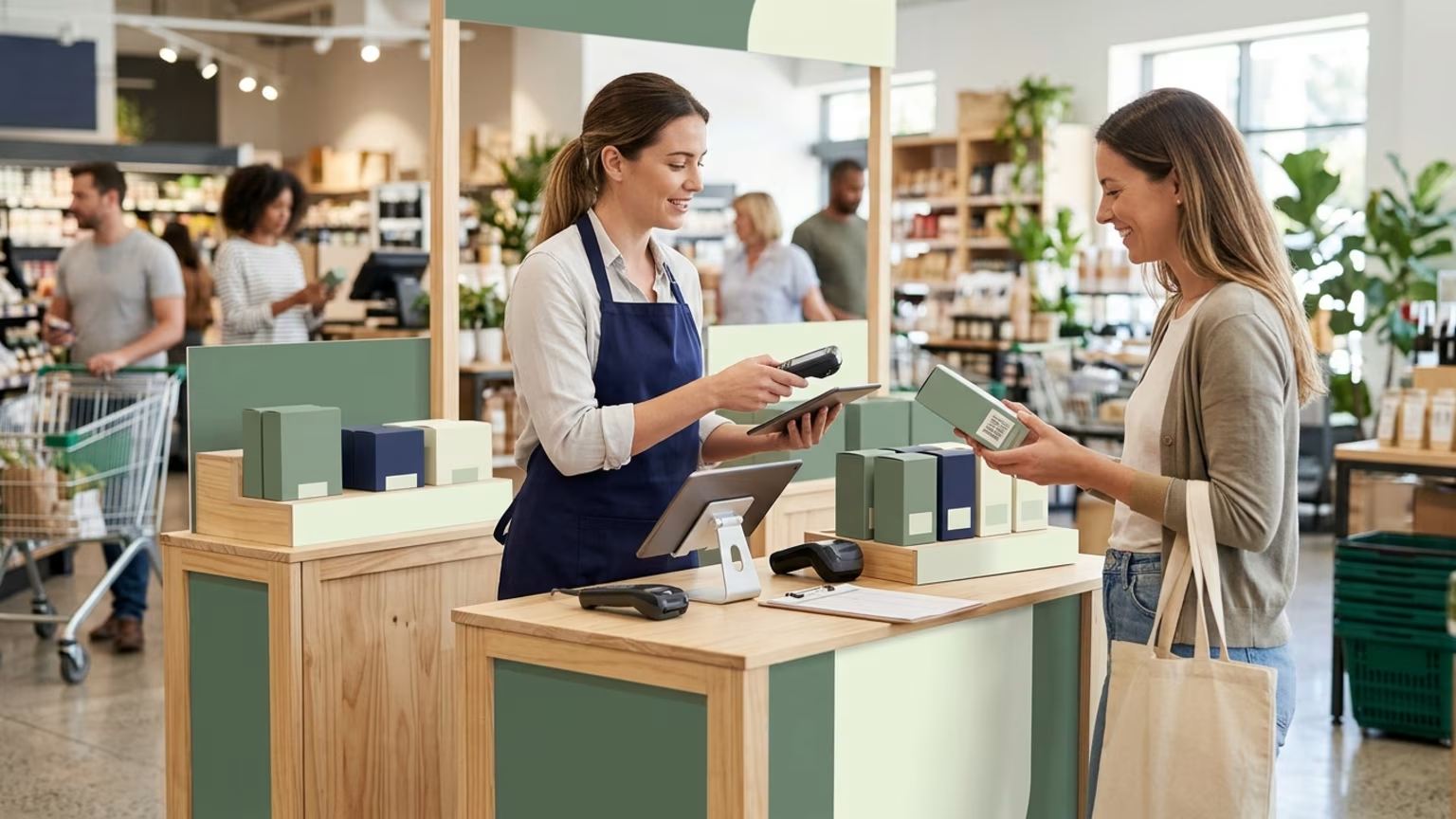
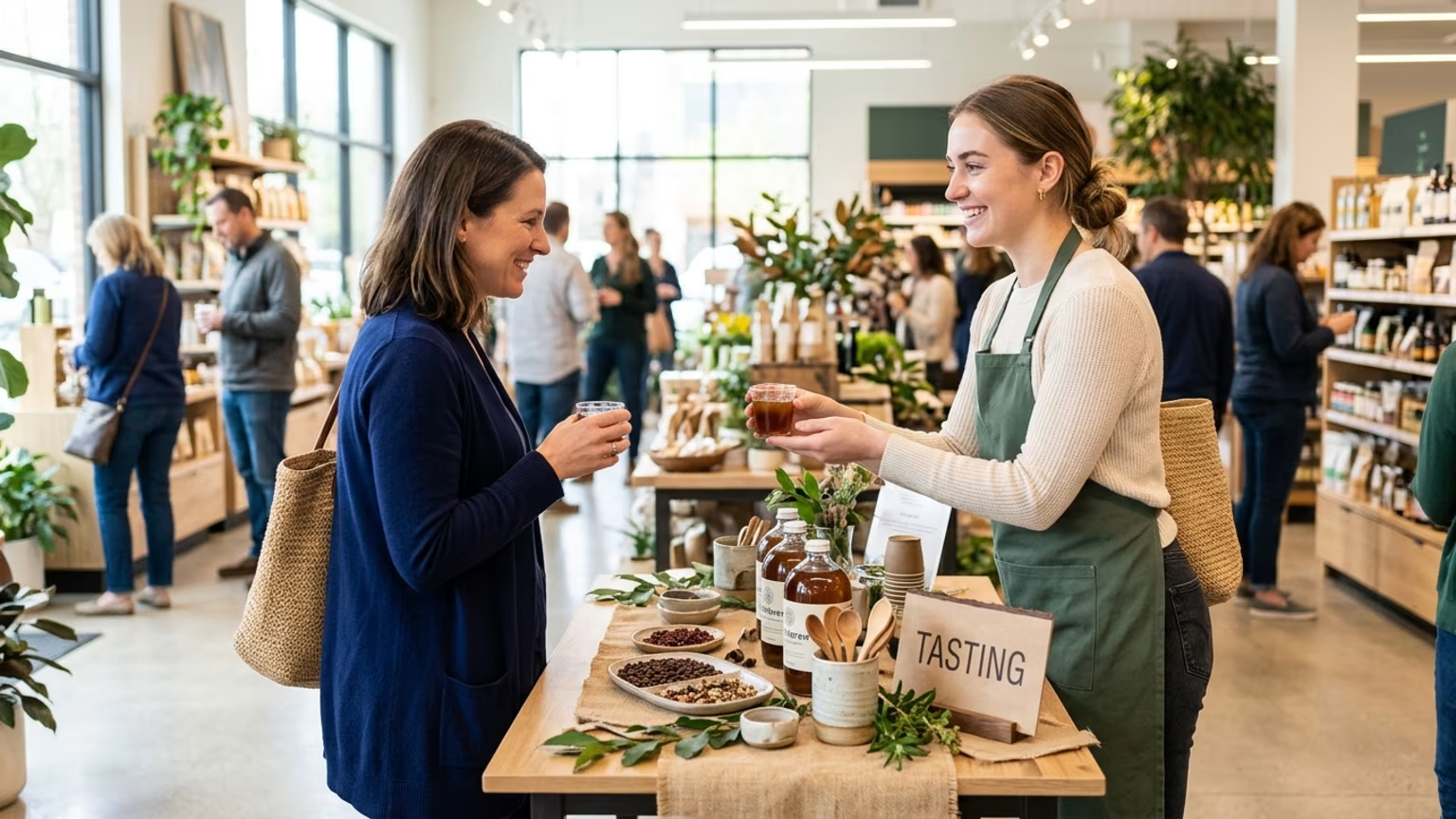
The strategy demands highly trained brand ambassadors who deeply understand the product. These ambassadors initiate authentic conversations with shoppers as they walk down the busy aisles. They offer a physical taste, explain the core value proposition, and hand over a targeted offer. This immediate physical interaction completely removes purchase hesitation.
Success relies on connecting the live demonstration directly to the broader shopper marketing plan. The activation must align perfectly with promotional calendars and point-of-sale data tracking. Brands that integrate these elements turn a simple tasting table into a predictable revenue engine. When field execution matches corporate strategy, shoppers feel confident adding the new item to their carts.
Marketing operators must stop viewing product sampling as an isolated tactic. It is a core component of the retail growth engine. Every sample handed out is a direct pitch to a qualified buyer. Treating the program with military precision yields better retailer relationships and higher category growth.
The most successful CPG brands approach the store floor like a targeted acquisition channel. They calculate the cost of a physical trial against the lifetime value of a newly acquired customer. Industry analysts note that sampling operations are expanding alongside broader premiumization trends, forcing brands to invest heavily in physical interactions to justify higher price points. This mindset shift separates market leaders from brands that constantly struggle to maintain distribution.
Transforming passive aisles into active sales environments takes rigorous planning and tight execution. A poorly managed activation can hurt a brand's reputation with both the shopper and the store manager. Teams must follow a clear operational playbook to drive measurable success. This playbook prevents chaotic floor situations and guarantees a consistent brand experience across hundreds of retail locations.
The days of measuring success by counting empty sample cups are completely over. Brands must track specific data points to prove Return on Investment to their demanding retail partners. Lead metrics include total shopper interactions, number of samples distributed, and coupon redemption rates on the event day. These daily numbers provide immediate feedback on the activation's energy and market reach.
Lag metrics focus on sustained retail performance and overall category growth. These include unit velocity lift over the following four weeks and repeat purchase rates. Analyzing this information helps marketing leaders validate their physical activation spend. It shows exactly how the physical interaction changed shopper behavior over a long period.
We provide clear reporting on reach, trials, leads, and sales to guide next steps in campaign optimization. Our measurement approach tracks awareness, engagement, and conversion, turning brand moments into actionable data that demonstrates business impact. When leadership asks for concrete proof, marketing teams need hard numbers instead of nice stories. Establishing clear measurement standards for your field operations gives brands the confidence to scale their physical activations.
Retail buyers respond positively to brands that bring data to their quarterly reviews. Showing a direct correlation between a live demonstration and a permanent lift in basket size wins more shelf space. It proves that your brand actively drives foot traffic and revenue for the store. This data-driven approach separates amateur pop-ups from professional experiential campaigns.
Consistent measurement highlights operational inefficiencies that drain marketing budgets. If an activation drives high interaction but low sales, the brand knows to fix the point-of-sale offer. If sales are high but interactions are low, the team must improve the visibility of the tasting cart. Data transforms the sampling program from a guessing game into a highly tuned machine.
Consider a premium snack brand launching a new flavor line in a major wholesale club. The initial shelf placement generated minimal product movement, and the retail buyer wanted answers quickly. The brand deployed weekend sampling events staffed by highly trained experiential professionals. Shoppers tasted the product, received a targeted point-of-sale offer, and immediately added the item to their massive carts.
The brand saw a massive spike in basket size during the activation weekends. Retail data confirmed that the sustained unit velocity remained high weeks after the demonstration ended. The physical trial built permanent shopper trust in the new flavor profile. Executing targeted weekend campaigns at major retail clubs successfully protected the brand's premium shelf space and drove massive repeat sales.
Another successful approach involves coordinating massive national pushes for established legacy brands. A targeted blitz across hundreds of stores can revive a stagnant product line in a matter of days. Reading about how major food conglomerates use scaled sampling blitzes to lift retail numbers shows how scale and precision work together. The strategy remains the same whether you are a startup or a global powerhouse.
This precise methodology works across every major category in the physical retail space. Beverages, frozen foods, health supplements, and pantry staples all benefit from removing the barrier to trial. When shoppers can touch, smell, and taste the product, the marketing friction disappears entirely. The brand goes from being an unknown risk to a trusted favorite in less than a minute.
Digital impressions will always look pretty on a marketing dashboard, but they cannot replicate the visceral power of a physical taste. When you pair a great product with a targeted offer in the real world, you build a buyer habit that lasts. If your brand needs to turn passive shoppers into active buyers, our team can build a systematic program that works. Book a strategy call with us today, and let us turn those empty digital clicks into full physical baskets.

30 Years Experiential & Retail Activation Partner for CPG & Beverage Brands | Multi-Market Demos, Roadshows & Costco/Club Programs That Actually Sell