Robbie Thain
Founder, CEO

Learn how CPG brands use BJ’s Wholesale Club’s expanded weekend sampling events to drive product trial, boost register lift, and secure member loyalty.
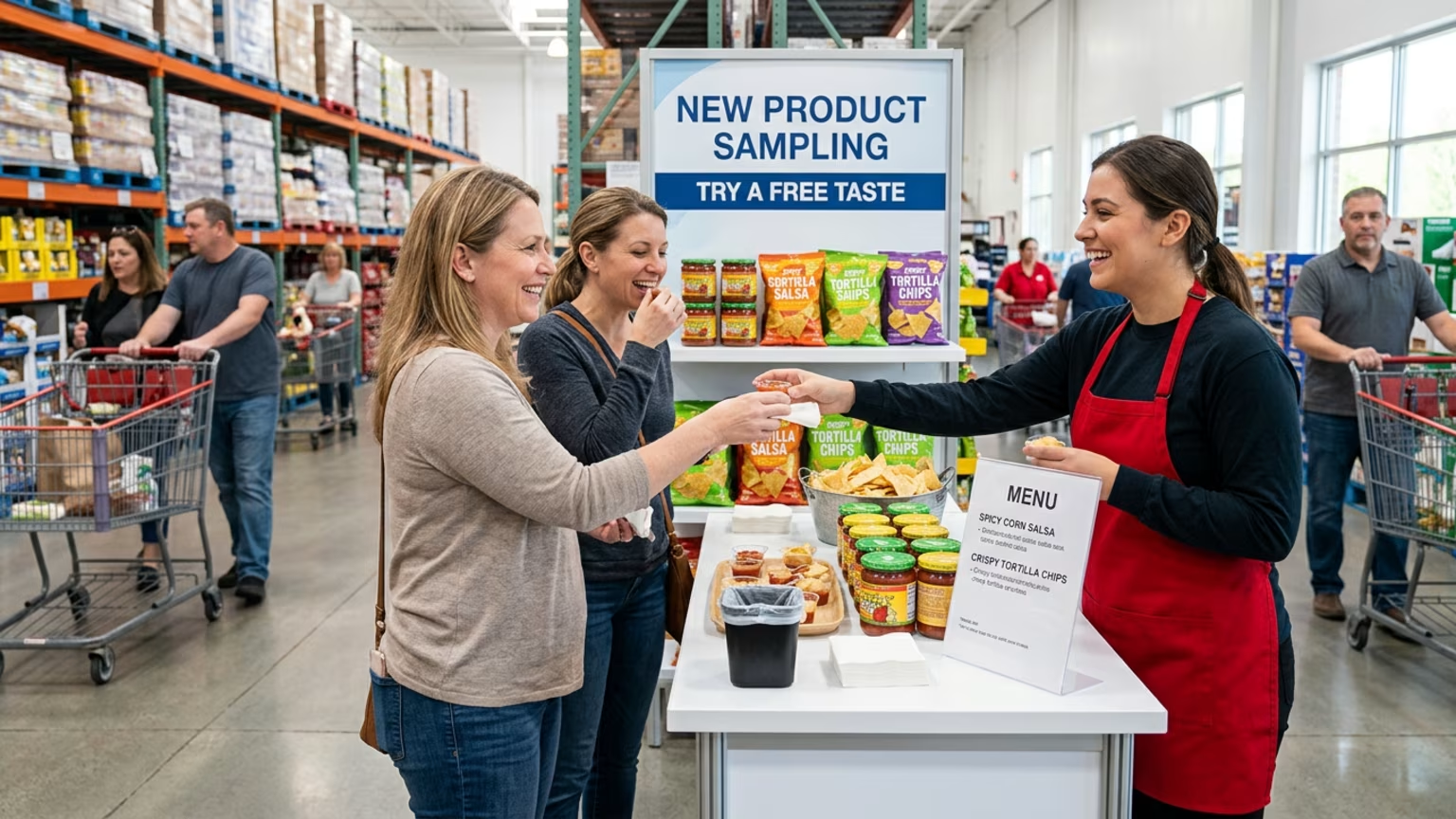
A field marketing manager stands near aisle four with a clipboard and a sinking feeling. Her brand just secured prime placement at a major club retailer. The pallets are stacked high, the foot traffic is heavy, but shoppers walk past. Without a reason to stop and taste the product, those bulk packages become invisible inventory.
BJ’s Wholesale Club recently expanded its weekend sampling schedule to give consumer packaged goods brands a consistent platform for product launches. Retailers are turning physical trial into a performance media channel, and brands must execute with precision to capture measurable Return on Investment.
You fought hard to get your beverage or snack brand into a wholesale club. The buyer signed off, the pallets shipped, and the product sits beautifully on the floor. Wholesale environments are massive, and shoppers are on a strict mission. The average basket size in a club store reaches up to $100.
Shoppers are highly intentional and rarely browse aimlessly. If they do not know your brand, they will avoid risking their money on a bulk package. Passive displays blend into the concrete floor. Brands rely on packaging to do the heavy lifting, but packaging cannot start a conversation.
A table with free samples often turns into a chaotic giveaway station. Unprepared brand ambassadors hand out product without capturing attention or explaining the value. Analysts report that 61 percent of shoppers feel overwhelmed by choices in the grocery aisles. Getting to taste a product eases that decision fatigue.
When a demo lacks structure, shoppers take the sample, nod politely, and keep walking. The brand burns through inventory and budget without seeing a spike in register rings. You are left staring at sales data that looks flat. Your team needs a structured way to intercept shoppers and force a buying decision right there.
Poor field execution turns a high-potential launch into a logistical nightmare. The pressure to perform mounts quickly. If a product does not move fast enough, the retailer will replace it.
Wholesale environments operate on high volume and thin margins. The buyers review velocity metrics ruthlessly. If a new SKU stalls in its first month, it rarely gets a second chance. The clock starts ticking the moment the product hits the concrete.
Brands consistently underestimate the operational difficulty of staffing and running these events. Passive reps sit behind tables instead of actively engaging the foot traffic. Product knowledge is weak, leaving ambassadors unable to answer basic questions about ingredients or benefits. Food safety standards slip, and the physical presentation looks sloppy.
These failures damage brand equity and ruin the chance for a successful regional rollout. Competitors who execute well will gladly take your shelf space. A bad demo is worse than no demo at all. You need a bulletproof plan to capture attention and drive revenue.
BJ’s expanding its sampling schedule shifts the rules for consumer packaged goods brands. It moves the model from sporadic events to a highly calendarized strategy. You can align your demos with seasonal resets, new flavor introductions, and retail media campaigns. Wholesale clubs offer a dense population of high-spend members who eagerly seek new value.
Shoppers in these environments have a proven appetite for trying new items. Data indicates that 64 percent of club members are likely to try new products during their visit. To win, you must treat the club floor as a physical performance channel. This requires shifting your mindset from giving away food to acquiring new customers.
The strategy centers on creating a controlled intervention in the shopper path. You pair trained ambassadors with clear messaging and immediate purchase incentives. Industry research shows an average sales lift of 71 percent on demo days compared to non-demo days. The execution must tie directly to inventory availability and club demographics.
The timing of these activations plays a massive role in their success. Running a demo during a slow Tuesday afternoon wastes valuable resources. You must align your efforts with the high-traffic windows when families do their weekly shopping, which requires deep coordination with regional club managers. A true experiential partner handles these negotiations seamlessly.
You do not just book a date and hope for the best. You target specific clubs, train your staff on strict talking points, and measure the register lift against a baseline. Brands that invest in retail staffing solutions for roadshows and product launches see higher returns. This disciplined approach converts a casual taste into a bulk purchase.
Retailers are increasingly linking physical activations with their own retail media networks. This convergence creates a powerful approach for brands. You can target members with digital ads before the weekend, intercept them with a live demo, and retarget them online afterward. A physical activation becomes the centerpiece of a broader acquisition campaign.
Turning a weekend spot at BJ’s into a revenue driver requires rigorous operational control. You need a playbook that leaves nothing to chance. Every detail from staffing to supply chain must align perfectly.
Your leadership team needs proof that these activations work. You must track both lead and lag indicators. Lead metrics show how well the event was executed on the floor. Lag metrics show the financial outcome.
When you track the 5 key metrics to prove retail sampling ROI beyond headcount at events, you gain total clarity. Lead indicators monitor the health of the live activation. Track the total number of samples distributed per hour to measure traffic flow. Measure the interaction rate to see how many shoppers actually stopped to listen.
Monitor the on-hand inventory levels before and after the shift. If you run out of product at noon, your planning was flawed. Lag indicators prove the financial Return on Investment. Track the day-of sales lift by comparing demo day register rings to your baseline.
Calculate the percentage of buyers who were new to the brand. Industry data indicates that 20 to 30 percent of day-of purchases typically come from first-time buyers. Monitor the repeat purchase rate over the following four to twelve weeks. Evaluating the cost per incremental buyer helps justify the budget.
Compare the expense of the physical activation against your typical digital acquisition costs. A well-run demo often delivers a highly efficient cost per acquisition. Once a club member buys a bulk item and likes it, their lifetime value spikes. This long-term profitability makes the upfront logistical effort entirely worthwhile.
Track the halo effect on adjacent products in your portfolio. Sometimes a strong demo for a new snack bar drives sales for an older flavor. This cross-portfolio lift proves the broader value of the field activation. Your experiential events should act as a rising tide for the entire brand.
Proving ROI requires discipline and accurate data collection. Do not rely on anecdotal feedback from the field. Demand hard numbers and tie them directly to point-of-sale data. This rigor protects your budget for future quarters.
When a premium food brand enters a club environment, the stakes are high. We recently managed a national rollout for a major client facing heavy competition in the snack aisle. The brand needed to prove velocity quickly to keep its pallet placement. We implemented a disciplined sampling schedule paired with strict ambassador training.
A VP of Marketing reflected on our partnership: 'Robbie, it was a pleasure working with you and your team. You turned our launch into an experience that connected with shoppers and built lasting excitement for our brand. We're already looking forward to the next project together.' Our team created a launch experience that resonated with retail shoppers and generated momentum for future collaborations.
By controlling the talking points and keeping the product close, the brand saw a massive day-of sales lift. Post-event tracking showed that first-time samplers returned to buy again weeks later. The physical trial built trust, and the operational rigor guaranteed the client captured every possible dollar. This is exactly how mobile tours turn energy drink sampling into retail pipeline, adapted perfectly for the club floor.
Scaling this success requires consistency across multiple regions. You cannot rely on a single good weekend to sustain momentum. The brand used the data from the initial weekend to optimize its staffing and messaging for the rest of the quarter. They expanded the program to additional clubs and integrated the messaging into their broader marketing strategy.
This proactive approach secured their shelf space and drove significant repeat purchases. Shoppers who tasted the product became loyal advocates. The brand successfully mastered the complex wholesale environment through sheer operational discipline. The investment in live trial paid off rapidly.
The wholesale club floor is unforgiving to passive brands. You cannot rely on packaging alone to drive bulk purchases. Start treating your physical sampling events with the exact same measurement standards as your digital campaigns. Book a strategy call today to build a retail activation plan that drives verifiable sales.

30 Years Experiential & Retail Activation Partner for CPG & Beverage Brands | Multi-Market Demos, Roadshows & Costco/Club Programs That Actually Sell