Robbie Thain
Founder, CEO

Major retailers are expanding in-store sampling programs. Learn how CPG brands can align their field execution to drive measurable sales lift.
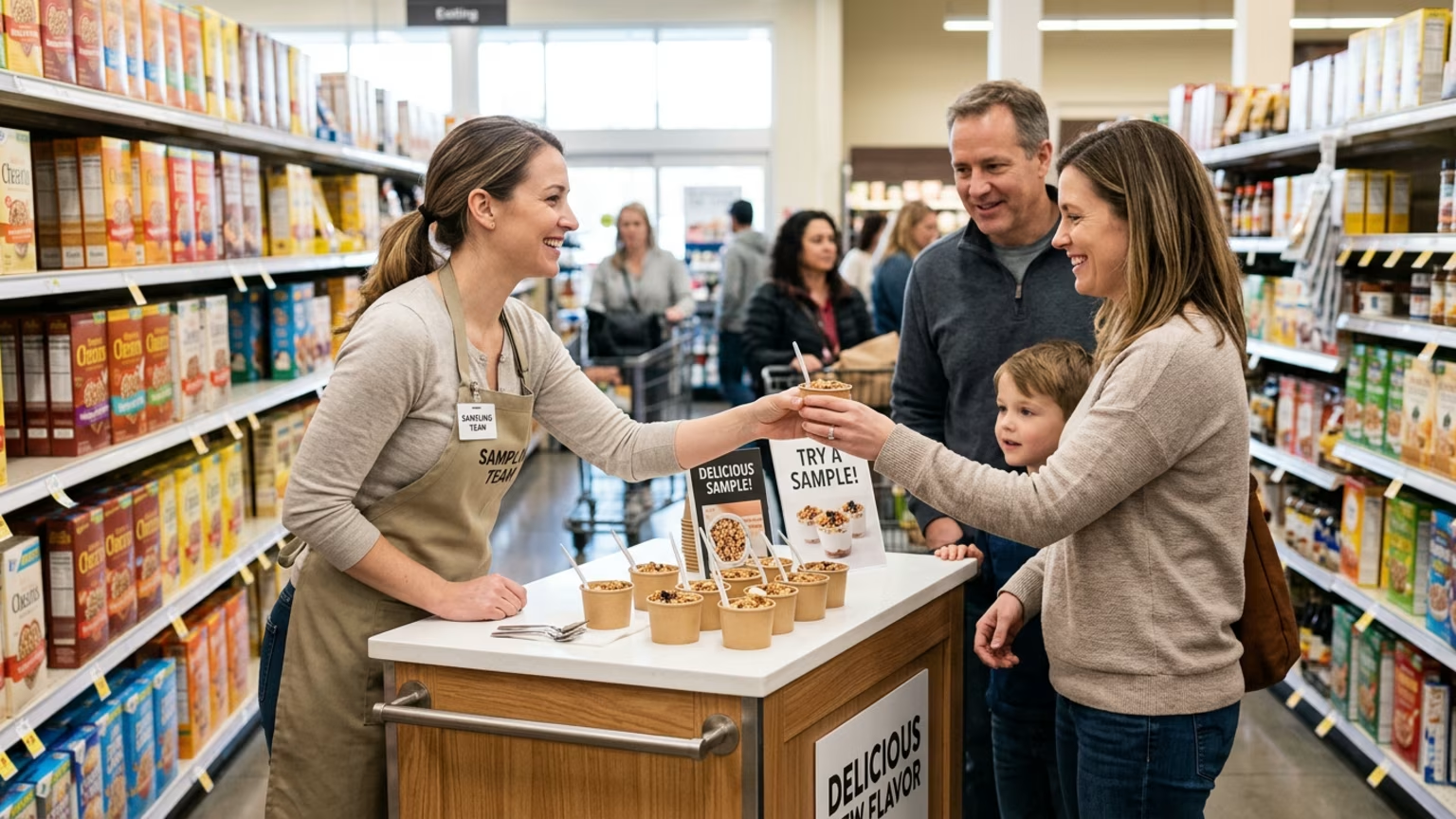
The harsh fluorescent lights of the grocery aisle illuminate a familiar Saturday scene. Shopping carts jam the main pathways, consumers consult their grocery lists, and a solitary folding table sits unattended by the dairy case. Major U.S. retailers are aggressively expanding weekend in-store sampling programs to convert heavy foot traffic into measurable basket growth. CPG brands must align their field operations with these new retailer mandates to win shelf space and drive immediate product trial.
Many marketing directors sit in corporate offices reviewing beautiful rendering decks of their upcoming campaigns. They approve the branded tablecloths, sign off on the talking points, and expect seamless execution. The reality at the store level is vastly different and highly unforgiving. Store managers are overwhelmed with daily operations, inventory shortages, and understaffed registers.
They do not have the time to hold the hand of an unprepared brand representative. When field teams arrive late or lack the proper health department permits, the store manager will shut the operation down immediately. Retailers offer prime real estate for branded demo events to increase overall basket sizes. They expect brands to show up on time, manage their own logistics, and move inventory.
Uncoordinated field teams routinely turn these golden opportunities into costly logistical disasters. The regional field marketing manager spends three weeks securing a prime demo slot for a new beverage launch. The product arrives late, the hired staff fails to show up, and the investment completely evaporates. Brands burn cash on these missed opportunities and alienate the retail buyers they desperately need to impress.
The financial cost of a failed execution goes far beyond the wasted staffing budget. A poorly executed demo signals to the retail buyer that your brand cannot handle basic field operations. Buyers talk to store managers constantly to evaluate which brands deserve premium shelf space. When your activation falls apart on a Saturday afternoon, that failure damages your reputation across the entire regional network.
Big box stores and regional grocers are completely changing the rules of engagement for product trial. Retailers increasingly prefer co-funded sampling initiatives and performance-based fee structures. They want active participation from brands to prove that an endcap display will actually move inventory. This shift requires CPG marketing leaders to build a systematic field operation that delivers consistent results.
The days of dropping a college student behind a table with a stack of coupons are completely over. To succeed, brands must treat physical retail spaces as high stakes performance arenas. You need strict alignment between your demo calendars and retailer product resets. Every activation must be meticulously planned, staffed with trained professionals, and fully integrated into the store environment.
We specialize in creating retail demos, product sampling programs, and roadshows that bring brands face to face with their audiences. Each program is designed to drive trial, build consumer relationships, and accelerate retail velocity across multiple locations. When you align your sampling strategy with a retailer's foot traffic goals, you create tremendous sales potential. Retail buyers want partners who solve their problems and increase their category revenue.
They reward brands that bring energy, operational discipline, and measurable sales lift to their aisles. Teams that establish best practices for grocery store sampling consistently outperform competitors who rely on passive shelf presence. Retailers like Walmart and Target now view their floor space as premium media inventory. They offer co-funded sampling programs to brands that can prove operational reliability.
This means you are not just paying for a footprint in the aisle. You are investing in a shared goal to increase the average transaction value for the retailer. A performance-based fee structure rewards brands that move high volumes of product during these weekend blitzes. You win by treating the retailer as a strategic partner rather than a simple landlord.
Your supply chain must be perfectly synchronized with your promotional calendar to avoid stockouts. Delivering promotional materials to a retail location requires accurate routing and exact timing. Store receiving docks are notoriously busy environments that will reject late or improperly labeled shipments. You must work with specialized logistics partners who understand the exact delivery windows for regional grocers.
Many CPG field marketing leaders cite gaps in demo support as the primary barrier to long term success. You fix this by building a dedicated field infrastructure that scales across different geographic regions. You must integrate your supply chain, staffing agency, and reporting software into one unified system. This operational excellence gives you a massive advantage over competitors who treat retail demos as an afterthought.
Executing a flawless in-store sampling campaign requires military precision and relentless attention to detail. This systematic approach turns a basic product demo into a high converting retail event. Every step in this playbook builds upon the previous one to maximize your revenue potential.
Field marketing teams must abandon vanity metrics and focus on numbers that prove financial impact. A successful retail activation generates clear data points that justify the operational expense. Tracking the right indicators separates profitable campaigns from wasteful marketing theater. We must measure both the immediate activity and the long term financial outcome.
Lead metrics tell you exactly what happens during the actual shift on the retail floor. Track the total number of samples distributed per hour and the number of meaningful conversations initiated by your brand ambassadors. Measure the average shopper dwell time at your activation station to gauge genuine consumer interest. Brands executing a strong beverage sampling strategy rely heavily on these interaction metrics to measure floor energy and predict immediate sales.
Lag metrics reveal the actual Return on Investment of your field marketing efforts. The most critical number is the immediate unit sales lift per store during the activation weekend. Next, track the retail buyer confidence score, which is reflected in expanded shelf space or secondary placements. Finally, monitor repeat purchase rates in the targeted region over the next ninety days.
Retail buyers expect you to bring this data to your quarterly business reviews. They want to see exactly how your field marketing budget contributed to their overall category growth. Brands that provide comprehensive data reports routinely win better promotional pricing and prime endcap locations. You secure an undeniable competitive advantage when you can prove your operational impact with hard numbers.
Presenting these numbers to corporate leadership requires total clarity and unshakeable confidence. Stop reporting on estimated foot traffic or vague brand awareness improvements. You must show the exact correlation between the weekend demo expenditure and the subsequent retail revenue. A strong post-event report highlights the cost per sample, the cost per acquisition, and the net sales lift.
When you speak the language of finance, you secure much larger budgets for future field marketing initiatives. If you are ready to build a bulletproof retail strategy that drives real revenue, book a strategy call with our operations team today.
An emerging organic snack company recently secured regional distribution in fifty prominent grocery locations. The retail buyer demanded high initial sales velocity to justify keeping the new product on the shelf. The brand faced a massive challenge in generating awareness among shoppers who habitually bought established competitors. They decided to launch an aggressive weekend sampling program tied directly to the retailer's seasonal reset.
The execution required precise coordination across all fifty locations within a single thirty-day period. The brand deployed specialized ambassadors who understood the specific nutritional benefits of the healthy snack. These professionals intercepted shoppers, offered immediate taste tests, and handed out targeted retail coupons. The field team logged every interaction and tracked live inventory levels by the hour.
This level of extreme coordination turned a massive logistical hurdle into a smooth retail operation. The results proved the absolute effectiveness of disciplined in-store sampling over a sustained period. The targeted stores saw a massive immediate spike in weekend unit sales compared to non-demo weeks. Better yet, the retail buyer noticed the sustained product velocity over the following thirty days.
This measurable success allowed the brand to negotiate better shelf positioning and expand into fifty additional store locations. The company successfully turned a stressful regional launch into a highly repeatable model for national expansion. Great products deserve to be experienced directly by the consumer in the aisles where buying decisions happen. Let's get out of the spreadsheets and back onto the floor to build real brand momentum.

30 Years Experiential & Retail Activation Partner for CPG & Beverage Brands | Multi-Market Demos, Roadshows & Costco/Club Programs That Actually Sell