Robbie Thain
Founder, CEO

Brella's new lead scoring and CRM integrations help experiential marketing teams turn chaotic trade show traffic into measurable sales pipeline and revenue.

Sarah sits in seat 14B on her flight home from a major food expo. She stares at a spreadsheet of two thousand raw badge scans with zero context. Her sales team is already complaining about the lack of qualified buyers.
Brella recently launched advanced lead-scoring tools and robust CRM integrations to fix the disconnect between live events and sales pipelines. These updates help sponsors capture behavioral intent data and tie physical meetings directly to measurable revenue.
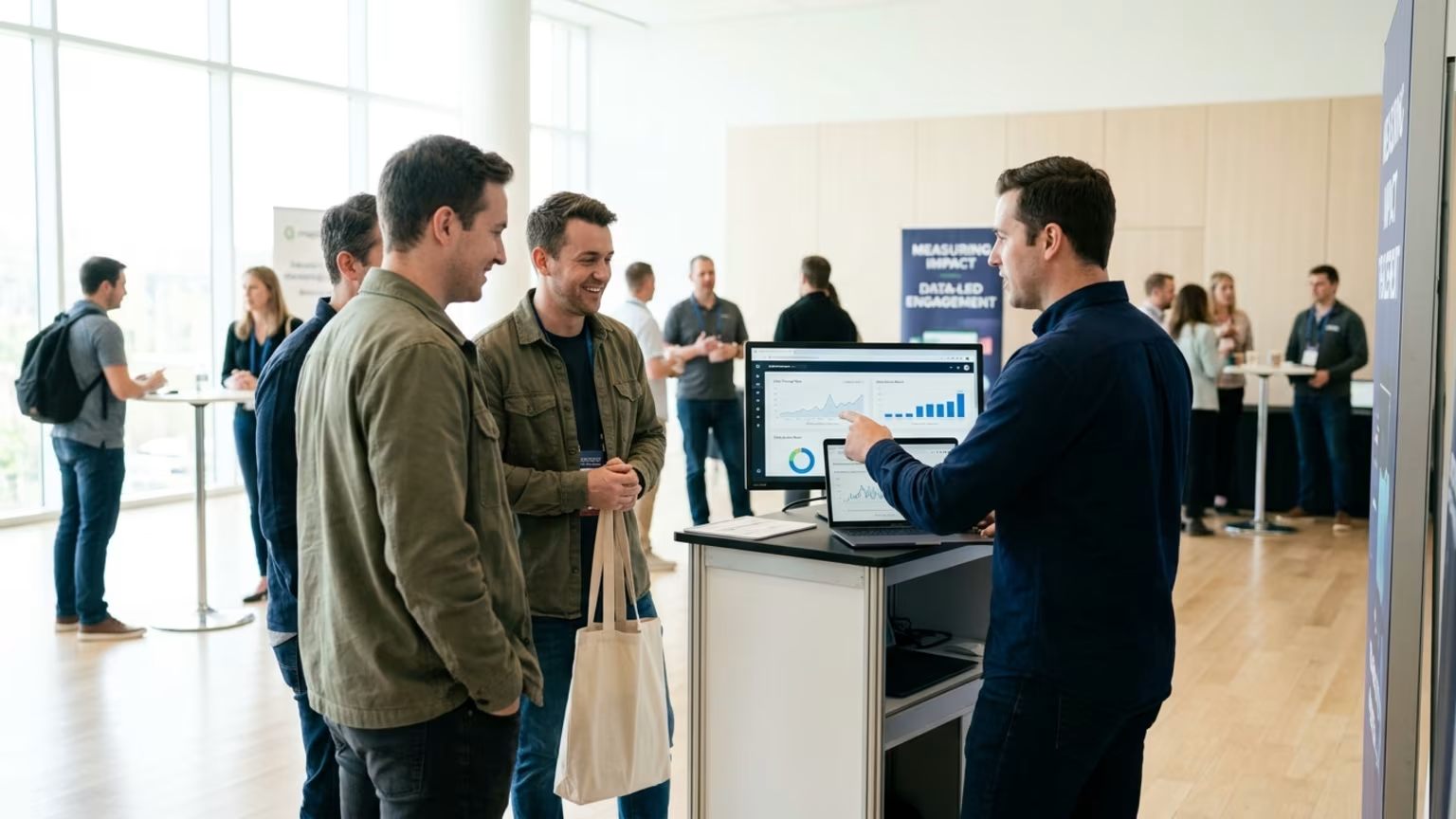
The trade show floor is a high-speed collision of sensory overload and brief conversations. Your brand ambassadors are handing out samples, answering rapid-fire questions, and trying to scan badges simultaneously. Most systems reduce these valuable interactions to a simple name and email address. Without context, a highly qualified retail buyer looks exactly like an intern hunting for free snacks.
This lack of intent data makes post-show follow-up an absolute nightmare for marketing teams. When you run a massive sampling tour or a large-scale Costco roadshow, foot traffic is never the issue. The real problem is sorting the serious buyers from the casual tourists. Field teams often lack the time or tools to manually record buying intent during a rush.
They end up scanning everything in sight just to meet arbitrary quota numbers. This creates a data bottleneck that frustrates sales teams and destroys any chance of accurate Return on Investment reporting. The resulting spreadsheet is full of dead ends and unqualified leads. Sales representatives quickly lose faith in experiential marketing when they waste hours calling people who just wanted a free tote bag.
Brands spend hundreds of thousands of dollars building beautiful booths and immersive experiences. Yet they rely on primitive data collection methods that fail to capture the true value of those interactions. This disconnect creates a massive gap between the marketing budget spent and the actual revenue generated. Event marketing directors find themselves unable to prove their impact to the executive board.
The gap between physical interactions and digital tracking creates operational friction. A consumer might spend twenty minutes asking deep product questions at your booth. If your software only captures their name, that high-intent prospect gets the exact same generic follow-up email as a passing visitor. Marketing operations teams spend weeks trying to clean up this messy data before routing it to sales.
The recent updates from Brella offer a structural fix for this common data problem. By introducing advanced lead-scoring capabilities, the platform allows brands to track actual attendee behavior. You can measure who requested a meeting, who downloaded a product sheet, and who attended designated sessions. This behavioral data automatically assigns a score to every prospect before the event even ends.
Your team no longer has to guess which leads deserve immediate attention. This strategic approach shifts the focus from sheer volume to absolute precision. Integrating these intent signals directly into your marketing automation platform removes the manual data entry barrier. When your physical brand moments connect to digital tracking, you create a seamless transition from the trade show floor to the sales pipeline.
It is about treating live experiences as measurable sales channels rather than vague brand awareness exercises. Brands that prioritize automating universal data collection across the floor see significantly better conversion rates. They stop treating every badge scan as an equal opportunity and start prioritizing based on real behavioral data. This targeted approach allows your best sales reps to focus their energy on the warmest accounts.
Integrating these systems provides immediate visibility into which exact activation elements drive the most intent. You can see if a product demonstration generates higher-scoring leads than a static sampling station. This intelligence allows marketing leaders to allocate future budgets based on hard performance data. It transforms experiential marketing from an art form into a predictable science.
Modern event technology captures subtle buying signals that human staff might miss during a rush. A prospect scanning a specific QR code for pricing information signals immediate intent. Connecting that digital action to their badge profile creates a rich context for your sales team. This unified data approach turns chaotic show floors into highly structured revenue engines.
Deploying a lead-scoring system requires discipline, preparation, and clear alignment with your field staff. You cannot simply turn on a software feature and expect flawless results without a solid plan. Setting up the technology is only the first step in a much larger operational shift. Your field marketing manager must orchestrate every detail of the capture process.
Executing this playbook prevents the dreaded post-event data dump. It gives your team a clear, actionable roadmap to turn brief conversations into pipeline velocity. Preparation guarantees that every field staff member understands their role in the data collection process. They stop acting like passive order takers and start operating like field intelligence officers.
Integrating these systems early prevents the common issue where maintaining clean CRM workflows becomes an impossible task after the expo ends. You must test every integration point before the doors open to the public. Failing to verify your data mapping can result in thousands of lost leads and wasted budget. A smooth technical deployment lets your staff focus on building genuine human connections.
Tracking the right numbers is the only way to justify your experiential marketing budget to senior leadership. You must look beyond vanity metrics like total booth visitors or total samples distributed. Lead metrics tell you if your activation is generating immediate interest. These include the number of meetings booked, the volume of high-intent badge scans, and the average lead score of booth visitors.
Monitoring these numbers gives you real-time feedback on your event performance. If your average lead score drops halfway through the first day, you can immediately adjust your engagement strategy. Your field marketing manager can brief the team to ask sharper qualification questions. This agility prevents you from wasting an entire event on poor execution.
Lag metrics show the true financial impact of your activation weeks or months later. You should track the percentage of event leads that convert to scheduled sales calls. Measure the total pipeline value generated directly from the event data. Finally, calculate the ultimate cost per acquisition for every closed deal sourced from the show floor.
Getting these numbers right is much easier when you focus on upgrading your event analytics tools before the busy season begins. Accurate lag metrics require patience and a tight alignment with your sales operations team. When you can definitively prove that a specific activation generated a set amount of revenue, your budget requests become undeniable. Executives fund marketing initiatives that produce clear financial outcomes.
We recently partnered with a major consumer packaged goods company to launch a new product line. They needed to move beyond basic sampling and capture buyer intent at a massive industry expo. We implemented a strict lead qualification process that integrated directly with their backend systems. The field team focused entirely on high-quality conversations.
The event technology handled the scoring in the background. This disciplined approach changed the way their executive team viewed live activations. A Director of Brand Strategy in the CPG snack division shared: 'The Makai team turned our product launch into a sensory event that shoppers still talk about. From creative storytelling to flawless in-store execution, they made snack time unforgettable. We couldn't have asked for a stronger partner.' Our team created an in-store experience that left a lasting impression on consumers and became a memorable brand moment.
It proved that you can deliver incredible creative experiences without sacrificing hard data. The activation produced a record number of high-scoring leads that converted into measurable retail partnerships. Sales representatives received detailed profiles of each prospect rather than a massive list of generic names. This successful execution set a new standard for how the brand measures experiential marketing performance.
Technology updates like Brella's lead scoring only work if you have the operational discipline to use them correctly. You need a structured approach to turn raw traffic into qualified pipeline data. Start by defining your top three lead qualification questions right now. If you want to build an experiential campaign that actually converts, book a strategy call with our team today.

30 Years Experiential & Retail Activation Partner for CPG & Beverage Brands | Multi-Market Demos, Roadshows & Costco/Club Programs That Actually Sell