Robbie Thain
Founder, CEO

Marketing budgets face rising scrutiny. Learn how to track lead quality, opportunity progression, and pipeline metrics to prove your trade show ROI.

The booth is packed with eager faces reaching for free product samples. The scanner beeps non-stop. Then the marketing director opens the post-show spreadsheet on Monday morning. They stare at a list of generic emails with zero context on actual buying intent.
Marketing teams face intense financial scrutiny and must prove their live event spend directly creates measurable sales pipeline. Adopting operator-grade data capture strategies allows brands to turn chaotic floor interactions into concrete commercial opportunities.
You spend months planning a massive product launch at an industry expo. The logistics team coordinates freight deliveries, schedules staff rotations, and sets up impressive displays. The doors open on day one. A wave of attendees immediately floods the aisle.
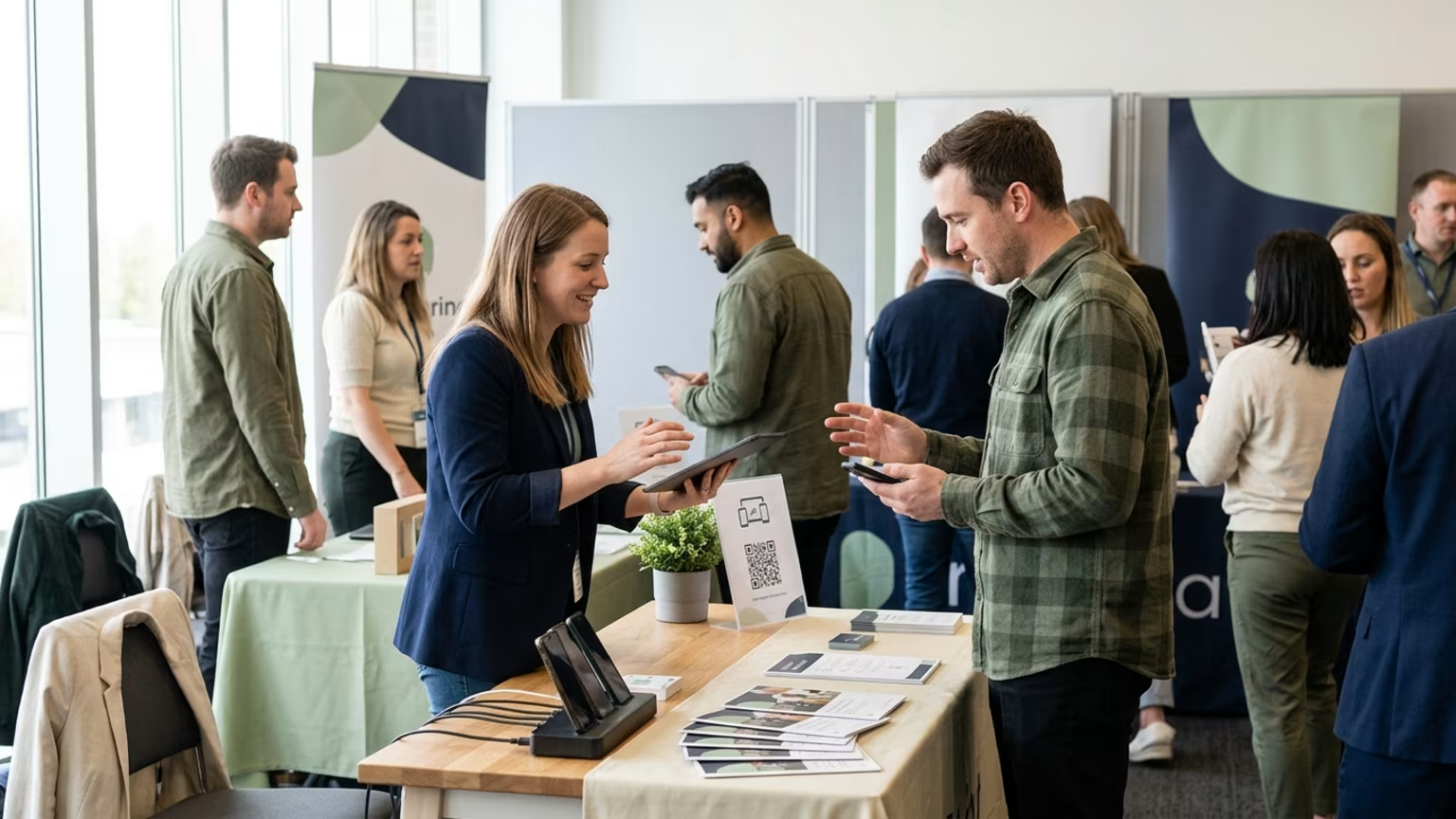
Your brand ambassadors work frantically to hand out samples and scan visitor badges. The sheer volume of human traffic feels like a massive win for the field team. Booth staff chat rapidly with passing distributors and retail buyers. They scan hundreds of QR codes hoping the interactions translate into future orders.
The real problem surfaces days later back at the corporate office. Your sales team receives a massive spreadsheet of unqualified names. They have no idea which visitors loved the new beverage formulation or which ones just wanted a free tote bag. The lack of contextual data stalls the entire follow-up process.
Most of those expensive leads sit untouched in a database. You are left trying to justify the massive event budget using nothing but badge scan totals and booth headcount. The chief financial officer wants to see a direct link to revenue. Handing them a report based on generic foot traffic only invites further budget cuts for the next quarter.
We build festival zones, premieres, and pop-ups that turn viewers into fans and fans into advocates. We design moments people want to share, using music tie-ins, screenings, and live stunts to bring stories to life. Our crews manage the execution and track reach and response metrics concurrently. This hands-on approach demands a rigorous framework for success.
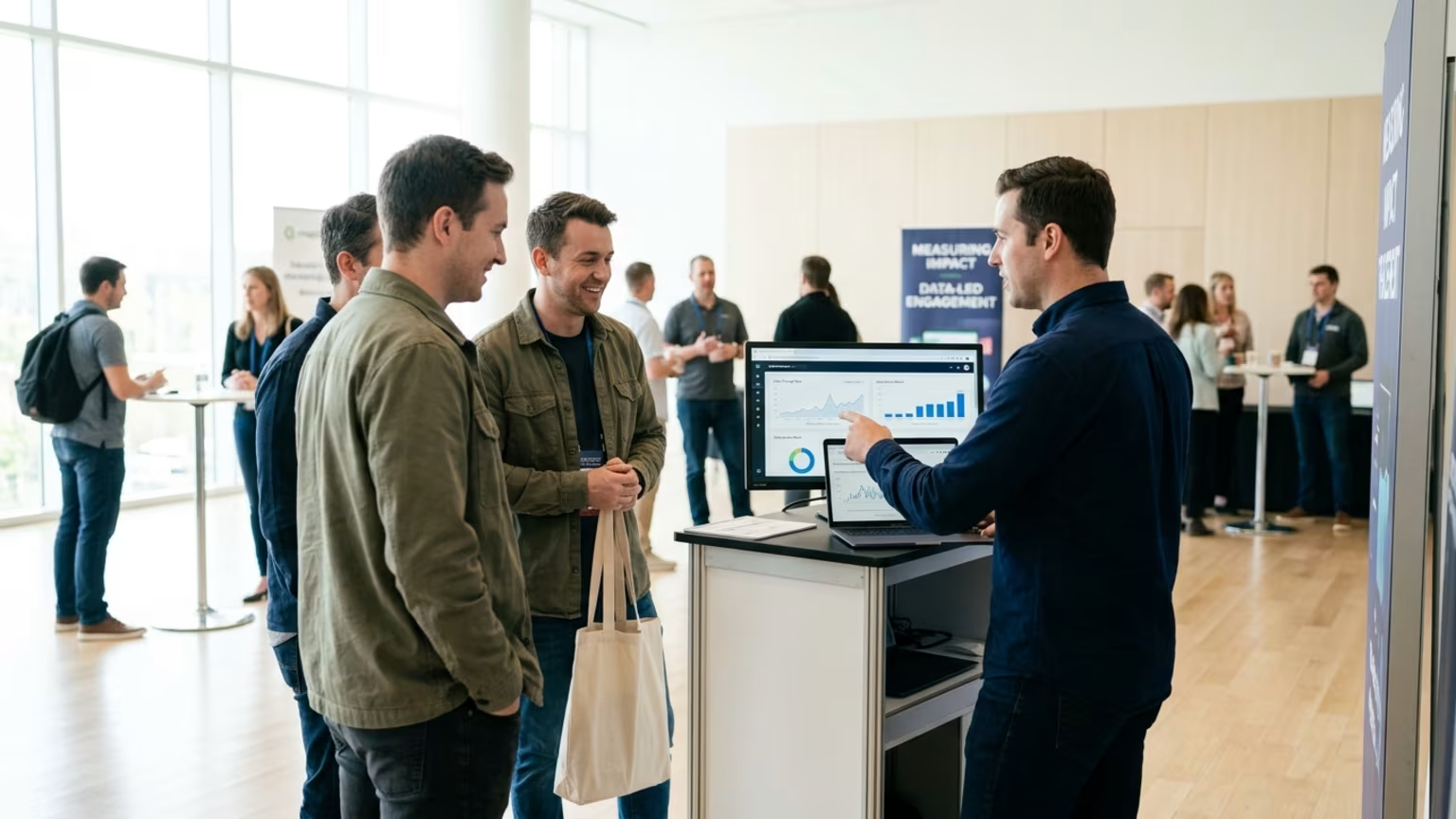
Industry reports highlight a clear disconnect between rising event investments and the ability to prove actual impact. According to insights from IBTM World, event management leaders recognize that simply tracking attendance is no longer sufficient. Organizers and brand marketers must measure lead quality, opportunity progression, and ongoing post-event engagement. The strategy requires treating every activation as a structured data capture mission.
You must build a framework that assigns a specific business goal to every physical interaction. If you hand a retail buyer a new energy drink, the conversation must end with a qualified data point logged directly into your system. This means equipping staff with mobile CRM tools that allow instant categorization of leads based on purchase intent. Moving past surface-level numbers allows you to focus on the event success metrics that leadership teams actually care about.
A unified strategy bridges the gap between the physical engagement and the digital sales pipeline. Staff training becomes just as critical as the booth design itself. Your field team must ask targeted questions and record those answers before the prospect walks away. This systematic approach guarantees that every scanned badge carries the context needed for immediate sales action.
Relying on rented scanners from the event organizer creates immediate data silos. These generic devices only capture names and email addresses. Brands must deploy universal lead capture applications on their own mobile devices. This technology allows field teams to standardize the data collection process across every event on the marketing calendar.
Connecting these custom applications directly to your primary customer relationship management system eliminates manual data entry. The moment a brand ambassador hits submit on a qualified lead form, the information routes to the correct sales representative. This instant transfer allows sales teams to draft personalized follow-up messages before the prospect even leaves the convention center. Speed and context form the foundation of a modern pipeline strategy.
Turning an expo presence into a predictable pipeline generator requires rigid operational discipline. You need a clear process to capture, qualify, and route leads in real time. The following playbook outlines how to deploy this strategy effectively in a live environment.
Executing these steps creates a closed-loop system for every activation. The field team gathers the necessary context with absolute precision. The technology routes the data seamlessly to the right internal departments. The sales team then executes a highly personalized follow-up strategy based on actual physical conversations.
Technology alone cannot solve the return on investment problem. The human element of your activation requires extreme precision and rigorous training. Brand ambassadors often default to handing out free items and rushing through interactions to manage long lines. You must train them to view every interaction as a distinct commercial opportunity.
Role-playing exercises before the event teach the staff how to ask qualifying questions naturally. They should practice transitioning from casual product education to direct inquiries about purchasing timelines. This preparation transforms your field staff from passive sample distributors into proactive pipeline generators.
Marketing operators need hard data to defend their budgets in boardrooms. Tracking the right indicators provides absolute clarity on event performance. You must divide your focus between early warning lead metrics and conclusive lag metrics. Return on Investment reporting depends entirely on this disciplined separation.
Lead metrics tell you if the event is functioning correctly in real time. Begin by tracking the percentage of badges scanned that include fully completed qualifying questions. This number reveals if your staff is having meaningful conversations or just frantically scanning passes to hit a quota. Next, monitor the immediate post-event email open and response rates. High engagement here proves that the field interactions were memorable and highly relevant to the prospect.
Lag metrics determine the long-term financial success of the activation. You must track the total pipeline dollar value generated directly from event leads. Next, monitor the lead-to-meeting conversion rate over the ninety days following the show. Finally, measure the actual closed-won revenue attributed directly to the trade show cohort. Tracking these numbers proves that your multi-city execution strategy creates actual business value rather than just temporary noise.
Focusing on these precise data points changes the internal conversation completely. You stop defending the cost of shipping materials and start presenting the event as a reliable customer acquisition channel. The data validates your field strategy to the entire executive team.
A national snack food brand recently faced immense pressure to prove the value of their massive trade show presence. They previously relied on generic badge scans and estimating crowd sizes at their tasting stations. The executive team demanded hard pipeline data before approving the budget for the next fiscal year. The marketing director knew they had to overhaul their entire approach to survive the budget review.
The brand implemented a strict data capture protocol for their next major food expo. Every sampling station featured a tablet with a three-question qualification form. Brand ambassadors offered a premium product tasting only after asking the visitor about their current retail distribution channels. The staff easily flagged regional buyers and tagged them with distinct product interests directly in the app.
This operational shift produced immediate clarity for the sales department. The team ignored the unqualified consumers and focused entirely on the fifty verified retail buyers who tasted the new product line. Within two months, the brand closed three major regional distribution deals directly linked to those exact booth conversations. This operational success demonstrates how you prove trade show Return on Investment in post-event roadshows and large scale live activations.
The marketing team returned to the boardroom with undeniable proof of success. They showed a clear path from a physical product sample to a signed distribution contract. The brand secured their full experiential budget for the following year based entirely on this documented revenue generation.
Stop measuring your event success by the size of the crowd. Book a strategy call today to implement a data capture system that turns casual booth visitors into measurable sales pipeline.

30 Years Experiential & Retail Activation Partner for CPG & Beverage Brands | Multi-Market Demos, Roadshows & Costco/Club Programs That Actually Sell