Robbie Thain
Founder, CEO

Digital ads are underperforming for CPG product trial. Learn how brands are shifting to live experiences and creator-led sampling to drive retail sales.
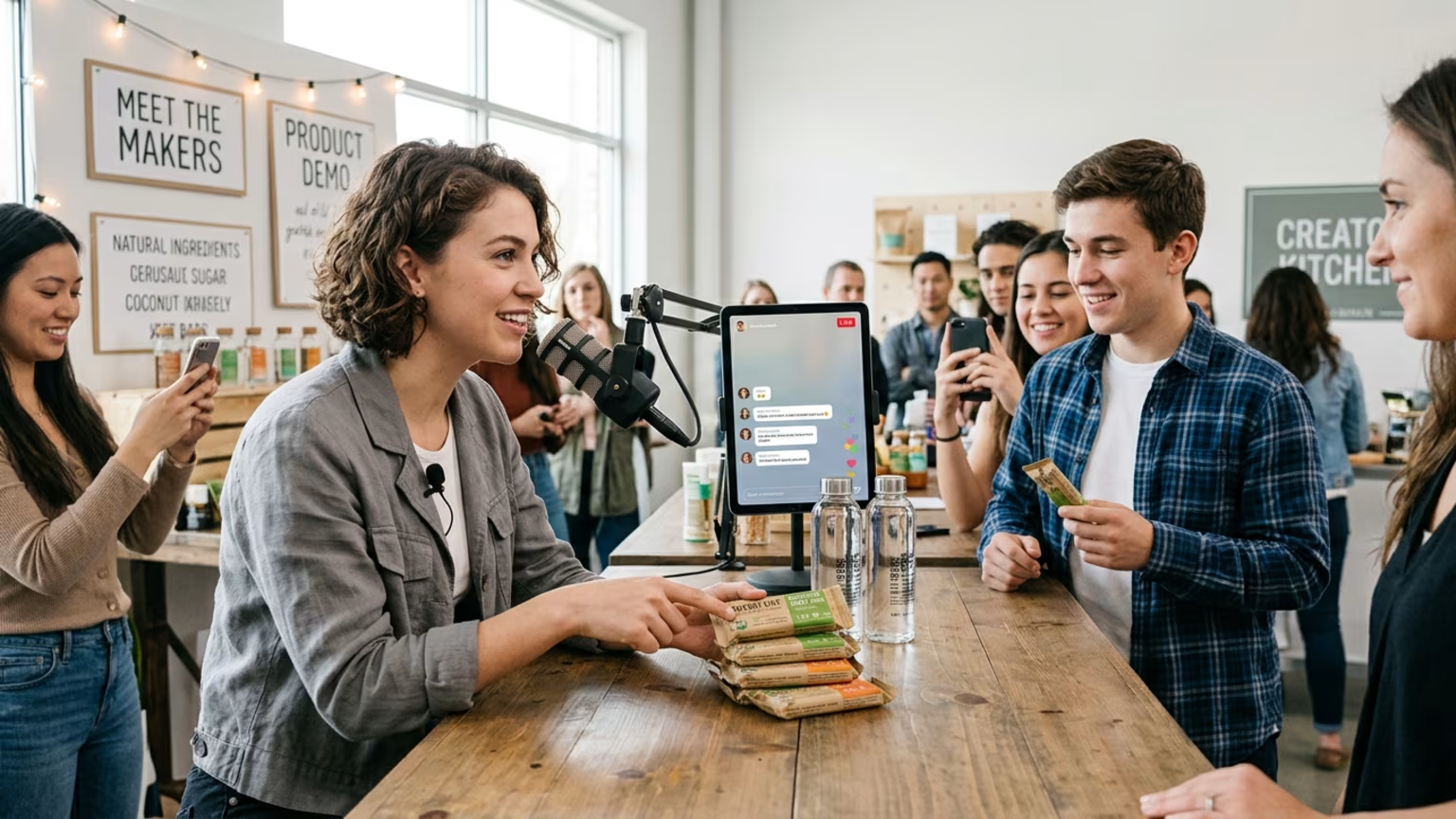
Industry analysis circulating among consumer packaged goods marketers this week reveals a hard truth about digital advertising underperforming for product trial. Brands are aggressively reinvesting in live street activations and creator-led physical sampling to drive authentic trust and measurable pipeline.
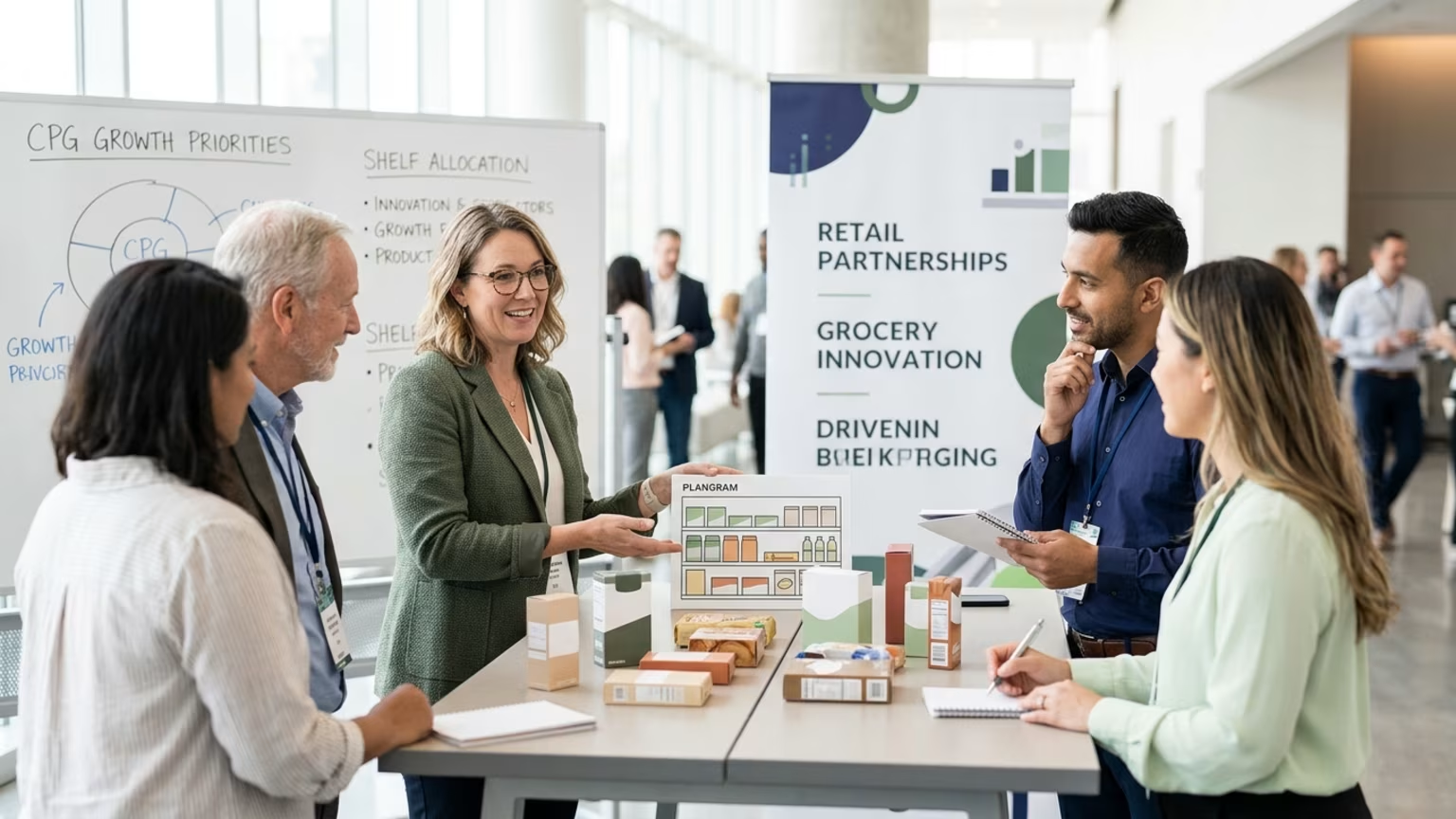
A tired field marketing manager stares at a half-empty trade show booth. A hired influencer awkwardly films a reel in the corner. The messaging feels disjointed, the attendees look bored, and the promised engagement numbers remain completely invisible. This massive disconnect happens daily when companies try to blend social media trends with live event logistics.
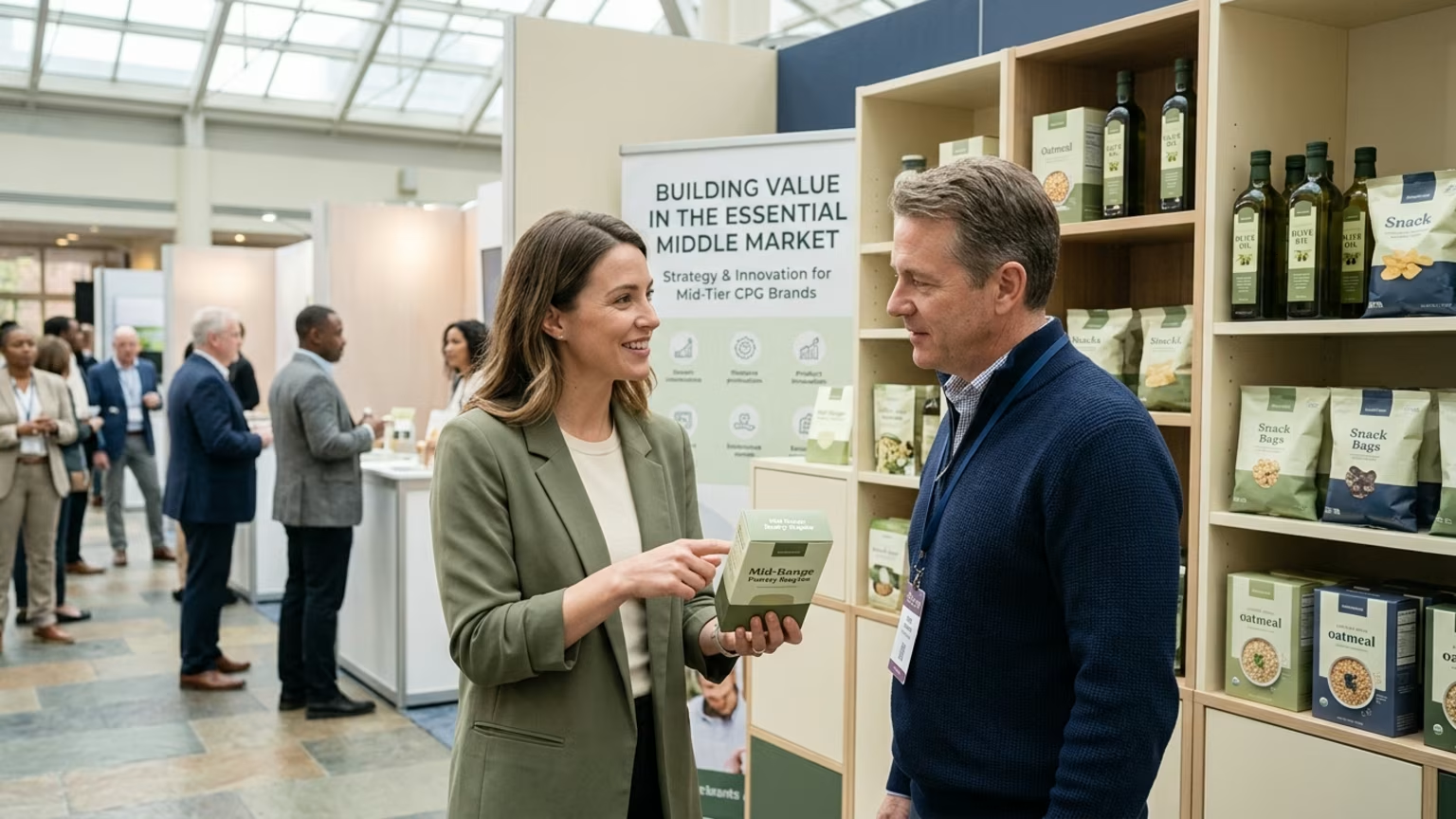
Modern expo floors and street activations often degenerate into loud, disorganized shouting matches. Brands spend huge budgets securing prime trade show spaces, but they completely fail to command attention from the right buyers. Booth staff hand out warm beverages to people who simply want a free promotional tote bag. Meanwhile, the marketing director back at headquarters waits for a Return on Investment that never materializes.
This chaotic scene repeats itself across national trade shows and regional roadshows every single month. Marketing leaders feel intense pressure to prove that their live events drive actual retail sales. They watch competitors launch flashy booths that attract massive crowds but generate zero usable sales data. The frustration builds rapidly when finance teams start questioning the massive logistical costs of these underperforming physical footprints.
The root of the problem lies in treating physical events as an afterthought to digital broadcasting. Many teams treat physical activations merely as a convenient backdrop for cheap content creation. They forget that the live consumer interaction must carry actual weight and spark genuine emotion to drive sales. When the event logistics crumble, the resulting digital content feels entirely staged and hollow to the audience.
The era of brands controlling the entire narrative from a corporate office has completely ended. Marketing analysts from outlets like Communicate Online report a major shift toward community-driven messaging and interactive content. Audiences now expect to shape the brand story themselves through live participation and creator interactions. This shift forces experiential teams to design engagements that produce highly measurable and easily shareable outcomes.
Winning in this new environment requires a highly synchronized approach to field marketing and talent management. You need a strategy that turns passive trade show attendees into active, vocal brand participants. The framework relies on blending highly trained brand ambassadors with creator-led sampling moments. The primary goal is to create a closed loop where physical trial drives digital sharing and direct retail sales.
Our team builds these complex campaigns around three core pillars of strict operational discipline. First, the physical environment must invite direct consumer interaction rather than simply displaying a static product. Second, the staffing model must prioritize deep product education and authentic conversation over scripted, high pressure sales pitches. Third, the post-event follow up must capture qualified leads and funnel them into very clear conversion paths.
By integrating these elements seamlessly, you bridge the massive gap between online hype and offline reality. You build a resilient strategy that respects the intense logistical demands of high volume live events. Companies that master this consistent brand activation approach can turn fleeting consumer interactions into highly repeatable revenue streams.
Executing a creator-led experiential campaign requires military-grade precision. You cannot rely on hope and good lighting to save a poorly planned street activation. Success demands a rigid operational sequence that coordinates talent, logistics, and consumer flow. Use this playbook to structure your next live event.
These steps prevent the typical operational failures that plague large scale brand activations. Strict adherence to this playbook guarantees your field marketing team maintains control over the physical environment. When the logistics run smoothly, the creative elements finally have room to shine.
Clicks and impressions hold very little value to a chief marketing officer reviewing a massive event budget. You must prove that your live experiences actually drive retail sell-through and corporate growth. Transitioning from digital ads to physical sampling requires a new approach to reporting Return on Investment. We separate these measurements into specific lead and lag metrics to provide total clarity.
Lead metrics show the immediate operational health of your live activation. You should track the total volume of qualified interactions per hour to measure pacing. Monitor the sample distribution rate to verify your ambassadors are maintaining appropriate volume without waste. Track the immediate digital capture rate to see how many visitors provided an email or phone number. These immediate numbers tell your field managers if the booth requires mid-day operational adjustments.
Lag metrics determine the long term financial success of the experiential campaign. Track the regional sales lift in target retail locations for the four weeks following the activation. Compare these results against your other in-store marketing programs to find the most effective channel. Measure the final cost per qualified lead to compare the live event against historical ad spend. You must track these long term results to justify future marketing budgets.
These data points form a concrete narrative about campaign performance and retail impact. They prove to stakeholders that investing in measurable live brand experiences generates tangible pipeline and retailer confidence. If you cannot produce these specific metrics, your activation budget will eventually face cuts.
Theory only matters when you can execute it flawlessly in the field under pressure. Our team recently managed a complex live activation for a premium consumer packaged goods beverage brand. The company needed to shift budget away from underperforming social ads and drive massive product trial. They wanted a multi-city street activation that felt completely organic but performed like a highly tuned machine.
We deployed a creator-led sampling tour that targeted high foot traffic zones and major retail hubs. The logistics required precise coordination of refrigerated storage, local city permitting, and active crowd control. Our trained ambassadors managed the complex operational flow. At the same time, local creators captured authentic consumer reactions. The campaign generated massive local awareness and drove clear, measurable spikes in regional grocery store sales.
A VP of Marketing in the CPG beverage category told us: 'Robbie, your leadership and vision turned our campaign into something truly special. The Makai team brought our new drink to life with energy, creativity, and flawless execution. Thanks to you, our brand isn't just tasted, it's remembered.' Our team's approach transformed their product launch into a highly memorable brand experience.
Success in physical marketing requires rigorous operational discipline and a total commitment to measurable outcomes. You can build these high impact programs for your own brand by partnering with seasoned field operators. Book a strategy call with our team today to map out your next major retail activation.

30 Years Experiential & Retail Activation Partner for CPG & Beverage Brands | Multi-Market Demos, Roadshows & Costco/Club Programs That Actually Sell