Robbie Thain
Founder, CEO

Discover why B2B brands are shifting trade show strategies from massive theatrical booths to targeted footprints that drive measurable pipeline and revenue.

Live marketing is experiencing a massive shift from theatrical brand spectacles to disciplined pipeline generation. Teams that treat trade shows as targeted opportunity funnels will dominate those who simply show up for generic brand awareness.
The modern expo hall is often a chaotic environment of flashy displays and aggressive swag distribution. Brand leaders frequently spend six figures on massive footprints that look incredibly impressive. They staff these large spaces with friendly faces who lack rigorous qualification training. The typical result is a crowded booth full of completely unqualified traffic.
When the event ends, sales teams receive a disorganized list of raw badge scans. Following up becomes a frustrating exercise in chasing prospects who only wanted a free pen. Sales representatives waste hours calling people who have no actual buying power. This misalignment creates tension between the field marketing team and the sales department.
Marketers are then left struggling to prove Return on Investment to their executive teams. The CFO looks at the massive invoice for booth construction and asks for direct revenue attribution. Without a clear tracking system, the marketing director has no solid answers. The fundamental problem is a historical focus on gathering bodies rather than starting valuable conversations.
Companies in the consumer packaged goods and tech sectors are highly vulnerable to this trap. They assume that heavy foot traffic naturally equals high market interest. This assumption leads to bloated budgets and poorly focused floor activities. A busy booth means nothing if the visitors do not match your ideal customer profile.
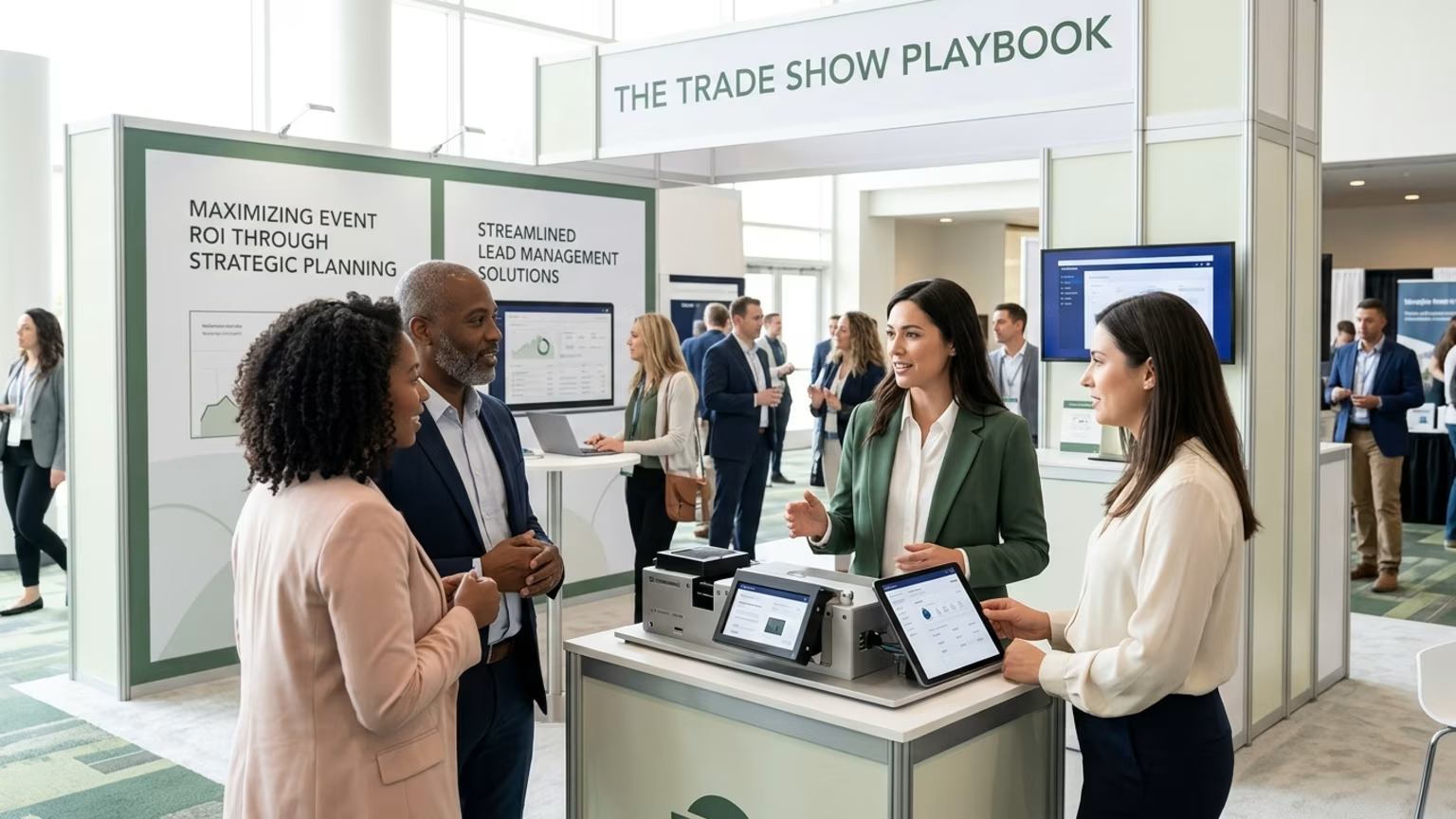
The solution requires treating the floor plan like a structured and measurable sales funnel. Instead of maximizing generic foot traffic, teams must maximize qualified conversations with actual buyers. This strategic shift heavily favors smaller and highly targeted footprints over sprawling brand monuments. You must design spaces expressly for deep product trials and meaningful business interactions.
A strong strategy begins weeks before the activation floor even opens. Teams must prioritize pre-event account planning over spontaneous interactions at the booth. Marketing and sales must collaborate to identify exactly who needs to visit the space. By mapping target accounts in advance, you guarantee that your resources are spent on real prospects.
Staffing models must evolve to match this precision driven approach. Every staff member needs a clearly defined role centered entirely on qualification. One person handles the initial greeting, and another manages the deep discovery questions. A dedicated closer should be ready to schedule follow-up calls right on the floor.
By aligning your event goals with hard revenue targets, you transform the activation from an expense into a growth engine. You stop relying on luck and start relying on a repeatable operational formula. The brand experience becomes a highly engineered mechanism for driving actual sales pipeline.
A pipeline-first strategy fails immediately if sales and marketing operate in isolated silos. Field marketing teams often plan the logistics, and sales teams simply show up on opening day. This disconnect is the root cause of poor lead capture and weak post-show follow-up. True success requires total alignment on goals, targets, and messaging long before the booth is built.
Sales leaders must approve the ideal customer profile used by the marketing team. They need to understand exactly how leads will be scored and routed on the floor. Marketing teams must provide sales representatives with clear talking points and pre-event outreach templates. When both departments work from the exact same playbook, the entire operation runs smoothly.
This alignment extends to the physical behavior inside the booth itself. Marketing directors should brief the sales team on the expected flow of the physical space. Representatives need to know where to conduct quick greetings versus where to hold deep negotiations. Practicing these physical transitions guarantees that buyers experience a totally frictionless progression.
Transitioning to this new model requires strict discipline before you even arrive at the venue. Your execution plan should operate exactly like a highly organized sales operation. Follow this exact sequence to turn your next event into a revenue generator.
You must clearly define your target audience long before booking your floor space. Write down the exact job titles and company sizes that matter most to your business. Share this profile with everyone involved in the event planning process. This clarity prevents your team from wasting time on unqualified booth visitors.
Design the booth layout to facilitate quiet meeting zones and focused product demonstrations. Avoid creating large empty spaces that encourage aimless wandering. Build dedicated stations where account executives can sit down and talk with serious buyers. The architecture of your booth should naturally guide visitors toward a structured business conversation.
Do not wait for buyers to magically appear at your booth. Launch targeted pre-event outreach to secure exact meeting times with key accounts. Use email sequences and direct mail to invite them for an exclusive product trial. A strong pre-booking strategy guarantees a baseline of success regardless of general floor traffic.
Assign distinct roles for your staff members so specialists manage deep qualification. Avoid having everyone try to do every job at the exact same time. Assign greeters to handle the outer perimeter and route serious buyers to product experts. This specialization keeps the flow of conversation organized and highly professional.
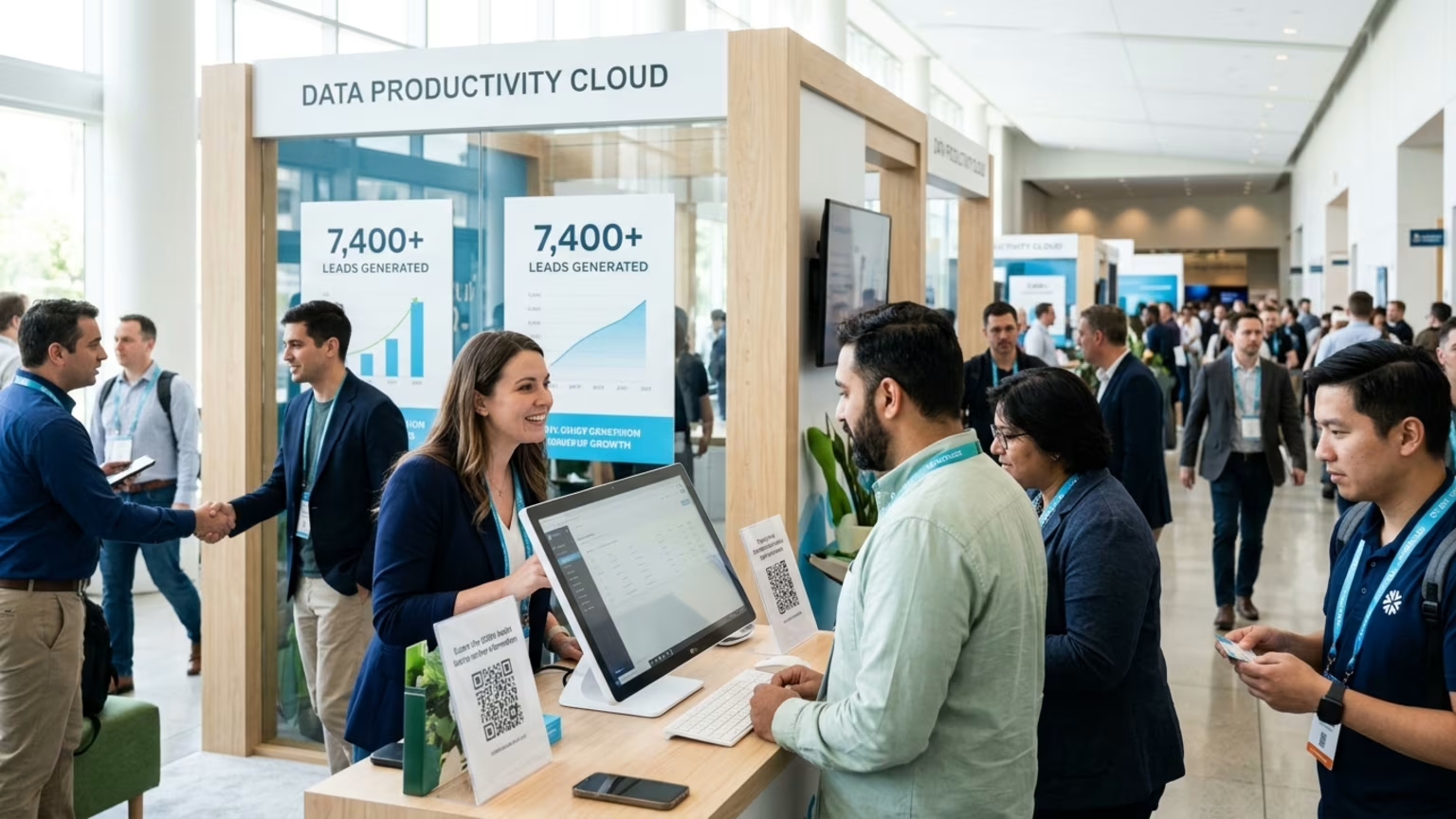
Implement digital lead capture workflows that score prospects instantly based on their engagement. Stop relying on simple badge scans that offer zero context about the conversation. Use digital forms to capture exact pain points and immediate product interests. This rich data makes the post-show follow-up process incredibly efficient.
Schedule your post-show follow-up sequences before the activation even begins. Have your email templates written and your sales cadences fully built. You must strike immediately after the event concludes to maintain buyer interest. If you need help structuring this operational transition, it is a great time to book a strategy call with our team.
Plan a seamless transition into targeted regional roadshows to maintain physical momentum. A single trade show interaction is rarely enough to close a major retail deal. Following up a massive expo with a hyper-local experiential activation keeps your brand top of mind.
Vanity metrics like total badge scans and raw visitor counts are no longer sufficient. Leading indicators must focus heavily on meeting quality and engagement depth. Track the percentage of pre-booked meetings that actually occur on the floor. Monitor the exact number of qualified product trials completed during the show.
You must measure the engagement time of each qualified visitor. A prospect who spends twenty minutes discussing implementation is far more valuable than fifty passing glances. Record the number of secondary meetings scheduled right there in the booth. These immediate actions indicate that your message is resonating with the right people.
Lagging indicators must focus entirely on generated revenue and pipeline velocity. Measure the total pipeline generated within thirty days of the event conclusion. Track the time it takes for a newly sourced event lead to convert into a closed deal. Compare this sales cycle length to leads generated from purely digital marketing channels.
These precise numbers provide the exact data needed for clear executive reporting. Proper tracking removes the guesswork and proves that your strategy actually works. When you can connect a booth conversation to a closed deal, future budget approvals become frictionless.
We create experiential marketing programs built to connect emotion with action. Our process blends creativity, strategy, and data to guarantee every brand interaction drives measurable results. We recently helped a national snack brand completely rethink their presence at a major industry expo. They had historically relied on a massive sampling booth that produced chaotic crowds but zero pipeline.
We guided them to transition toward a much smaller footprint designed exclusively for retail buyer meetings. The new activation featured focused tasting sessions rather than a loud public giveaway. We required staff members to qualify visitors before offering any full product samples. Only pre-vetted buyers were invited into the inner circle to discuss distribution terms.
They tracked the exact number of secondary meetings booked during the initial tasting sessions. The field team used digital scorecards to instantly route buyer notes directly to the national sales director. The brand successfully bypassed the usual expo hall distractions and connected directly with regional distributors. By prioritizing intimate business conversations over sheer volume, the activation generated three major retail deals within a single month.
We craft experiences that engage all five senses. We help people not just see brands, but feel them, turning moments into meaningful business outcomes. When you apply operational discipline to experiential marketing, the results always speak for themselves.

30 Years Experiential & Retail Activation Partner for CPG & Beverage Brands | Multi-Market Demos, Roadshows & Costco/Club Programs That Actually Sell