Robbie Thain
Founder, CEO

Discover how modern enterprise marketing teams use AI and predictive lead scoring to track event performance, capture better leads, and prove physical ROI.
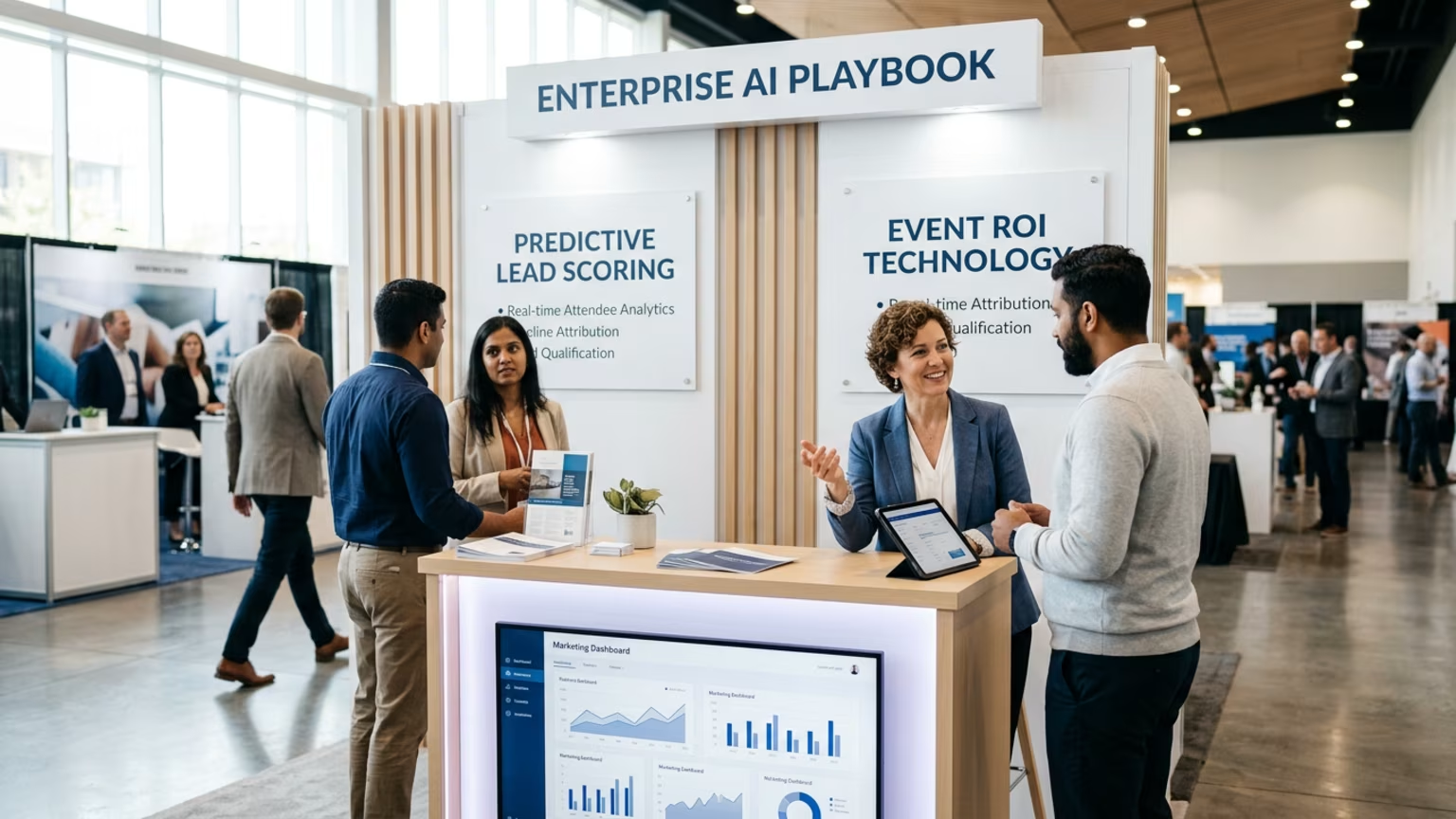
Industry analysts report that integrating artificial intelligence into event lead capture can increase pipeline visibility by up to forty percent. By applying predictive lead scoring to field marketing, this new enterprise playbook turns unpredictable trade show interactions into measurable revenue streams.
The convention center hums with the noise of a thousand simultaneous pitches. The aisles are packed with people looking for free merchandise and quick snacks. Your brand ambassadors are scanning badges as fast as they can. You are collecting a massive list of names without any real context.
Most field marketing teams leave these massive halls with a spreadsheet full of unqualified emails. They hand this cold list to the sales team on a Monday morning. The sales team calls the first five names and gets nowhere. They quickly abandon the rest of the list.
The physical event felt successful since the booth was incredibly busy. The customer relationship data tells a completely different story. The Return on Investment (ROI) becomes impossible to prove to the executive team. The gap between a great brand experience and a closed deal remains uncomfortably wide.
We create experiential marketing programs built to connect emotion with action. Our process blends creativity, strategy, and data to guarantee every brand interaction drives measurable results. We craft experiences that engage all five senses. This helps people not just see brands, but feel them, turning moments into meaningful business outcomes.
The solution lies in applying rigorous digital analytics to the physical world. A recent enterprise marketing playbook details how machine learning transforms raw event data into prioritized targets. According to research from Lyzr, modern frameworks use predictive lead scoring to analyze event interactions alongside historical buyer behavior. This means your tracking systems can automatically flag the highest intent prospects.
We no longer treat all badge scans equally. Instead, we use real time scoring to separate the qualified buyers from the casual snackers. The artificial intelligence evaluates job titles, company size, and exact booth engagement metrics. It assigns a numerical value to every single person who stops by your activation.
By tying this event data into attribution modeling, marketing directors gain unprecedented visibility. You can directly compare field activation performance against your digital advertising channels. This creates a unified baseline for measuring success across your entire organization. It brings absolute clarity to your experiential strategy.
This systematic approach gives you the exact language needed for board meetings. You stop talking about brand awareness and start presenting clear pipeline contribution. The integration of AI for lead capture changes the entire narrative around physical marketing budgets. It proves that real world engagement drives serious corporate revenue.
Historically, marketing departments treated field events and digital campaigns as entirely separate disciplines. Digital teams enjoyed rich analytics panels and precise attribution software. Meanwhile, the experiential team relied on headcounts and estimated impressions. This discrepancy created massive budget friction.
The new enterprise playbook eliminates this gap completely. By applying predictive models to badge scans and booth visits, physical activations generate the exact same data format as a website form submission. This structural change allows Chief Marketing Officers to view all initiatives on a level playing field.
If a digital ad campaign generates leads at fifty dollars each, you can now directly compare that to your trade show cost per lead. More importantly, you can track the long term lifetime value of an event sourced customer against a digital native buyer. We consistently find that in person interactions create stronger loyalty and higher average order values. With consistent benchmarks in place, you can finally prove that reality to the board.
Implementing this strategy requires intense discipline before the doors even open. You need a structured operational plan to turn fleeting interactions into actionable data. We have found that success depends on strict adherence to a clear set of rules. Follow this process to maximize your field marketing returns.
Executing these steps requires alignment between your marketing and sales departments. Everyone must trust the scoring model for this to work effectively. When you train your ambassadors, make sure they know how to use experiential marketing content. Taking photos and sharing live updates can supplement the lead generation process.
This turns a localized physical event into an always on digital asset. It stretches your budget further and captures attention beyond the expo walls. If you need help building this technical infrastructure, Book a strategy call.
The best technology in the world cannot fix a poor human interaction. Your predictive lead scoring model requires high quality data inputs to function correctly. This means your frontline staff must operate with absolute precision and professionalism. You cannot simply hire untrained bodies to pass out flyers and expect robust data returns.
Your brand ambassadors serve as the physical entry point for your entire data funnel. They must understand the underlying strategy behind the questions they ask. When staff members know how their conversations directly impact company revenue, their performance improves dramatically. Invest heavily in comprehensive training sessions before your team steps onto the floor. Teach them how to read body language and naturally guide attendees toward the digital capture tools.
Data is useless if you measure the wrong things. You must track both early indicators and final outcomes to understand campaign health. This dual approach gives you a complete picture of your operational efficiency. It highlights exactly where your funnel is leaking.
For lead metrics, start with the qualified conversation rate. This measures the percentage of total interactions that yield a fully completed lead profile. Next, track the speed to lead. This calculates the exact time between an event interaction and the first sales follow up. These early numbers tell you if your floor execution is actually functioning.
For lag metrics, focus entirely on revenue and pipeline contribution. Track the event sourced opportunity value within thirty days of the activation. Measure the final conversion rate of trade show leads compared to organic digital leads. You can use these figures to validate the quality of your in person interactions.
You should monitor the meeting booking rate generated from the floor. This tracks how many casual conversations transition into formal calendar appointments. Measuring this helps you evaluate the persuasiveness of your brand ambassadors. It forces your team to focus on quality discussions rather than mindless badge scanning. Good metrics drive better operational habits across the entire staff.
Finally, calculate the total cost per qualified opportunity. This precise metric proves the financial efficiency of your physical activations. We have found that bad CRM data undermines this entire tracking process. Strict data hygiene is mandatory to achieve accurate benchmarking.
You must track the account penetration rate for business to business activations. This metric shows how many individual stakeholders within a target company engaged with your brand on the floor. A single booth visit from a junior manager might carry a low predictive score initially. If three different directors from that same company visit your activation over two days, the predictive model upgrades the account score significantly. Tracking these compound interactions reveals the true networking power of your physical events.
Consider a recent national roadshow for a premium cold brew coffee brand. The team needed to drive wholesale grocery accounts and sample to everyday consumers at the same time. In the past, they simply counted the number of cups handed out. This archaic method provided zero insight into their business growth.
This time, the brand deployed a tiered lead capture strategy at major food and beverage expos. Ambassadors used specialized tablets to separate retail buyers from casual fans. The retail buyers answered three quick questions about their purchasing volume. This data flowed directly into a customized predictive scoring model.
The model instantly flagged high volume accounts based on their answers and company profiles. Those high priority accounts received automated meeting invites before they even left the venue. The brand completely bypassed the usual post show lag. The sales team knew exactly who to target first.
The results were immediate and highly profitable. They closed several major regional distribution deals within a week of the event. The activation paid for itself three times over. The team finally had the concrete evidence they needed to justify their budget.
Think back to that deafening convention center floor. The noise and the overwhelming crowds have not changed at all. What has changed is your ability to move through the room with precision. You are no longer just handing out samples and hoping for the best.
With predictive lead scoring, you can see the precise path from a simple conversation to closed revenue. You can isolate the exact interactions that drive real business growth. The chaotic environment suddenly becomes a highly structured revenue engine. You can finally prove the indisputable value of showing up in person.

30 Years Experiential & Retail Activation Partner for CPG & Beverage Brands | Multi-Market Demos, Roadshows & Costco/Club Programs That Actually Sell