Robbie Thain
Founder, CEO

Poor CRM data causes 41% of AI lead scoring failures. Learn how to fix event data capture, clean your database, and prove real experiential marketing ROI.
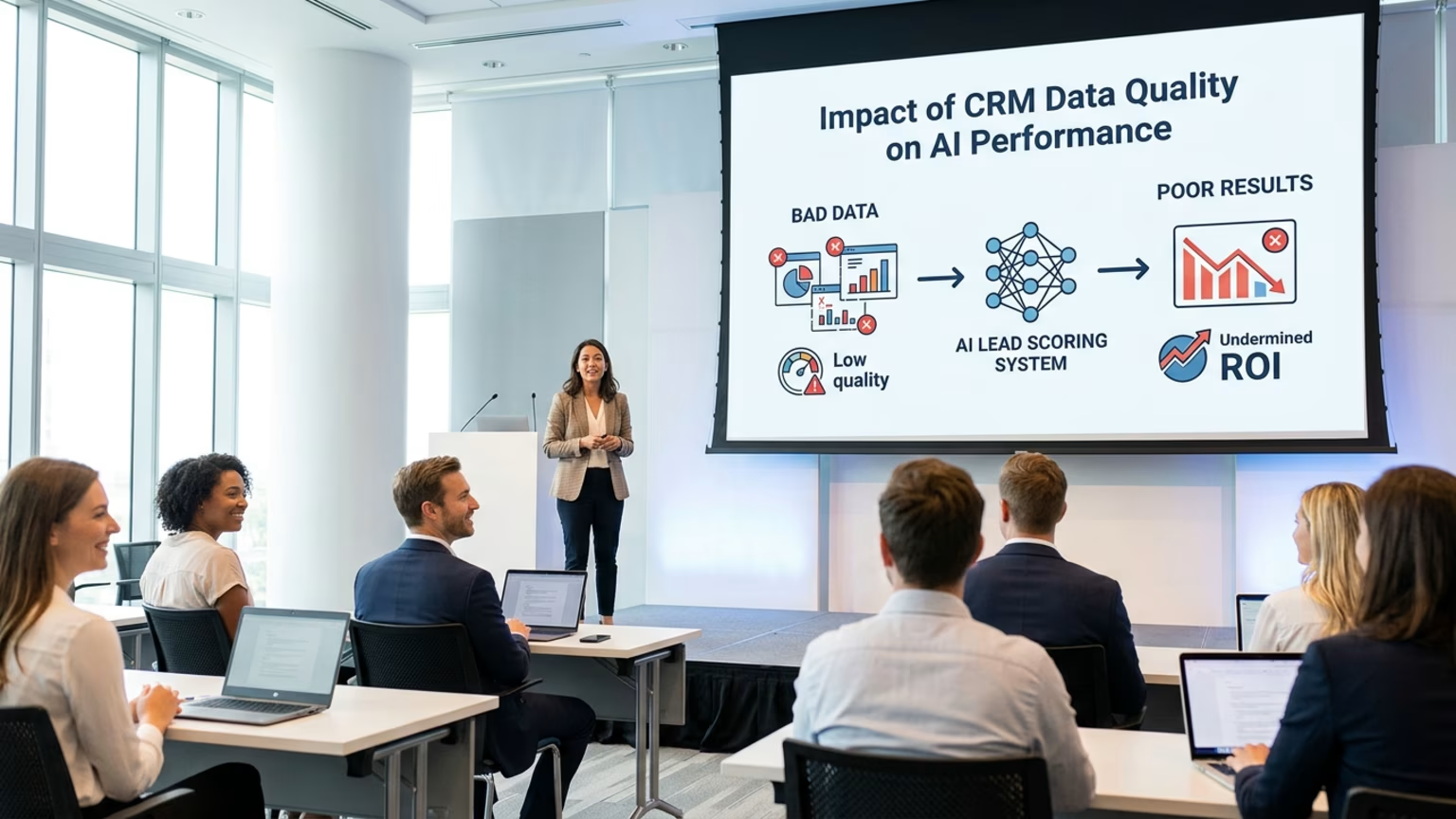
A Field Marketing Director stood at her booth scanning her hundredth badge of the day. The scanner beeped with promise. Two weeks later half those leads bounced or vanished into duplicate records.
AI lead scoring promises to turn raw event traffic into immediate sales priority. Without clean data hygiene that expensive algorithm will just confidently route trash to your sales team.
The expo floor looks like a major win for your experiential marketing program. You have high foot traffic, packed product demos, and a buzzing atmosphere. Your brand ambassadors are talking to real buyers in the CPG and food sectors. People scan QR codes and drop business cards into fishbowls all day long.
Then the event ends and the real work begins. You export a massive spreadsheet and load it into your marketing automation platform. This is where the entire machine breaks down completely. The fresh data from the show mixes with existing CRM records to create total chaos.
Many field marketing teams assume technology will automatically fix their sloppy capture habits. They purchase expensive predictive software and expect miracles overnight. The reality is much harsher for brands trying to win shelf space. The algorithm simply learns from the garbage data you feed it.
According to a Sales Hacker survey, 41 percent of predictive lead scoring initiatives fail caused by CRM data issues rather than algorithmic flaws. Your expensive AI tool starts misrouting retail buyers and inflating lead counts with duplicates. Sales reps call wrong numbers and get incredibly frustrated. The Return on Investment for your booth drops to zero very fast.
Bad data costs organizations 12.9 million dollars annually on average according to Gartner research. AI amplifies this issue by propagating errors across ten to fifteen interconnected systems. MIT Sloan estimates a 15 to 25 percent revenue impact from bad data alone. The moment flawed data enters the pipeline, your credibility fractures entirely.
Lead to account mapping struggles under the weight of outdated records. This makes your beautiful activation look like a complete failure.
You cannot wait until after the event to fix your data. You must filter information at the exact point of entry. Enterprise systems average a 25 percent critical error rate on contact records right from the start. You need a systematic approach to stop the bleeding.
A solid approach follows the Sirius Decisions one ten one hundred rule. It costs one dollar to verify a record at entry. It takes ten dollars to clean it later, and it costs one hundred dollars if ignored entirely. This means treating lead capture like a strict compliance checkpoint on the floor.
You must align your sales and field teams on lead definitions before the truck leaves the warehouse. Brand ambassadors need to understand what constitutes a real prospect. If your field staff scans every single person who grabs a free sample, your database will flood with irrelevant contacts. This misalignment ruins your chances of closing deals.
Your AI scoring model needs trustworthy inputs to work properly at scale. If you want leadership to trust your numbers, you must feed the system verified information. It is much easier to prove the business case for experiential investments when your numbers match reality. You need to present hard facts to the executive team.
In 2026 AI lead generation trends stress pre implementation data audits for clean inputs. Poor CRM hygiene renders predictions completely unreliable for your sales team. You need rigorous governance and continuous validation to overcome siloed systems. Data quality sets the ceiling for predictive analytics reliability.
Human judgment remains required for nuanced handoffs. This counters full reliance on artificial intelligence tools.
Stop treating bad data as an inevitable cost of doing business. You can control the quality of information leaving your booth right now. Here is a step by step guide to keep your CRM clean and your sales team happy.
Hold a debrief meeting immediately after the event to review data quality. Look for patterns in data entry errors from specific brand ambassadors. Address these issues quickly before your next activation begins. Continuous training guarantees your team treats data collection with the respect it deserves.
B2B contact data decays at 30 percent per year. A study of over a thousand contacts found that 70 percent experienced at least one change within twelve months. You need hard metrics to spot this decay early before it ruins your campaigns. You cannot manage what you do not measure.
Track your lead bounce rate immediately after the first follow up email. A high bounce rate points straight back to poor capture hygiene at the booth. If 94 percent of organizations suspect their data inaccuracy, you must prove your event data is actually clean. This is a key lead metric.
Measure the lead to account mapping success rate constantly. This metric shows how well your new event leads attach to existing target accounts in your database. If the mapping fails, your sales team will never see the leads. This creates a massive bottleneck in your go to market engine.
Monitor the pipeline progression speed of event generated leads. If leads stall, they might lack the required fields for AI scoring models to rank them properly. You must watch out for overautomation without human oversight. This can misinterpret buying signals entirely.
Track your sales rejection rate closely every single week. If reps send leads back to marketing, it usually means the contact information is wrong. Tracking the right universal lead capture metrics will prove your events generate real revenue. You must build dashboards with verified fields to rebuild trust across the company.
We see this play out constantly in the beverage and food categories. A national brand launched a major sampling tour but struggled to connect street level trials to retail sell through. Their data was a complete mess of incomplete forms and duplicate entries. Their forecasts drifted from reality amid buyer shifts to harder to track channels.
We deployed a strict capture protocol to fix the entire system. Every interaction required standardized field entry before the system would accept the new lead. We mapped all event data directly to their CRM to prevent manual import errors and routing mistakes. We forced the system to reject bad emails immediately.
This made sure only trustworthy data entered the pipeline. A VP of Marketing in the CPG beverage category told us: 'Robbie, your leadership and vision turned our campaign into something truly special. The Makai team brought our new drink to life with energy, creativity, and flawless execution. Thanks to you, our brand isn't just tasted, it's remembered.'
Our team's approach transformed their product launch into a memorable brand experience that drove actual retail sales. Gartner predicts that through 2026 organizations will abandon 60 percent of AI projects lacking AI ready data. Do not let your brand fall into that trap and waste your marketing budget. Book a strategy call with our team to fix your event data pipeline today.
Audit your CRM today for duplicate records from your last three events before you spend another dollar on event sponsorships.

30 Years Experiential & Retail Activation Partner for CPG & Beverage Brands | Multi-Market Demos, Roadshows & Costco/Club Programs That Actually Sell