Robbie Thain
Founder, CEO

Learn how to treat student ambassador programs as measurable growth channels, tracking verified reach, trial, and first-party data rather than just headcount.
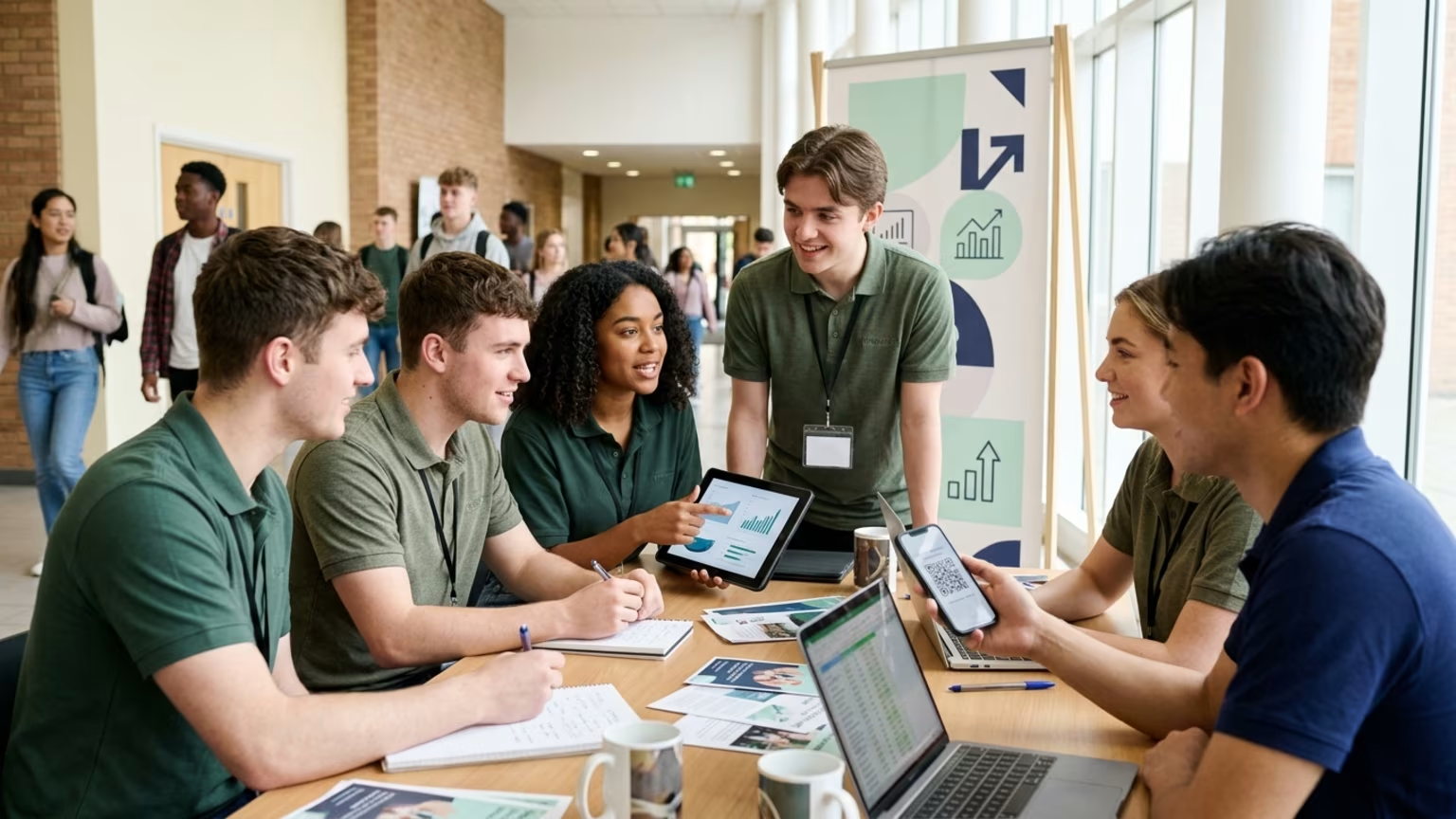
Retail demo programs frequently get judged on cups poured rather than incremental pipeline. A field marketing manager stands in a crowded campus quad holding a clipboard of shift schedules. Fifty students are hired to wear branded shirts and hand out samples between classes. The event looks incredibly busy, but the CRM shows zero new permissioned relationships the next morning.
Before a single student is hired, the infrastructure must be entirely locked down. A headcount model skips straight to recruitment and hopes for the best. A growth channel model starts with setting up the CRM routing and data governance. Teams must establish unique tracking links and promo codes for every specific campus zone.
Permitting for vehicle staging and campus quad access must be secured months in advance. Data privacy procedures need to be established early to protect the brand. Clear consent protocols prevent reputational risk when capturing first-party data from students. Every ambassador needs a structured digital workflow to log interactions properly.
The makai methodology approaches this preparation with strict operational discipline to guarantee clean data collection. Without this rigorous setup, a campaign quickly devolves into an unmeasurable expense. Executing a unified campaign requires centralized storage and logistics. The marketing team must coordinate product delivery nationwide so every activation stays on schedule. When the right product arrives at the right campus zone, ambassadors can focus entirely on the consumer.
Teams that want to build a student ambassador program that drives trial must configure these tracking systems long before the launch date. Setting up the baseline sales metrics and attribution windows takes significant time. You need to assign unique QR codes to specific ambassadors to trace downstream purchases accurately. Direct on-site transactions are generally easier to attribute than a purchase weeks later.
Recent higher-education coverage describes institutions formalizing student storyteller and creator roles to produce social, video, and written content about campus life. Brands should adopt this same distributed mindset for their own physical campaigns. An ambassador is a local distribution point, not just a temporary event staffer. The prep work must reflect that level of commercial responsibility.
Executing a profitable campus program requires a step-by-step measurement protocol. You cannot evaluate a network of local distribution points using only basic traffic counts. The execution on the floor must follow a structured path.
To amplify the reach of the campaign, teams must integrate digital layers directly into the physical execution. Blending physical trials with digital amplification turns a single on-campus conversation into an extended online relationship. When an ambassador successfully drives an app download, that user enters a measurable digital funnel. This allows the brand to track follow-up engagement reliably.
A recent higher education study provides useful context for evaluating these roles systematically. The project surveyed more than 300 student ambassadors across ten universities and was designed to examine who ambassadors are, how they engage, what they gain, and the perceived value of their roles. Brands can apply this same methodological rigor to their commercial programs. By defining the steps clearly, the field team can log every meaningful interaction through a standardized platform.
The first major failure point is relying on claimed network sizes. Amateurs add up every ambassador's social following and report it as potential reach. This heavily double-counts the audience and inflates the numbers beyond reality. Smart operators track verified unique reach through consent-based data capture instead.
The second mistake is treating sample distribution as successful trial. A student might hand out five hundred energy drinks during a single class change. Amateurs log this as five hundred successful consumer engagements. Teams must track the actual sample-to-trial conversion to prove retail sampling Return on Investment effectively.
Poor tracking environments also destroy campaign credibility rapidly. Relying on paper clipboards leads to lost leads and illegible contact information. Without a digitized workflow, the time from interaction to CRM entry stretches into days. This delay kills the momentum of a successful physical brand experience.
Another common error involves ignoring the attribution window entirely. A student might purchase a product three months after the initial campus event. Amateurs attempt to claim full credit for that transaction without a control group. Seasoned operators declare the attribution window before launch and report long-term CRM matches with appropriate confidence levels.
Finally, amateurs fail by mixing awareness metrics with hard revenue figures. Presenting social media impressions beside verified product purchases confuses the finance department. A proper dashboard separates supply quality from downstream commercial behavior. This clarity prevents the common mistake of averaging away useful performance differences between specific campuses.
The campaign does not end when the semester finishes. Marketing leaders must watch the repeat purchase behavior within the predefined attribution window. The next step involves matching CRM outcomes against the initial event opt-in lists. Identify which campus formats produced the highest qualified action rates. Shift the budget toward those verified distribution points for the following semester.
Surveys conducted before and after the activation should also remain in rotation. These surveys test brand awareness and purchase intent among engaged and non-engaged audiences. When the hard revenue data aligns with the survey results, the business case becomes undeniable. This multi-layered evidence secures future budget from executive leadership.

30 Years Experiential & Retail Activation Partner for CPG & Beverage Brands | Multi-Market Demos, Roadshows & Costco/Club Programs That Actually Sell