Robbie Thain
Founder, CEO

Size activation teams by station, peak traffic and interaction time. Use a practical worksheet to plan concurrent roles, breaks, relief and follow-up.
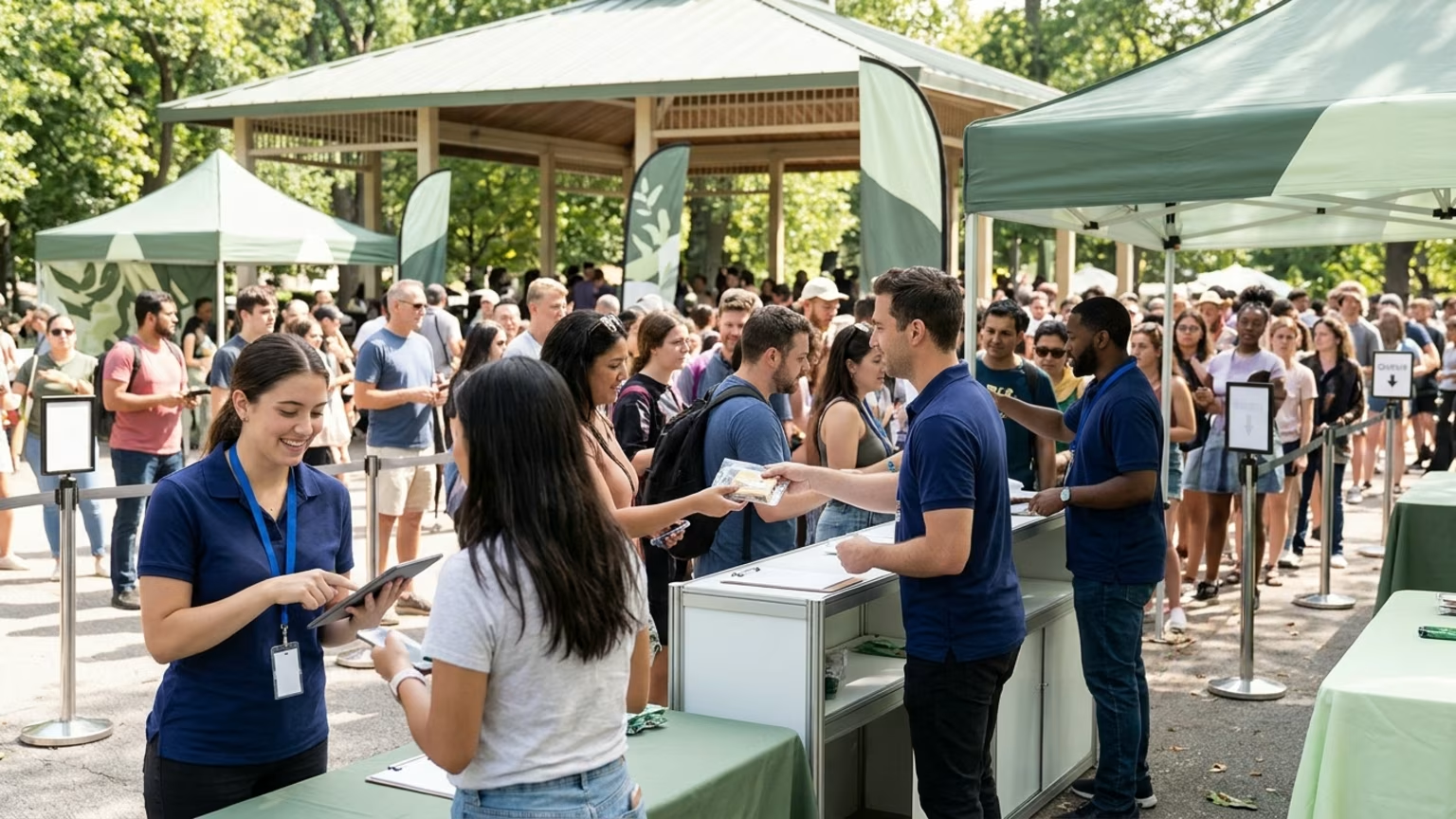
Start with the work surrounding the consumer interaction. Permitting, CRM routing and vehicle staging belong in the pre-event brief. A frontline staffing calculation does not resolve those responsibilities.
Makai's integrated services span permitting through CRM reporting. Our storage and logistics work includes storing sampling products and event gear, then coordinating shipping and tracking for nationwide delivery. For us, operator-grade planning means treating the supporting logistics as part of the activation rather than as background detail.
Keep the brief clear about which responsibilities occur before opening and which continue during public hours. Lead routing needs an owner beyond the initial capture. Product replenishment also needs coverage when the sampling station remains active. Keep permit and compliance planning visible without treating this worksheet as a permit checklist.
Vehicle staging is a separate logistics question from guest-facing capacity. We ran the Little Debbie Share a Smile Tour across 21 markets using a branded truck, trailer and Cupcake Smart Cars. That format illustrates why a mobile activation brief must account for more than the people handing out product.
Our retail demonstrations, sampling programs and roadshows bring brands face to face with consumers. The staffing question is how to support that interaction while keeping the surrounding work accounted for.
Eventdex's staffing guide recommends estimating demand by station and time block, timing the task and accounting for breaks and floating coverage. FM Event Staffing also recommends considering simultaneous activities and peak periods rather than applying one fixed ratio.
These are practitioner planning methods rather than independently validated staffing standards. They provide no universal engagement rate, interaction duration, acceptable wait time or relief allowance. They also do not establish that a particular staffing formula improves sales or Return on Investment (ROI).
Use the following sequence to make the estimate reviewable:
A planning calculation based on the concepts described by Eventdex and Viper Experience is:
Concurrent frontline staff = round up(expected traffic in block × expected station-use share × average interaction minutes ÷ minutes in block).
Viper Experience illustrates estimating floor staffing from visitor volume, interaction share and interaction duration. Its approach then accounts separately for leadership, hosting and break coverage. Keep that distinction visible instead of treating the formula's answer as the finished roster.
Create a separate entry for every station and time block. A copy-ready worksheet can use these fields without requiring a spreadsheet table:
Keep estimates and actuals beside each other. That makes the worksheet useful after the event rather than merely a document used to approve labor.
An all-day traffic average can conceal the period that determines whether the station has enough coverage. Ashley Avery Agency advises planners to account for attendance waves and retain flexibility as guest flow changes.
The practical correction is to keep peak assumptions visible. Compare observed arrivals with the planned block and let the onsite lead reassess deployment. The agency's guidance includes repositioning staff, staggering call times and reallocating coverage as conditions evolve.
Do not turn a peak estimate into an all-day staffing requirement without reviewing the other blocks. The point is to match deployment to the workload rather than replace one blanket assumption with another.
A roster can look complete while leaving lead capture or break relief unassigned. FM Event Staffing's guidance calls for checking simultaneous activities and maintaining coverage at key posts.
For trade shows, connect the product conversation to the next accountable role. A guest's interest should not become an ownerless follow-up task. Keep CRM routing visible in the brief rather than assuming the person who captures the contact also owns everything afterward.
Review field-team roles and readiness alongside the coverage worksheet. Headcount answers how many people are available. Role assignments explain what they can cover at the same time.
At Natural Products Expo West 2025, we designed and managed a 40 by 20 foot trade show environment for Glanbia. Our team handled concept, operations, staffing and breakdown. More than 14,000 recorded product samples were distributed across the activation stations.
That is documented sampling output rather than a staffing ratio or lead-conversion result. Its relevance here is the coordinated environment: multiple activation stations sat within one managed space.
For planning purposes, that distinction matters. A single total for the environment does not describe the workload at each station. The worksheet needs station-level assumptions before those requirements can be assembled into a coordinated roster.
Compare expected station use with completed interactions during the busiest block. Review observed interaction length and queue conditions alongside any changes in deployment. Then check whether relief coverage kept the intended functions operating.
For trade shows, follow the contact beyond capture into its assigned CRM route. Keep that follow-up separate from sample volume so the report distinguishes participation from qualified opportunity. A scorecard built around qualified interactions can keep those outcomes visible.
What to watch next: Identify the station and time block with the largest gap between planned workload and completed interactions. Review that gap before repeating the staffing plan at the next event or tour stop.
Trade show coordinators carry the daily staffing challenge; Makai brings product storage, shipping, tracking and nationwide equipment delivery into the activation scope. For crowded booths producing weak leads, its campaigns and trade show environments are designed to turn brief consumer contact into qualified opportunities for premium CPG brands.

30 Years Experiential & Retail Activation Partner for CPG & Beverage Brands | Multi-Market Demos, Roadshows & Costco/Club Programs That Actually Sell