Robbie Thain
Founder, CEO

Learn how to build a student ambassador program that drives measurable product trial and retail sales for CPG brands through strict field marketing tactics.
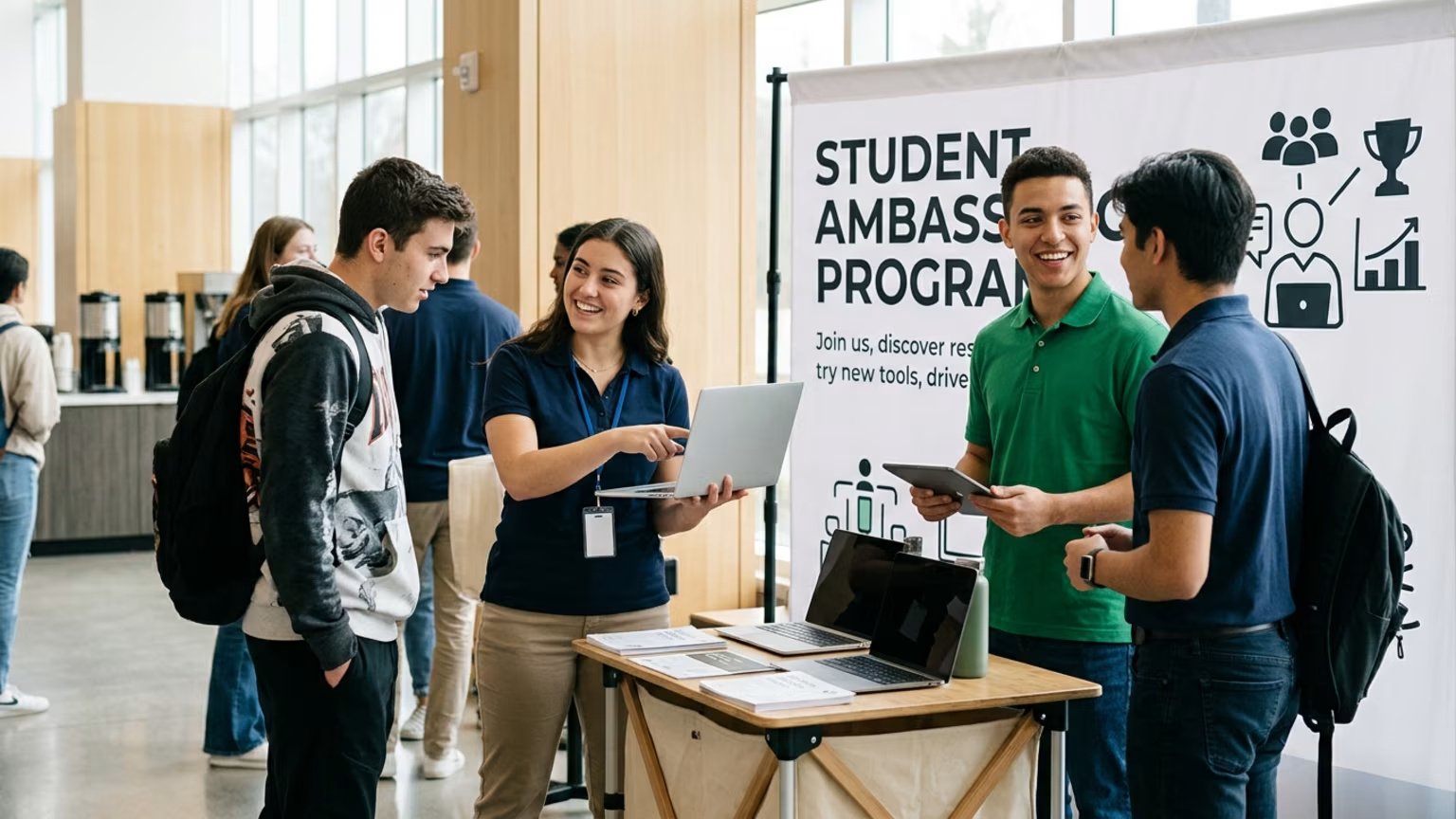
Paying college students to post photos of your product on social media is a spectacular waste of budget. Most campus ambassador programs operate as glorified influencer campaigns that generate zero retail velocity. True experiential marketing on campus requires building a disciplined trial and advocacy engine.
The university demographic represents billions in discretionary spending power. Brands that capture loyalty during these formative years often retain those customers for decades. A poorly executed campus campaign leaves that massive revenue potential on the table.
This guide outlines a systematic framework for transforming passive student representatives into active field marketers. You will learn the exact steps to recruit, train, and track ambassadors so your program produces measurable pipeline rather than fleeting likes.
You ship fifty cases of your new beverage to a sophomore in a fraternity house. Two weeks pass with absolute silence from the field. A blurry photo appears online showing your product sitting unattended on a dorm room desk. You have no idea if anyone tasted the drink, where the inventory went, or if the effort moved a single unit at the local grocery store.
This is the standard reality for brands that treat student programs as an afterthought. Marketing teams assume college students naturally understand how to represent a brand. They mail out free merchandise and expect automatic retail lift. The result is lost inventory, zero data, and a frustrated leadership team demanding answers about Return on Investment.
Field marketing managers bear the brunt of this unstructured chaos. They spend hours tracking down missing shipments, pleading for event photos, and trying to justify the budget to their executive team. When leadership asks for concrete sales data, the manager can only provide a handful of social media screenshots. This lack of visibility damages the credibility of the entire marketing department.
Students disappear during midterms or extended holiday breaks. Your product sits in a mailroom gathering dust for a month. The lack of constant communication creates massive blind spots for your regional sales directors. They cannot forecast inventory needs when they do not know what is happening on the ground.
Without a rigid operational structure, university activations devolve into expensive giveaways. You end up paying for shipping, premium product, and branded apparel with no corresponding sales data. Retail buyers lose confidence when promised campus support fails to materialize into foot traffic at their stores. When brands fail to properly hire and train their field teams, execution falls apart immediately.
The chaos compounds when you attempt to scale this flawed model across multiple universities. Managing ten disorganized campuses is a headache. Managing fifty disorganized campuses is a major financial liability. A new approach is necessary.
A student ambassador program must function as a localized experiential marketing campaign. The strategy shifts the focus from digital awareness to physical product trial. You are building a decentralized sales force. The goal is to turn initial curiosity into recurring retail purchases.
First, align the program closely with retail availability. There is no point in sampling a product on a campus if students cannot buy it within a two-mile radius. Map out key grocery stores, convenience shops, and target accounts near the university. Every campus activation must drive foot traffic directly to those exact retail doors.
Selecting the right university environment is the foundation of this strategy. A sprawling, rural campus requires a completely different logistical approach than a dense, urban university. You must evaluate the walkability of the campus, the concentration of target retail accounts, and the local campus culture. A dense cluster of independent convenience stores near dormitories creates the perfect ecosystem for driving immediate trial and purchase.
Second, mandate physical interaction over digital posting. Ambassadors must organize tasting sessions, host study break samplings, and hand out product at intramural games. They need to have real conversations with peers. Digital posts only serve to announce these physical events.
We specialize in creating retail demos, product sampling programs, and roadshows that bring brands face to face with their audiences. We apply that exact same operational rigor to campus programs. We treat every university as a distinct territory that requires structured management and clear expectations. This localized approach is just as effective as how in-store tasting programs build immediate product trial for emerging brands.
Traditional advertising struggles to capture the attention of busy college students. Banner ads and sponsored posts fade into the background noise of daily digital life. A genuine recommendation from a peer cuts through that clutter instantly. Students trust their classmates far more than they trust corporate messaging.
This psychological dynamic makes the campus environment incredibly valuable for emerging brands. A student athlete handing out a recovery drink carries inherent authority. The product gains instant credibility by association. You cannot buy that level of authentic endorsement through conventional digital channels.
This peer trust is highly fragile. It breaks the moment a student sounds like a programmed corporate robot. The training process must equip ambassadors with natural conversation starters rather than rigid sales pitches. Authenticity drives the conversion from a free sample to a paid retail purchase.
Field representatives must learn to read the room during an activation. Pushing a product too aggressively during a stressful exam period creates negative brand sentiment. Offering a well-timed snack break outside the library builds genuine goodwill. Context matters just as much as the product itself.
The execution must be flawless to see actual results. You cannot rely on hope as a management strategy. Following a strict operational playbook separates high performing programs from amateur efforts.
Look for students involved in club leadership, Greek life, or intramural sports. You want organizers who naturally draw crowds. Avoid applicants who just want free merchandise or easy resume bullet points. The ideal candidate already manages budgets, coordinates meetings, and speaks confidently in public.
Interview these students exactly like traditional field marketing contractors. Ask them how they handle rejection. Question them on their organizational habits. A student who struggles to return an email quickly will never execute a sampling event on schedule.
Run mandatory video training sessions before shipping any product. Teach them how to talk about the brand, answer common questions, and handle objections. Provide a clear script for product handoffs.
Do not leave the brand messaging to chance. Similar to how we design promotional campaigns that turn initial interest into measurable sales, campus reps need a structured script. They must know the primary value proposition, the ingredients, and the exact location of the nearest retail stockist.
Require a strict number of physical interactions per week. Tell them exactly how many samples to distribute. Mandate that every sampling event includes a clear call to action regarding where to buy the product. Vague instructions produce vague results.
Set clear consequences for missing these quotas. If an ambassador fails to execute two consecutive events, pause their product shipments. Replace underperforming students quickly to maintain momentum within the territory.
Treating dorm rooms like professional warehouses is a recipe for disaster. Students often lack the storage space or the discipline to manage perishable inventory. Ship product in small, frequent batches rather than massive pallets.
Provide clear instructions on product handling, temperature control, and storage conditions. A premium beverage served warm out of a cardboard box ruins the initial brand experience. Require ambassadors to confirm receipt of every shipment within twenty-four hours to prevent mailroom theft.
Missing shipments derail the entire activation calendar. You must establish a clear chain of custody for every single case of product leaving your facility. Assign tracking numbers directly to the student portal. Hold the ambassador financially responsible for any unaccounted inventory.
This strict approach eliminates the casual attitude many students bring to campus jobs. When they understand the exact monetary value of the goods they control, their behavior changes rapidly. They stop treating the product like a personal stash and start treating it like company property.
Use simple mobile forms to capture data after every event. Require photos of the setup, estimated crowd size, and qualitative feedback from the samplers. This data proves the work actually happened.
Capturing field data requires a system similar to how universal lead capture tools track immediate event outcomes to maintain accountability. Do not accept text messages or casual emails as event reports. Centralize all field data into a single dashboard for your marketing team to review weekly.
Data collection must be entirely frictionless for the student. A complex spreadsheet will never get filled out after a late-night sampling event. Provide a mobile application with simple drop-down menus and photo upload capabilities. The recap process should take less than three minutes to complete.
Timely data entry is non-negotiable. Require all event recaps to be submitted within twelve hours of the activation. Late submissions indicate a lack of operational discipline. A strict deadline keeps the field team focused and provides leadership with accurate weekly performance numbers.
Concrete performance data validates the budget. You cannot manage what you do not measure. Tracking the right numbers prevents the program from becoming a subjective branding exercise.
Lead metrics track the immediate activity on the ground. Count the number of physical samples distributed per week. Track the number of micro-events hosted by your ambassadors. Monitor the completion rate of post-event recaps submitted through your mobile tracking tools.
These leading indicators tell you if the operational engine is running smoothly. High sample distribution numbers suggest strong field engagement. Low recap completion rates indicate a breakdown in management and oversight.
Lag metrics prove the financial impact of the program. The most pressing metric is retail sales lift at stores within a three-mile radius of the campus. Track regional distribution gains if local store managers request more product. Measure the volume of redeemed digital coupons handed out during campus events.
Connecting field activity to retail velocity is the true test of success. If sample distribution is high but local sales remain flat, you have a conversion problem. The product might have a taste issue, or the ambassadors are failing to direct students to the stores.
Beyond hard numbers, a disciplined program captures invaluable qualitative field data. Ambassadors serve as your direct line to changing consumer preferences. They can report on flavor favorites, packaging complaints, and aggressive competitor promotions happening on campus.
This ground-level intelligence helps brand managers pivot their messaging quickly. When an ambassador reports that a rival brand is dominating a specific fraternity house, you can immediately deploy targeted counter-measures. This feedback loop transforms your field team into a live focus group.
A fast-growing clean energy drink brand needed to drive retail velocity near major state universities. They initially relied on students posting selfies with the can. Sales remained completely flat.
The brand overhauled the program using our direct engagement model. They recruited fifty intramural sports captains across ten universities. Each captain received a monthly drop of product allocated for post-game distribution. The ambassadors handed out cold cans right when players needed energy the most.
During the handoff, ambassadors told players exactly which local convenience store stocked the brand. They handed out physical punch cards for discounts. Within one semester, the target convenience stores saw a forty percent increase in sell-through.
The brand turned a vague awareness campaign into a predictable retail growth engine. Retail buyers noticed the surge in foot traffic and immediately expanded shelf space. If your current sampling efforts are falling flat, book a strategy call with our team to rebuild your approach.
A brand is just an idea until someone actually tastes the product. The real magic happens when a trusted peer puts that product into a new hand. A well run program simply removes the friction between a curious student and their first sip. When the process is respected, the results follow naturally.

30 Years Experiential & Retail Activation Partner for CPG & Beverage Brands | Multi-Market Demos, Roadshows & Costco/Club Programs That Actually Sell