Robbie Thain
Founder, CEO

Discover why experiential marketing must evolve beyond Y2K aesthetics to drive measurable retail sales for Gen Alpha consumers.
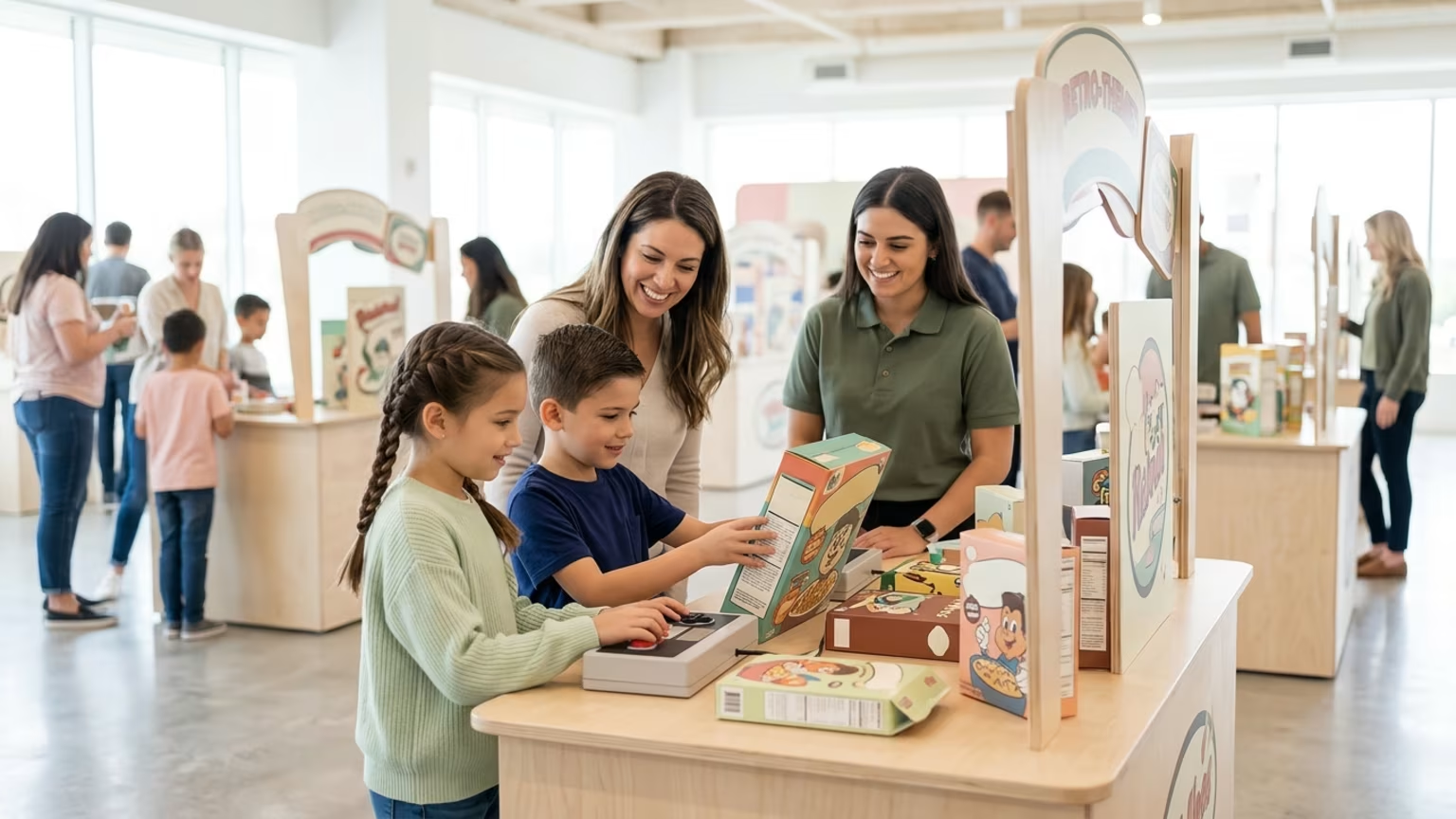
Recent research from Vevo, as cited by Adweek, indicates that 65 percent of Gen Z respondents feel a sense of borrowed nostalgia for time periods they did not fully experience. This figure explains the sudden rush of late-1990s branding taking over modern retail floors. However, replicating a vintage aesthetic is not a complete marketing strategy.
Your giant interactive virtual reality booth at trade shows is bleeding you dry. Launching campaigns with 1996-inspired low-rise jeans might get you social media likes, as seen in recent industry examples. But if that visual hook fails to drive immediate trial, you are funding a museum exhibit instead of a marketing campaign. Marketers constantly mistake borrowed nostalgia for actual purchase intent.
A physical activation must compel a consumer to act decisively. When brands rely purely on cultural recognition, they ignore the hard work of retail conversion. A teenager might recognize a retro logo from a viral internet video. That does not mean they will spend their own money to buy the product today.
Nostalgia without a clear transaction path is simply expensive corporate decoration. We see premium beverage and snack brands pour massive budgets into these visually stunning but commercially empty setups. They create incredible sets, hire expensive photographers, and hand out free merchandise. Yet they completely forget to ask for the sale at the end of the interaction.
Your target audience is overwhelmed by digital noise and craves real interaction. But they do not want to participate in a convoluted brand activation that lacks a clear purpose. If your experiential marketing strategy relies solely on a throwback aesthetic, you are leaving money on the table.
Consumer packaged goods brands are currently spending six figures to build environments that look incredible on camera but generate zero qualified pipeline. A Chief Marketing Officer looks at the engagement metrics and sees thousands of photo shares. Then they review the regional retail sell-through data and see completely flat numbers. The panic sets in when the executive board asks for Return on Investment on that massive event budget.
Visual success often masks deep operational failure. Field marketing managers worry about inconsistent staffing, fragmented execution, and poor in-store presentation. An event that looks busy but produces fog instead of evidence is a liability. Adweek analyzed this exact tension in their August 2026 report.
Their analysis identifies a broader wave of brands revisiting late-1990s cultural cues to engage younger consumers. The publication highlighted Bath & Body Works launching a Fruit Fusion line featuring Hilary Duff. They also pointed to Gap using Hailey Bieber in a retro denim campaign. These are major investments in retro theater designed to capture attention.
But Adweek issues a critical warning for brand leaders. They note that strategies built specifically for Gen Z will not automatically work for Gen Alpha. Gen Z is defined in the article as consumers born between 1996 and 2010. While Millennials and Gen X remember the 1990s, younger cohorts are experiencing these cultural references second-hand.
The same Vevo research showed that compared to the 65 percent of Gen Z feeling borrowed nostalgia, only 55 percent of Millennials and 54 percent of Gen X reported the same feeling. If a brand assumes that a vintage logo will automatically trigger a purchase, they will lose money. Trade shows and regional expos present the exact same aesthetic trap.
A brand might invest heavily in a visually stunning booth design meant to evoke a specific era. However, without proper flow and data capture, the space just creates low-quality leads and scattered attention. Experiential marketing must serve as a reliable engine for retail credibility and regional market entry.
In our experience, you fix this mismatch by blending human connection with relentless operational focus. Makai approaches live consumer experiences with a welcoming, authentic mentality. We want shoppers to feel a genuine emotional connection when they interact with a brand in the physical world. But we pair that approachable energy with brutal execution standards.
A friendly smile must be backed by a highly trained ambassador who knows how to close a sale. This operational rigor prevents brand activations from becoming beautiful dumpster fires. We train our teams to have authentic conversations while moving consumers down a defined path to purchase. Every single interaction should guide the shopper toward a tangible outcome.
When you review our experiential marketing and brand activation services, you will see this exact philosophy applied across national campaigns. We manage end-to-end retail demonstrations and high-volume roadshows that bring brands directly to shoppers. Our exclusive focus on the nuances of the food and beverage sectors allows us to maximize pipeline efficiently. We design memorable live experiences that bring brands and people together through interaction and emotion.
By utilizing trained brand ambassadors, we drive in-store sales through real conversations and product trials.
A VP of Marketing reflected on our partnership: "Robbie, it was a pleasure working with you and your team. You turned our launch into an experience that connected with shoppers and built lasting excitement for our brand. We're already looking forward to the next project together."
Our team created a launch experience that resonated with retail shoppers and generated momentum for future collaborations. Real human warmth drives the initial engagement, and disciplined execution secures the final results. We provide comprehensive services from permitting to detailed reporting. We even store your sampling product and coordinate nationwide delivery so every event stays perfectly on schedule.
The experiential objective must shift from tracking passive impressions to tracking tangible outcomes. Brands must prioritize product samples distributed to target buyers and actual retail meetings booked. According to retail analysts, Pizza Hut recently demonstrated this exact strategic shift with its Throwback Value Menu. They did not just bring back old restaurant designs to look cool.
They connected their cultural nostalgia directly to a highly specific pricing and trial mechanism. Industry reports indicate the Throwback Value Menu includes a $3 one-topping Personal Pan Pizza. It also features $4 breadsticks, $4 cinnamon sticks, and a $3 Pepsi two-liter. The promotion includes a $10 medium one-topping Stuffed Crust Pizza, although prices and participation can vary by location.
Instead of relying exclusively on restored menu items, Pizza Hut also introduced entirely new products. They added Triple Cheese Mac at $6 and S'mores Sticks at $5 to drive fresh trial among young consumers. Pizza Hut clearly defined the path to purchase for their activation. Delish reported that the throwback menu is available for dine-in, carryout, and direct delivery.
However, they explicitly excluded third-party delivery applications to keep consumers securely in their own ecosystem. This forces the customer to interact directly with the brand. They also extended the campaign beyond food with a limited-edition Dinner Service NY streetwear collection. This apparel line was inspired by old company uniforms and classic reading memories.
To further drive measurable engagement, Pizza Hut built a custom experience inside their own rewards application. Members can complete trivia and challenges to unlock rewards and collectibles. We constantly review experiential marketing strategies that mirror this exact level of strategic tracking. Connecting a live experience to digital reporting is no longer optional for modern consumer brands.
A successful campaign captures contact information, monitors coupon redemptions, and tracks subsequent retail lift. Without this closed-loop reporting, marketing directors cannot prove that their field execution actually works. Nostalgia gets the consumer to the table, but hard data proves they stayed for the meal.
Marketing teams must demand perfect execution over pure aesthetics every single time. A striking vintage visual identity will certainly make people stop and look at your booth. But capturing attention is only the very first step in a much longer commercial process. You have to guide that specific attention toward a physical product trial.
You must give the shopper a compelling, measurable reason to put your item in their cart. Those young consumers feeling borrowed nostalgia are standing on the retail floor right now. They are looking at your retro branding and waiting for a clear reason to buy. They will only convert if you guide them seamlessly from a memory to a transaction.
An effective activation turns that fleeting cultural curiosity into verified retail pipeline.

30 Years Experiential & Retail Activation Partner for CPG & Beverage Brands | Multi-Market Demos, Roadshows & Costco/Club Programs That Actually Sell