Robbie Thain
Founder, CEO

An operator’s take on Bain’s retail guidance, with implications for CPG staffing, product trials, booth flow and retailer-aligned reporting.
On October 29, 2026, Bain & Company published “Want to Lead in Consumer Products? Adapt to Retailing’s New Reality.” The article recommends changes to how consumer-products companies invest in channels, work with retailers and organize their commercial capabilities.
For CPG and beverage marketing leaders, the immediate development is a strategic recommendation rather than a new operating requirement. The field question is how that recommendation should affect the next retail demonstration, sampling program or trade show brief.
Bain’s argument is that commercial models need to change alongside shopping behavior and retailer capabilities. Its authors describe retailers expanding into adjacent businesses while gaining stronger data and technology capabilities. They recommend four strategic bets:
The scale of Bain’s forecast explains the attention around its guidance. Bain projects that agentic commerce could influence about $1 trillion in U.S. consumer spending by 2030. That is a projection, not a description of current purchasing.
Current survey evidence also calls for precise language. McKinsey’s June 2026 survey reported that 48% of U.S. respondents had used AI for shopping. KPMG’s 2026 holiday-shopping survey found that 37% planned to use AI to compare prices across retailers and 33% planned to use it to find discounts or promotions. Reported use and stated intentions are different from completed purchases.
Bain’s article does not evaluate sampling or event execution and does not establish their sales impact. It also says channel maturity varies across markets and categories. The operational implications below are Makai’s interpretation of its commercial guidance, not a tested activation protocol supplied by Bain.
Our stance is simple: keep the welcome generous and the commercial purpose clear. A good product conversation should feel human. It should also belong to a deliberate plan for where the brand wants to grow.
We have been connecting brands with people through live experiences, retail programs and national activations since 1995. Our retail demos, product sampling programs and roadshows are designed to drive trial and build consumer relationships while supporting retail velocity across locations. That physical work remains the center of our perspective.
We read Bain’s guidance as a reason to connect that work more closely to channel decisions. The choice is not whether a brand should have a warm conversation or a disciplined commercial strategy. For us, the useful question is what that conversation contributes to the strategy.
For a beverage brand planning retail expansion, that means judging a proposed activation against the retailer relationship and the intended purchase destination. Product trial is a purpose. Supporting distribution is another. A brief should make their relationship explicit rather than assuming that consumer attention will connect them automatically.
We believe hospitality and accountability belong together. A shopper should have room to taste, ask questions and form an opinion. Marketing leadership should have a clear account of what the program was designed to accomplish and what evidence it produced.
That is the practical value of adapting execution without losing the brand’s promise. The experience can remain approachable while its role in the commercial plan becomes more precise.
Bain’s recommendations become useful to field teams when they change the brief. Our operational reading centers on staff responsibilities, the purpose of the footprint and the evidence expected after the interaction. Each should connect to the selected channel and retailer objective.
Bain argues that technology can shift frontline commercial work away from repeated scenario-building and toward strategic customer discussions. Our interpretation for experiential teams is to examine the purpose of field time rather than assume that automation creates a reason to reduce staffing.
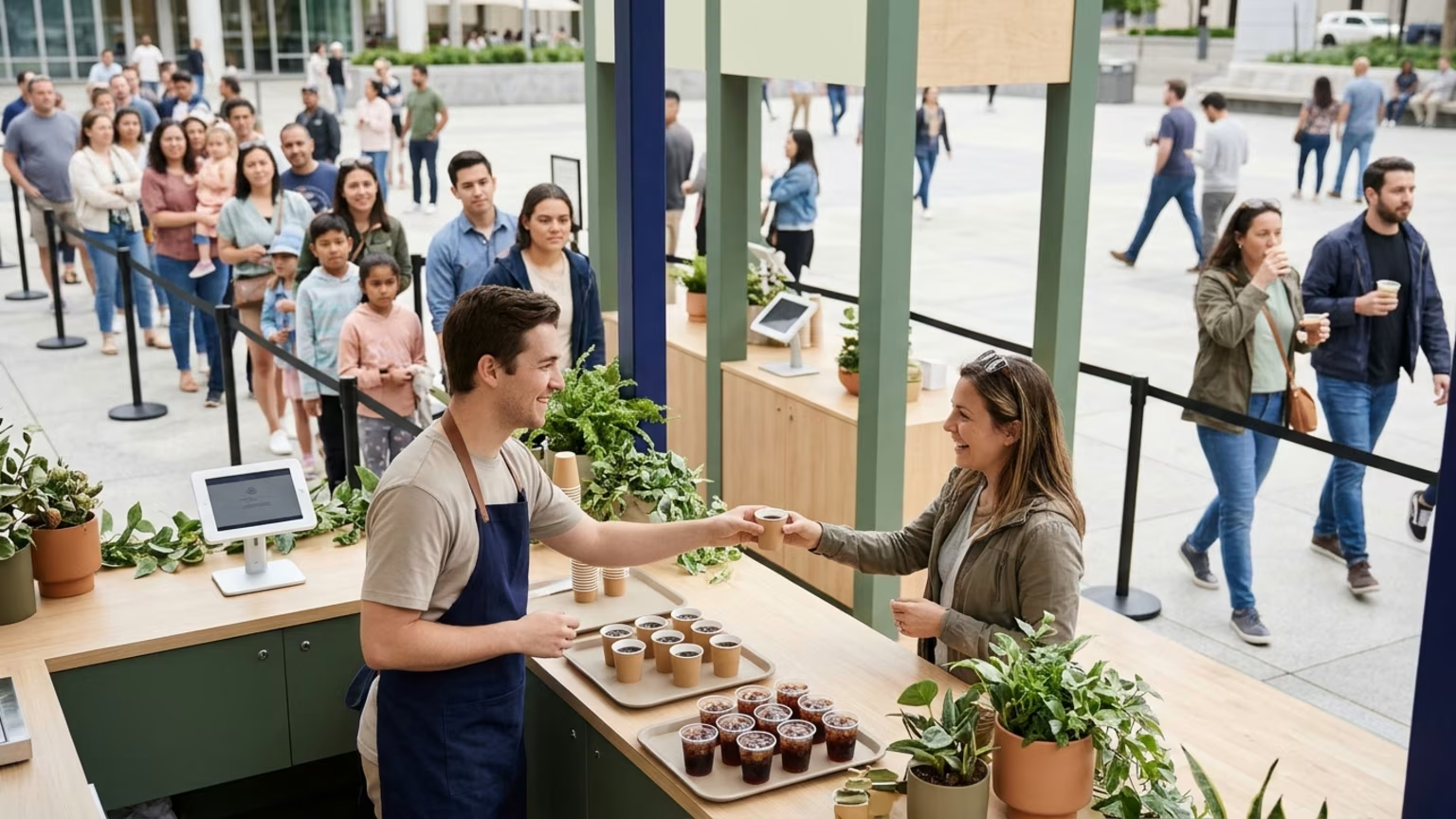
Makai’s retail demonstrations use trained brand ambassadors to support in-store sales through conversations and product trials. In that setting, the planning question is what the ambassador needs to help the shopper understand. The product story and the path to purchase should support the same objective.
This is not a recommendation to turn every interaction into a sales pitch. Our view is that a useful brief gives the conversation direction without scripting away the human connection. A consumer question deserves an answer, not an interruption from a campaign talking point.
For leadership, the relevant review is whether staff responsibilities match the program’s stated purpose. A team assigned to support product trial should not be evaluated as though every interaction were a qualified buyer meeting.
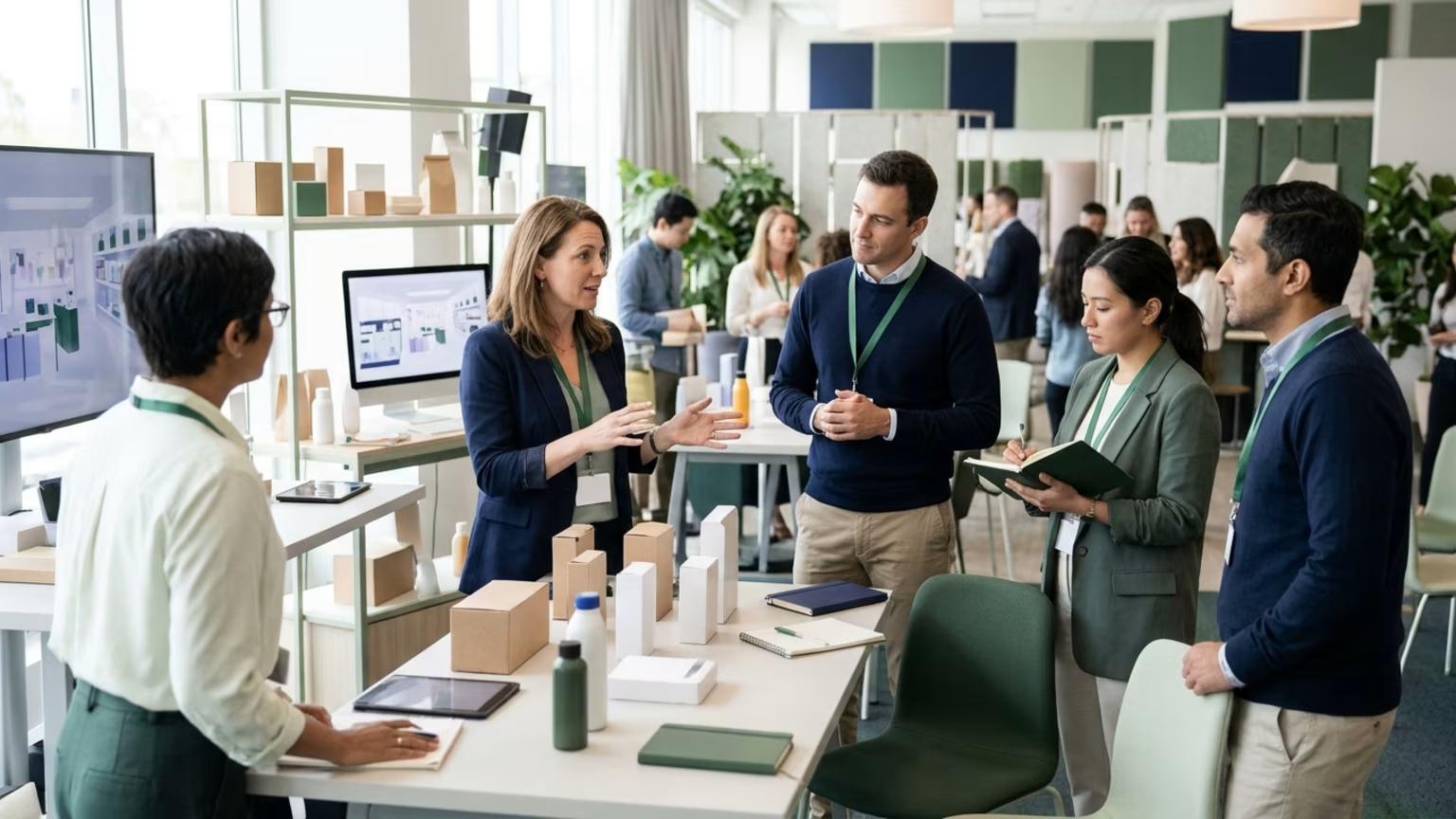
For trade show planning, our reading of Bain’s retailer-partnership argument is to start with the commercial conversation the space should support. Attention is part of that brief. So are product understanding and a relevant next step.
Makai plans and manages trade show spaces intended to attract attention, start conversations and convert visitors into customers. We believe the footprint should serve those purposes rather than become a separate creative project with its own definition of success.
That changes the questions asked during layout review. Does the space give the intended product conversation a clear role? Is the next step connected to the brand’s distribution or retailer priorities? Those questions keep flow tied to purpose without claiming that a particular layout guarantees conversion.
The same discipline matters when planning execution across different market and venue conditions. Our view is that the commercial objective should remain recognizable even when the physical expression changes.
Bain says retailers now bring stronger consumer data capabilities to commercial decisions. It argues that CPG companies need to contribute more through data and category-growth thinking. For experiential planning, our interpretation is to define what evidence a program should contribute before calling it successful.
A product trial, a request for information and a completed purchase should remain distinct outcomes. Treating them separately is a practical reporting recommendation, not a claim that Bain has supplied an event measurement method.
For Return on Investment (ROI) discussions, leadership should distinguish observed activity from commercial outcomes that still need to be established. A report can accurately describe participation without proving incremental sales. The useful next conversation is what the evidence supports and what decision it informs.
Makai’s integrated capabilities extend from permitting to CRM reporting. We see that connection between execution and reporting as relevant to this discussion: the intended outcome should be clear before a program reaches the field.
This is also the discipline behind judging trade show performance through commercial evidence. The aim is not to dismiss attendance or interactions. It is to avoid asking those measures to prove a different outcome.
Bain’s partnership recommendation puts category growth and retailer priorities closer to the center of commercial planning. Our view is that the activation brief should reflect those priorities in plain language rather than leave them in a separate strategy presentation.
A brief can identify the retailer objective, the intended shopper interaction and the purchase destination without pretending to predict the result. That gives creative and field teams a shared basis for evaluating the proposed experience. It also gives marketing leadership a clearer basis for deciding whether the program belongs in the plan.
As CMO or VP of Marketing, will you review one upcoming activation brief today and confirm how its shopper conversation connects to a retailer growth objective and a clear path to purchase?
Choosing how retailer growth priorities translate into an in-store conversation is where Makai’s retail demonstration work takes over. For food and beverage brand managers, Makai’s trained ambassadors conduct product trials and sales-focused conversations during retail demonstrations designed to bring products face to face with shoppers.

30 Years Experiential & Retail Activation Partner for CPG & Beverage Brands | Multi-Market Demos, Roadshows & Costco/Club Programs That Actually Sell