Robbie Thain
Founder, CEO

New retail-media guidance connects shopper interactions to clear next steps, with implications for CPG staffing, activation flow and measurement.

On October 28, 2026, Voyageur Group published an analysis of interactive retail media calling for experiences built around a defined shopper decision and a clear destination. Its example was Amazon Ads and Warner Bros. Pictures Animation’s “Open to Fun” campaign for The Cat in the Hat. The campaign connected a mobile game with a branded page that also offered a ticket-purchase path.
For CPG and beverage marketers, the relevant development is the planning guidance rather than the entertainment format. Participation needs a purpose. A shopper who plays or samples has done something observable, but the brief should explain what decision the experience is meant to support next.
Voyageur’s recommendation is planning advice, not a new platform requirement. It asks teams to define the intended shopper decision before building the interaction. That decision might involve understanding a benefit or choosing a product to investigate further.
The analysis also recommends aligning the creative with its destination and checking that destination on mobile and desktop. Before launch, teams should specify available measures and establish a review point. The logistical change is straightforward: destination ownership and measurement planning belong in the original brief rather than in a later reporting discussion.
Amazon’s October 26 announcement described the campaign’s interactive mobile mini-game and two Alexa experiences. Placements extended across Prime Video, IMDb, Twitch and Alexa. Players tilt a mobile device to catch animated “Things,” while the Brand Store page includes film content and a direct route to buy tickets on desktop and mobile.
Amazon said the page was scheduled to run through November 8. The film was set to open in North American theaters and IMAX on November 6, 2026.
The evidence boundary is clear. Amazon’s announcement reports no participation totals or attributed ticket sales and provides no conversion-lift or incrementality results. Voyageur offers planning recommendations rather than performance findings, and this custom entertainment activation does not establish that every advertiser can access the same features.
At Makai, our view is that hospitality and commercial discipline belong together. Give people a reason to participate without making them work to understand what comes afterward. A warm interaction should respect the shopper’s attention and the brand’s business objective.
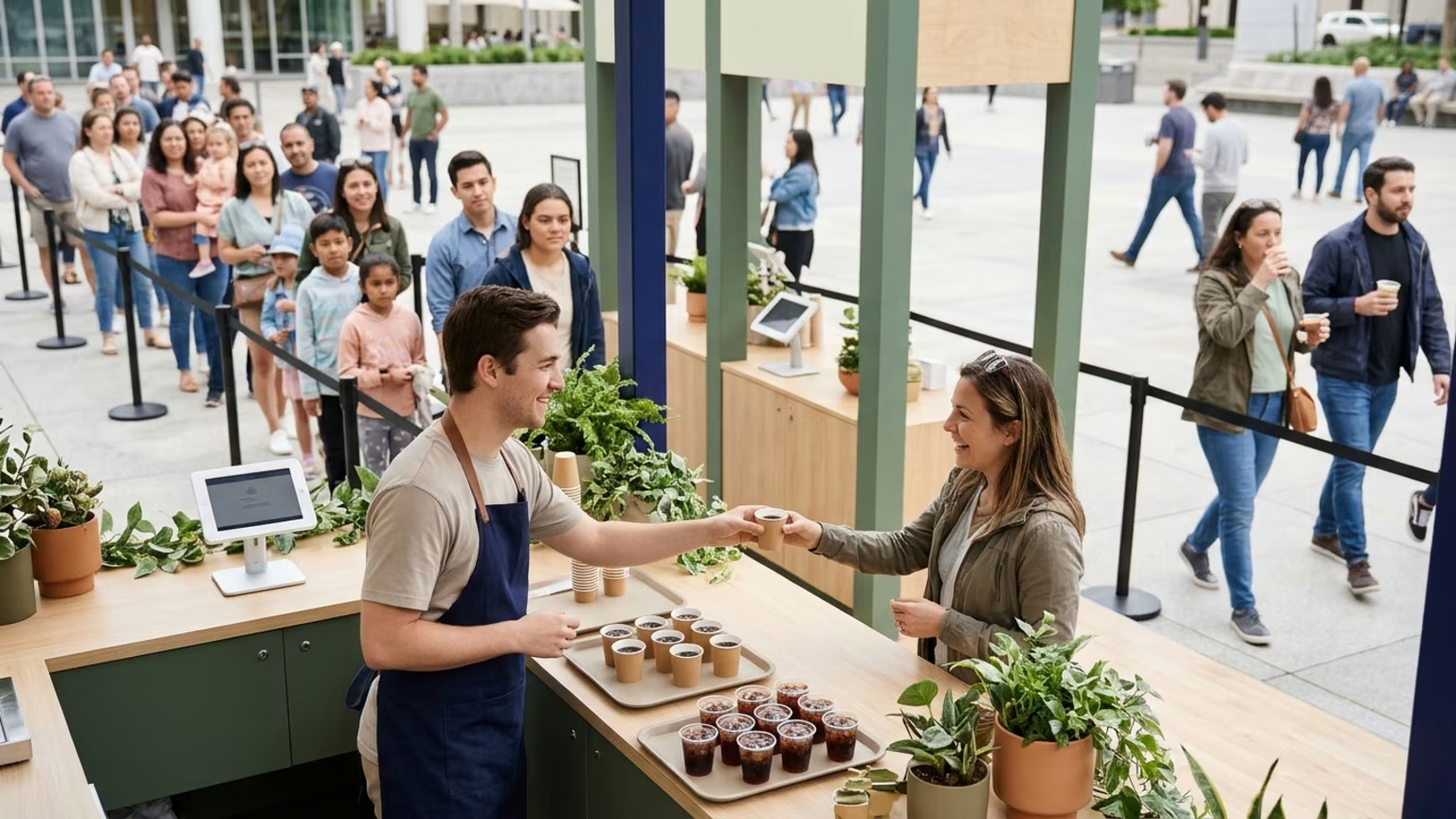
Our retail demonstrations use trained brand ambassadors to drive in-store sales through real conversations and product trials. That makes the intended decision relevant to the conversation itself. If the objective is benefit understanding, the interaction should help explain the benefit; if it is purchase consideration, the product destination needs to be clear.
We also design mobile activations and roadshows around 90-day product launch windows to accelerate trial, build trust and support retail velocity. In that setting, our position is that the invitation to try should connect with the launch objective. The format is a means of supporting the decision, not the decision itself.
The commercial tension appears in P2PI’s October 2026 coverage of a Target event. Roundel executive Shawn McGahee said 66% of Roundel advertisers identified sales growth as their primary investment reason. He also said 8% used incremental return on ad spend as their primary performance metric. Those figures describe the Roundel advertisers and context he discussed, not the wider advertising market.
For us, a credible Return on Investment conversation starts by keeping different outcomes distinct. Our reporting covers reach, trials, leads and sales to guide campaign optimization. Those measures serve different purposes rather than interchangeable versions of success.
That distinction also matters when connecting sampling with retail-media data. The useful question is whether the evidence matches the intended behavior, not whether every channel can contribute a large activity count.
Applied to physical marketing, Voyageur’s destination principle becomes an operating question: how does the experience support the intended decision from first contact through follow-through? The following implications translate the published guidance into field planning. They are not reported outcomes from the Amazon campaign.
Voyageur recommends choosing one intended shopper decision. For a demonstration team, that gives the ambassador brief a specific purpose beyond generating participation.
A benefit-focused interaction calls for a conversation about that benefit. A comparison-focused interaction needs a relevant product choice. A purchase-focused interaction needs a clear destination where the shopper can act.
This is a role-definition question before it is a headcount question. Our view is that the staffing discussion should begin with the work the interaction requires. A participation count alone cannot describe whether the team supported the decision named in the brief.
The physical implication is to evaluate the space around both participation and the intended next action. A sampling area can invite trial, while the surrounding experience needs to make the relevant product information or purchase destination understandable.
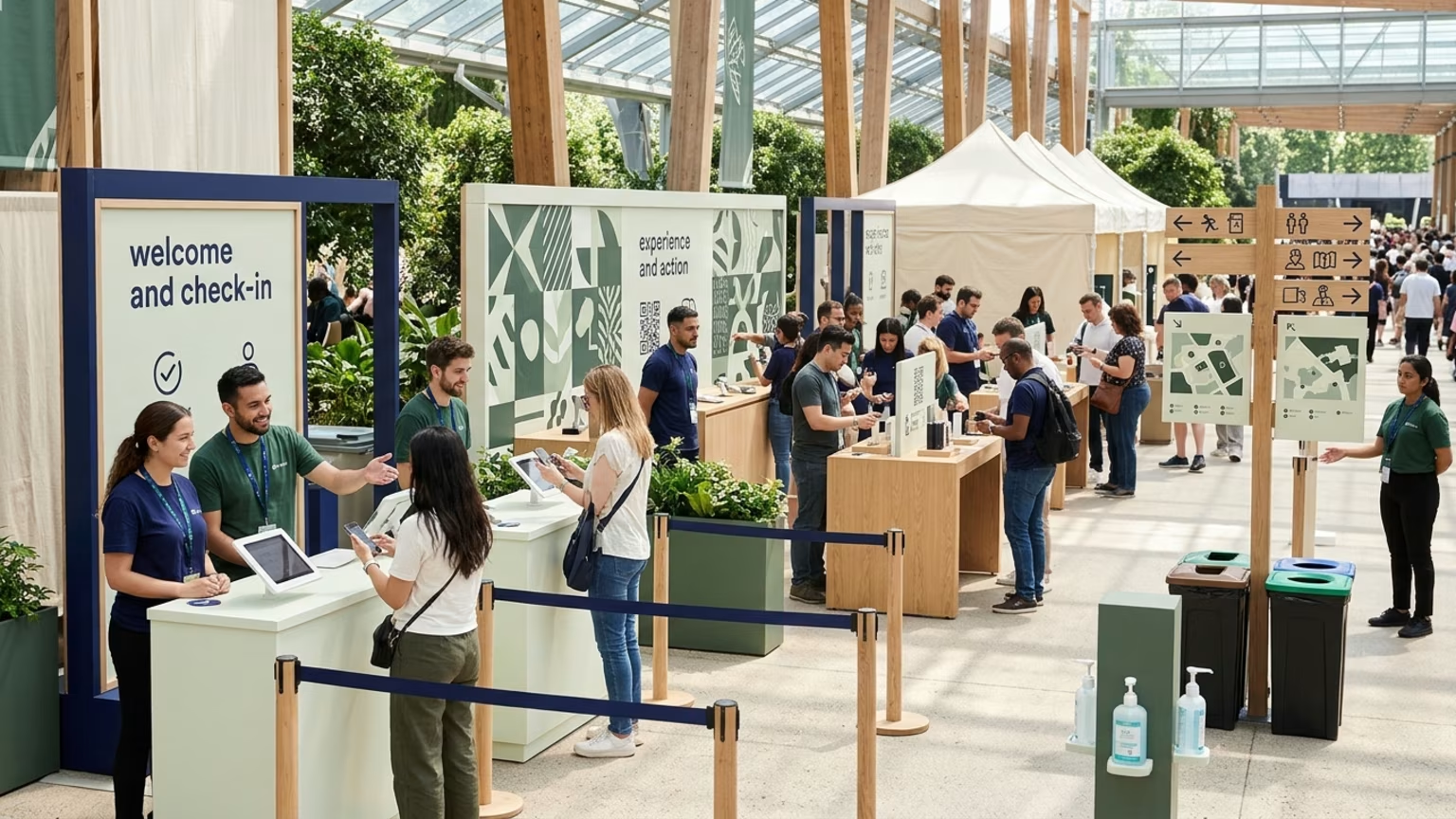
For a trade show, the same principle applies to the move from initial interest to a useful product conversation. The layout should serve that transition rather than treating every stop as equivalent. This connects with planning buyer conversations around follow-through.
Makai plans and manages trade show spaces that attract attention and start conversations with customer conversion in view. Our position is that the intended next action should inform the footprint discussion, rather than being added after the space is approved.
Voyageur recommends assigning ownership for the experience and its destination alongside product availability and reporting. For an in-person activation, the practical interpretation is to connect the field brief with the place or information shoppers are directed toward.
Where the destination is digital, the article specifically recommends checking it on mobile and desktop. Where the destination is a physical product location, the planning question is whether the experience points shoppers toward the relevant product. These are different execution conditions serving the same principle.
The handoff should have an owner. Otherwise, the creative team may approve the invitation while the field team is left to explain a destination that was never resolved in the brief.
Voyageur distinguishes interaction with an experience from evidence of purchase interest. Applied to field reporting, that supports separate treatment of participation and follow-on actions rather than combining them into a single engagement total.
A practical reporting structure keeps three questions visible:
For Makai, this is the value of distinguishing attention from commercial response. We believe the report should preserve those distinctions even when a single headline number would look cleaner.
Voyageur recommends setting a review point before launch and documenting what the available measures can establish. The operational implication is to agree in advance on the evidence that would support continuing or changing the activation.
IAB Europe’s October 2026 committee coverage identifies measurement consistency and proving incrementality as retail-media challenges. It notes that A/B tests, lift studies and marketing-mix models have different limits and timing.
The planning lesson is not to select a method because its name sounds rigorous. Start with the behavior the campaign is intended to change and match the measurement approach to that question. The review then becomes a business discussion rather than a retrospective search for a favorable metric.
The useful lesson from the mobile game is not that a beverage brand needs animated characters or an entertainment partnership. It is that an interaction and a destination can be planned together.
For physical marketing, our position is to bring that same clarity into the ambassador brief and the footprint discussion. Measurement should describe the intended progression without pretending that every participant has reached the same point.
For you as a CMO or VP of Marketing, does the next activation brief make the path after participation as clear as the invitation to play?
A retail demonstration can attract participation while leaving shoppers without a clear product decision or purchase direction. Makai uses trained brand ambassadors to drive in-store sales through real conversations and product trials for CPG marketers and food and beverage brand managers.

30 Years Experiential & Retail Activation Partner for CPG & Beverage Brands | Multi-Market Demos, Roadshows & Costco/Club Programs That Actually Sell