Robbie Thain
Founder, CEO

CAVA paired its Greek Goddess installation with NYC sampling. Makai examines the logistics, staffing and measurement questions behind the experience.

On October 17, 2026, restaurant brand CAVA brought its Greek Goddess menu to Flatiron Plaza in New York City with a large-scale installation and product sampling, according to BizBash. A stone-like goddess seated on a throne anchored a space where passersby could taste new products and sit down.
The useful development for food and beverage marketers was the connection between the menu launch and the physical setting. The statue supplied a visual focal point. Sampling and seating gave the experience a purpose beyond looking at it.
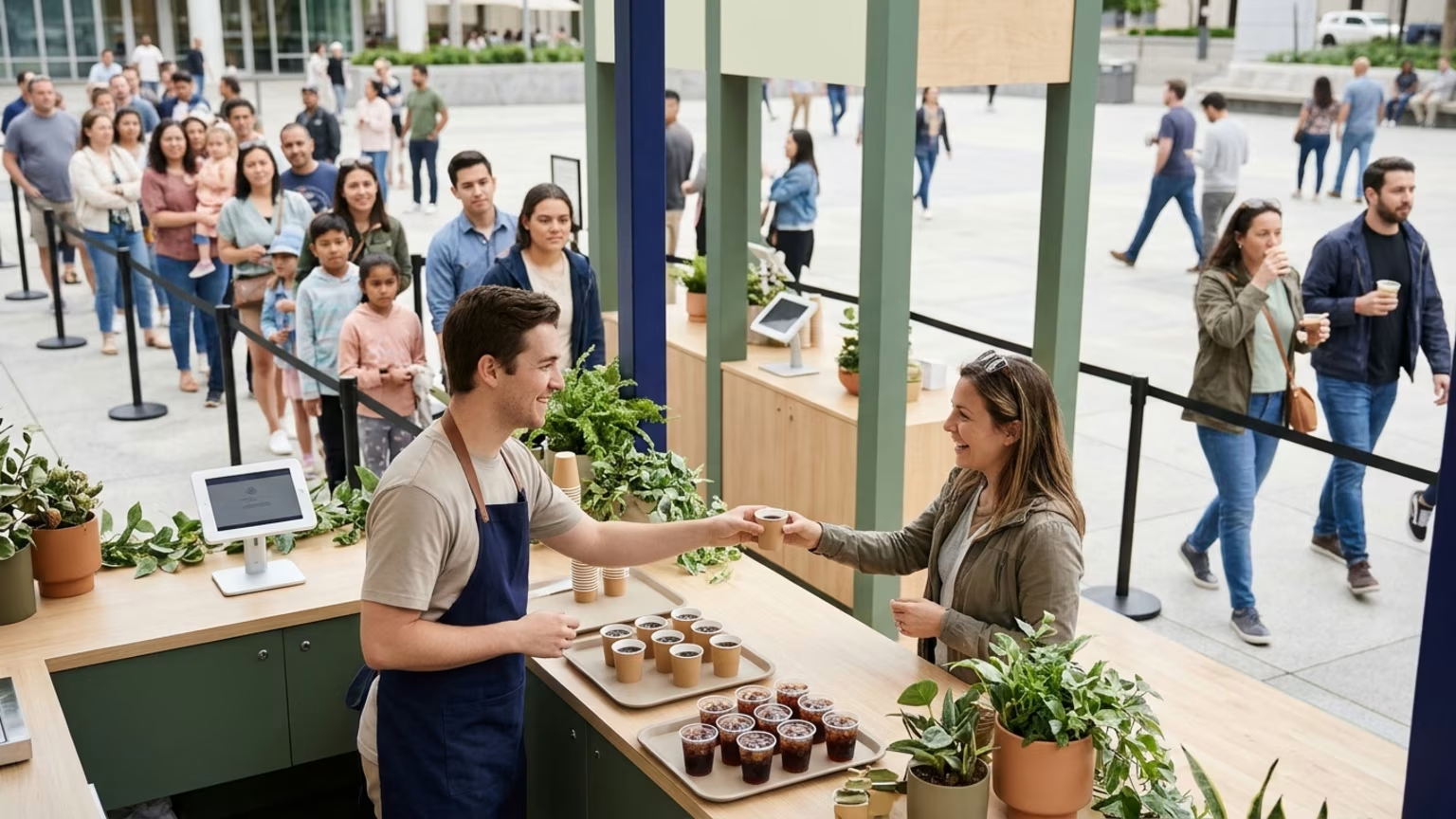
BizBash reported that the launch introduced Greek Goddess dressing, two new bowls and a seasonal Pomegranate Apple drink. Passersby could sample the dressing with pita chips and try the seasonal beverage. Picnic tables and archways helped turn the plaza into a Greek-inspired gathering place, with turf completing the setting.
The production crossed several operational boundaries. BizBash credited Conscious Minds with developing the activation, Vision Scenery with fabrication and Dollhouse with installation. According to Conscious Minds creative director JK Lyons, the goddess and façade were 3D-printed in pieces and assembled by artists. They received a finish intended to resemble carved stone and withstand weather before being shipped from Los Angeles to New York.
Lyons told BizBash that Flatiron Plaza matched the team’s location criteria. He cited foot traffic and the visual backdrop, along with proximity to media contacts and a CAVA restaurant. Those were the agency’s reasons for choosing the site.
BizBash’s event report was dated October 28, 2026. It does not disclose attendance or sample totals, and it provides no verified store visits or sales results. It also gives no Return on Investment (ROI) results or detailed operating plan. That makes this an execution example rather than a documented commercial result.
Our take at Makai: the welcome deserves as much operational attention as the centerpiece. Offering someone a taste and a place to pause is a thoughtful creative choice. Making those elements work together is a separate responsibility.
For CPG and beverage brands, that distinction matters because attention is only the beginning of a commercial conversation. A physical experience should give the product a clear role. It should also define what the business hopes to learn or capture from the interaction, rather than treating a busy-looking space as the finish line.
We specialize in retail demos, product sampling programs and roadshows that bring brands face to face with their audiences. Across our history, we have delivered more than 1,000 campaigns in all 50 states for more than 200 brands. That range informs our view that a strong concept needs an operating brief built for its particular setting.
At Natural Products Expo West 2025, we designed and managed a 40 by 20 foot trade show environment for Glanbia. Our scope covered concept, operations, staffing and breakdown. More than 14,000 recorded product samples were distributed across the activation stations. For us, that coordinated footprint is a useful reference for thinking about how product access and guest movement belong in the same conversation.
CAVA’s reported site criteria also point to a useful planning distinction. A visually attractive location and a commercially relevant location are not interchangeable goals. For a comparable launch, matching the setting to the intended consumer interaction should happen alongside the creative brief. Nearby product availability deserves a place in that discussion, not an assumption that proximity alone will produce purchases.
The reported execution combined freight, installation and food sampling with a place for guests to stay. For teams adapting that combination, the practical task is to examine those elements together. The following are planning recommendations, not a reconstruction of CAVA’s operating procedures.
The Los Angeles fabrication and New York installation described by BizBash make transport part of the creative story. A finished object still has to reach its destination and become an installed experience. Planning should therefore connect fabrication decisions with shipment and installation timing.
The same brief should account for sampling product and event equipment. Treating those as separate workstreams without a shared schedule leaves the concept disconnected from the materials needed to operate it. A coherent plan should show how the set and the product become ready for use at the same site.
Makai’s storage and logistics services cover sampling product and event gear, including nationwide shipping coordination and tracking. That capability reflects the practical relationship between inventory planning and field readiness. The relevant planning question is not simply whether something shipped, but whether the activation’s required materials are accounted for together.
For a similar public-space activation, venue permissions belong in the design discussion. The proposed footprint needs to account for the installation and sampling area, along with seating and guest movement. A rendering should not become a substitute for confirming what the venue permits.
This is also where an outdoor concept needs a practical review of transport access and installation timing. Weather-oriented finishing was part of CAVA’s reported production. For another project, the appropriate treatment and operating arrangements should come from that project’s requirements rather than from copying the appearance of this one.
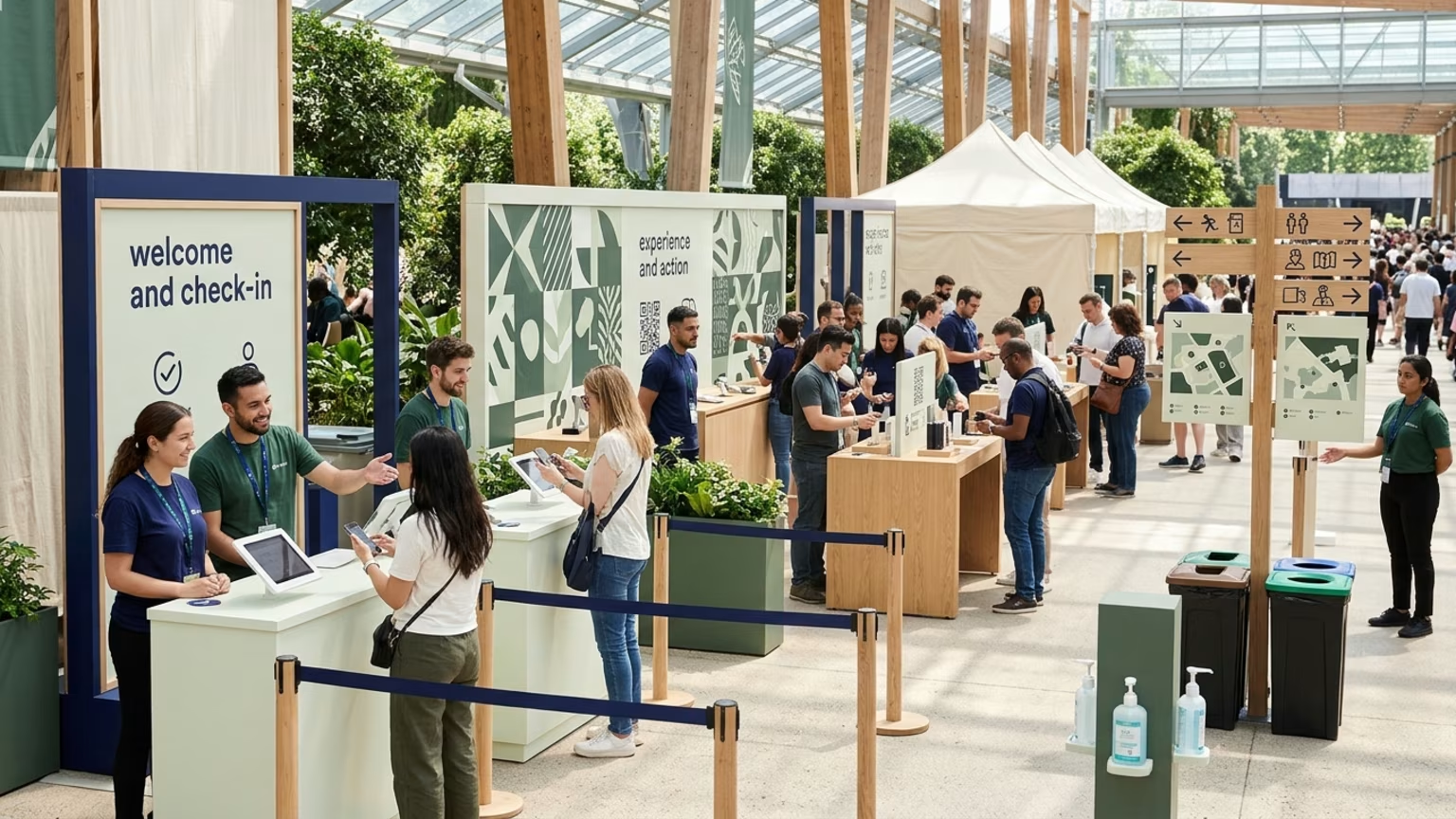
A hospitality-oriented setting calls for a staffing brief that addresses more than product distribution. For a comparable program, responsibilities should distinguish sampling from guest assistance and general site coordination. Food-handling requirements also belong in the operating plan.
The point is role clarity, not an unsupported staffing ratio. Teams should assess the work created by the experience they are actually building. A place designed for people to pause deserves a different staffing discussion from a brief centered only on handing out samples.
At Makai, trained brand ambassadors are part of our retail demonstration offering. We believe their conversations should connect the welcome to the product’s purpose. Staffing should support that exchange without confusing a friendly interaction with a qualified lead.
The reported combination of a prominent statue and picnic tables creates a useful layout question: how should observation, tasting and sitting relate to one another? For a comparable activation, those activities should be considered together rather than added independently to a floor plan.
The same reasoning applies to trade show footprints. Makai plans and manages show spaces intended to attract attention and start conversations. Our view is that a focal feature should support access to the product and the people representing it. Creative presence and usable space need to remain part of the same decision.
A practical layout review should therefore address where sampling happens and where guests can pause. It should also account for staff working within that arrangement. These are operating choices to resolve in advance, not outcomes that can be inferred from an event photograph.
Before a similar launch, the brand should define what a useful response looks like. Research recommendations for this type of execution include recording sample distribution and opt-in engagement. Nearby-store traffic or sales may also be relevant where measurement is feasible.
Those measures answer different questions. Sample distribution documents product delivery. Opt-in engagement records permission for a continuing connection. Store-level evidence addresses a separate commercial step, so it should not be replaced by a count of people who passed through the space.
A sound brief should also identify responsibility for post-event follow-up. For brands seeking qualified pipeline, defining measurement around business goals keeps the reporting discussion connected to the reason for activating. The objective is a clear account of what happened next, not a larger collection of unrelated activity counts.
Lyons described the goddess to BizBash as a visual symbol for the new offerings. He also said the team wanted to communicate Mediterranean hospitality through sampling and a place where people could sit and connect.
That intent is the detail worth carrying into the next brief. Hospitality was not described only as a tone of voice. It had a physical expression in the experience. Our view is that this makes seating and guest support part of the operating discussion, rather than decorative details around the main attraction.
CAVA’s plaza execution puts a concrete planning choice in front of marketing leaders: whether the installation and the sampling program are developed as one experience or managed as adjacent projects. The next brief should connect creative intent with movement of materials, staffing responsibilities and measurement.
As a CMO or VP planning the next launch, how will you connect the attention around a plaza centerpiece to product trial and a measurable next action?
Coordinating an installation’s arrival with sampling inventory makes transport part of the activation decision, where Makai’s storage and logistics services take on product and equipment movement. Makai stores sampling products and event gear and coordinates nationwide shipping, tracking and delivery for regional and national campaigns.

30 Years Experiential & Retail Activation Partner for CPG & Beverage Brands | Multi-Market Demos, Roadshows & Costco/Club Programs That Actually Sell