Robbie Thain
Founder, CEO

Immersion Neuroscience’s event-measurement argument puts participation, purchase intent and commercial follow-up under operational scrutiny.
On October 28, 2026, Immersion Neuroscience published an article challenging how brands establish the business value of live experiences. The company argues that attendance, registration and satisfaction scores are insufficient on their own. It proposes measuring attendee response during the experience and connecting that response to event objectives.
For CPG and beverage marketers, the news is a measurement proposition to evaluate rather than a reason to replace every field tool. The operating question is how an interaction becomes evidence that can inform event design and commercial follow-up.
Immersion Neuroscience describes the 2026 Experiential Marketing Impact Report (EMIR) as a survey of 2,000 B2B and B2C attendees who participated in branded live experiences during the preceding year. It reports that hands-on participation was associated with nearly twice the reported purchase intent of passive attendance. It also says 85% of deeply engaged attendees reported being likely to purchase the featured product.
The ANA's October 20, 2026 listing repeats the sample size and purchase-intent finding. It identifies Qualtrics as the fielding partner.
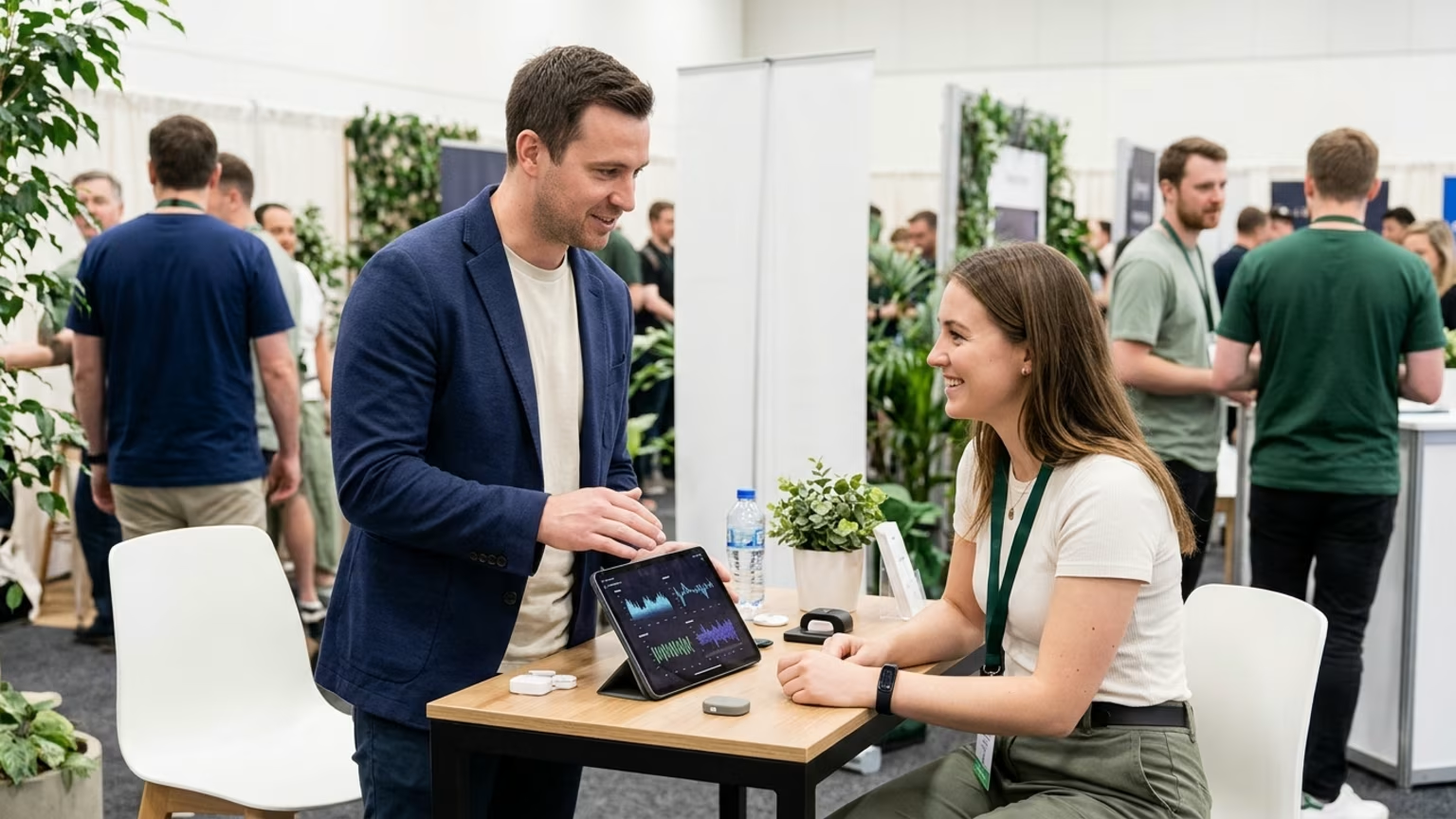
Alongside that research, Immersion Neuroscience presents ImmersionLive as its wearable-based measurement approach. The company says wrist-worn sensors capture neurological responses continuously and produce a second-by-second Immersion measure. It also claims the platform automatically calculates monetary return on experience (ROX) from brain data.
The broader measurement context helps explain the pitch. Meetings Today reports that a separate 2026 Boldpush survey of several hundred planners found 69.2% used registration numbers as a Return on Investment (ROI) measure. In that survey, 46.5% used lead-generation or sales-pipeline influence. This planner survey provides context rather than evidence about EMIR participants or consumer activations specifically.
The public EMIR summaries omit field dates, question wording and subgroup sizes, along with definitions of key engagement categories. The ANA article is member-exclusive beyond its listing. Purchase intent is a reported association here, not proof of purchases or incremental revenue. The public product material also neither explains the monetary ROX calculation nor independently validates its accuracy or connection to business outcomes.
The practical change for event buyers is the measurement brief: define the response worth observing and the business outcome it is supposed to inform. Treat the research finding and the vendor proposition as separate evaluation decisions.
People should feel invited to participate, not processed through a measurement system. At Makai, we believe warmth in the experience and discipline in execution belong together. A useful engagement signal should help the team understand the brand moment without becoming a substitute for the business objective.
We design consumer events that bring brands and people together through interaction, emotion and engagement. We also build festival zones, premieres and pop-ups that turn viewers into fans and fans into advocates. Our crews manage execution while tracking reach and response metrics.
For a beverage or food brand, the practical appeal of the EMIR finding is straightforward: it directs attention toward what people actually do. Sampling a product is a different interaction from passing a branded display. Neither action should disappear into an attendance total when the objective is to understand trial and response.
Our position is that measurement should respect those distinctions. We provide reporting on reach, trials, leads and sales to guide campaign optimization. Our measurement approach tracks awareness, engagement and conversion so brand moments become actionable data.
That is why we favor measurement built around business goals. The point is not to collect every available signal. It is to make the intended outcome clear enough that field execution and reporting can support the same decision.
A welcoming experience and an accountable campaign are compatible goals. The discipline is in knowing which evidence supports which claim.
Our operational reading of the article starts with a simple distinction: attendance, participation, intent and commercial outcomes should remain separate in the plan. Connecting them is useful. Treating them as interchangeable is not.
For multi-regional campaigns, that distinction belongs in the shared brief. Otherwise, the final report risks comparing different kinds of activity under the same engagement label. Our integrated service scope runs from permitting to CRM reporting, which is why we view measurement as part of execution rather than an isolated reporting task.
The staffing implication is role clarity rather than an assumed increase in headcount. A product trial and a lead-qualification conversation serve different purposes. The brief should identify what participation means for that activation and what response belongs in the reporting.
Makai's retail demonstrations use trained brand ambassadors to support in-store sales through real conversations and product trials. That first-party capability illustrates the operational distinction: an ambassador facilitates an experience with the product. Counting everyone nearby describes reach rather than the same activity.
The EMIR finding supports paying attention to participation. Our practical judgment is to make that participation observable in the staffing brief instead of leaving each field team to interpret the word “engagement” differently.
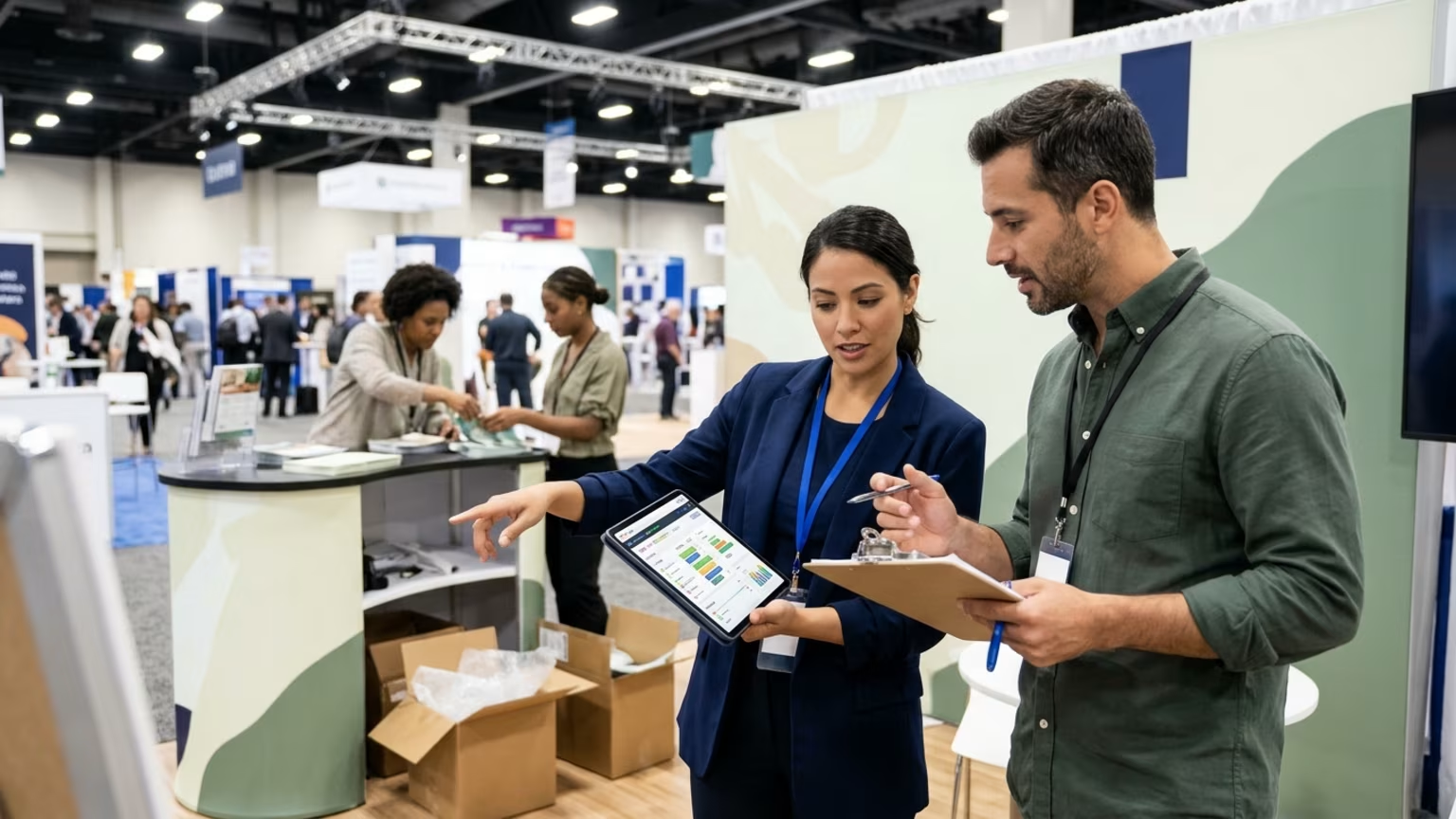
For trade show planning, distinguish people passing through the space from people trying the product or entering a relevant conversation. The measurement plan should describe those activities before traffic is reported against them.
Makai plans and manages trade show spaces to attract attention, start conversations and convert visitors into customers. From that operating perspective, the footprint and measurement brief should describe the same experience. If product trial is the objective, reporting should identify trial rather than infer it from booth presence.
This is the value of separating foot traffic from pipeline evidence. Attendance remains useful context. It should not carry the entire explanation of what happened inside the footprint.
A proposed wearable layer introduces an evaluation task alongside the creative brief. Based on the public product description, due diligence should cover how the platform defines value and validates its measure. It should also address the monetary ROX calculation, the comparison or baseline used and how participant data are handled.
For field leaders, our view is that this review belongs before the technology becomes part of the attendee experience. The team needs a defined purpose for the proposed measurement. Product trial, participant feedback and commercial follow-up each answer a different question about the event.
The practical purchasing decision should therefore begin with the objective. A detailed signal is useful only when the team understands what decision it is intended to support.
The most consequential handoff for a pipeline-focused campaign comes after the live interaction. Our recommendation is to preserve the meaning of that interaction through the reporting and follow-up plan.
A useful evidence structure keeps four categories visible:
These categories offer a practical application of the research rather than a new finding from it. They also create a clearer basis for deciding what belongs in CRM routing and what belongs in event-design feedback.
For Makai, the goal is measurable sales pipeline from carefully executed face-to-face experiences. That requires attention to the handoff as well as the live moment. A consumer response should retain enough context to support the next relevant action without being relabeled as a transaction.
Our approach to connecting field evidence with business outcomes keeps that distinction central. Event reporting should help a marketing leader decide what deserves repetition and where follow-up needs attention.
Immersion Neuroscience's October 28 article begins by challenging the attendance total. For brand operators, the stronger response is not simply a more detailed dashboard. It is an event plan that connects a defined participant action to relevant follow-up and the outcome the brand funded.
That is where the welcome and the discipline meet: a live experience designed for people, with evidence organized for business decisions.
When your next event brief reaches approval, will it show you as CMO or VP how participation connects to qualified follow-up and the business outcome you funded?
An engaging consumer event still leaves the work of post-event follow-up and CRM routing. Makai designs live experiences around interaction, emotion and engagement for CPG marketers, pairing that consumer-event focus with experiential campaigns and trade show activations built to turn brief consumer interactions into qualified leads.

30 Years Experiential & Retail Activation Partner for CPG & Beverage Brands | Multi-Market Demos, Roadshows & Costco/Club Programs That Actually Sell