Robbie Thain
Founder, CEO

Stop measuring event success by headcount. Learn how to track dwell time, NPS, and pipeline metrics to prove real ROI for your experiential activations.
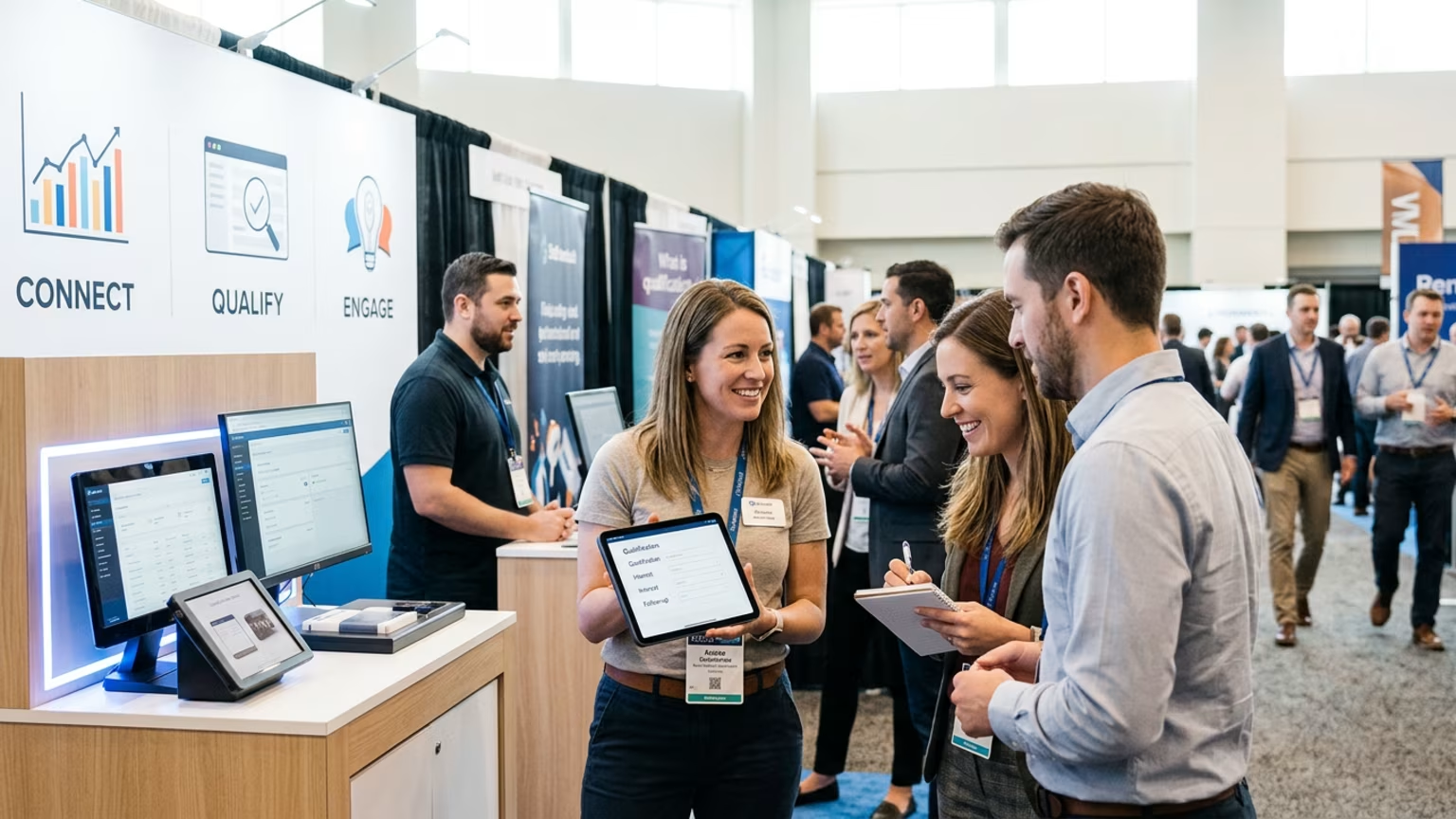
A marketing director stares at a stack of three hundred badge scans from a massive expo. The booth was packed for three straight days. Yet, when asked about projected revenue, her spreadsheet shows absolute zero.
Live events only drive revenue when brands shift their focus from raw attendance to measurable pipeline progression. This operational playbook provides a systematic framework to track meaningful engagement metrics that prove Return on Investment to leadership.
The trade show floor is a chaotic environment built for volume over substance. Brands spend heavily on massive booths and flashy displays to draw maximum foot traffic. Teams often celebrate high headcount numbers and busy product sample stations. These metrics create fog instead of evidence when post-event follow-up lags.
Industry observers note that measuring event success only by booth traffic and badge scans has faded. Most brands still rely on raw attendance data to justify their physical footprints. This outdated approach leaves field marketing leaders unable to connect live interactions to retail sell-through. Without tracking key metrics that prove trade show success, experiential budgets look like an unquantifiable expense.
Foot traffic remains a baseline gateway for brand visibility. A low attendance event limits the reach of your physical activation. That volume only matters if it feeds a qualified sales pipeline. Brands must look past the initial badge scan to measure true depth of engagement.
When activations operate as isolated booths, the resulting data is shallow. Teams collect emails but fail to capture the intent behind the interaction. This disconnect makes it impossible to measure actual regional sales lift. Marketers need evidence over theater to defend their annual live event budgets.
Corporate brands are now reallocating funds to live strategies that impact actual business goals. The focus is completely shifting away from basic brand awareness plays. Field marketers face intense pressure to show how live experiences convert casual samplers into loyal customers. It requires a complete rethink of what a successful physical activation looks like.
Winning brands build activations around multi-channel content tracks instead of isolated structures. They design physical experiences that capture data and feed customer platforms immediately. This strategic shift moves the focus toward genuine pipeline interest and financial impact. The hub-and-spoke model is highly effective for premium physical brand engagements.
In this exact model, the inner ring focuses on deep engagement for key strategic targets. A consumer-packaged goods brand might host intimate private tastings for retail buyers here. The outer ring offers broader consumer trial zones to generate initial product awareness. Planning this dual approach requires detailed preparation three to six months ahead of the event.
Experiential expert Gianna Gaudini notes that layered design is critical for these activations. She states that the experience around the event is where the relationship is actually built. Gaudini breaks this down into two distinct parts for live physical activations. Layer one is the access, which gets your target buyers into the actual space.
Layer two is the surround, which personalizes the brand interaction and builds lasting trust. This shift from event buzz to pipeline qualification tiers filters casual attendees and accelerates true deals. Gaudini observes this impact clearly in high stakes hospitality environments. She notes that deals close in premium spaces that took years to move in a corporate boardroom.
These premium engagements work incredibly well for complex B2B sales pipelines. Mass market consumer brands must adapt this precise logic for retail trial events. A high volume Costco roadshow requires flawless execution of the access layer through engaging product demonstration. The surround layer then builds brand loyalty through knowledgeable brand ambassadors and pristine booth presentation.
In 2026, major global events saw a massive pivot in how brands approach their footprints. Exhibitors at massive tech conferences shifted their physical activations into prolonged content ecosystems. They baked post-event amplification directly into the booth design. This strategy guarantees repeated second life impacts on future buying decisions.
Transforming a standard footprint into a conversion engine requires strict operational discipline. Our team relies on a proven sequence to eliminate friction and capture intent. Field marketers must prioritize precise execution over flashy event distractions.
Volume metrics only matter if they show clear sales funnel progression. Brands must track specific performance indicators that demonstrate real depth of engagement. Dwell time is a critical leading indicator of future brand affinity and product interest. The longer a prospect interacts with your product, the higher their overall likelihood to convert.
You can track this physical dwell time accurately using specific beacons or event applications. Another core metric is the clear rate of leads to pipeline progression. Marketers must know exactly how many casual product samplers utilized a specific retail offer. Tracking genuine pipeline interest with real-time metrics is how smart brands operate today.
Recent event data indicates a massive pivot toward these revenue tied performance indicators. To capture lag metrics, measure the actual sales lift in the surrounding market post-event. Building a unified event reporting dashboard allows marketers to defend their physical footprint budgets confidently. We always advise our consumer clients to implement Net Promoter Score tracking for event attendees.
You need tangible numerical proof that your activation moved the needle for physical consumers. Not all market sectors suit real-time engagement metrics equally. Automotive or food trade shows may prioritize major retailer confidence over an instant attendee score. Fragmented staffing or poor in-store product presentation can easily undermine any data capture efforts.
Field teams must align their data collection methods perfectly with the specific physical environment. If you need help structuring this operational data, book a strategy call with our expert team. We design comprehensive systems that track exactly what senior marketing leadership wants to see. Proper metric measurement stops live brand events from becoming beautiful operational disasters.
Our team recently applied this strict methodology for a major consumer brand looking to launch a complex product line. We successfully integrated multiple experience layers to convert casual participants into committed brand advocates. A Brand Manager in the consumer packaged goods space shared their perspective on the measurable operational results.
They noted that Makai transformed their physical test drive activation into an emotional brand experience. We connected technology, modern lifestyle elements, and human interaction smoothly across the entire event footprint. This structured approach turned casual booth visitors into loyal brand fans and captured high quality performance data.
By prioritizing dwell time and pipeline progression over simple headcounts, the activation drove measurable financial results. The field marketing team could finally prove their exact return on investment to the executive board. The brand stopped guessing at outcomes and started treating their activations as legitimate physical sales channels.
Audit your next trade show floor plan today to remove one point of friction between your product and the attendee.

30 Years Experiential & Retail Activation Partner for CPG & Beverage Brands | Multi-Market Demos, Roadshows & Costco/Club Programs That Actually Sell