Robbie Thain
Founder, CEO

Choose retail demo stores and time slots through a controlled pilot covering approvals, staffing, product availability, measurement and CRM planning.
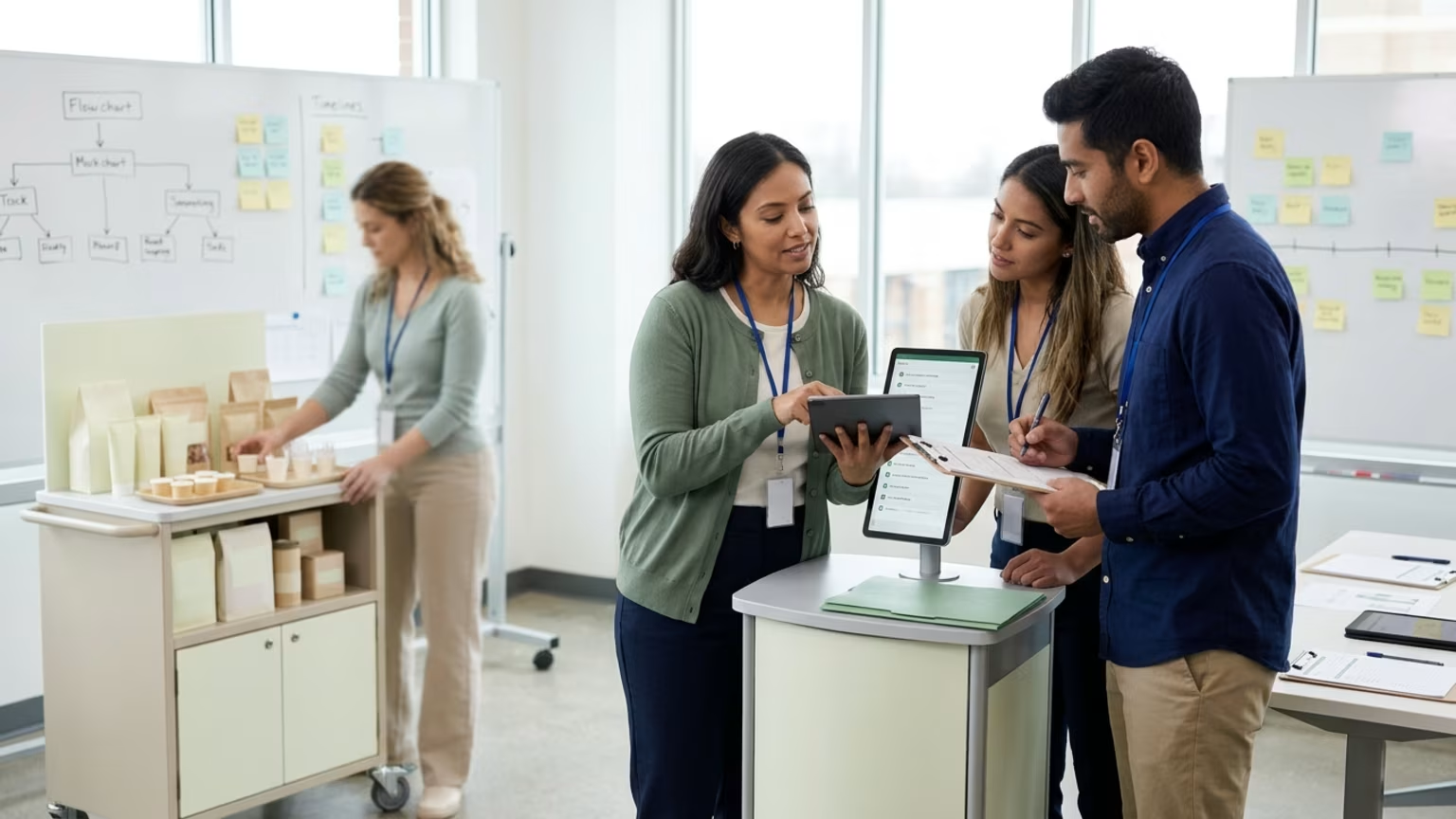
Run a retail demo where the product is stocked and shoppers can buy it after the encounter. Put product availability at the sampling table and on the shelf in the same plan. Choose retailer-approved shifts as candidates for a controlled pilot rather than treating any location or time as an automatic winner.
The strongest starting point is a clear campaign objective. Then compare reasonably similar stores or markets using consistent measures. Published CPG sampling test guidance recommends selecting stocked locations with sufficient data access and recording conditions that could affect the result.
That guidance does not establish a universally best store or daypart. Shopper relevance remains a hypothesis to test against the intended audience and outcome. A busy shift alone does not answer whether the right people tried the product or bought it.
At Makai, we specialize in retail demos, product sampling programs and roadshows that bring brands face to face with their audiences. These programs are designed to drive trial and accelerate retail velocity across multiple locations. We believe store selection should serve that commercial purpose rather than reward activity for its own sake.
Before comparing locations, define what success means:
The same testing guidance supports those measurement fields. It also recommends recording activation cost. That gives the pilot a business question beyond how many samples left the table.
Start with retailer approval, product availability and a workable shared schedule. Practitioner guidance on demo coordination describes distributor delivery and staffing as coordination tasks alongside retailer approval. It also identifies retailer-specific setup rules and shift timing relative to store traffic as execution considerations.
Treat those details as part of location eligibility. A store may look attractive on a map but still lack the conditions needed for a useful test.
A source-supported preparation checklist includes:
Retailer approval and setup rules belong in this planning stage. They should not be replaced by assumptions drawn from another location's requirements.
Next, build the comparison. The CPG testing guidance recommends reasonably comparable stores or markets. It suggests a staggered test when a matched comparison is impractical. Neither approach makes dissimilar conditions disappear, so the record should retain the differences that matter.
For each candidate store and shift, document baseline sales, price and stockouts. Record promotions and relevant local events. Include traffic when that information is available.
This matters when interpreting a strong demo week. A change in sales alongside a promotion presents a different measurement question from a change under otherwise comparable conditions. Recording both gives the readout context without assigning every movement to sampling.
Our guide to assessing store and timing fit is a useful companion for organizing that selection work. The immediate goal is a testable shortlist, not a permanent ranking of every store.
Ambassador readiness should connect the campaign objective to a genuine product conversation. Makai's retail demonstrations use trained brand ambassadors to support in-store sales through real conversations and product trials. Our experiential work is also designed around emotional connection.
For us, an aloha approach means warmth without pressure. We believe the person in front of the table deserves attention rather than a rushed interaction built only around the sample count.
That position affects how a pilot should be interpreted. Samples accepted measure trial activity. They do not reveal the full quality of a conversation or establish that a shopper became a customer.
Training should support the purpose of the encounter: explain the product, invite trial and connect the experience to the campaign's intended outcome. Store-specific preparation should also reflect the approved setup and shared schedule described in the operational guidance.
Keep the human element consistent with the measurement question. If the objective is trial, assess encounters and acceptance. If the objective includes purchasing, pair those activity measures with the retailer's available purchase measure.
Our broader guide to retail demonstration programs provides planning context across formats. The pilot itself should remain focused enough to compare stores and shifts without losing sight of the people participating.
A handshake begins a conversation. It does not create a qualified CRM record by itself. Likewise, a sample count is not a lead count or proof of Return on Investment (ROI).
Makai's integrated service scope extends from permitting to CRM reporting. Our positioning connects face-to-face experiences with qualified leads and measurable sales pipeline. That makes the handoff between participation and commercial follow-up a planning issue, not just a reporting task after the event.
Separate the measurement design into two layers.
The activation record describes what happened on the floor. The CPG testing guidance supports recording the store and day alongside eligible encounters and samples accepted. It also includes product availability, activation cost and a purchase measure when available. Keep the selected shift attached to the comparison so the pilot can address the timing question.
The contact record describes a qualified person and the follow-up path. Aggregate shift fields do not define identity capture or CRM routing rules. That workflow needs a separate specification rather than an assumption that everyone who accepted a sample belongs in the pipeline.
Before launch, resolve these questions with the team responsible for CRM reporting:
These are specification questions, not claims about a particular capture platform or integration.
For ROI analysis, retain activation cost alongside the available outcome measures. Our discussion of using historical store baselines addresses the comparison problem. Keep observed purchases separate from any claim that the activation caused them.
The contingency plan should protect both the activation and the integrity of the pilot. A missed shift is an execution problem. It is not evidence that the store or daypart failed to generate demand.
Use the coordination tasks and measurement fields already established in the plan:
This is an operating framework, not a specified backup-staffing or offline-capture procedure. Those procedures require their own event-level decisions.
The same discipline applies when activity continues under changed conditions. Keep that shift distinguishable from a shift executed as planned. Otherwise, a reporting problem can become a false conclusion about location quality.
The field lead's job is to make the disruption visible and restore coordination. The readout should preserve what was observed rather than fill missing outcomes with optimistic assumptions.
Review which store-and-shift combinations answered the campaign question under reasonably comparable conditions. Examine product availability and competing activity alongside trial and purchase measures.
Then identify what deserves another test. A promising result may justify repeating the combination. An interrupted activation may justify resolving execution before judging the location.
The next planning document should name the objective, candidate stores and proposed shifts. It should also capture approvals, product availability and the consistent measurement fields. Expansion becomes a clearer decision when the team can explain both the result and the conditions behind it.
A promising demo slot can be wasted by missing product or event gear; Makai addresses that risk through storage and coordinated nationwide shipping, tracking and delivery. For premium CPG marketers, Makai's trade show work addresses low-quality leads by connecting face-to-face brand experiences with qualified-lead goals.

30 Years Experiential & Retail Activation Partner for CPG & Beverage Brands | Multi-Market Demos, Roadshows & Costco/Club Programs That Actually Sell


