Robbie Thain
Founder, CEO

Choose in-store demo locations and time slots with a practical scorecard covering shopper fit, stock, staffing, retailer rules, and measurement.

Run in-store demos where relevant shoppers can try the product, find saleable stock, and buy it during a workable activation window. Prioritize locations that also support trained staffing and store-specific measurement. Foot traffic belongs in the assessment, but it should not override product fit or execution readiness.
At Makai, we specialize in retail demos and sampling programs that bring brands face to face with their audiences. Our programs are designed to drive trial and build consumer relationships while supporting retail velocity across multiple locations. That makes store selection an execution decision as well as an audience decision.
The scorecard below is a proposed operating decision aid. It is not a validated prediction model and does not establish universal weights or an optimal day or time. Its purpose is to make the reasons behind each booking visible.
Assess each candidate store and time slot against these five factors:
For an internal ranking, score each factor from 1 to 5 and apply weights chosen for the campaign objective. Keep the component scores visible. Operational eligibility should remain separate from the ranking so a high traffic estimate cannot conceal an approval or inventory problem.
The measurement component follows vendor-published guidance on demo analytics, which recommends store- and time-specific sales data alongside inventory counts. Use the ranking to select a pilot, then revise the weights against observed results.
Evaluate the store and time slot together. A promising location still needs stock and staffing during its proposed window. Retain actual demo start and end times so later reporting reflects the activation period rather than treating the entire store day as one demonstration.
A retailer-execution vendor’s buyer guide says retailer requirements can include background checks and badges. It also identifies insurance and scheduling requirements alongside check-in procedures and third-party floor setups. Verify the applicable rules with the retailer rather than transferring assumptions from another account.
The planning record should address:
These checks belong before the final booking decision. A location with unresolved operating requirements should remain outside the eligible shortlist until those conditions are confirmed.
Placement also connects this section back to sales opportunity. An approved footprint and a stocked shelf are separate facts. The planning assessment should establish whether both are workable during the same activation window.
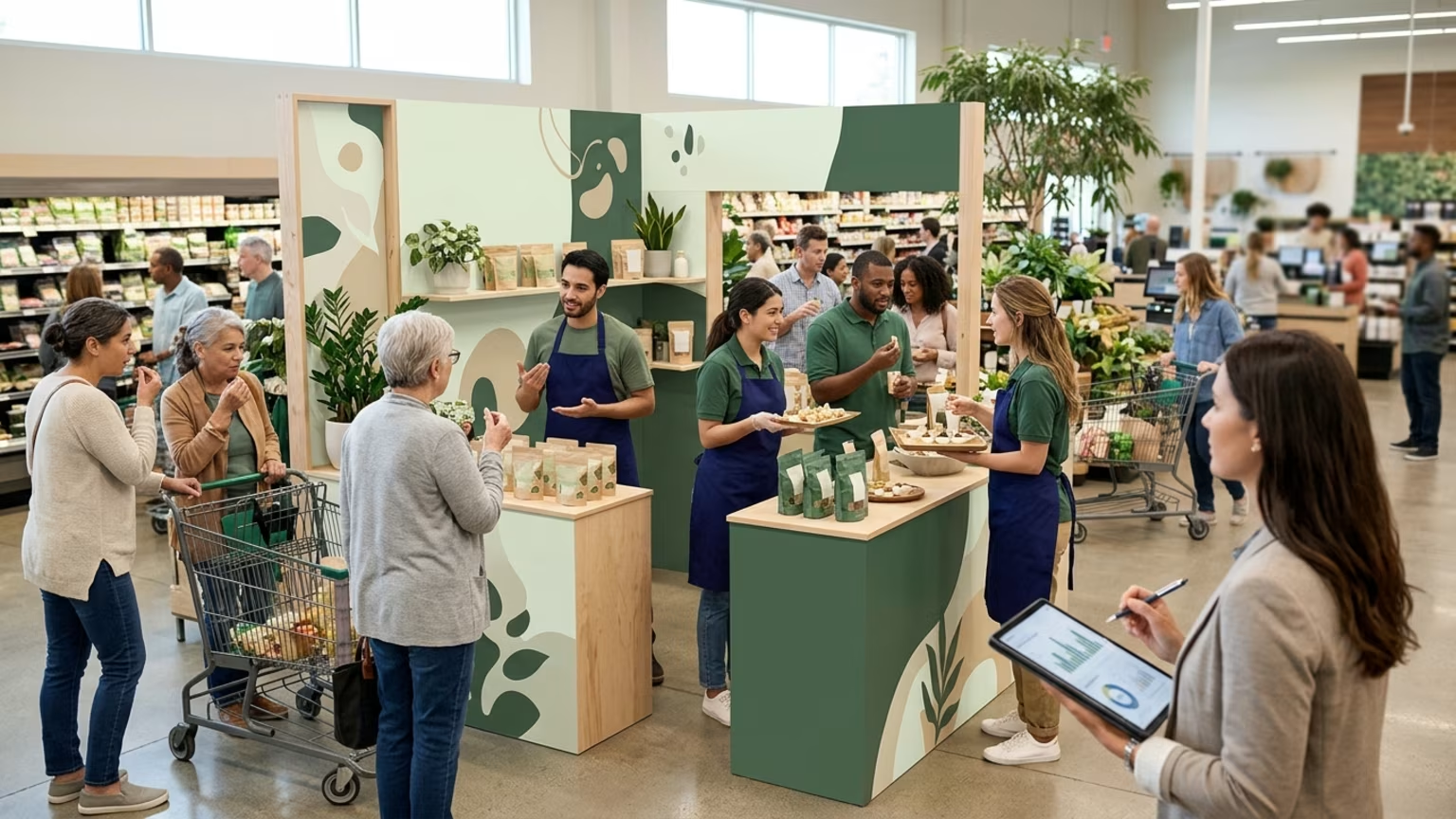
Makai’s Retail Demonstrations service uses trained brand ambassadors to drive in-store sales through conversations and product trials. For us, an aloha approach means welcoming people into the experience without treating every interaction as a transaction. Warmth and operational discipline belong together.
Staffing fit therefore deserves its own assessment. The proposed scorecard should address whether trained talent is available for the location and time slot. A strong shopper-fit score is not evidence that the human side of the activation is ready.
We believe preparation should keep product trial and human connection aligned with the campaign’s purpose. That is the distinction between simply distributing samples and creating a meaningful brand interaction. Our perspective on human-centered retail experiences develops that planning lens further.
We managed a four-week, multi-market Costco sampling program for Pulmuone’s PlantSpired line. The program delivered more than 65,000 samples. That engagement provides a concrete example of multi-market execution, not a forecast for another store or schedule.
For the selection framework, the practical lesson is to keep staffing feasibility visible alongside audience opportunity. The store shortlist and the staffing plan should describe the same proposed activation windows.
Separate qualified leads from store sales before defining Return on Investment (ROI). Makai’s end-to-end positioning extends from permitting to CRM reporting. For this framework, the reporting plan should preserve the distinction between a human interaction and an aggregate sales result.
A proposed handoff has four parts:
The demo-analytics guidance also recommends units sold per hour and cost per demo. It includes sales lift against a same-store baseline and samples distributed relative to units sold. Those measures answer different questions and should remain visible rather than collapsing into one activity total.
A sales increase during an activation is an observed association, not proof that the demo caused the increase. Use baseline and promotion context to interpret it. For more on that distinction, review connecting trial with purchase measurement.
The proposed contingency plan should return to the same eligibility checks used for booking. Protect the distinction between an activation that was scheduled and one that was completed with interpretable results.
This is the field general’s role in the framework: distinguish what can still be executed from what can still be measured. The pilot record should retain inventory availability and execution completion alongside samples and sales. Otherwise, the next store ranking may reflect an execution failure rather than the opportunity the location offered.
Pilot the transparent scorecard before extending the booking calendar. Capture samples or exposure alongside units sold. Retain inventory availability and execution completion with the baseline comparison. Then review which combinations of store and time slot produced useful trial and interpretable sales outcomes.
The next planning phase should revise the selection criteria using those store-level findings. Keep observed performance separate from causal claims and keep unresolved operating conditions visible when deciding which placements deserve another test.
Choosing a demo location also means deciding how its shopper opportunity will become a live product experience. Makai supports that execution through Retail Demonstrations with trained brand ambassadors and product trials. The service uses shopper conversations to drive in-store sales for brands seeking face-to-face consumer engagement.

30 Years Experiential & Retail Activation Partner for CPG & Beverage Brands | Multi-Market Demos, Roadshows & Costco/Club Programs That Actually Sell