Robbie Thain
Founder, CEO

A practical framework for measuring retail demo ROI by connecting physical product sampling to point-of-sale data, setting clean baselines, and tracking sales.
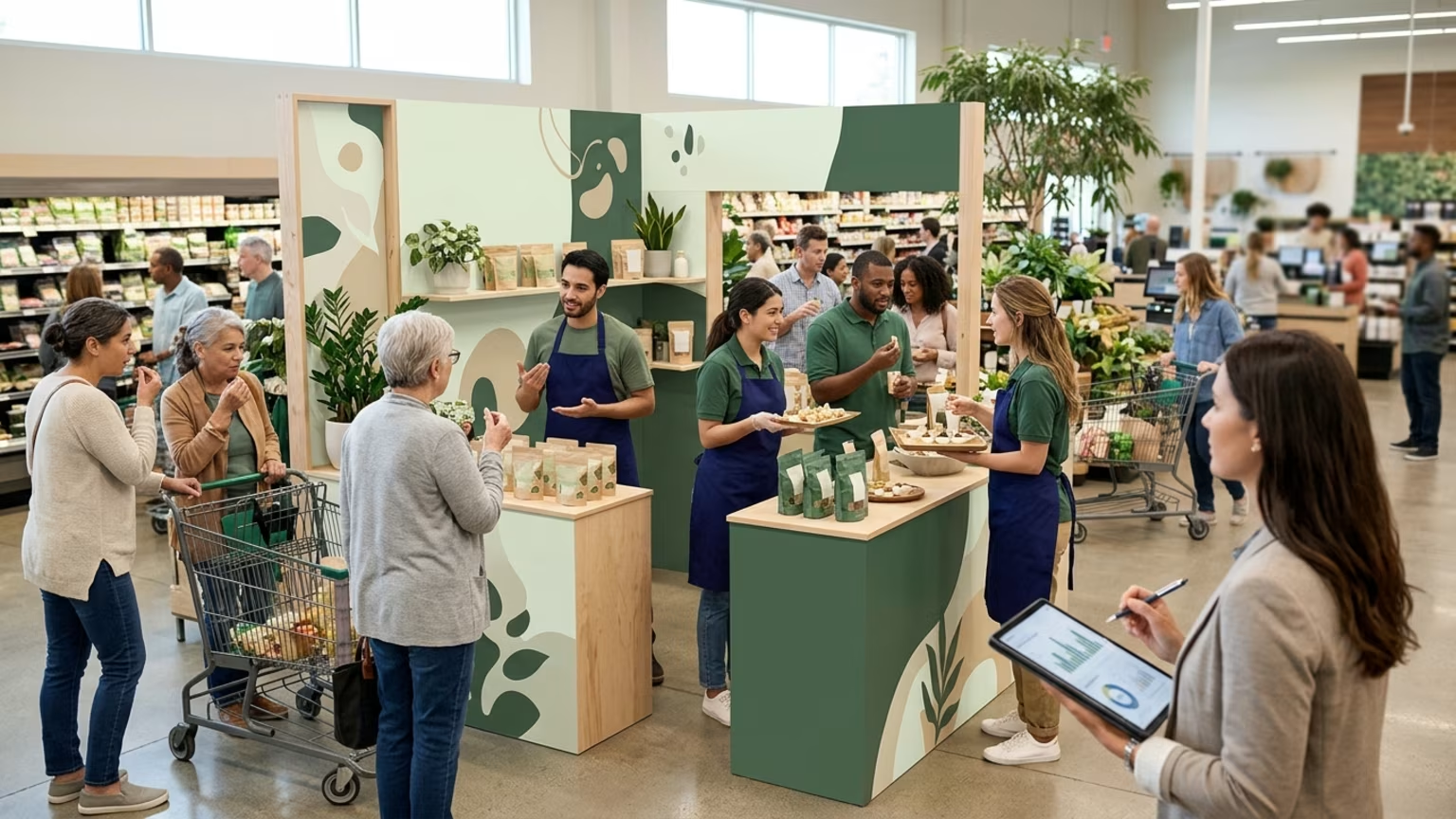
Retail demo programs often get judged on cups poured rather than on incremental pipeline. Brands ask a primary question: what is the true Return on Investment (ROI) of a retail demonstration program? The answer requires moving past headcount and connecting physical engagement directly to point-of-sale data. Counting samples records activity, not commercial impact.
To prove a campaign changed shopper behavior, marketers must establish a clear baseline and track sales over time. Relying on vanity metrics obscures the real value of field marketing. We provide clear reporting on reach, trials, leads, and sales to guide next steps in campaign optimization. Our measurement approach tracks awareness, engagement, and conversion.
This structured method turns brand moments into actionable data that demonstrates business impact. Teams must agree on what success looks like before deploying staff to the floor. Measuring true performance requires comparing a live event against controlled historical periods. Once the goals are clear, field execution can directly support broader corporate growth strategies.
A retail demo and event checklist can keep these operational goals aligned across the entire organization.
Getting the floor ready for a product activation requires more than just shipping out folding tables. Before a single interaction happens, planners must select the right measurement baseline to ensure data is clean. Demo Wizard describes comparing POS data during the demo with a comparable non-demo period at the same store. This process sets a realistic benchmark for regular product velocity.
Selecting that baseline requires careful attention to historical shopping patterns. This requires matching factors such as day of the week and season. Planners must also actively avoid time periods that feature overlapping store promotions. A heavily discounted week will artificially inflate the control data and ruin the comparison.
When we manage end to end Costco roadshows, our teams handle everything from storage to floor setup. We store your sampling product and event gear securely. Then, we ship, track, and coordinate delivery nationwide so every activation stays on schedule. Structuring a massive roadshow footprint requires strict operational precision before the doors even open.
A flawless physical setup ensures that the data reflects the true impact of the activation. Without proper logistics, missing inventory or delayed booths will skew the final numbers. Accurate beyond the booth in-store experiences rely entirely on this logistical discipline. Precision on the back end guarantees clear visibility on the front end.
A perfectly permitted retail space will still fail if the staff cannot connect with shoppers. A sterile transaction rarely builds enough trust to make a consumer abandon their usual shopping list. We specialize in creating retail demos, product sampling programs, and roadshows that bring brands face to face with their audiences. Each program is designed to drive trial, build consumer relationships, and accelerate retail velocity across multiple locations.
We rely on a human-centric aloha methodology to turn fleeting interactions into genuine brand loyalty. Trained brand ambassadors drive in store sales through real conversations and product trials. They treat shoppers as guests, inviting people to try, share, and act rather than just pushing a product. This hands on approach connects emotionally and turns casual audiences into active participants.
The physical handshake and warm introduction matter just as much as the product itself. When staff project confidence and approachability, consumers are far more likely to engage. Field teams must understand the core brand message and deliver it naturally to every passerby. This human connection separates memorable experiential marketing campaigns from forgettable background noise.
Consumers want to feel seen and valued during their shopping trips. A knowledgeable ambassador answers questions, overcomes objections, and directly influences the purchasing decision right at the shelf. Their on-site presence bridges the gap between passive brand awareness and active product trial.
Moving from a physical handshake to a measurable business outcome requires structured data collection. Demo Wizard recommends linking the activation’s store, date, and time to point-of-sale (POS) movement for the same product. Once that data is captured, marketers should compare the results with a non-demo period or control stores. This comparison proves whether the activation actually generated a lift in revenue.
For a store-to-store comparison, Demo Wizard recommends comparing a demo store with a similar non-demo store in the same chain and region over the same period. Brands must look beyond the immediate day of the activation to measure true success. Demo Wizard describes checking sales before, during, and after the demo. They recommend running post-demo checks at 3 to 7 days and again at 2 to 4 weeks.
Tracking post-event sales reveals whether shoppers returned to buy the product again. We managed a four-week, multi-market Costco sampling program for Pulmuone's PlantSpired line. The program delivered more than 65,000 samples and recorded an 18 percent sold-to-sale rate. That gives us a concrete example of how structured retail sampling can connect trial with purchase.
Clear data routing requires diligent field reporting from the staff on the floor. Teams must record exactly how many samples were distributed during their shift. This data must then flow seamlessly into the brand's central CRM or reporting software. Proper integration allows marketing leaders to accurately track the 5 key metrics to prove retail sampling ROI.
Live environments are inherently unpredictable, and even the best measurement plans will face physical reality. Shipments get delayed, store managers lose the schedule, and technical equipment fails on the floor. When executing high volume roadshows, field managers must have a contingency plan ready before the first issue arises. Proper preparation prevents minor logistical snags from ruining an expensive field deployment.
Across our history, we have delivered more than 1,000 campaigns in all 50 states for more than 200 brands. That range has given us experience across different products, audiences, retail settings, events, and market conditions rather than a single activation format. The most critical field defense is having trained leadership on site with the authority to adapt. If a digital scanner breaks, staff must seamlessly transition to manual data collection without breaking their stride.
We manage end to end Costco roadshows that bring brands to shoppers through live demos, real conversations, and measurable sales impact. This process involves strict oversight to handle massive crowds safely and efficiently. When unexpected foot traffic surges, experienced brand ambassadors manage the flow to maintain safety and preserve the customer experience. Operational excellence means the consumer never notices the scramble happening behind the scenes.
Every field marketing manager knows that adaptability is just as important as the initial plan. Teams should maintain backup supplies, printed reporting forms, and direct lines of communication to regional directors. A fast response keeps the brand experience intact and ensures the POS data remains reliable.
Establishing a reliable framework for field activations changes how marketing teams allocate their budgets. The next phase of planning should begin by selecting the specific operational baseline for upcoming events. Marketers must review their historic POS data and identify a comparable non-demo period to serve as the control. Aligning field execution schedules with accurate store-level data ensures that every sample distributed links to a commercial outcome.
Teams should audit their current data collection methods before launching their next major tour. Confirm that the systems tracking field inventory speak directly to the software tracking retail sell-through. Marketing directors must demand clear reporting that filters out overlapping store promotions and external variables. Accurate data empowers brands to scale their most effective programs with total confidence.
Setting the right operational standard before the event guarantees better insights when the campaign concludes. Brands should train their field teams to prioritize detailed reporting just as much as consumer engagement. This rigorous approach shifts experiential marketing from an unpredictable expense to a verifiable revenue driver. Teams can then build a field measurement framework that proves event pipeline value.
Tracking individual product samples against retail sales data demands structured field execution and rigorous post-event reporting. Makai eliminates inefficient post event follow up and CRM routing by handling the entire operational lifecycle. The agency executes Guerilla Marketing campaigns to launch creative, street level ideas that surprise, delight, and generate authentic word of mouth. Request a proposal

30 Years Experiential & Retail Activation Partner for CPG & Beverage Brands | Multi-Market Demos, Roadshows & Costco/Club Programs That Actually Sell


