Robbie Thain
Founder, CEO

Separate retail demo activity from sales impact. Define the decision, baseline, comparison, purchase window, and data owners before launch.

Stop treating a crowded sampling table as proof that your marketing worked. A polished setup and a high sample count show delivery. They do not answer the question your finance team cares about: what commercial result did the program produce?
Retail demos deserve better than a highlight reel disguised as a business case. The experience should feel welcoming and make the product worth trying. But the commercial claim must stand apart from the creative presentation.
A practitioner guide to sampling measurement makes the distinction explicit: accepting a sample is not a sale. It also cautions that a platform-attributed purchase is not automatically incremental. That is the starting point for a useful measurement plan.
The expensive mistake is asking one activity count to answer several different questions. Samples distributed tell you something about delivery. They do not establish shopper intent or reveal how many purchases would have happened without the activation.
For a CMO, this is where the anxiety starts. The program has consumed budget and management attention. The recap looks lively, yet the team still cannot explain whether the investment produced qualified pipeline or a defensible retail sales outcome.
The problem is not attractive design. It is allowing attractive design to stand in for an operating argument. A beautiful dumpster fire is still a failure if nobody can connect the experience to the decision the business needs to make.
Return on Investment is a financial question. Renaming sample volume as business impact does not answer it. Neither does putting shopper comments beside a sales total without explaining how those measures relate.
Our position is straightforward: agree on success before launch. The creative concept should serve that agreement rather than dictate what gets reported afterward.
At Makai, we believe warmth and operational discipline belong together. An aloha-minded experience gives people a genuine invitation to participate. The operating side demands that the product and the execution can support that invitation.
A shopper should encounter a person who can have a real conversation, not just repeat a promotional line. Behind that interaction sits less glamorous work: product availability and coordinated logistics. Human authenticity is the experience; disciplined execution supports the opportunity to turn trial into purchase.
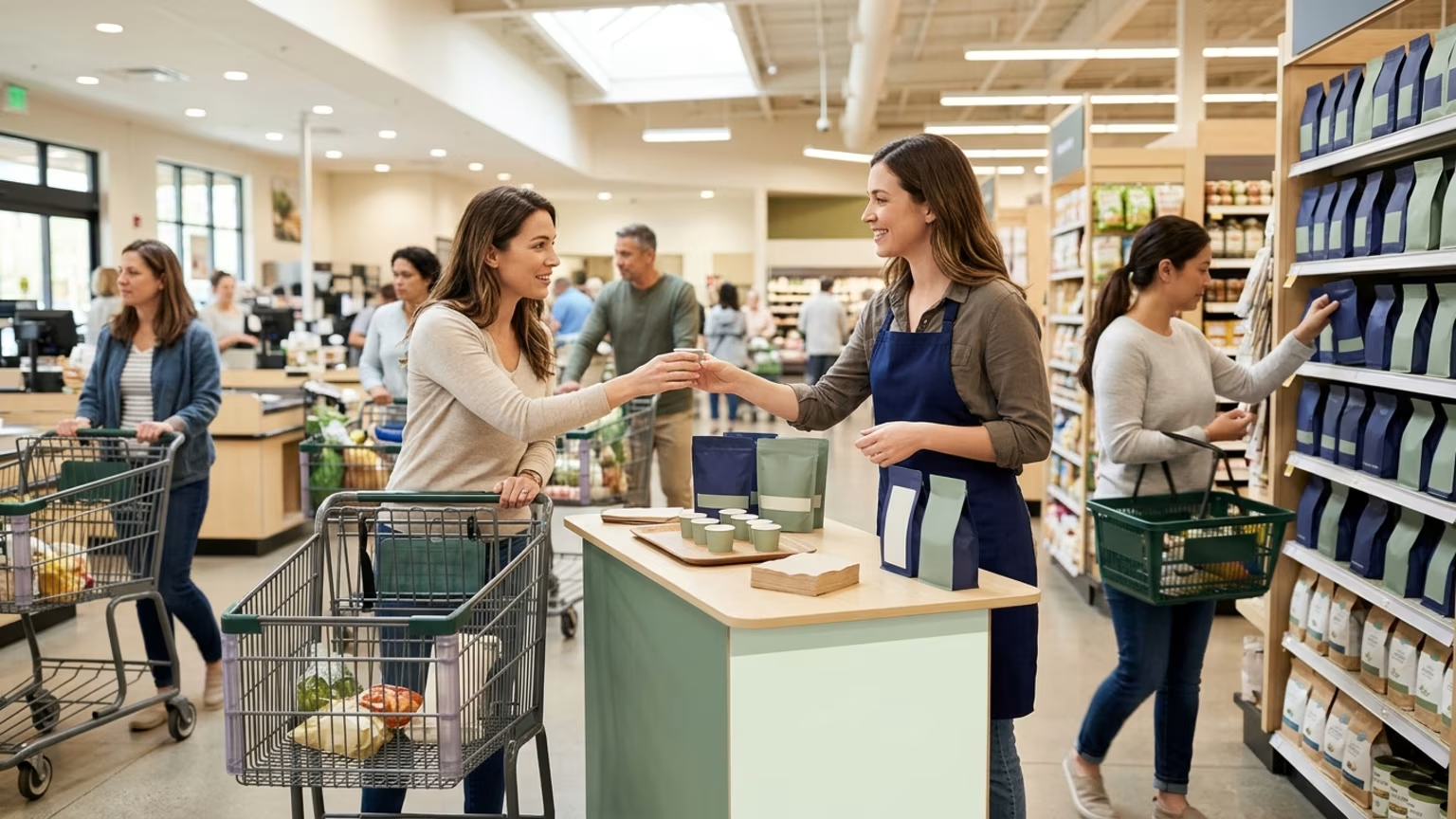
We specialize in retail demos and sampling programs that bring brands face to face with their audiences. Our roadshows are designed to drive trial and build consumer relationships across locations. We also store sampling product and event gear and coordinate shipping and delivery tracking nationwide.
Those capabilities belong in the same conversation. A compelling concept still needs the physical product and equipment in place. For us, operational discipline is not the opposite of creative work. It is how the intended experience gets a fair chance to happen.
We managed a four-week, multi-market Costco sampling program for Pulmuone's PlantSpired line. The program delivered more than 65,000 samples and recorded an 18 percent sold-to-sale rate. The useful reporting distinction is between the volume delivered and the purchase measure recorded.
That program's reported rate is not a category forecast or proof of incremental lift. Its lesson here is narrower: trial and purchase deserve separate lines in the business conversation. We provide reporting on reach, trials, leads, and sales because the next campaign decision needs more than an attendance story.
Start by replacing the question “Did the activation look successful?” with “What evidence would change our next decision?” The measurement plan should connect operational delivery to shopper response and then to the strongest purchase evidence available.
For a trade show, the tangible outcome might be retail meetings booked. For a retail demo, it might be purchases recorded during a defined window. Neither goal is answered by impressions alone.
The practitioner guidance recommends defining the decision before selecting metrics. That could mean repeating the demo or expanding to additional stores. It could also mean changing execution or funding a better-controlled test.
Write that decision into the brief. A report designed to improve staffing does not need to answer exactly the same question as a test designed to estimate incremental sales.
The source also recommends distinguishing sampling's effect from paid social's effect or their combined effect. Mixing those questions creates an attribution problem before the first sample is handed out.
Use distinct categories rather than one blended success score. The research supports separating delivery and response from purchase evidence:
These categories keep different kinds of evidence visible. They also make the distinction between trial and purchase part of the reporting structure rather than a clarification added after results arrive.
The sampling measurement guidance recommends comparable stores or markets where the product is stocked and sales data are available. It also recommends documenting baseline conditions before making comparisons.
That means recording baseline units and price alongside product availability. Promotions and stockouts belong in the record too. Where available, traffic and local events add context to the sales readout.
A before-and-after increase alone should not be called incremental lift. Promotions or seasonality may also explain the change. The guidance recommends credible comparison locations or a staggered test where appropriate.
A comparison is not a guarantee of a causal answer. Stock variation and spillover can limit the design, as can sample size and operational control. Treat the comparison as something to evaluate rather than a box to check.
Set the purchase window before the activation begins. The guidance supports a consistent window for the activation and its comparison, but it does not establish one universally correct duration for retail demos.
The practical requirement is consistency. State when purchases become eligible and when the window closes. Apply the same rule to the comparison so the report does not quietly compare different periods.
Keep that purchase window distinct from reporting lag. When a purchase counts and when the data become available are separate planning questions.
The source recommends an internal test sheet covering the decision and participating stores. It also calls for dates and assignment method alongside costs and eligible outcomes. Data ownership belongs there too.
Document exclusions for stockouts and promotions before results arrive. Include reporting lag and a stop rule. A dated change log can preserve changes in store conditions during the test.
Our practical reading is to assign responsibility for activation counts and retailer sales data before launch. Name who supplies inventory and promotion information. Then identify who reconciles those inputs into the final readout.
Activation cost belongs beside the outcome evidence. That keeps the commercial economics of a demo in view without pretending that every recorded purchase was caused by the program.
The practitioner guidance draws a clear boundary: without retailer sales data, a team can still learn about consumer response and execution. It cannot honestly claim measured retail lift.
Report the delivery and response evidence you have. Where observed sales are available but a credible comparison is not, label them as observed sales and explain possible alternative causes. A narrower answer is more useful than a larger claim the design cannot support.
Core takeaway: Demand execution before aesthetics and evidence before applause. A worthwhile retail demo pairs a human product experience with a measurement plan that keeps delivery separate from purchase and incrementality. Define the decision before launch. Then insist that every commercial claim matches the available data, even when the honest answer is an execution lesson rather than a sales-lift headline.
Retail trial and qualified pipeline are the focus of Makai's face-to-face campaigns for premium CPG brands. Makai supports activation logistics by storing sampling product and event gear and coordinating shipping, tracking, and nationwide delivery for regional and national programs.

30 Years Experiential & Retail Activation Partner for CPG & Beverage Brands | Multi-Market Demos, Roadshows & Costco/Club Programs That Actually Sell