Robbie Thain
Founder, CEO

Plan retail sampling around shopper fit, store readiness, staffing, contingencies, and the handoff from product trial to purchase reporting.
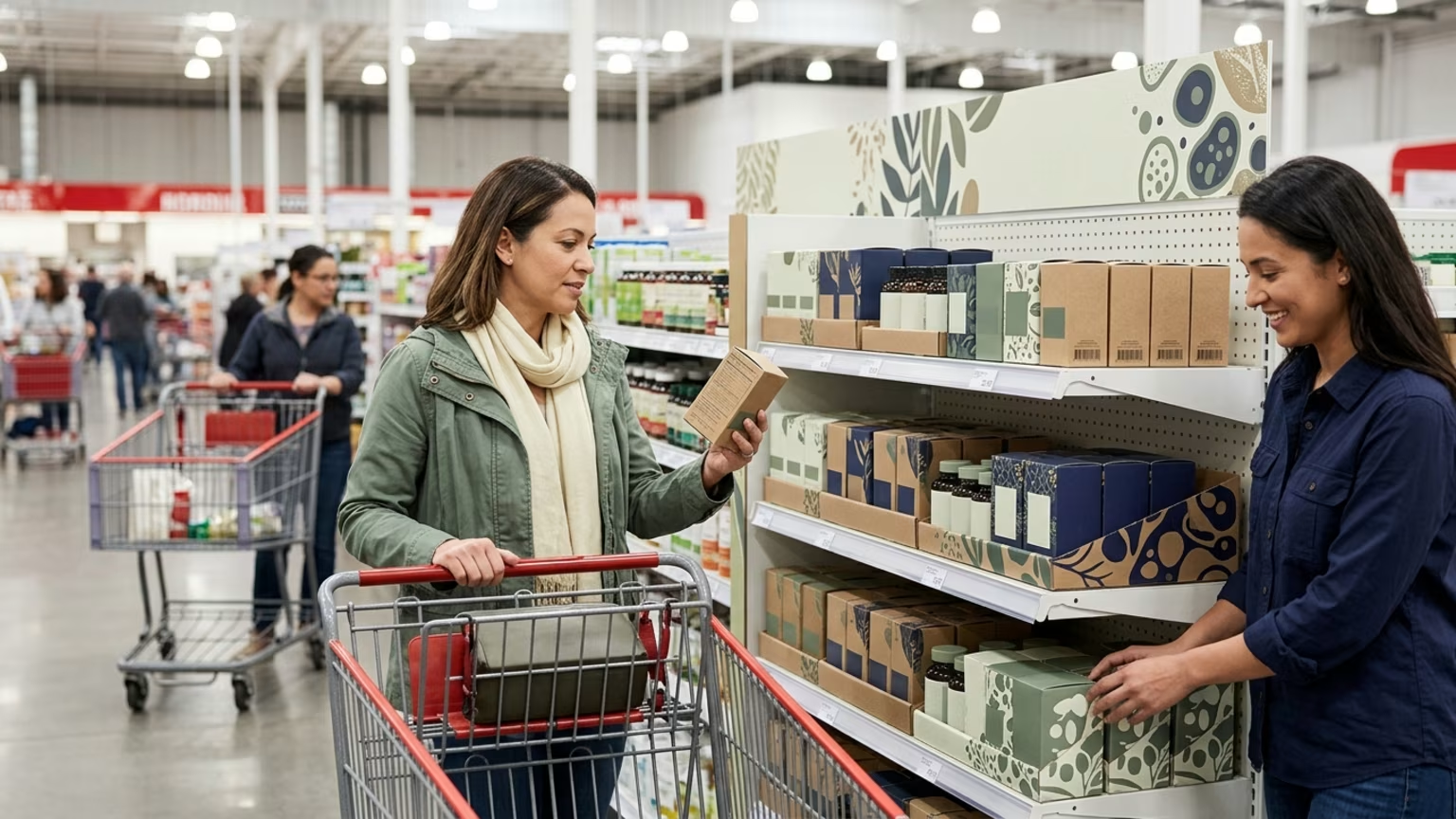
34,000 demos formed the Grassroots Marketing dataset discussed on the Startup CPG podcast. The speakers noted that outcomes vary with store type and shopper traffic. For planning purposes, that makes the retail setting part of the commercial decision rather than just a place to distribute samples.
Plan retail sampling by defining the intended shopper and purchase action before choosing stores. Then bring product availability and staffing into the same brief as venue requirements and measurement. The operational goal is a connected experience: the right person encounters the product in a setting where the next purchase step is available and clear.
At Makai, we specialize in retail demos and product sampling programs that bring brands face to face with their audiences. Our programs are designed to drive trial and build consumer relationships while accelerating retail velocity across multiple locations. We believe the planning brief should hold those commercial intentions together rather than separating the experience from its outcome.
An agency buyer guide recommends defining audience, geography, behavior, objective and timing before choosing the environment and format. Applied to retail sampling, that supports a focused starting brief:
Store choice should follow those answers rather than traffic alone. Our discussion of matching the physical setting to shopper intent provides a useful next layer for that decision.
Start with the venue requirements rather than assuming the same setup can travel unchanged between locations. An agency planning brief recommends bringing staffing and product availability into planning early. It also calls for attention to transport, venue requirements, local conditions and contingencies before the creative idea is finalized.
That guidance identifies the questions to resolve, but it does not establish specific permits or approval timelines. Those details need to be settled for the actual activation rather than copied from a general sampling playbook.
Makai’s integrated services extend from permitting to CRM reporting. Our storage and logistics work includes holding sampling product and event gear, then coordinating shipping and tracking for nationwide delivery. These capabilities belong in the planning conversation because the activation brief includes the movement of physical product and equipment.
For inventory and timing, a vendor sampling guide recommends considering customer traffic alongside stock availability. Staffing and shelf cycles also enter its timing guidance. It advises against activating when inventory is low.
The practical planning sequence is therefore:
Keep sampling activity and purchase availability connected in the brief. Distributing product is one operational task; making the intended retail purchase possible is a separate planning consideration.
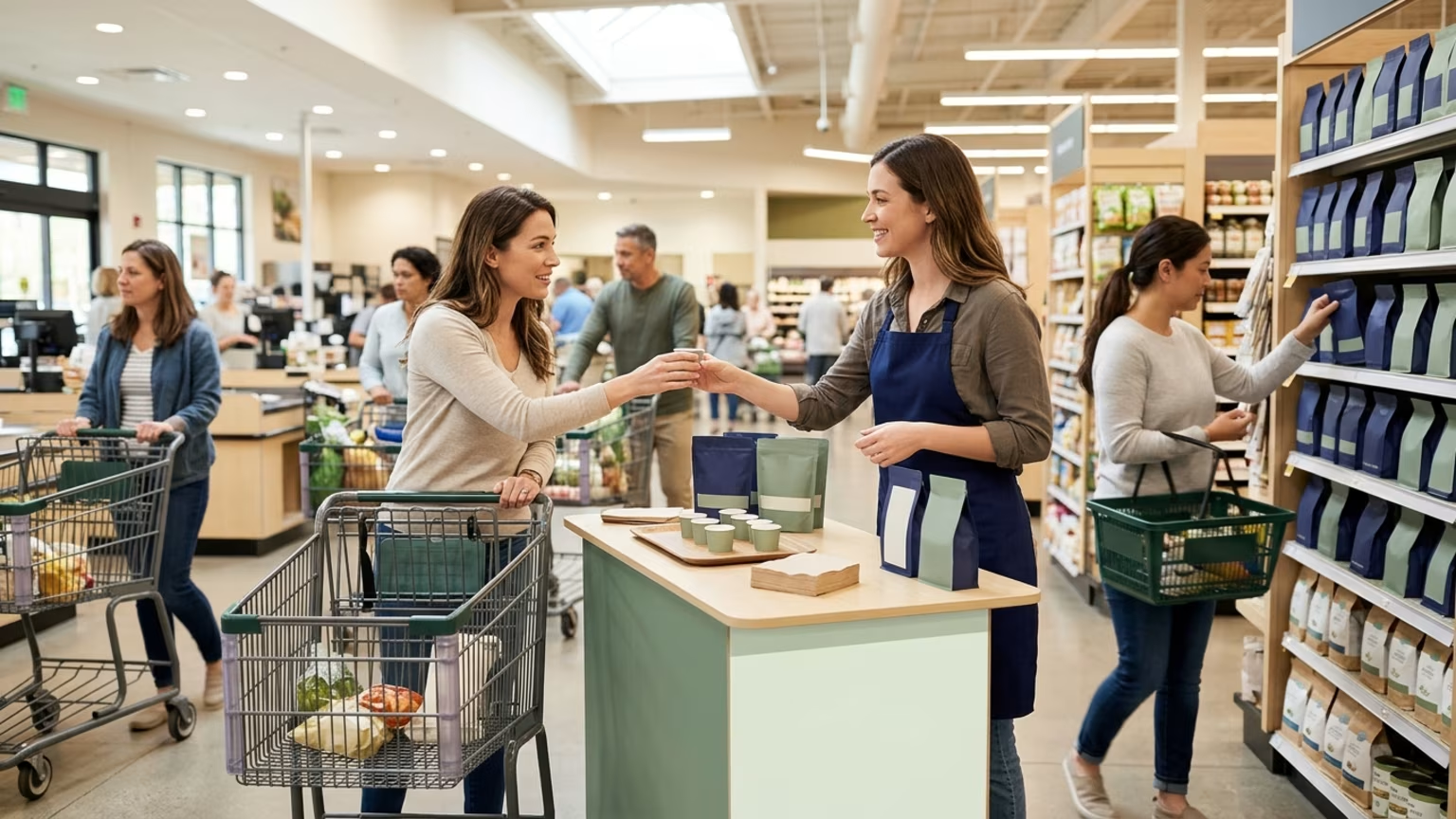
Retail demos need people who can carry the product conversation, not simply occupy the space. Makai’s retail demonstrations use trained brand ambassadors to drive in-store sales through real conversations and product trials. That human connection is part of the service itself.
For us, an aloha-minded approach means treating the shopper as a person rather than an activity count. We believe warmth should make a conversation more useful without turning the interaction into pressure. Approachability and operational discipline belong together.
The staffing brief translates that principle into defined expectations. A vendor campaign template recommends specifying staff numbers and training. Its guidance also includes key messages, uniforms, consumer interaction protocols and escalation procedures.
Those items support a practical training discussion:
The research does not establish a staffing ratio or training model that is best for every product and retailer. The brief should specify the staffing plan for the actual interaction instead of treating headcount as a universal formula.
In our experience, the commercial purpose of retail sampling is broader than getting a product into someone’s hand. Our programs are designed to build consumer relationships as well as trial. We believe a useful training brief should preserve that distinction: the ambassador represents the brand through the conversation, not just the sample.
Begin by separating the desired purchase outcome from the decision to collect contact information. A retail demo may be designed around an immediate sale. A lead-focused activation may instead aim to create qualified interest for follow-up.
A conversation is the beginning of that process, not automatically a CRM record. Makai’s positioning connects face-to-face experiences with qualified leads and measurable sales pipeline. Our integrated services include CRM reporting, but the reporting objective still needs to match the purpose of the activation.
The agency planning guidance supports defining measures and assigning a follow-up owner. Within that scope, the handoff can be organized around three decisions:
The cited guidance does not specify a capture tool, consent process or technical CRM integration. Those mechanics require a separate implementation plan that explains how the physical interaction becomes a usable record. Do not leave that transition hidden inside a general promise to collect leads.
The distinction between activity and outcome matters even when contact collection is not the objective. Return on Investment (ROI) is not established by sample volume alone.
We managed a four-week, multi-market Costco sampling program for Pulmuone’s PlantSpired line. The program delivered more than 65,000 samples and recorded an 18 percent sold-to-sale rate. The reporting lesson is to state the sample activity alongside the purchase measure rather than letting distribution volume stand in for commercial performance.
In the Startup CPG discussion, speakers reported an average of 12.79 units per demo from the Grassroots Marketing dataset. That is one agency’s reported result, not an industry benchmark or a forecast for another program.
For planning purposes, keep three questions distinct: What happened on the floor? What purchase outcome was recorded? What supports the business-performance claim? Our guide to measurement beyond event headcount develops that reporting distinction.
The contingency plan should already be part of the activation brief. The agency planning guidance calls for contingency decisions early, while the vendor template includes escalation procedures. Together, those recommendations support a defined decision path rather than improvisation without ownership.
The field leader’s job is to bring the failure into that process and keep the report faithful to what occurred.
Escalate the staffing gap through the route defined in the brief. Reassess the planned consumer interaction against the staffing actually available. The contingency decision should address the changed conditions rather than treating the original plan as delivered.
This is why staff numbers and interaction expectations belong together during preparation. A staffing problem is also a question about which parts of the intended experience remain supported.
Bring the technology failure into the escalation process. Keep observed activity separate from outcomes that were not recorded or verified. Conversations should not become CRM leads in the report simply because a capture process was intended to run.
The recovery decision belongs in the implementation plan discussed above. A field report should distinguish the experience delivered from the records successfully created.
Use product availability as a purchase-readiness decision. The vendor timing guide recommends avoiding activations when inventory is low. Its guidance supports reassessing the purchase opportunity rather than continuing to describe the program as though stock conditions were unchanged.
These responses are an operating framework, not a claim that every disruption has the same remedy. Our view is that contingency planning should preserve clear ownership and honest reporting while the team resolves the immediate problem.
Build the next planning document around one proposed retail setting. Bring the intended shopper and desired action together with product availability and staffing. Add venue requirements, contingency decisions and the follow-up owner before finalizing the creative treatment.
Then examine the purchase handoff separately. If the program needs contact capture or verified purchase evidence, resolve that implementation before launch. A useful next read is our discussion of connecting sampling activity with purchase validation.
The next phase is not a larger creative presentation. It is a brief that makes the purchase opportunity and reporting responsibility explicit.
Retail sampling plans face execution gaps when permits and staffing remain unresolved. For CPG marketers managing regional or national campaigns, Makai addresses those logistical demands through retail demonstrations staffed by trained brand ambassadors who use product trials and real conversations to drive in-store sales.

30 Years Experiential & Retail Activation Partner for CPG & Beverage Brands | Multi-Market Demos, Roadshows & Costco/Club Programs That Actually Sell