Robbie Thain
Founder, CEO

Measure retail demos beyond sample counts with clear trial and purchase measures, retailer sales data, store baselines, and credible comparisons.
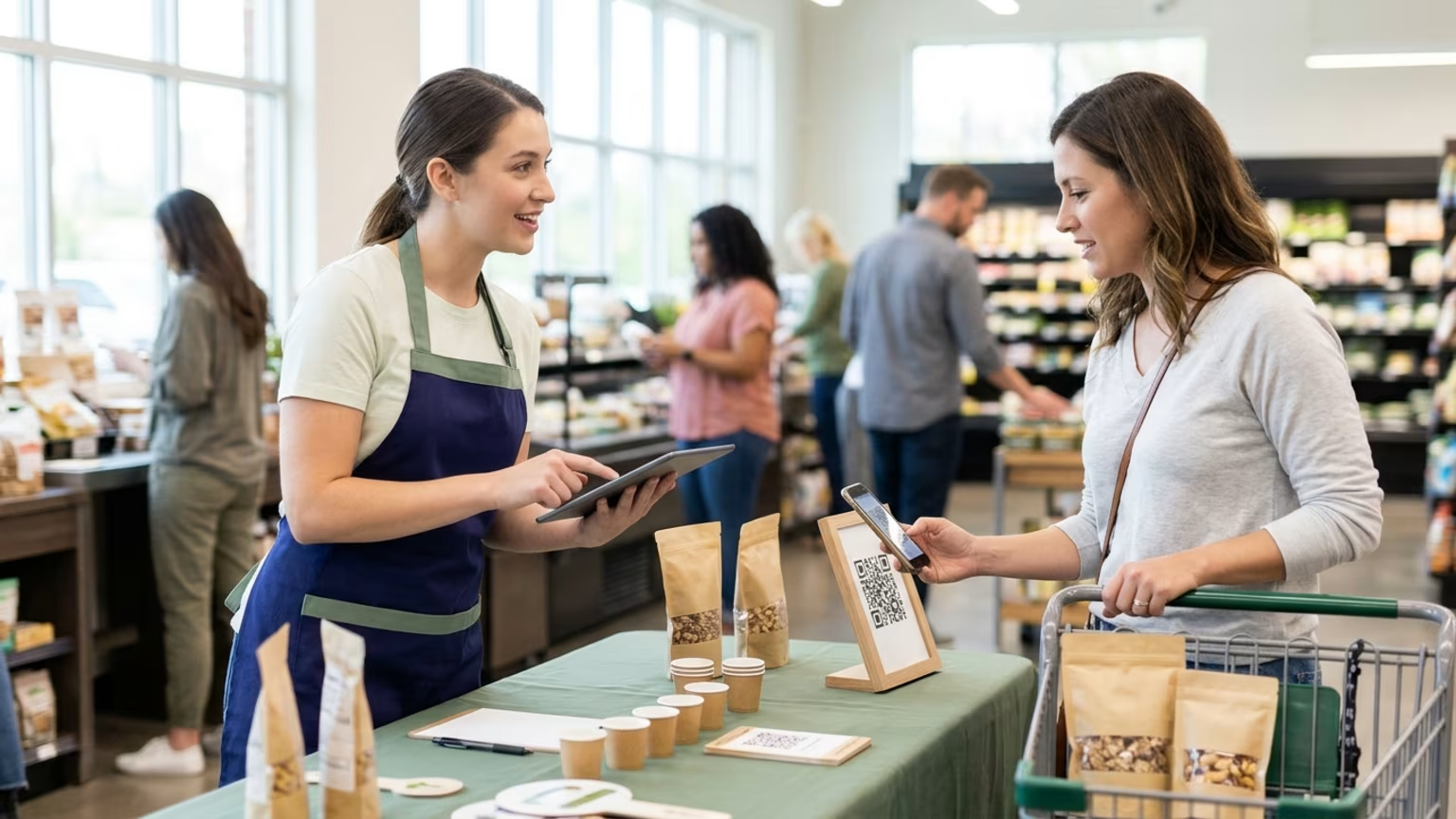
Your prettiest retail demo can still be your weakest investment. A polished display and an empty sample tray do not establish that shoppers bought anything. Calling that success gives the presentation credit for a business outcome nobody measured.
The sample count deserves a place in the report. It does not deserve to be the verdict.
For a CMO defending a major activation budget, that distinction is not academic. The uncomfortable question is whether the program produced meaningful trial and purchasing evidence or simply looked productive. A crowded table cannot answer it, and a photo recap cannot turn activity into Return on Investment (ROI).
The mainstream mistake is treating everything visible as evidence of everything valuable. Samples disappear. Shoppers react positively. The recap combines those observations into a success story without establishing the connection to purchase.
That is the beautiful dumpster fire: strong presentation wrapped around a weak business case. The field team may have delivered exactly what the brief requested. The problem is that the brief rewarded distribution while leadership expected commercial proof.
A published analysis of sampling and paid social makes the distinction explicit. It separates accepting a sample from making a purchase and cautions that enthusiastic comments do not establish repeat demand.
The analysis describes a food-sampling field study at one U.S. grocery chain covering six products over six weekends. Its summary does not identify the underlying paper or authors and omits exact results and comparison-design details. That makes the study description context for asking better questions, not a numerical sales-lift benchmark.
Our position is straightforward: creative ambition should survive commercial scrutiny. A demo can be welcoming and memorable while still being judged on what the available evidence supports. The trouble starts when aesthetics become a substitute for that judgment.
At Makai, we believe human warmth and operational discipline belong in the same brief. A shopper deserves a real conversation rather than a rushed handoff. The marketing team deserves an experience designed around a business purpose rather than an attractive photograph.
We specialize in retail demos and sampling programs that bring brands face to face with their audiences. Our retail demonstrations use trained brand ambassadors to support in-store sales through conversations and product trials. Our broader capabilities extend from permitting to CRM reporting, with storage and logistics supporting national execution.
That combination is the alternative to brand theater. We believe authenticity gives the interaction its value, while disciplined execution gives that interaction a practical route toward trial and conversion. Neither replaces the need to measure what happened.
Our four-week Dole Whip summer sampling program reached San Francisco, Boston, Tampa, and Orlando. We distributed more than 64,000 servings and built creative assets that could be reused in future campaigns. The lesson we take from that work is not that creative should become less ambitious. It is that creative should remain useful beyond the recap.
Reusable assets and a documented serving count describe different parts of delivery. Neither should be stretched into an unsupported claim about purchases. Giving each result its proper role makes the commercial discussion clearer.
The field details behind the interaction deserve the same attention as the visual concept. Aloha-style approachability is not permission to be casual about operations. For us, it means making the human experience warm while taking the delivery seriously.
The goal should shift from proving that people were nearby to understanding what the activation actually accomplished. For retail demos, that means separating product trial from shopper response and purchase evidence. Impressions can provide context without carrying the business case.
The sampling analysis recommends starting with the decision the test must inform. Its measurement guidance follows a useful principle: the outcome measure should match the business question.
For delivery reporting, the analysis recommends recording eligible encounters and samples accepted. It also recommends documenting the store and day alongside product availability and activation cost. A purchase measure belongs in the report when the retailer can provide one.
That distinction gives a sample count a useful job without overstating it. It describes product distribution. Recording eligible encounters alongside accepted samples adds context about the opportunity to try the product.
Qualified trial should not become a more impressive label for the same undifferentiated count. Our view is that reaching intended buyers matters more than simply emptying the cooler. The report should make clear what was recorded rather than imply targeting quality that was never established.
Purchase intent belongs with shopper feedback, not completed sales. Positive reactions can inform learning about the product. They should not be silently promoted into evidence of demand.
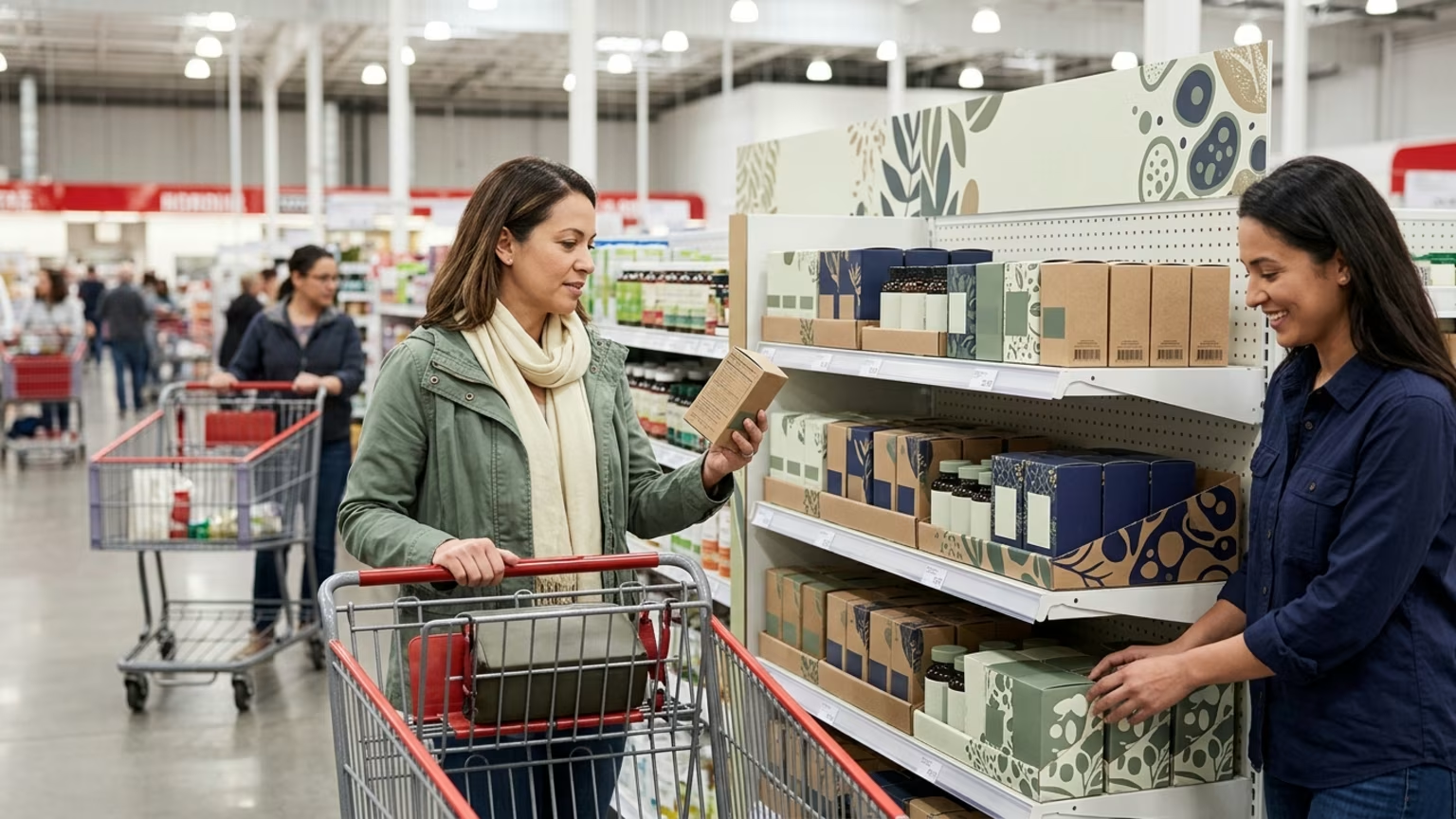
In our four-week Costco sampling program for Pulmuone's PlantSpired line, we delivered more than 65,000 samples and recorded an 18 percent sold-to-sale rate. Those are distinct program results. Keeping the distribution count separate from the reported rate gives the purchase-related outcome its own place in the conversation.
The analysis recommends agreeing with the retailer before activation on whether store-level or market-level sales data will be available. This is a planning decision, not a reporting detail to settle afterward.
Without a credible sales measure, the program can still teach a team about shopper objections or operational feasibility. It cannot honestly establish measured retail lift. Naming that boundary upfront lets the activation answer a useful question rather than fail an unanswerable one.
This also changes what leadership should expect from the recap. A learning test should be evaluated as a learning test. A purchasing test needs purchasing evidence.
The analysis recommends selecting comparable stores or markets where the product is stocked and data access is sufficient. Before activation, its guidance calls for documenting baseline units and price. Availability and stockouts also belong in that record.
Promotions need their own context. So do store traffic where available and relevant local events. The purpose is to understand the conditions surrounding the result rather than compare two totals stripped of their retail setting.
Our view is that establishing the store’s starting point deserves a place beside the activation concept in the planning discussion. A sales number becomes more useful when the team knows what preceded it and what else changed.
The sampling analysis cautions that observed sales growth is not automatically incremental. Price and promotions can affect the comparison. Stock conditions and seasonality also need attention.
A control group alone does not make a small test valid. Retail permissions and spillover can constrain a comparison, while stock variation and sample size can limit interpretation. Those constraints belong in the explanation of the results.
The same analysis recommends deciding whether the test concerns sampling alone or its combination with paid social. Running both everywhere makes separating their contributions difficult. For teams with enough comparable units and operational control, it describes a four-cell design covering neither tactic, sampling only, paid social only, and both.
That is an option, not a requirement for every brand. The comparison should answer the intended question within the retailer’s operating reality.
Cost per valid trial can help a team understand the expense of delivering product experience. The analysis cautions against treating it as cost per buyer or proof of ROI. An inexpensive trial does not establish a purchase.
A useful recap therefore keeps three categories separate:
This separation is the practical difference between reporting activity and assessing sales impact. It gives leadership a clearer account of what the program delivered without forcing every observation into an ROI claim.
Core takeaway: Demand execution that can stand beside the creative, not hide behind it. Warm conversations and thoughtful presentation deserve support from disciplined logistics and credible measurement. Count the samples, but judge the program against its business question. The strongest report is not the one with the biggest activity number. It is the one that makes the outcome and its meaning clear.
A polished demo setup still leaves the harder question of whether product trial connects with an actual purchase rather than a favorable reaction at the table. Makai assigns trained brand ambassadors to retail demonstrations that use product trials and direct conversation to drive in-store sales.

30 Years Experiential & Retail Activation Partner for CPG & Beverage Brands | Multi-Market Demos, Roadshows & Costco/Club Programs That Actually Sell