Robbie Thain
Founder, CEO

A crowded booth is not the goal. Makai makes the case for clear product experiences, capable staff, and next steps tied to meaningful outcomes.
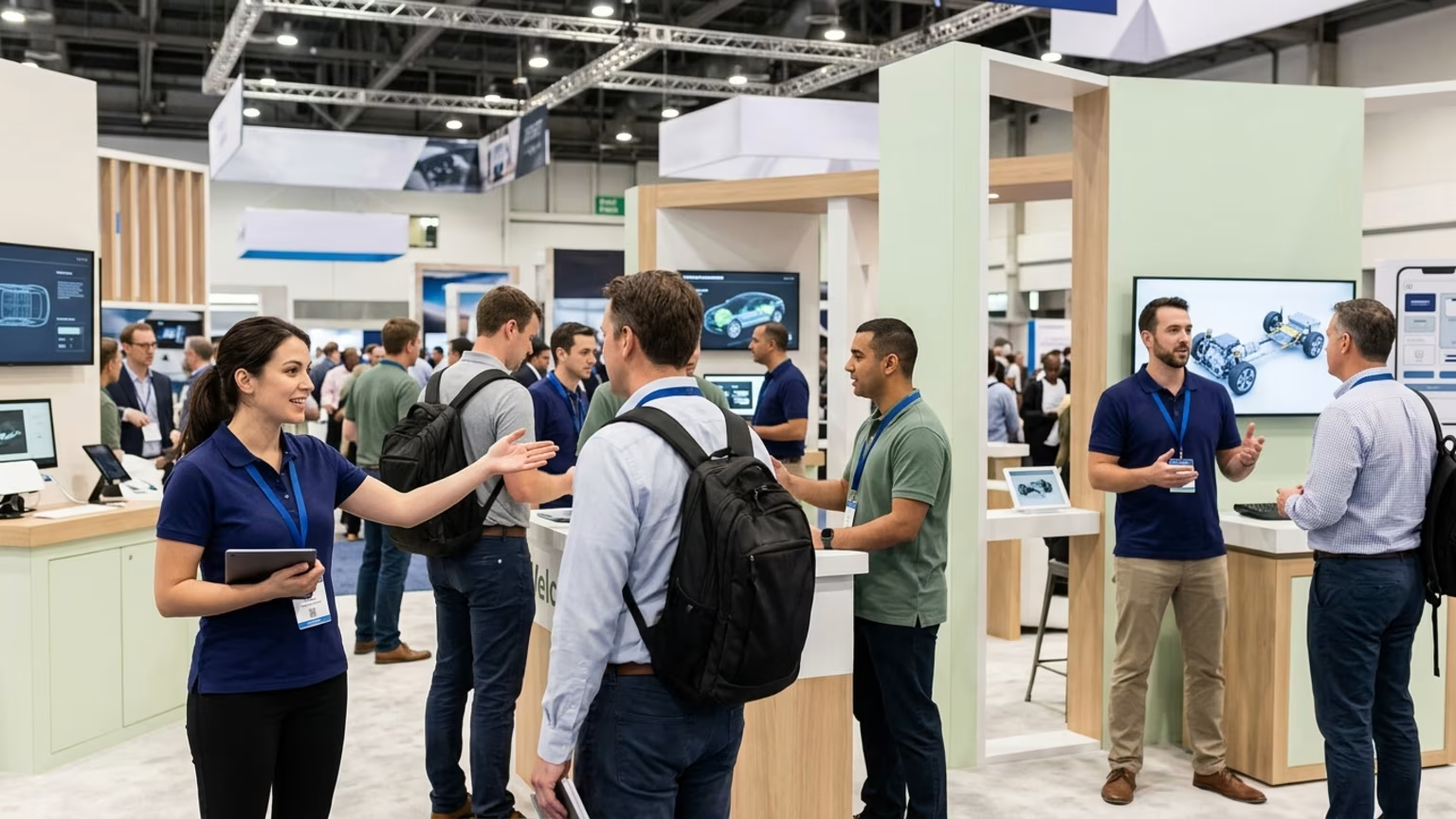
A booth that wins attention but leaves the product unexplained is not a creative triumph. It is an expensive detour.
That is the problem with treating spectacle as the starting point for experiential marketing. The attraction becomes the assignment. Product understanding and a useful next action become somebody else’s problem.
For the CMO defending a major event investment, that separation should be uncomfortable. A crowded booth makes a convincing photo. It does not answer the harder question: did the right people leave with a reason to buy or continue the conversation?
Our position at Makai is straightforward. Creativity should serve the encounter between a person and a product. When the attraction becomes more memorable than the offer, the experience needs editing rather than another feature.
The beautiful dumpster fire starts when every element has its own objective. The screen needs views. The giveaway needs entries. The sampling station needs volume. Nobody owns the visitor’s understanding of the whole experience.
A visitor might participate without learning what makes the product relevant. A retail buyer might want a serious conversation while staff are occupied explaining a game. These are design risks to resolve, not reasons to abandon creativity.
The commercial anxiety is real enough without inventing a horror story. Leadership approved an expensive activation and now expects qualified pipeline. A recap full of attendance totals cannot explain whether visitors understood the product or had a credible reason to stay connected.
The evidence gives product interaction a stronger foundation than spectacle alone. A secondary summary of Freeman’s 2025 commercial research reported that 96% of surveyed attendees said touching or testing a product made it easier to advocate for a purchase.
Those findings describe attendee perceptions from a summary that does not state the sample size. They do not establish sales lift or Return on Investment (ROI). They also do not validate the audience-benefit-action framework proposed below.
The practical distinction matters. An interaction can give someone useful evidence about a product. An attraction that merely occupies them has a different job. Our view is that the product deserves the stronger role in the booth plan.
At Makai, we believe a welcoming experience and demanding execution belong together. For us, aloha means treating the visitor like a person rather than a unit of traffic. Operational discipline means giving that welcome a clear product purpose.
Warmth without coordination can leave a visitor feeling acknowledged but poorly informed. Coordination without warmth can make an encounter feel like a transaction. The alternative is a human conversation supported by an experience that works.
That worldview fits Makai’s work across consumer events and retail demonstrations. Our consumer events bring brands and people together through interaction and emotion. Our retail demonstrations put trained brand ambassadors in the conversation alongside product trials.
Knowledgeable people deserve as much attention as the physical build. The same summary of Freeman’s 2025 research reported that 93% of attendees considered staff who could answer their questions very or extremely important. Meanwhile, 78% rated exhibitors very or extremely effective at providing that capability.
That reported gap is a useful challenge to a design review. Does the experience give staff a meaningful product conversation to have? Or does it leave them explaining participation mechanics while the product sits in the background?
Our Glanbia work offers a concrete example of coordinated scope. At Natural Products Expo West 2025, we designed and managed a 40 by 20 foot trade show environment. It brought think!, Isopure, Optimum Nutrition, and Amazing Grass into one coordinated space.
Our team handled concept, operations, staffing, and breakdown. More than 14,000 recorded product samples were distributed across the activation stations. That figure documents distribution rather than buyer qualification.
For us, the relevant lesson is that the assignment extended beyond the environment’s appearance. The work included the people and operations needed to deliver product interactions across multiple stations. A design discussion that ignores those responsibilities leaves too much of the experience unresolved.
This is why we favor planning capacity around the product interaction. The creative idea should be judged alongside the practical work required to deliver it. Neither deserves a separate definition of success.
Our design hypothesis is simple: identify a primary audience, make a relevant product benefit understandable, and make the next action visible. This is an editorial framework to test against the objective, not a universal booth formula.
A primary audience does not mean everybody else gets ignored. It means the team knows whose understanding and response matter most when design choices compete. A consumer trying a snack and a retail buyer evaluating it may need different conversations within the same environment.
The benefit should then connect to something visitors can experience or ask about. A sample gives them a product encounter. A capable ambassador gives them somewhere to take the questions that encounter creates. The next action should follow the interest actually expressed.
Before approving another activity, the useful question is what it helps a visitor understand. A hands-on element should have a clear relationship to the product or the problem it addresses. Otherwise, the team should be honest that it is primarily entertainment.
This does not make technology the enemy. A Brand Manager in the CPG space described our work this way: “Makai transformed our test-drive activation into an emotional brand journey. They connected technology, lifestyle, and experience seamlessly, and turned casual visitors into loyal fans.”
Our point is not to remove the emotional layer. It is to give that layer a job. Product demonstrations built around a clear purpose offer a useful starting point for that discussion.
Jack Morton argues that trade-show experiences extend beyond the booth. Its perspective includes pre-event communications and onsite engagement as well as follow-up afterward. That is agency guidance rather than a measured conversion rule.
Freeman’s pre-event research also covers how people find, choose, and prepare for events. That broader view is a useful reminder not to begin planning at the moment a visitor reaches the carpet.
For this framework, the invitation should establish a relevant expectation. The live interaction should make the product understandable. The follow-up should continue the conversation the visitor actually wanted to have.
Before the show, a practical usability check is to ask representative visitors or internal reviewers to describe the proposed experience. This is a suggested check rather than a documented research protocol.
Ask them:
Listen for the explanation rather than a positive reaction to the design. If reviewers remember the activity but cannot explain the product, the concept needs another pass. If they understand the product but cannot identify a next step, the journey is unfinished.
Foot traffic can describe activity. It should not stand in for every other result. A more useful proposed scorecard would distinguish:
These are different outcomes. A sample is not a meeting. A meeting is not a purchase. Keeping them separate makes the report more useful without pretending the event has already delivered revenue.
That distinction also belongs in the design of the lead-capture system. The record should preserve the meaning of the interaction rather than flatten every participant into the same kind of lead.
Core takeaway: Demand an experience that earns attention and gives it somewhere useful to go. Warm hospitality matters. So do knowledgeable staff and the operational work behind the product interaction. Aesthetics deserve investment when they support that encounter, but they should not excuse an unclear offer or an unfinished next step. The better question is not whether the booth looks impressive. It is whether the intended visitor can understand the product and take a relevant action.
Trade show coordinators carry the daily burden of turning booth activity into qualified interest; Makai brings consumer-event design centered on interaction and emotional connection to that work. For CPG teams facing low-quality leads from crowded trade shows, Makai combines those live experiences with activations designed to turn brief encounters into qualified leads for premium CPG brands.

30 Years Experiential & Retail Activation Partner for CPG & Beverage Brands | Multi-Market Demos, Roadshows & Costco/Club Programs That Actually Sell