Robbie Thain
Founder, CEO

CADA spread specialists across its ACE presence. Makai examines the implications for booth staffing, visitor routing and CPG trade show planning.
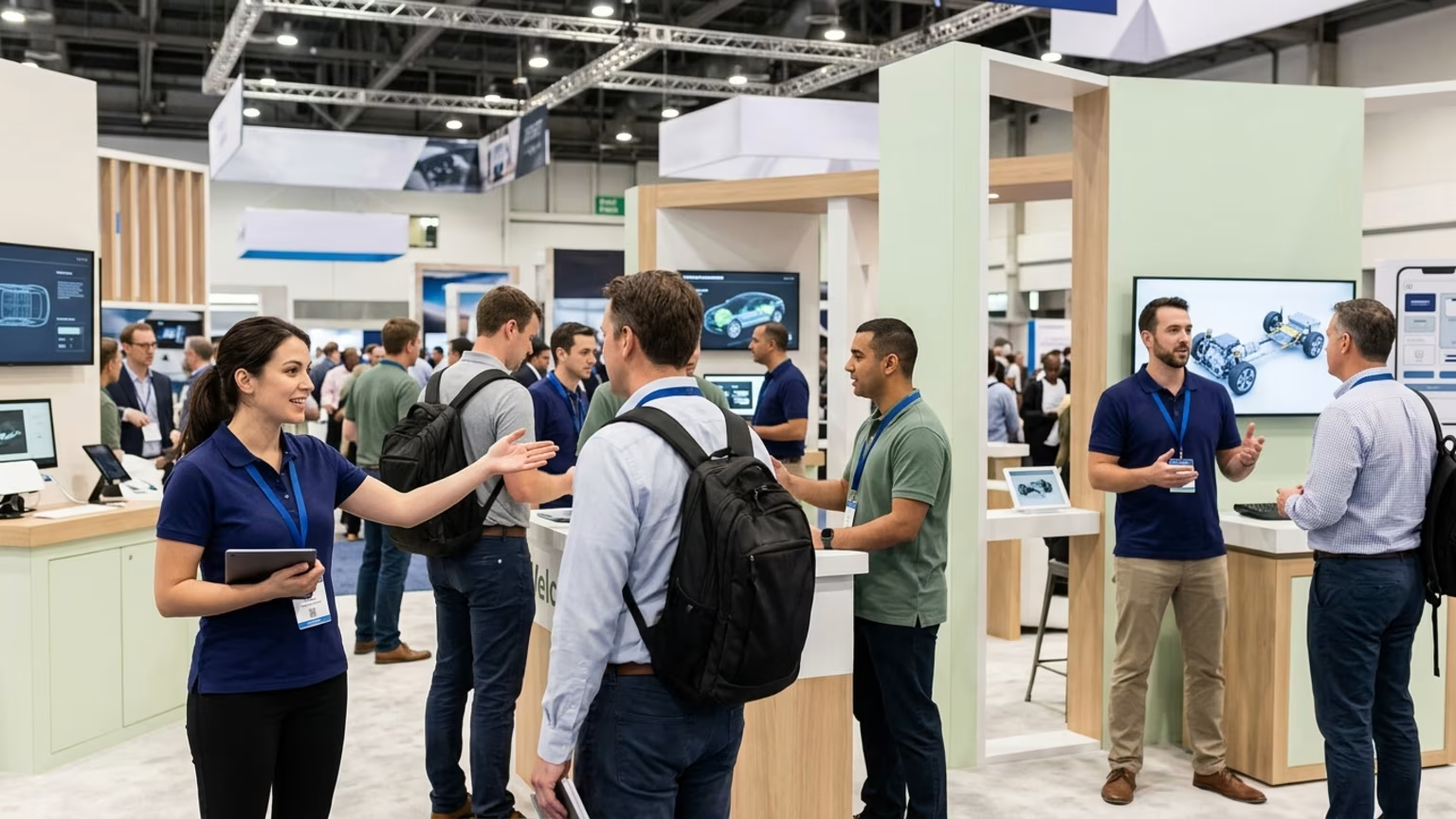
On October 19, 2026, Canadian Auto Dealer reported that CADA had spread its presence at the 2026 Automotive Conference & Expo (ACE) beyond its main booth. The association also had a Hub booth and a separate CADA 360 DriveHR booth. Its stated aim was to make relevant expertise easier for dealers to find.
The event took place at Fallsview Casino Resort in Niagara Falls. In the publication’s account, CADA’s staffing choice centered on access to program and partner specialists rather than reliance on a small team at one location.
CADA Manager of Marketing & Communications Brigette Goldenshtein told Canadian Auto Dealer that the association brought more program and partner representatives than in previous years. Specialists were present on the floor so dealers could find people equipped to discuss association programs, dealership services or operational challenges.
That is the logistical change worth examining: more specialist representation across multiple booth areas. CADA described its programs and partners as represented across the space rather than contained within its main booth.
The broader event context helps explain the range of questions those representatives might encounter. In its separate ACE event report, Canadian Auto Dealer described workshops covering workforce management, security and fraud prevention among other operational topics. That report also said CADA used ACE to meet members of its newly formed Canadian Truck Dealers division.
In the exhibitor coverage, the publication reported that dealers wanted to understand how offerings might improve productivity, protect margins and fit existing operations. Those were observations from exhibitor conversations rather than a quantified finding about all attendees.
The evidence has a clear boundary: this is an edited exhibitor account, not a performance study. Canadian Auto Dealer spoke with a select group of a dozen exhibitors. The coverage supplies no measured outcomes or comparison with a single-booth setup, and no staffing headcount or documented routing procedure. CADA’s arrangement is therefore a planning example rather than a proven conversion formula.
Makai’s view is straightforward: a warm welcome should lead somewhere useful. Hospitality gets the conversation started. Operational discipline gives that conversation a purpose and a suitable person to carry it forward.
For CPG and beverage marketers, that distinction matters because physical engagement can serve very different needs. A consumer trying a product and a retail buyer discussing an account are not necessarily looking for the same conversation. We believe the staffing brief should reflect those differences before the team approves extra space or additional people.
Our work centers on face-to-face experiences designed to capture attention and generate measurable sales pipeline. That includes retail demonstrations and trade show activations. The commercial objective connects those formats, but it does not justify giving every touchpoint an identical staffing role.
We designed and managed a 40 by 20 foot trade show environment for Glanbia at Natural Products Expo West 2025. The space brought think!, Isopure, Optimum Nutrition and Amazing Grass into one coordinated environment. Our scope covered concept and operations as well as staffing and breakdown. More than 14,000 recorded product samples were distributed across the activation stations.
Our takeaway from that experience is not that every brand needs multiple booths. It is that a coordinated environment deserves a deliberate view of what each activation station contributes. Brand variety and staffing purpose are related planning decisions, but they are not interchangeable.
For us, organizing a booth around meaningful demonstrations starts with the intended interaction. Product trial can be a valuable interaction in its own right. A conversation intended to generate qualified pipeline needs an equally clear purpose rather than being treated as an automatic extension of sampling.
That is the useful connection between CADA’s stated intent and CPG execution: define the expertise visitors need to reach before deciding where everyone should stand.
The research supports considering specialist touchpoints when an offering genuinely spans distinct topics or functions. In Makai’s view, the staffing decision should begin with those differences rather than an assumption that more representatives will solve the problem.
A useful planning brief can identify:
These are planning questions supported by the example, not a reconstruction of CADA’s operating procedures. They give staffing discussions a business purpose without inventing a required headcount.
For CPG teams, the practical distinction is between having someone available and having relevant expertise available. Makai’s position is that both deserve attention in the brief. A friendly general welcome remains valuable even when a specialist owns the deeper discussion.
Our resource on defining clear booth roles offers a related starting point for teams reviewing how staffing responsibilities fit their activation goals.
CADA’s multiple presences make footprint a visible part of this story. The planning implication is not to copy the number of locations. It is to ask what distinct visitor need would justify another touchpoint.
For Makai, an additional area should have a clear role in the experience. It might support a different conversation rather than repeat the same welcome elsewhere. The research supports defining that purpose before adding locations or people.
This is also where separating demonstration activity from buyer discussions becomes a useful design consideration. A product experience and a detailed commercial conversation can belong within the same activation without being treated as the same interaction.
Our view is that the floor plan should express those priorities. Space allocation should follow the intended conversation rather than become the reason a conversation exists. A larger footprint is a design choice, not a staffing objective.
Makai’s end-to-end services span permitting through CRM reporting. That positioning reflects our view that staffing cannot be treated as a detached creative decision. The people on the floor sit within a larger execution plan.
For teams considering specialist touchpoints, we believe footprint, logistics and permits belong in the same planning discussion. Adding a presence creates another commitment to evaluate rather than simply another place to display the brand. The commercial purpose should remain clear throughout that discussion.
This does not require assuming that every complex offering needs several booths. A shared environment may be the right setting for different kinds of expertise. The research supports evaluating visitor needs first rather than prescribing a particular physical arrangement.
The operational choice is therefore broader than assigning people to locations. It is deciding which conversations deserve dedicated attention and how those conversations fit the activation’s overall purpose.
The research’s practical implications include setting event objectives and tracking interactions or follow-up actions. That gives marketing teams a way to assess their staffing choice against the job it was intended to do.
For Makai, Return on Investment should remain tied to the commercial objective rather than the appearance of a fully staffed booth. A product trial objective and a qualified-pipeline objective call for different interpretations of activity. The measurement discussion should preserve that distinction.
Teams evaluating specialist access can define the relevant interaction or next action before the show. The value of that decision is clarity: everyone can understand what the staffing arrangement is supposed to accomplish. It also keeps the assessment focused on the visitor need that justified the touchpoint in the first place.
The useful image from Niagara Falls is a main booth that was not expected to hold every answer. CADA described placing more program and partner expertise across its ACE presence so dealers could find relevant support.
For the CMO or VP approving the next activation, that image belongs in the planning meeting before additional space or staffing becomes the default answer.
When your next show opens, will you be able to point from the main booth to the right expertise for each priority visitor need, or will visitors still have to work out that route themselves?
A specialist-led booth plan can stall at the coordination of event logistics, permits and staffing. Makai addresses those planning challenges through trade show spaces designed to attract attention and start conversations, alongside experiential campaigns and activations designed to turn brief consumer interactions into qualified leads for premium CPG brands.

30 Years Experiential & Retail Activation Partner for CPG & Beverage Brands | Multi-Market Demos, Roadshows & Costco/Club Programs That Actually Sell


