Robbie Thain
Founder, CEO

Trade show success relies far less on expensive exhibits than on structured booth teams trained to engage visitors and convert foot traffic into revenue.
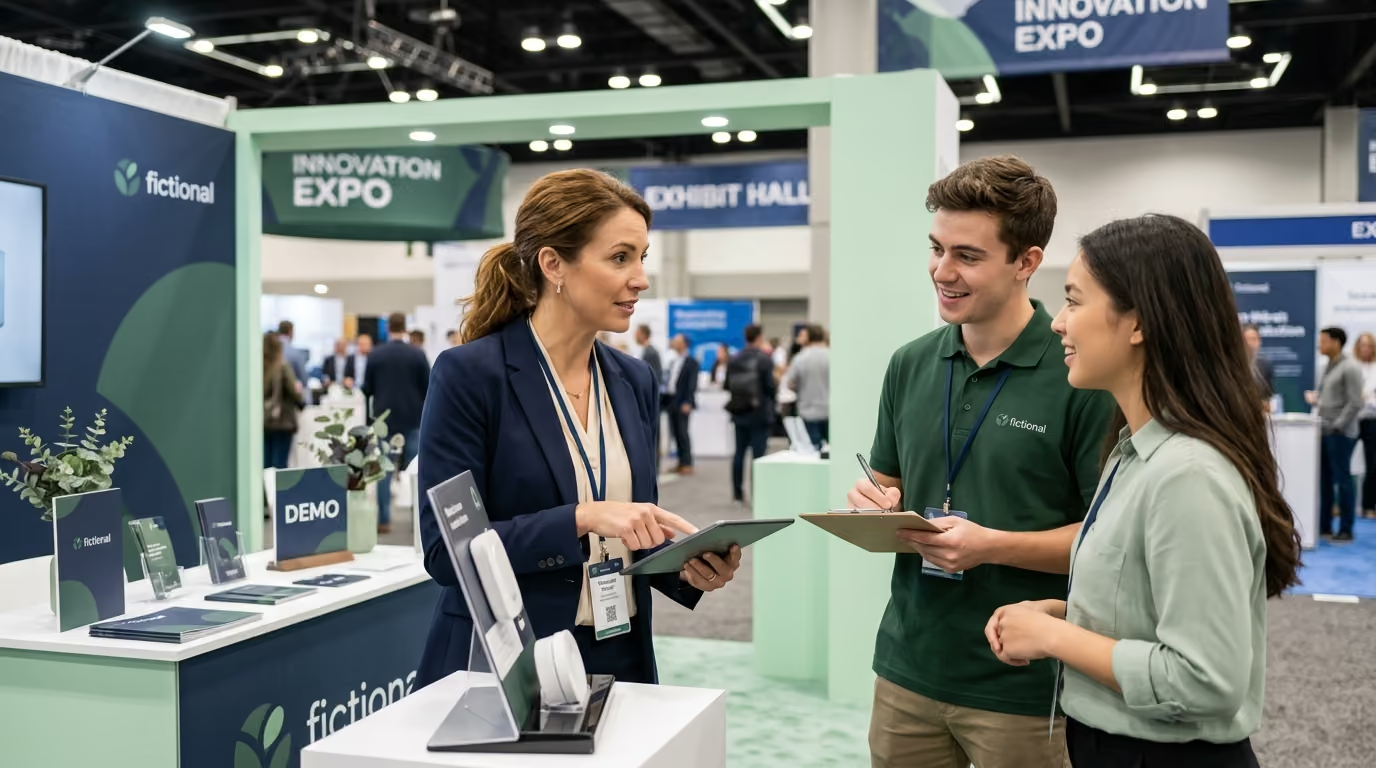
Booth staff performance directly determines whether live event traffic converts into measurable commercial pipeline or evaporates into useless badge scans. This operational playbook provides marketing leaders with a systematic framework for recruiting, training, scheduling, and managing high-performing booth teams that protect brand integrity and drive revenue.
Ten minutes after the exhibition hall doors open, the physical space reveals the gap between planning and execution. A four-deep crowd gathers at the front counter while two staff members look down at their mobile phones behind a product tower. Nearby, an enterprise buyer asks a detailed technical question, only to receive a generic brochure from a temporary host who started that morning. Across the aisle, three corporate sales representatives huddle together in a private conversation, effectively forming a physical barrier between your brand and thousands of qualified attendees.
Global exhibitions represent a massive operational and financial investment. Data published by UFI indicates that roughly 32,000 exhibitions take place worldwide each year, bringing together 4.7 million exhibiting companies and 318 million visitors. In North America alone, exhibitions draw approximately 89 million attendees annually. When companies allocate tens of thousands of dollars to floor space and physical structures, the individuals standing on the carpet remain the primary factor governing conversion.
Research from the Center for Exhibition Industry Research shows that sales lead generation remains the top objective for exhibitors, followed closely by brand awareness and relationship management. Despite these priorities, many organizations treat booth staffing as an informal, rotational duty rather than a precise operational system. High-traffic trade shows quickly overwhelm teams that lack defined roles, structured engagement workflows, and real-time coaching mechanisms.
Attendee behavior also reinforces the need for rigorous staff preparation. Research from Freeman indicates that 87 percent of event attendees cite discovering new products, solutions, and partners as a primary reason for attending exhibitions. Furthermore, 80 percent of attendees view in-person events as the most trusted marketing channel available. If your staff cannot articulate value propositions clearly within thirty seconds, attendees move directly to a competitor down the aisle.
The physical booth is not a passive showroom. It functions simultaneously as a qualification engine, a hospitality environment, a product demonstration lab, and a commercial data-capture hub. Success requires shifting away from ad-hoc employee assignments toward a documented, repeatable operating model.
A major structural failure on the trade show floor is role ambiguity. When every person in the booth is expected to handle every type of interaction, high-value technical specialists end up answering directional questions while general hosts struggle to qualify enterprise buyers. Implementing specialized staffing for pipeline growth creates operational clarity, maximizes labor efficiency, and eliminates bottlenecks during traffic spikes.
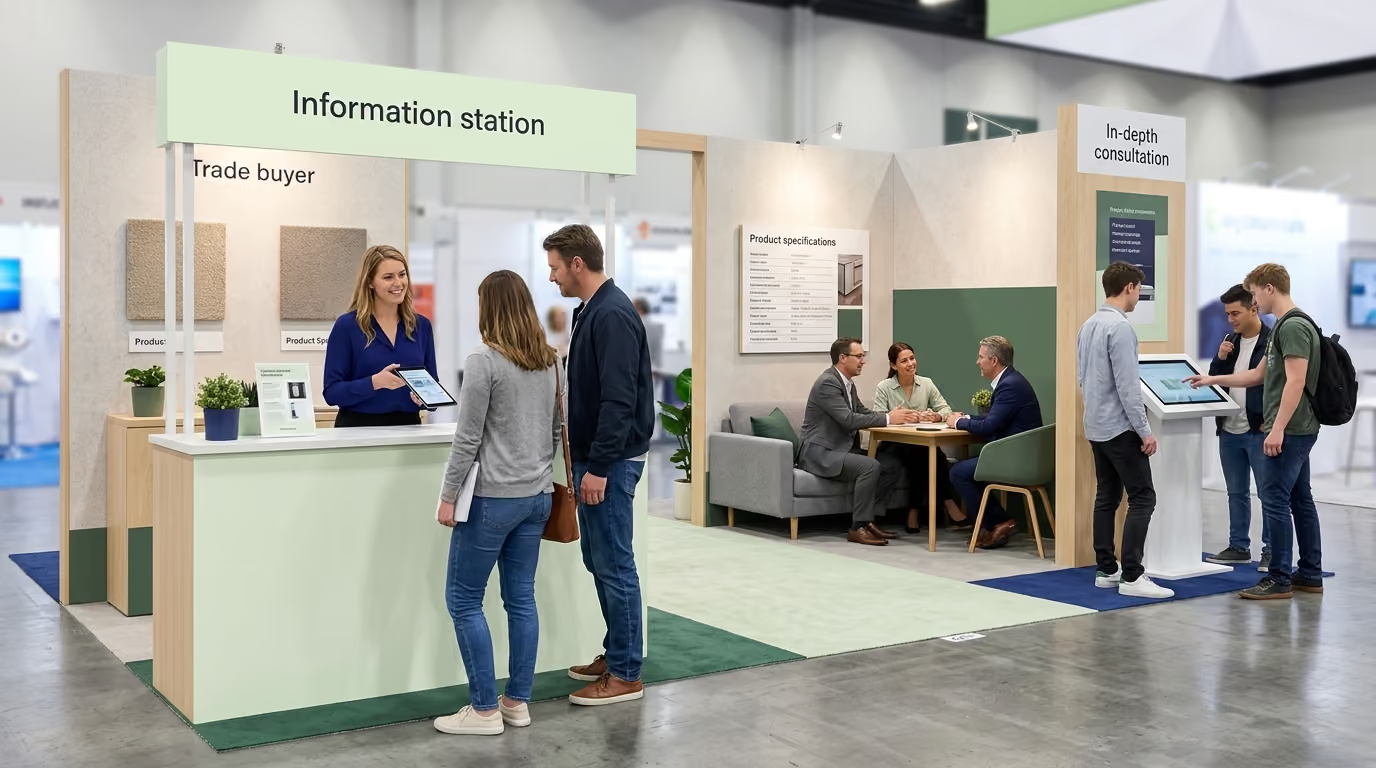
The aisle engager operates at the perimeter of the exhibit space. This role requires high energy, exceptional approachability, and strong situational awareness. The primary duty is to initiate warm, low-pressure conversations with passing attendees and guide qualified individuals into the booth environment.
The qualifier determines whether a visitor matches your ideal customer profile before deeper company resources are deployed. This person uses structured, conversational questioning to evaluate authority, current challenges, project timelines, and commercial fit.
The conversation lead conducts commercial discovery with qualified prospects. This role is typically staffed by experienced account executives who understand the nuances of the sales cycle, contract sizing, and buyer psychology.
The demonstrator delivers concise, high-impact product walk-throughs that highlight core differentiators. Rather than showing every button or ingredient, this specialist tailors the demonstration to the visitor's specific operational pain points.
Data integrity often breaks down under high volume. The lead capture coordinator oversees digital badge scanners, ensures custom qualification fields are completed, and audits digital entries in real time.
The floor captain functions as the operational field commander. This senior leader observes floor dynamics, rebalances staff during unexpected traffic surges, handles escalations, and ensures adherence to break schedules.
Operational success begins by translating high-level business goals into observable on-floor behaviors. Broad directives like "generate leads" or "represent the brand well" fail because they give staff no tactical guidance during chaotic moments. Leaders must connect organizational targets directly to physical actions on the show carpet.
When the primary objective is net-new lead generation, staff must be trained to initiate contact quickly, execute a three-question qualification sequence, and log a specific next step. If the goal is named-account expansion, staff must prioritize cross-referencing badges against target lists, alerting account directors, and escorting executives to private meeting suites. When launching a new commercial line, demonstrators must focus on consistent messaging, trial volume, and structured objection logging.
Every target metric requires a corresponding behavioral routine. If the marketing team needs to collect market intelligence, staff must ask structured survey questions during conversations rather than relying on spontaneous chatter. When existing customer retention is the core priority, booth personnel must recognize current clients immediately, resolve open support tickets, and route strategic expansion discussions to customer success leaders.
Trade show interactions succeed when they follow a disciplined conversational sequence. Staff should move fluidly through nine discrete phases without sounding scripted or mechanical:
High-volume trade show environments require rapid, polite qualification. Staff cannot afford twenty-minute exploratory conversations with non-buyers while ideal prospects walk past unassisted. Using a structured scoring framework allows team members to categorize visitors within one minute.
Score each visitor across five core dimensions using a zero to two point scale:
Using this model, visitors scoring between zero and three points are tagged as basic inquiries for general email nurture. Visitors scoring between four and six points are categorized as marketing-qualified leads requiring standard inside sales follow-up. Attendees scoring seven to ten points are immediately classified as high-priority sales opportunities requiring executive handoffs and guaranteed outreach within twenty-four hours.
The visual presentation and physical conduct of your booth personnel communicate your company's operational standards before a single word is spoken. Professional boothmanship is not an innate personality trait. It is a set of observable, enforceable behaviors that maintain an open, welcoming environment throughout the exhibition.
Body language on the trade show floor heavily influences walk-in foot traffic. Staff members who stand with folded arms, lean against back walls, or cluster in inward-facing circles signal that the booth is closed to visitors. Training must reinforce forward-facing stances, proactive eye contact, and situational readiness across every hour of the show.
Apparel standards should reflect brand positioning while supporting physical mobility and operational comfort. Requiring matching corporate attire or branded apparel creates instant visual alignment for attendees seeking assistance. Clear guidelines must specify appropriate trousers, branded tops, clean footwear, and visible name badges positioned on the right chest area for natural line-of-sight reading during handshakes.
Grooming and uniform policies must remain inclusive, modern, and legally compliant. Focus guidelines strictly on hygiene, brand uniformity, and professional execution rather than outdated, restrictive personal appearance rules. Ensure clothing options accommodate diverse body types, religious requirements, medical accommodations, and temperature fluctuations across drafty exhibition halls.
Trade show exhibits operate as places of public accommodation under the Americans with Disabilities Act. Booth staff must understand how to create an accessible, respectful environment for all visitors. This includes keeping accessible pathways clear of boxes, knowing how to activate video captioning, offering printed materials, and interacting respectfully with service animals without distracting them.
Professional conduct policies must be clear and reinforced before travel. Exhibitors must adhere to Equal Employment Opportunity Commission guidelines by establishing zero-tolerance policies for harassment, clear incident reporting paths, and explicit conduct standards covering both official show hours and evening hospitality gatherings. Establishing psychological safety ensures all staff members feel supported while representing the business in high-density public environments.
Deploying an untrained team to an exhibition floor guarantees low conversion rates and wasted marketing investments. A complete training program must span multiple weeks, combining asynchronous knowledge building, live role-playing simulations, and daily on-site operational briefings.
Four weeks prior to the event, distribute the core briefing documentation. This package outlines the macro event objectives, target attendee profiles, priority account lists, core value messaging, product technical specifications, and badge scanning workflows. Using pre-show rehearsal playbooks ensures every team member completes a digital product fluency assessment before attending live group training sessions.
Two weeks before the show, convene mandatory simulation sessions. Role-playing must move beyond basic elevator pitches to stress-test staff readiness against real-world floor conditions. Run fast-paced drills testing team responses against difficult visitor scenarios:
Training continues directly on the exhibition floor. Conduct a walk-through twenty-four hours before the hall opens to verify physical layout, test equipment, and walk through emergency procedures. During show days, execute brief fifteen-minute morning stand-up meetings to review previous day lead counts, highlight outstanding team interactions, address recurring buyer objections, and adjust daily target metrics.
Floor fatigue degrades performance rapidly. After three consecutive hours of standing and talking in a loud, crowded environment, staff alertness drops, smile frequency declines, and qualification discipline deteriorates. Maintaining high conversion rates requires active shift scheduling, scheduled rest periods, and dynamic floor leadership.
Calculate your required staffing headcount using the physical layout of your exhibit space and expected traffic volume. A standard industry planning heuristic suggests deploying one active staff member for every fifty square feet of open engagement space, excluding closed storage rooms and dedicated display structures.
For example, a twenty-by-twenty foot island booth contains four hundred gross square feet. If storage closets, display towers, and demonstration counters occupy one hundred and fifty square feet, the booth possesses two hundred and fifty square feet of open engagement space. Applying the density heuristic indicates a requirement of five active floor staff during peak operational hours, plus designated coverage for dedicated meeting suites and technical demonstration stations.
Never schedule staff for full-day continuous floor shifts. Implement rotating schedules where team members spend a maximum of ninety to one hundred and twenty minutes on the active floor before rotating into a mandatory thirty-minute off-floor rest break. When bringing contract brand ambassadors together with internal corporate sales teams, implementing hybrid event staffing models maintains high energy while preserving technical depth.
Shift changes present operational vulnerability if managed carelessly. Always schedule fifteen-minute overlapping transition windows between shifts. During this handover, departing staff brief incoming team members on active conversations, high-priority visitors expected to return, pending equipment troubleshooting, and specific buyer trends observed during the previous shift.
The floor captain must monitor team interactions from a macro perspective, looking for specific behavioral patterns that require correction:
When delivering on-site coaching, use the brief three-step intervention loop: observe the specific behavior, provide objective feedback in private, and have the team member practice the adjusted behavior immediately on the next interaction.
Executing a flawless booth staffing program requires disciplined preparation across eight distinct operational phases. Follow this chronological checklist to ensure total readiness:
Unusual and disruptive scenarios regularly occur during large-scale exhibitions. Providing staff with explicit response frameworks ensures consistent execution, protects brand equity, and prevents embarrassing public mistakes.
Promotional giveaways frequently attract massive crowds of non-qualified attendees, creating artificial congestion that prevents serious buyers from entering the space. Never place giveaways on open front counters where passing crowds can grab items without interacting.
Position promotional merchandise deep within the booth footprint, past the primary qualification zone. Require attendees to participate in a brief discovery question or product demonstration before receiving items. Train aisle engagers to guide casual swag hunters through a rapid digital entry kiosk, keeping primary conversational corridors open for high-value commercial prospects.
Competitors frequently walk exhibition floors seeking competitive intelligence, product formulation details, pricing tiers, and customer account data. Similarly, industry journalists and bloggers may record conversations without clearly identifying their press credentials.
Staff must never guess or share proprietary operational details. If a visitor asks probing questions regarding pricing strategies, upcoming product roadmaps, or unannounced commercial partnerships, staff should use a standardized boundary phrase:
"We share detailed roadmaps and enterprise pricing structures directly through our executive account directors. Let me take your contact information so our commercial team can schedule a formal discussion."
If an individual identifies as a credentialed member of the press, immediately introduce them to the designated corporate communications lead or hand over an official media briefing pack. Staff must never provide unscripted on-the-record commentary.
Digital hardware and venue wireless networks frequently fail under the load of thousands of connected devices. If a badge scanner freezes, loses power, or drops network synchronization, staff must never stop qualifying visitors or attempt lengthy technical troubleshooting on the active floor.
Every station must maintain a physical clipboard containing standardized paper lead sheets. These sheets must mirror the exact mandatory fields found on the digital scanners: contact details, company name, fit score, primary pain point, agreed next step, and staff initials. Once the interaction concludes, the staff member flags the lead coordinator to swap out the malfunctioning hardware while maintaining conversational flow.
Evaluating event success requires tracking both operational efficiency during the show and long-term commercial pipeline velocity after the event concludes. High-performing teams analyze leading indicators on the floor to adjust execution in real time while tracking lagging financial metrics to validate marketing spend.
Leading indicators measure staff engagement discipline, operational throughput, and data capture accuracy during the exhibition. The floor captain should monitor these metrics daily to detect operational drift and optimize team performance using booth staffing engagement data:
Lagging indicators evaluate the true commercial impact of the event on organizational revenue. These metrics take weeks or months to materialize across standard enterprise sales cycles:
$$\text{Return on Investment} = \left( \frac{\text{Gross Margin from Show-Sourced Deals} - \text{Total Show Investment}}{\text{Total Show Investment}} \right) \times 100$$
When calculating total show investment, ensure accounting includes exhibit space rental, physical build fabrication, freight, travel, staff wages, contractor fees, digital systems, hospitality, and post-event administrative overhead.
A major consumer packaged goods food and beverage manufacturer prepared to launch a premium functional snack line at Natural Products Expo West. The brand invested in a prominent twenty-by-thirty foot island booth, projecting high foot traffic across four exhibit days. The core objectives were securing distribution commitments from regional grocery buyers, generating trial among independent natural food retailers, and collecting direct consumer taste feedback.
In our experience executing activations across nationwide retail and trade environments, consumer goods brands often fail by deploying untrained temporary staff who simply distribute samples without qualifying commercial buyers. We have executed over 1000 campaigns across all 50 states, bringing brands to life in every major U.S. market. For this launch, our team built a multi-tiered staffing architecture combining professional engagement hosts with corporate trade marketing directors.
The outer perimeter featured high-energy brand ambassadors who managed sanitary sampling stations. These ambassadors delivered a five-second flavor profile introduction while observing badge credentials. When an attendee badge indicated a retail buyer, distributor, or category manager, the ambassador executed a smooth handoff to an internal commercial lead positioned in the mid-booth lounge.
The team utilized a mobile scanning configuration that required three mandatory fields before a record could be saved: store count, primary distributor, and requested wholesale follow-up package. Category managers were escorted into a semi-private meeting zone where sales directors conducted targeted range reviews.
The campaign achieved exceptional operational and commercial results:
By separating high-volume sampling mechanics from commercial buyer qualification, the brand preserved booth flow, prevented staff exhaustion, and delivered measurable commercial pipeline.
Even experienced marketing organizations fall into predictable traps when deploying teams to the show floor. Identifying and correcting these operational errors before the event protects your budget and improves lead quality.
A digital badge scan is merely an electronic record of physical presence. It does not represent buying intent, budget availability, or project fit. Requiring staff to input qualification tags and detailed conversation notes prevents marketing teams from dumping hundreds of worthless contacts into sales pipelines.
Crowding a booth with excessive staff creates an intimidating environment for passing attendees. When six corporate representatives stand together with no visitors to engage, they naturally form inward-facing social clusters. Maintain strict adherence to the fifty square foot guideline to ensure open, inviting corridors.
Assuming experienced sales representatives know how to engage trade show attendees is a major mistake. Field sales conversations typically unfold over thirty-minute scheduled calls, whereas trade show interactions require rapid, thirty-second value hooks. Implement structured message modules to maintain brand consistency.
Executive attendance adds credibility, but unassigned executives often disrupt booth operations. Senior leaders may take over random conversations, pull staff away from assigned stations, or bypass lead-logging workflows. Schedule executives for specific private meeting windows, media interviews, or strategic VIP handoffs.
Relying on a single high-performing sales director to handle every meaningful interaction creates severe operational bottlenecks. Qualified prospects walk away while the top performer is monopolized by a single visitor. Train all qualifiers to conduct baseline discovery and schedule formal follow-ups.
Relying entirely on cellular networks or venue wireless infrastructure introduces critical risk. When digital systems fail, untrained staff often stop capturing contact details entirely. Every station must have printed intake sheets ready for immediate deployment.
Passing a visitor between staff members without providing conversational context forces the buyer to repeat their entire background. Use structured introductions: "David, this is Sarah from Horizon Retail. She manages twelve doors in the Midwest and wants to review our bulk distribution terms."
A warm, friendly conversation that yields no commercial intelligence wastes valuable floor time. Staff must balance hospitality with commercial discipline, ensuring every interaction uncovers fit, operational needs, decision influence, and agreed next steps.
Looking down at a mobile device signals to passing attendees that staff members are busy and do not wish to be interrupted. Enforce a zero-tolerance phone policy on the active carpet, requiring team members to step into private back rooms for communications.
Foot traffic fluctuates significantly between morning keynotes, lunch breaks, and afternoon floor receptions. Leaving static staff assignments in place during traffic shifts leads to understaffed perimeters during peaks and idle teams during lulls. The floor captain must rebalance staff dynamically throughout the day.
Review this staffing playbook when planning major annual trade shows, launching new product lines, expanding into new geographical markets, or onboarding external event staffing agencies. Re-evaluating your staffing operating model ensures your field execution consistently matches your brand strategy, protects capital investments, and delivers measurable commercial returns on every exhibition floor.

30 Years Experiential & Retail Activation Partner for CPG & Beverage Brands | Multi-Market Demos, Roadshows & Costco/Club Programs That Actually Sell