Robbie Thain
Founder, CEO

Learn how structured pre-show playbooks and mandatory staffing run-throughs turn chaotic trade show booths into predictable, measurable sales pipeline.

Trade shows require operational precision to turn expensive booth traffic into actual sales pipeline. Implementing mandatory pre-show playbooks and rigorous staffing run-throughs closes the execution gaps that destroy lead quality.
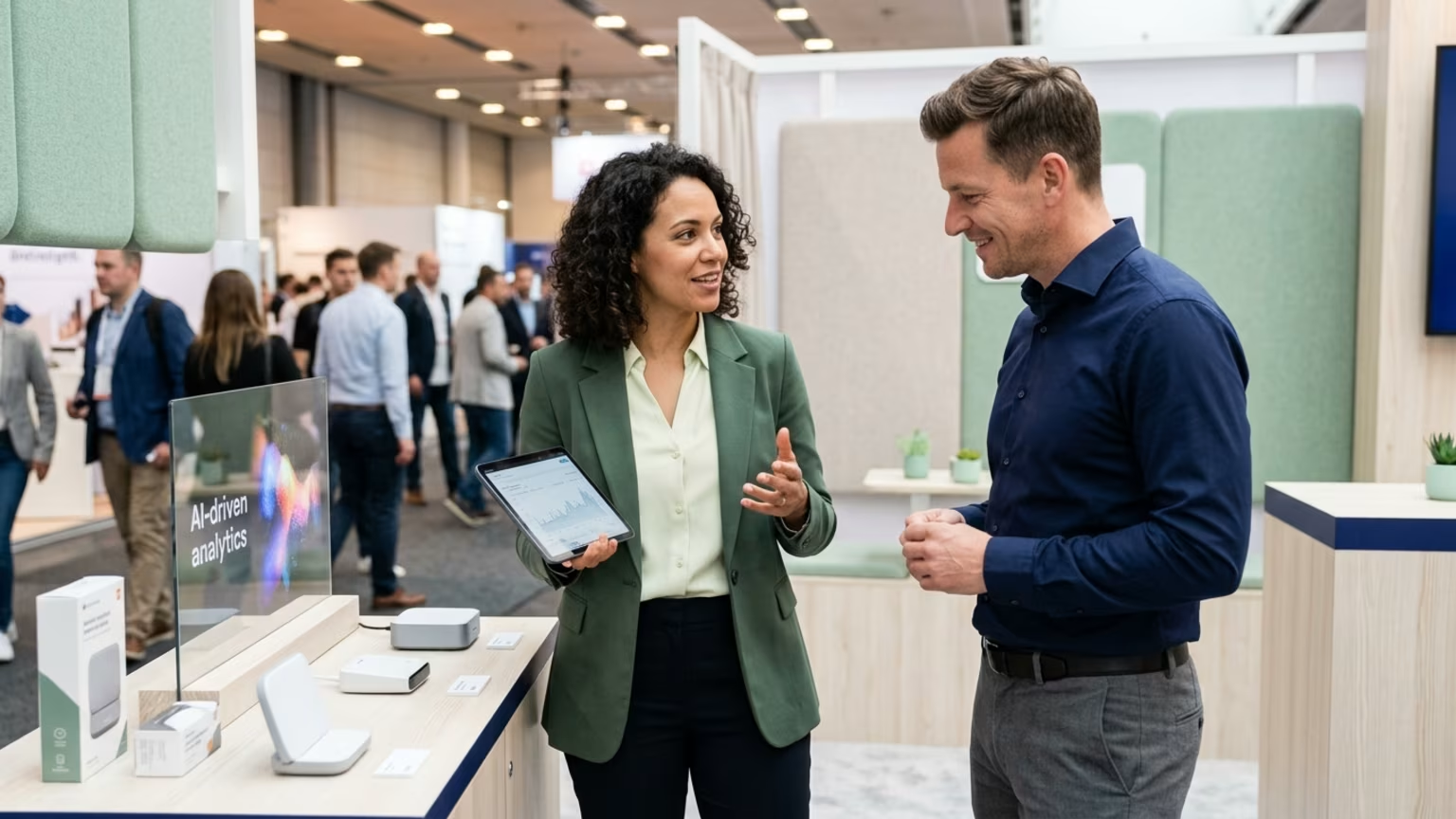
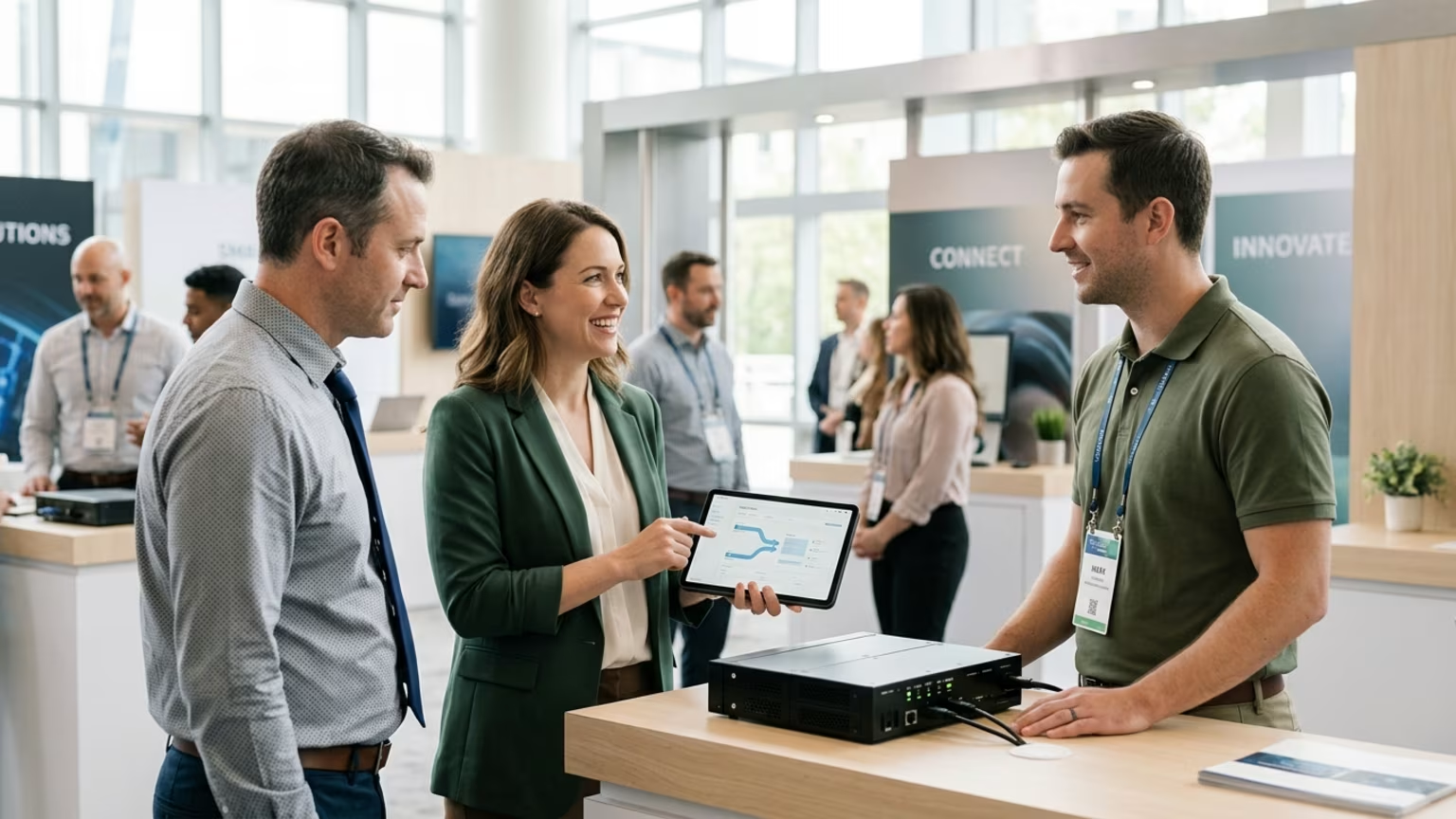
The convention center doors open at 9:00 a.m. sharp. Within ten minutes, your 20x20 booth is packed with regional buyers and curious competitors. Two of your brand ambassadors are struggling to log into the badge scanner. A major retail distributor walks away when nobody is available to answer a simple pricing question.
This scenario plays out across the country every single week. Brands spend hundreds of thousands of dollars securing premium floor space. They design beautiful structures to showcase their newest consumer packaged goods. Then they hand the execution over to untrained staff with vague instructions.
Event marketing publications consistently report that execution gaps undermine lead capture and follow-up. The result is a high-traffic booth that produces low-quality data. Reps scan badges without asking qualifying questions. Post-show spreadsheets are filled with generic names and missing context.
Sales teams routinely ignore these leads when they lack clear buying signals. Without a structured plan, the live event becomes a chaotic liability. The floor reality is harsh for unprepared teams. Trade shows demand operational excellence to turn expensive booth traffic into actual revenue.
Consider the perspective of a national retail buyer walking the aisles. They have hundreds of booths to visit in a single afternoon. They do not have time to wait for a confused brand ambassador to find the right brochure. They expect immediate answers about unit costs, minimum order quantities, and promotional support.
When your team fails to provide these answers quickly, the buyer moves on. The cost of that missed interaction is enormous. You lose the potential distribution deal and the lifetime value of that account. This is the hidden tax of poor event preparation.
The solution to booth chaos is a standardized pre-show playbook. This framework removes all guesswork from live event execution. It aligns your marketing goals with precise floor operations well before the event begins. Every person in the booth must know their exact role and daily responsibilities.
We have executed over 1000 campaigns across all 50 states, bringing brands to life in every major U.S. market. From retail demos in Seattle to roadshows in Miami and events in Honolulu, our teams activate brands wherever our clients' audiences are located. This national footprint taught us that hope is not a strategy. You need a systematic approach to train staff on product messaging.
A proper strategy mandates precise scripts for different buyer personas. Your team needs to know how to talk to a regional grocer versus a national distributor. It requires clear schedules to prevent staff burnout during peak hours. These elements form the foundation of a reliable lead generation engine.
Many marketing leaders rely on trained booth personnel to capture better data. A trained representative knows how to politely end a conversation with an unqualified attendee. They know how to escalate a conversation with a VIP buyer. This level of control requires mandatory staffing run-throughs before the show.
These run-throughs simulate the actual pressure of the show floor. They expose weak points in your messaging or technology setup. Fixing these issues in a quiet conference room saves thousands of dollars later. Your strategy must prioritize rehearsal just as much as booth design.
Every role requires a specialized training module before the event. A product demonstrator needs deep knowledge of flavor profiles and ingredient sourcing. A lead catcher needs expertise in qualifying questions and badge scanning speed. Blurring these lines leads to poor customer interactions and missed opportunities.
Your playbook must outline exact expectations for professional behavior on the floor. This includes rules about cell phone usage and eating in the booth. Attendees notice when brand representatives look distracted or disinterested. Professionalism builds trust and makes regional buyers more willing to share their contact information.
A playbook establishes a clear chain of command on the floor. If a logistics problem arises, the team knows exactly who to contact. This prevents minor issues from escalating into major disruptions. It allows the brand ambassadors to stay focused on engaging with attendees.
Running a successful trade show requires strict step-by-step discipline. You must organize your preparation into clear operational stages. This prevents details from slipping through the cracks during the final weeks. Below is a bulleted guide to running your preparation.
This strict playbook approach helps brands avoid the common trap of empty brand theater. Operational rigor turns a busy activation into a measurable business asset.
Clear measurement separates professional field marketing from amateur hour. You must track specific indicators to prove Return on Investment (ROI) to your executive team. Vanity metrics like total booth visits do not pay the bills. You need concrete numbers that tie directly to revenue.
For lead metrics, monitor the number of qualified conversations per hour. Track the percentage of scanned badges that include custom notes or survey answers. A scan without notes is just a name on a list. A scan with buyer context is a warm lead.
Measure the exact time it takes to sync floor data to your sales team. Fast routing directly impacts your post-show conversion rates. The faster sales can call a prospect, the higher the win rate. Waiting a week to send the list kills your momentum.
Another highly valuable lead metric is the meeting attendance rate. Track how many pre-scheduled booth meetings actually take place. High cancellation rates might indicate poor pre-show outreach or a confusing booth location. Tracking this helps you adjust your scheduling strategy for the next expo.
Lag metrics tell the final story of your campaign success. Focus on the total pipeline value generated from the specific event. Track the closed-won revenue directly attributed to booth meetings. This financial data justifies the high cost of trade show participation.
You should monitor retailer sell-through velocity in the months following a major show. If you secure a new regional distributor, track their order volume. This proves that the trade show drove long-term brand growth. Connecting these data points builds a powerful case for future event budgets.
You need to segment your lag metrics by buyer category to find deep insights. Analyze whether your booth generated more pipeline from independent grocers or national chains. This categorization helps you refine your targeting for the following year. It reveals which audience segments respond best to your physical activations.
Marketing teams must partner with sales operations to build these reporting dashboards. The data needs to flow seamlessly from the badge scanner to the final revenue report. Manual data entry invites human error and slows down the entire measurement process. Automated reporting proves the true value of your field marketing efforts.
You should calculate the cost per qualified lead. Divide your total event expenditure by the number of highly rated prospects captured. This provides a baseline to compare trade shows against your digital marketing channels. It helps you justify future resource allocations to your financial department.
A premium snack brand recently faced a massive opportunity at a national food expo. They were launching a new product line and needed to secure regional distribution deals. In the past, their event leads were messy and largely ignored by the sales team. They decided to implement a rigid pre-show playbook to fix the problem.
The marketing director mandated two mandatory staffing run-throughs before the show. The team practiced pitching the new product and categorizing buyers in the app. They assigned clear zones in the booth for sampling and private meetings. No one was allowed on the floor without passing a script test.
They established clear technology protocols for their badge scanners. The team practiced adding specific tags for grocery buyers and convenience store operators. This extra step took ten seconds but provided massive value. It allowed the sales team to prepare customized follow-up emails.
The food expo lasted three days and attracted thousands of industry professionals. The snack brand maintained perfect booth discipline throughout the entire event. Their representatives managed the crowds efficiently without losing their high energy levels. The mandatory breaks kept everyone smiling and focused during the final hours.
When a national buyer approached the booth, the team executed perfectly. The lead catcher asked three qualifying questions before introducing the senior sales manager. The sales manager referenced the buyer's exact volume needs during their brief meeting. This seamless handoff impressed the buyer and secured a massive preliminary order.
The preparation paid off dramatically on the show floor. Every single badge scan included detailed notes on buyer timelines and volume needs. The sales team received prioritized lists within hours of the show closing. This operational discipline resulted in five new regional retail contracts.
The brand completely eliminated the post-show confusion that plagued previous events. They proved that strict rules create better marketing outcomes. Their success shows how operational focus beats flashy gimmicks every time. The playbook is now a permanent part of their marketing strategy.
Stop treating trade show preparation as an afterthought. Structured playbooks and trained teams are the only way to convert floor traffic into measurable pipeline. Proper planning removes the friction between a great brand experience and a closed deal. Book a strategy call to get your next activation running with operational precision.

30 Years Experiential & Retail Activation Partner for CPG & Beverage Brands | Multi-Market Demos, Roadshows & Costco/Club Programs That Actually Sell