Robbie Thain
Founder, CEO

Discover the updated industry standards for maximizing trade show Return on Investment, focusing on booth layout, post-show follow-up, and pipeline metrics.
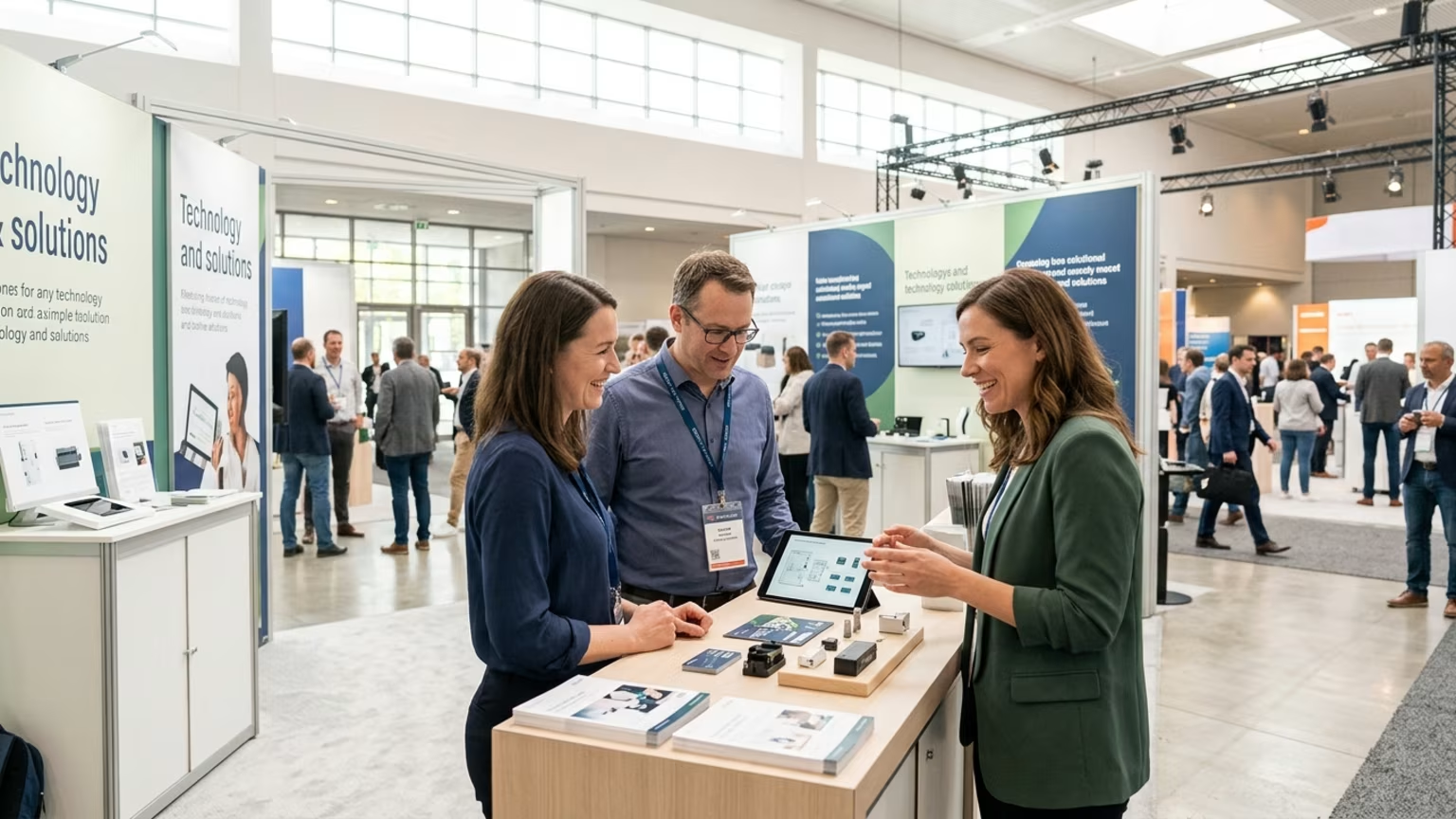
In July 2026, the experiential marketing sector formally shifted its measurement standards from vanity foot traffic to an end-to-end pipeline model. Trade show organizers and industry analysts issued updated guidance that requires brands to evaluate events through strict 90-day post-show Return on Investment scorecards. This structural change demands a rigorous look at how companies plan their live activations. High booth traffic no longer guarantees success if the interactions fail to produce measurable business outcomes.
All-in exhibiting costs for mid-to-large-scale events currently range from $15,000 to over $100,000. These price tags necessitate a revenue-attributable measurement model rather than simple badge scans. Marketing leaders can no longer justify their budgets using inflated impression-equivalent math. The focus has decisively moved toward proving actual commercial value.
The logistical reality of trade shows has fundamentally changed. Companies are abandoning fluffy brand theater in favor of an end-to-end pipeline model. This begins before a brand even commits to a specific event. Marketing teams now conduct Ideal Customer Profile density checks before show selection to verify the right buyers will actually be in the room.
Measurement methodologies have also evolved significantly. Exhibitors are focusing on cost-per-engagement metrics like the number of samples distributed or demos completed. They are tracking sample-to-sale conversions through QR codes and retail lift data. This gives leaders a clear view of how field efforts translate to register rings.
The data supports this more disciplined approach to event execution. Well-executed experiential marketing campaigns currently deliver an average Return on Investment between 3:1 and 5:1. Approximately 48% of brands are now reaching this specific performance range. Furthermore, industry data shows that trade shows generate an average of $20.98 in revenue for every $1 spent.
At makai, we view these updated industry standards as a necessary correction. Consumer packaged goods and beverage brands rely heavily on physical marketing to drive retail sell-through. Pouring hundreds of samples is only useful if those tasting moments convert into retailer confidence and long-term brand loyalty. An activation must do more than just look busy on the expo floor.
We have executed over 1000 campaigns across all 50 states, bringing brands to life in every major U.S. market. From retail demos in Seattle to roadshows in Miami and events in Honolulu, our teams activate brands wherever our clients' audiences are located. Through this nationwide footprint, we see firsthand how a lack of strict CRM routing can ruin a great activation.
Brands need to blend an approachable, aloha-style consumer experience with operator-grade background logistics. The physical interaction should feel warm and organic to the attendee. Meanwhile, the backend data capture must operate with absolute precision to feed the sales pipeline. This combination separates winning activations from expensive distractions.
Many brands struggle because their experiential efforts are disconnected from their core sales infrastructure. A marketing team might design a visually stunning footprint, while the sales team operates with entirely different goals. This fragmentation leads to the classic failure of a booth that is packed with visitors but produces zero qualified opportunities.
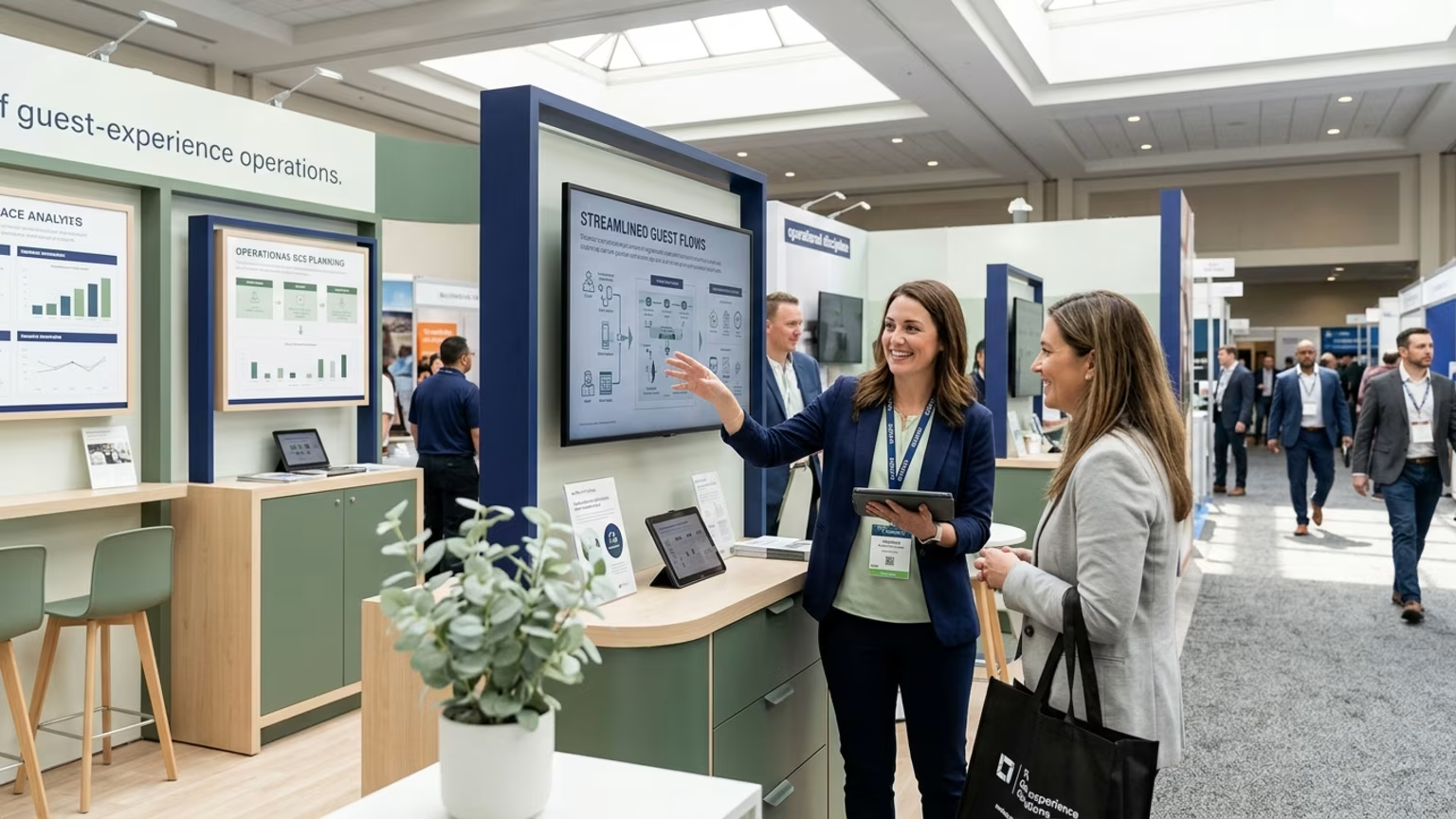
Our approach at makai bridges this divide by treating field staff as an extension of your sales operation. When ambassadors understand the specific business objectives behind an event, they can steer conversations appropriately. They know how to transition a casual product tasting into a targeted discussion about distribution or wholesale purchasing.
This alignment is particularly crucial when dealing with all-in costs that regularly exceed $100,000. Brands cannot afford to treat these events as isolated marketing exercises. Every interaction must be engineered to move the needle on specific commercial targets.
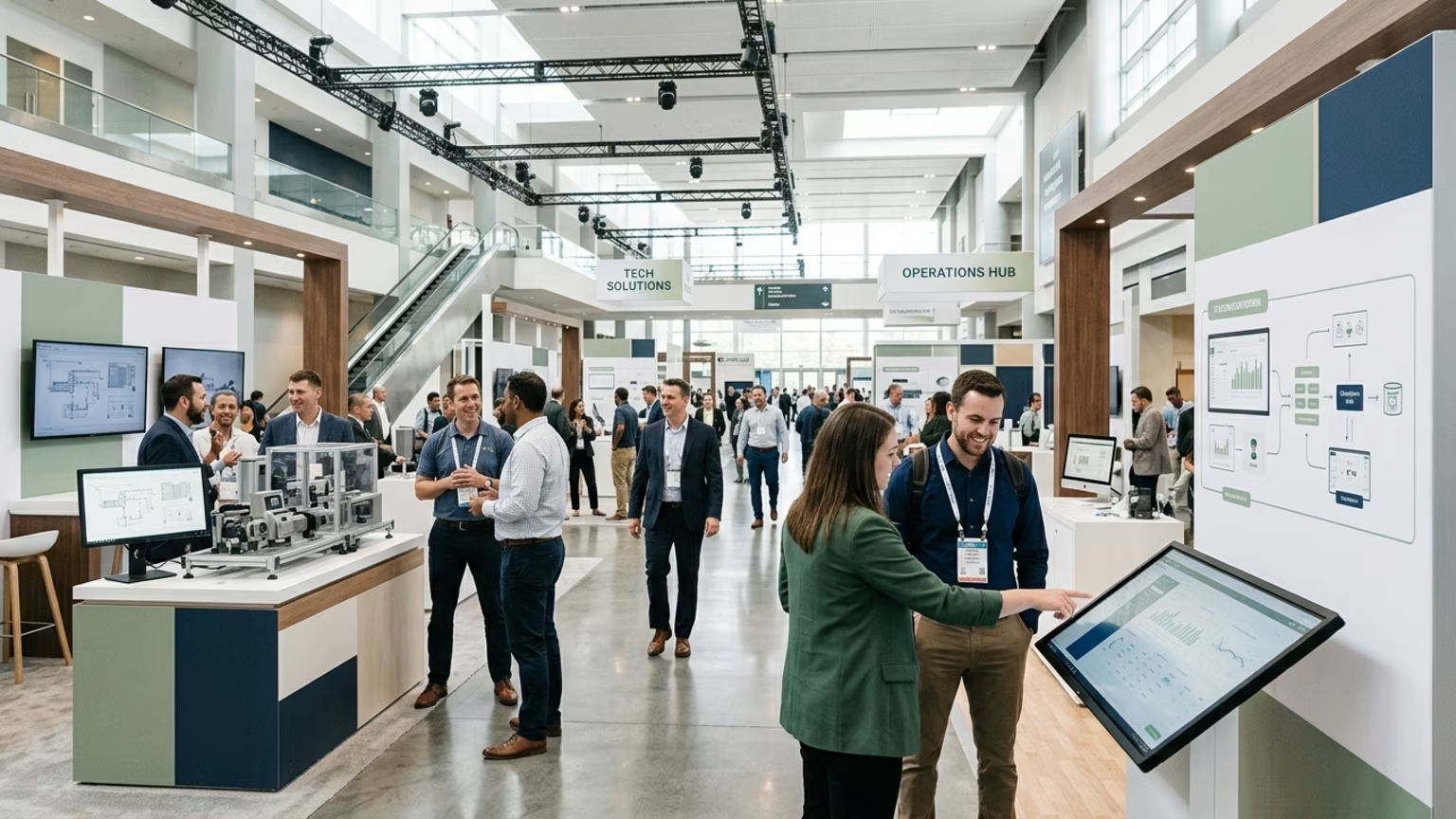
The push for measurable pipeline changes how physical spaces must be constructed. Traditional booth designs that place high counters at the aisle edge are now heavily discouraged. These structures create a physical and psychological boundary that tells buyers they are an interruption. Exhibitors must remove these barriers to invite real conversation.
Instead, marketing teams must keep the front third of the footprint entirely clear to avoid looking closed off to foot traffic. The new standard involves angling screens and product samples toward the aisle. This specific layout is designed to catch attention from 15 to 30 feet away. When designing trade show experiences that drive trial onsite, the physical layout must prioritize accessibility.
Every inch of the booth design for product trials must serve a functional purpose. Booth traffic should flow naturally from a low-pressure entry zone into deeper engagement areas. A seamless layout directly supports the goal of turning passing curiosity into a qualified lead.
Passive exhibiting is no longer a viable strategy for competitive brands. Rather than hoping for walk-ins, marketing teams should book a quota of pre-show meetings with high-value targets. This proactive scheduling creates a busy booth atmosphere that naturally attracts more organic traffic. Attendees are drawn to spaces that already look active and in demand.
This requires tight coordination between field marketing and sales departments weeks before the doors open. Sales representatives must leverage their existing prospect lists to lock in dedicated meeting times. The physical booth then serves as a scheduled batch of meetings with an experiential component attached. This approach guarantees a baseline level of qualified traffic regardless of overall show attendance.
The most significant operational shift involves post-event data management. Fast follow-up is the only way to convert trade show activations with integrated lead capture into actual revenue. High-performing exhibitors contact hot leads within 48 hours. Those who wait longer see significant drops in conversion efficiency.
To maintain this pace, teams must establish a Day 0 to 14 calendar before the show even starts. CRM owners must be assigned to specific leads before the flight home. This ensures that hot leads are addressed while the conversation is still fresh in the buyer's mind.
Treating lead capture as an afterthought completely undermines the financial investment of the event. A strict service-level agreement between marketing and sales is mandatory for post-show success. Without this structured handoff, the data collected on the floor will simply go stale in a spreadsheet.
For brands in the food and beverage sectors, the definition of a qualified lead looks different than it does in software sales. A great interaction might target a regional grocery buyer, a distribution partner, or a high-volume consumer. All of these segments require distinct tracking mechanisms to measure success accurately.
Using QR codes to track sample-to-sale conversions bridges the gap between the convention center and the grocery aisle. When a consumer tries a new snack on the show floor, a scannable offer provides immediate attribution data. The brand can then track how many of those floor samples resulted in actual retail purchases over the following weeks.
This level of data granularity supports the 90-day Return on Investment scorecard model. Marketing leaders can point to exact sales figures rather than vague estimates of brand awareness. Moving from brand theater to revenue requires this exact type of closed-loop reporting. It proves to retail partners that consumer demand is real and actively growing.
Successful field execution relies on every element working together seamlessly. The pre-show outreach strategy sets the stage for high-quality interactions. The physical layout removes friction and encourages meaningful dialogue. Finally, the rapid follow-up process turns those fleeting conversations into permanent pipeline value.
A breakdown in any single phase compromises the entire campaign. If the booth design is welcoming but the staff cannot qualify leads properly, the data will be useless. If the CRM routing is perfect but the booth relies on high counters that block entry, traffic volume will plummet.
Operating with this mindset transforms trade shows from isolated line items into strategic growth engines. Companies can confidently allocate budgets when they know the exact mechanics of their return. Discipline in planning leads directly to predictability in results.
As you review your upcoming event calendar, are your teams equipped to capture and process pipeline data within 48 hours, or will those expensive interactions fade before Monday morning?

30 Years Experiential & Retail Activation Partner for CPG & Beverage Brands | Multi-Market Demos, Roadshows & Costco/Club Programs That Actually Sell