Robbie Thain
Founder, CEO

FMI data reveals a generational split in how shoppers evaluate beverages. Learn why targeting field marketing logistics is critical for CPG retail success.
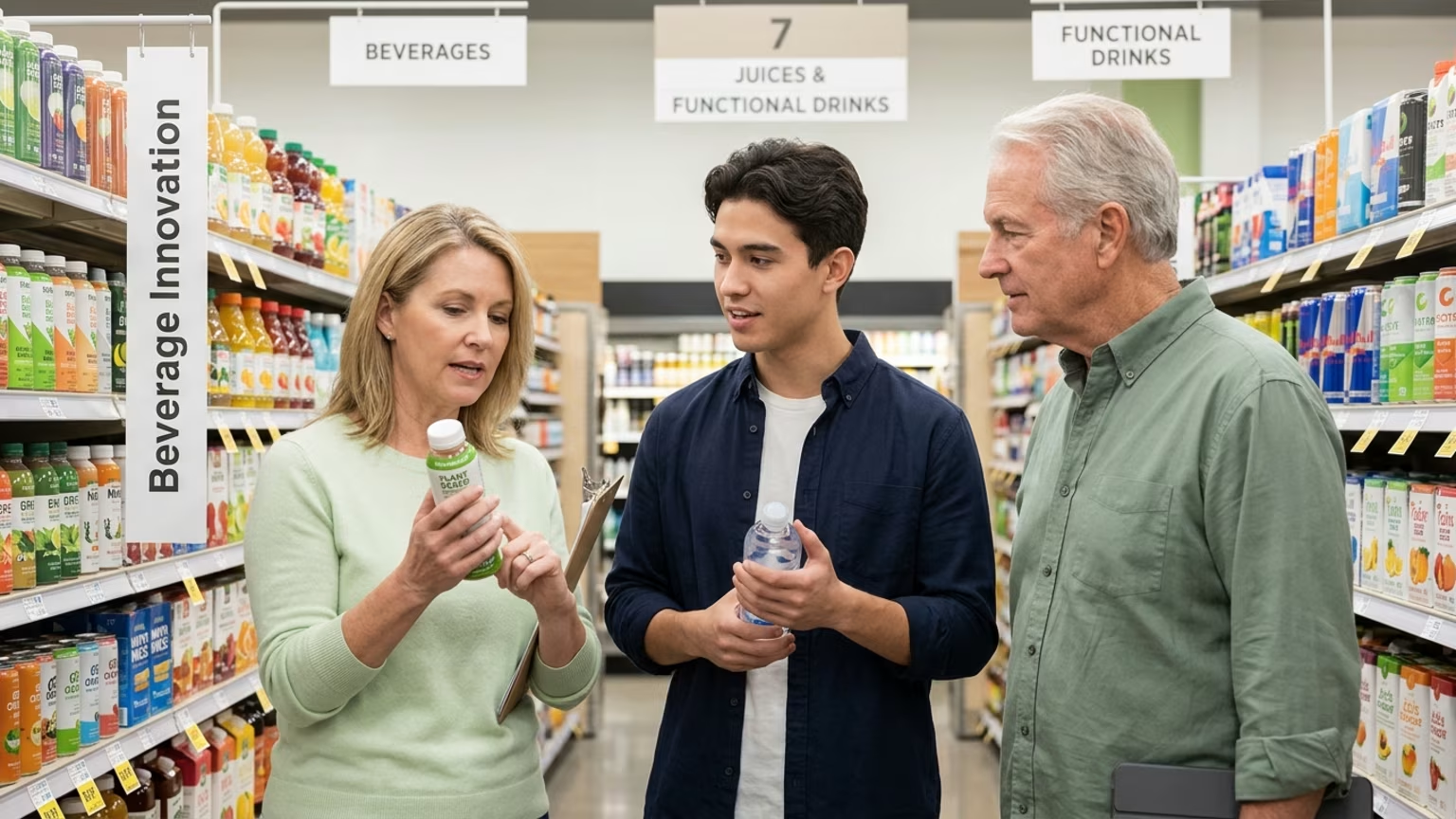
On September 11, 2026, FMI published its Power of Beverage 2026 research. The extensive report documents exactly how different demographic groups evaluate and purchase drinks. FMI published data showing a sharp split in how shoppers find new products across generations. Older generations rely heavily on the physical retail floor, while younger cohorts turn directly to social media platforms.
This data confirms what operators have seen happening in the grocery aisles for months. The traditional retail demonstration model requires an immediate upgrade to remain effective. Brands can no longer deploy generic booths and expect uniform sales lift across all age groups. Field execution must now match the specific evaluation habits of the target buyer.
FMI’s Power of Beverage 2026 research finds that beverage preferences, definitions of value, and product evaluation behaviors vary significantly across generations. The data completely shatters the myth of a single, unified beverage shopper profile. For older demographics, the physical store remains the primary engine for finding new items. FMI reports that 41% of baby boomers say in-store shelf signage helps them find new beverages.
Furthermore, 35% of baby boomers locate products simply by noticing them during a shopping trip. For younger demographics, the purchasing journey begins entirely online before they ever touch a shopping cart. FMI notes that Gen Z’s evaluation journey is considerably more digital. The research shows 92% use social media to find new beverages, 58% use TikTok, and 55% use Instagram for this exact purpose.
However, finding a product online does not guarantee loyalty to established national brands on the shelf. Food Business News reports that 59% of Gen Z shoppers and 53% of millennials increased their private-label purchases during the prior year, compared with 49% of shoppers overall. This signals that younger shoppers will happily abandon established brands for appealing private-label alternatives. Food Business News reports that the better-for-you qualities consumers most want from beverages include caffeine content, low or no added sugar, electrolytes, and natural flavors.
Functional benefits now dominate the purchasing decisions of these younger groups. Specifically, 28% of Gen Z shoppers look for protein compared with 23% of adults overall. FMI also shows 24% look for B vitamins compared with 17% of adults overall. The data indicates 16% look for immunity support compared with 13% of adults overall. Finally, 6% look for adaptogens compared with 4% of adults overall.
Generational definitions of value have also shifted significantly away from pure pricing. FMI reports that Gen Z’s definition of beverage value includes more than price: 22% cite wellness benefits, 17% cite healthier or better-for-me attributes, and 31% cite portion size as important aspects of value. Millennials similarly over-index on premium ingredients at 22%, healthier attributes at 20%, and trusted quality at 47%, according to FMI. FMI’s separate 2026 U.S. Grocery Shopper Trends report also focuses on shoppers’ changing perspectives on the in-store experience, reinforcing that retail environments remain an active area of shopper and retailer strategy.
The era of running identical retail activations for every demographic is completely over. Beverage brands face intense pressure to prove event Return on Investment through qualified pipeline rather than just vanity metrics. You cannot run a one-size-fits-all roadshow and expect strong returns when older and younger shoppers define value so differently. The physical footprint must be targeted, disciplined, and designed for the specific audience walking down the aisle.
For older shoppers, a physical activation serves as the absolute first introduction to the product. For younger audiences, the store is strictly where they validate the functional claims they first saw on social media. This operational split requires field marketing teams to blend physical trials with digital amplification for CPG growth. A shopper might understand a refreshing flavor profile immediately, but concepts like adaptogens require a real conversation with a trained professional.
In-store sampling must act as a rigorous educational channel rather than just a passive product giveaway. Trained brand ambassadors drive in-store sales through real conversations and structured product trials. When a consumer tastes a low-sugar functional beverage, they form an immediate opinion that no digital advertisement can ever replicate. The objective is always to design structured physical experiences that turn first taste into repeat buys on the retail floor.
If a brand relies heavily on complex functional claims, depending on packaging alone is a failing strategy. We know that creating hands-on brand moments is the only reliable way to communicate these ingredient nuances effectively. The physical trial must directly answer the shopper's immediate questions about flavor, sugar content, and specific wellness benefits. Without this face-to-face clarity, a highly functional beverage simply looks confusing on a crowded supermarket shelf.
To succeed in this fragmented environment, teams must master the art of designing in-store experiences that improve retail sell-through. This means stripping away the theatrical fluff and focusing entirely on product education. A well-executed sampling booth provides the exact context a shopper needs to justify a premium price point. The goal of any activation is generating qualified demand. When field teams understand exactly what their specific buyer values, they can structure conversations that convert immediately.
This demographic fragmentation forces a complete rewrite of field marketing operations and logistics playbooks across the country. Staffing profiles and training materials must change strictly based on the targeted demographic for each specific campaign. When targeting Gen Z, brand ambassadors must be totally fluent in functional ingredients and modern wellness terminology. They must explain adaptogens, electrolytes, and protein content clearly without overwhelming the shopper with scientific jargon.
Conversely, programs targeting baby boomers require a totally different tactical execution on the floor. Staff should focus heavily on familiar routines, clear product explanations, and highly visible point-of-purchase communication. The physical footprint must include prominent shelf signage, well-placed endcaps, and clear messaging to attract older shoppers effectively. Footprint flow must match the shopper's natural movement through the store to avoid feeling interruptive or chaotic.
Inventory coordination becomes the absolute most critical operational condition for capturing measurable sales lift. You must have the sampled product available for immediate purchase right next to the demonstration booth. Poor coordination among inventory and distribution will severely reduce conversion potential. A lack of alignment with store management and promotional timing also destroys results. A compelling sampling moment without product available creates intense friction precisely when purchase intent is hitting its absolute peak.
Modern field programs must also connect the physical trial with trackable digital follow-up mechanisms seamlessly. Teams should integrate QR codes, mobile promotions, digital coupons, and loyalty-program connections into every physical booth. These smart digital tactics blend physical sampling with QR codes for digital pipeline extension and measurable downstream action. This technical infrastructure allows marketers to track behavior and measure definitive actions long after the initial interaction ends.
Field teams should report much more than raw foot traffic or the simple number of samples distributed. Useful operational measures include confirmed product availability, meaningful brand conversations, trial-to-purchase behavior, and specific offer redemption rates. Targeting specific retail banners based on category velocity requires precise coordination of physical assets across highly fragmented regions. When you command your logistics tightly, you prevent the scattered attention that ruins in-store conversions.
FMI executives Steve Markenson and Morgan Griffin frame the central issue as shopper fragmentation rather than a single generational trend. They argue retailers and suppliers should tailor merchandising and innovation strategies to different shopper cohorts. Their analysis confirms that segmenting your physical approach is no longer optional.
This perspective perfectly aligns with the hard operational reality we see on the retail floor every single day. The physical trial moment must confirm the online promise for younger buyers while serving as a clear introduction for older generations. If a CPG team ignores these demographic splits, their sampling program will generate foot traffic but fail to produce measurable retail velocity. True experiential success requires matching the activation style precisely to the audience standing in front of the booth.
As you review your upcoming retail demonstration schedule and field marketing budgets, look closely at the grocery aisle again. The data proves that the shelf is no longer a static display. For older demographics it serves as a primary evaluation engine, while for younger buyers it acts as the final physical checkpoint for an online promise. Are your physical sampling campaigns rigorously configured to match the specific ways your target generations actually evaluate and purchase products?
Trade marketing managers overseeing fragmented beverage campaigns need absolute control over field logistics to secure measurable sales lift. When CPG brands face difficulty measuring real ROI from live events, Makai utilizes our Mobile Sampling Tours capability to deliver your brand directly to audiences through on the go experiences that drive trial and awareness.

30 Years Experiential & Retail Activation Partner for CPG & Beverage Brands | Multi-Market Demos, Roadshows & Costco/Club Programs That Actually Sell