Robbie Thain
Founder, CEO

AB InBev’s reported experience strategy offers CPG leaders a practical lens on staffing, product trial, footprint flow, and commercial measurement.
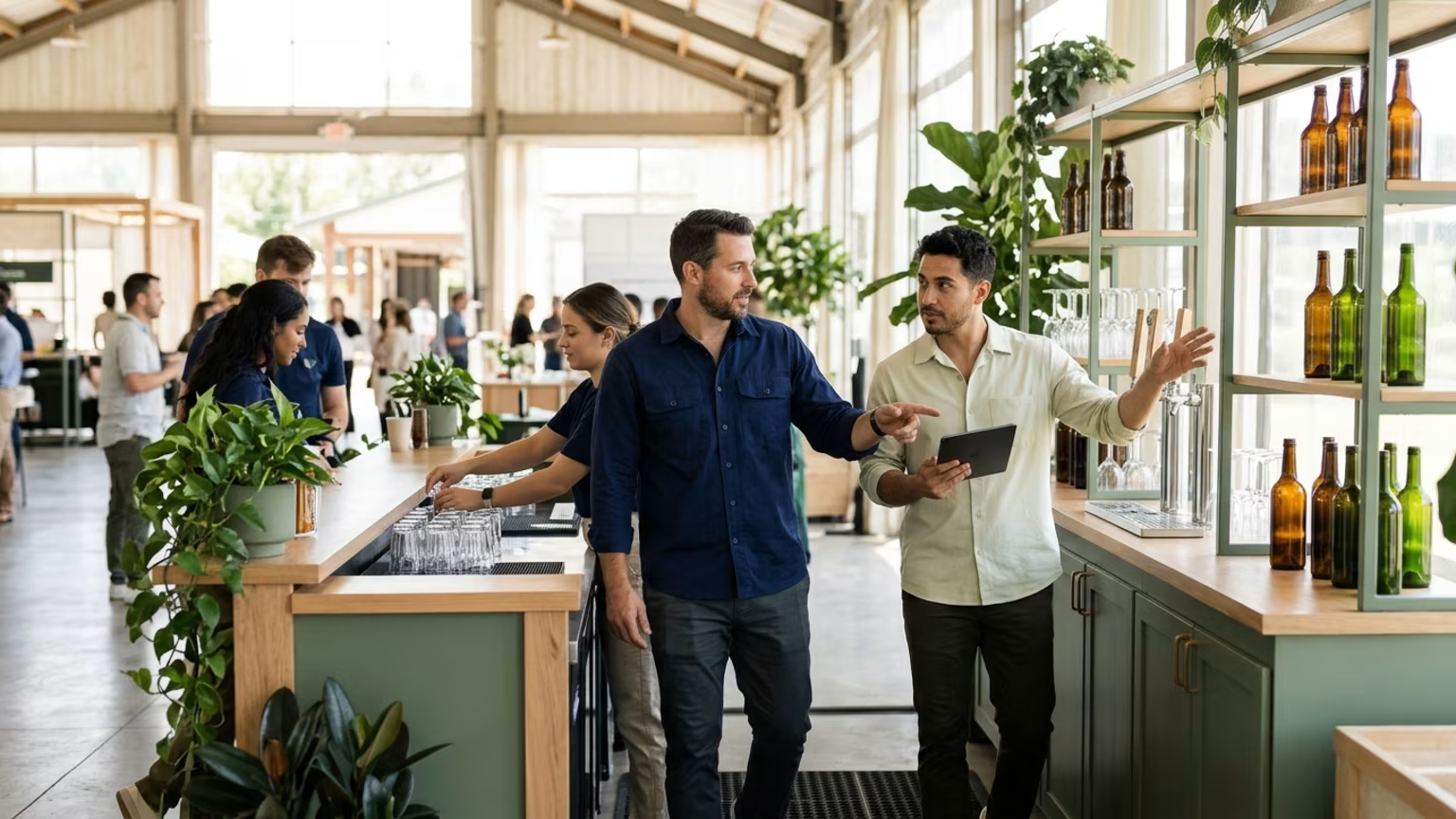
On October 21, 2026, AB InBev Global CMO Marcel Marcondes presented the company’s consumer-centric brand-building approach at the ANA Masters of Marketing conference in Orlando. According to Marketing Dive, he described a shift from being “strictly an advertiser” toward providing brand experiences.
LBB’s conference preview spotlighted “Catalyzing Growth.” Marcondes’s presentation brought that ambition into operational territory: connecting consumer interests with product occasions and commercial execution. For CPG marketing leaders, the useful news is the relationship between those pieces rather than the scale of the sponsorships behind them.
Marketing Dive reports that AB InBev organizes these experiences around consumer passion points through what it calls “mega platforms.” They span sports and music alongside streaming and travel. The approach extends beyond placing a brand’s name in front of an audience.
The publication describes AB InBev’s FIFA World Cup sponsorship activation around Michelob Ultra as an integrated effort. It connected media and packaging with trade marketing and experiential marketing. The operating model joined several channels around a shared consumer occasion rather than treating the physical experience as a separate project.
Marcondes said data shared on stage showed the mega platforms delivering twice the Return on Investment (ROI) of traditional media. Marketing Dive also reports that AB InBev requires commercial leaders to spend at least 30 hours annually in face-to-face consumer contact. The company said it had recently surpassed 50,000 total hours under that policy.
Those claims have a clear boundary. The ROI comparison is AB InBev’s reported result rather than a category benchmark, and the coverage does not disclose its calculation method or comparison period. It also does not establish a financial effect from the consumer-contact policy or prove that these initiatives caused revenue growth.
The practical lesson is narrower and more useful: connect the experience to commercial execution, then define how that connection will be evaluated.
At Makai, we believe a welcoming experience and a disciplined business objective belong in the same plan. People deserve a genuine product conversation. Marketing leaders deserve a clear account of what that conversation was designed to accomplish.
Our experiential programs connect emotion with action through creativity, strategy, and data. We create experiences that engage all five senses so people can feel a brand rather than only see it. That sensory ambition needs a commercial purpose rather than a separate justification after the event.
For food and beverage brands, the product itself offers a direct connection between experience and action. Makai’s retail demonstrations use trained brand ambassadors to drive in-store sales through real conversations and product trials. The interaction has room for warmth while remaining grounded in what the shopper is trying and where the product is sold.
That is why we read AB InBev’s presentation as an execution challenge rather than permission to buy a larger sponsorship. A brand does not need to reproduce the company’s platform portfolio to connect consumer interest with a relevant product experience.
The same principle sits behind giving physical product interaction a clear role. The creative question concerns what people will feel. The operating question concerns what the experience makes possible next. Both belong in the brief before the footprint is built.
For Makai, the downstream implications sit in staffing and site planning as much as reporting. The strategy becomes operational when the intended consumer interaction shapes the people and space supporting it.
Our team has delivered more than 1,000 campaigns across all 50 states for more than 200 brands. That experience spans different products and retail settings as well as event formats. It informs our view that a shared commercial objective should not erase the practical differences between locations.
If the purpose is product trial, staffing should support more than handing over a sample. From our perspective, the team needs room to explain the product and hear the consumer’s response. A crowded footprint is not the same objective as a useful conversation.
Makai’s retail demonstration service places trained brand ambassadors at that point of interaction. The relevant planning issue is whether the assigned work supports the intended experience. Greeting visitors and conducting a product conversation should not disappear inside an undefined instruction to keep people moving.
AB InBev’s consumer-contact policy also gives commercial leaders a reason to stay close to those interactions. Our takeaway is that consumer contact should inform planning while commercial reporting retains its own job. Listening and measuring answer different questions.
Makai’s integrated services extend from permitting to CRM reporting. We also store sampling product and event gear, then manage shipping, tracking, and nationwide delivery coordination. Those capabilities address the physical requirements behind a face-to-face experience.
Our operating view is straightforward: the proposed interaction and the approved footprint need to agree. If product trial is central to the concept, its location and supporting logistics belong in the plan. They should not remain assumptions attached to a sponsorship agreement.
This is where creative ambition meets site reality. The experience needs a workable place to happen and coordinated product delivery. Treating those as connected decisions keeps the commercial objective present during production rather than leaving it only in the strategy presentation.
At a trade show, Makai plans and manages spaces designed to attract attention and start conversations that can become customer relationships. From that standpoint, booth flow is part of the commercial design. It is not simply a question of how many people can stand inside the space.
A plan built around making the product demonstration central to the footprint gives the interaction a clear place. It also creates a practical planning question about what follows the demonstration. That next action should match the campaign’s purpose rather than default to collecting another contact.
For a retail demonstration, the objective may center on an in-store purchase. For a trade show activation, it may center on qualified interest and follow-up. Our view is that those distinct objectives should shape the experience before the team starts counting participation.
The research’s practical implication is to define intended outcomes before activation. A useful planning brief separates the following:
These are different measures rather than interchangeable descriptions of success. A plan can include several, but each needs a definition that the field and commercial teams share.
For Makai, the value of connecting field observations with commercial reporting is keeping that relationship visible. Product conversations provide one kind of information. Sales and qualified pipeline provide another. A useful report preserves the distinction while showing how each relates to the campaign objective.
That approach also gives staffing and footprint decisions a common reference point. The team can evaluate whether the operating plan supports the outcome the campaign actually intends to measure.
In Marketing Dive’s account, Marcondes said: “We don't track impressions, because we can buy impressions. We track share of engagement.”
The statement puts participation at the center of AB InBev’s stated measurement philosophy. For Makai, its value is the challenge it poses to activity-only reporting. An experience should have a defined purpose beyond being visible.
Our position is to keep engagement connected to the product and the intended commercial outcome. A sensory interaction deserves creative care. It also deserves reporting that tells a marketing leader whether the program generated the kind of response it was built to pursue.
AB InBev’s presentation brings attention to the connection between consumer experiences and commercial execution. For field teams, the work sits in carrying that connection through the brief and into the physical environment.
The lasting lesson is less about the size of a platform than the clarity of its purpose.
As a CMO or VP of Marketing planning your next activation, will you be able to see the path from consumer experience to commercial outcome in the operating plan itself?
Consumer participation needs a connection to purchase, and Makai’s retail demonstrations put trained brand ambassadors at that point of interaction. For food and beverage marketers facing difficulty measuring live-event ROI, Makai uses product trials and shopper conversations to support in-store sales while its experiential campaigns focus on qualified leads.

30 Years Experiential & Retail Activation Partner for CPG & Beverage Brands | Multi-Market Demos, Roadshows & Costco/Club Programs That Actually Sell