Robbie Thain
Founder, CEO

Discover how B2B brands use demo-centric booth designs and structured lead capture to turn trade show chaos into measurable sales pipeline and higher ROI.

Industry data from Exhibitor Group shows that live product demonstrations require as little as a $500 setup cost to become the most effective interactive element on the floor. This analysis highlights how marketing leaders must replace raw badge scans with revenue-focused lead capture and structured demo experiences.
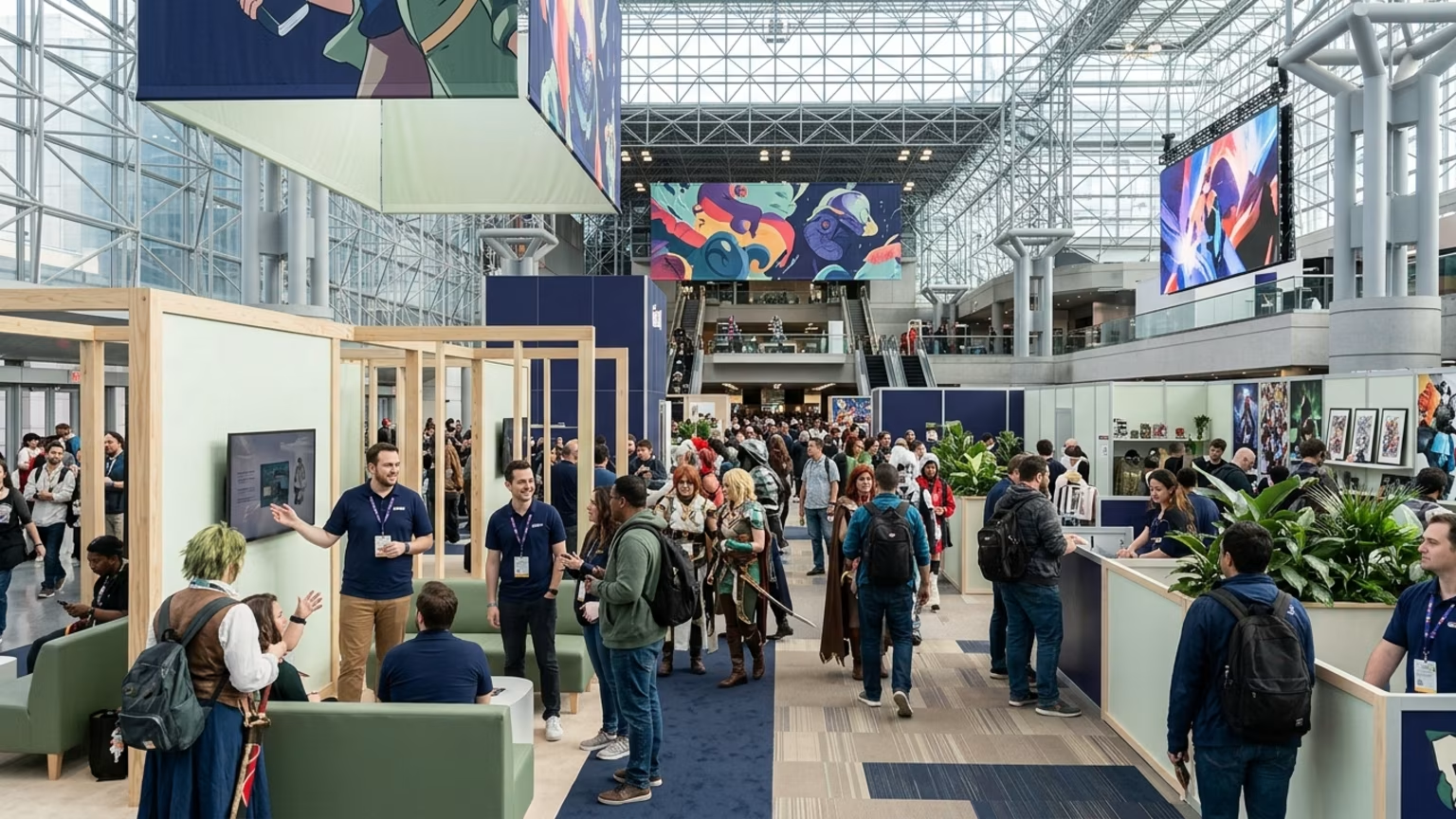
You know the exact scene when you walk onto a chaotic expo floor. The aisles are packed with people scanning badges for free pens. Reps are shouting over the noise to deliver a generic pitch that nobody remembers. The venue internet drops just as a high-value buyer asks to see the platform in action.
This chaotic reality leaves marketing teams with hundreds of unqualified leads that sales ignore. Counting raw badge scans looks great on a daily recap report. The truth surfaces weeks later when those contacts fail to generate actual pipeline. Sales reps waste hours calling people who only wanted a free t-shirt.
The strategy to fix this broken system relies on structured engagement rather than flashy distractions. According to guidance from Pure Exhibits, a booth should feature a strict maximum of three interactive elements to prevent staffing confusion. Adding too many experiences fragments the buyer path and overwhelms the field team. Brands must focus on tight product demonstrations that anchor the entire floor footprint.
Live demonstrations provide a distinct advantage by letting visitors ask questions and see the product perform in real time. Interactive quizzes or games cost up to $3,000 to build but serve as excellent tools for stopping traffic. Touchscreen product configurators run between $2,000 and $8,000 in hardware costs. These configurators excel at capturing precise preference data from buyers in larger booths.
Brands looking for stronger differentiation often invest in augmented reality experiences for their physical spaces. Industry sources estimate these tools cost between $3,000 and $12,000 to implement properly. These advanced tools create shareable moments but they must integrate seamlessly into the core demonstration path. Technology should reinforce the core message rather than act as a standalone gimmick.
We specialize in creating retail demos, product sampling programs, and roadshows that bring brands face to face with their audiences. Each program is designed to drive trial, build consumer relationships, and accelerate retail velocity across multiple locations. In our experience, creating a short demonstration path outperforms a massive general presentation every time. Our team builds interactive lead capture workflows that connect directly to your core buyer personas.
Our flagship services extend far beyond simple booth operations. We manage end to end Costco roadshows that bring brands to shoppers through live demos, real conversations, and measurable sales impact. Applying these same rigorous engagement rules to a warehouse club setting yields massive dividends. You must capture attention quickly and guide the prospect into a structured interaction.
Transforming a footprint into a pipeline engine requires a highly disciplined operational playbook. You cannot expect your field team to generate qualified conversations without the right framework in place. Analysts from Guideflow recommend building short demonstrations that last just two to three minutes. This prevents reps from getting bogged down in full sales pitches on the floor.
You must map all digital touchpoints long before the first crate ships to the venue. A beautiful booth fails completely if the lead capture technology breaks on day one. Your team must implement rigorous testing protocols for every piece of software. Every interaction must tie directly to a specific qualification step.
This disciplined approach removes the guesswork from the live environment. Reps know exactly what questions to ask and how to document the answers. You capture the actual context of the conversation rather than just an email address. The entire operation shifts from hoping for good traffic to engineering CRM-integrated lead capture at scale.
The advice from ZoomInfo reflects a modern sales operations perspective on event marketing. The booth is not just a passive branding surface for your logo. It acts as a critical data entry and qualification point that feeds directly into your sales workflows. This integration guarantees that your field team operates with the precision of an inside sales unit.
Marketing operators face immense pressure to prove their Return on Investment for every live activation. Counting the sheer number of bodies that pass through a footprint no longer satisfies the finance department. You must pivot your reporting to highlight concrete business outcomes. The most successful teams track precise lead metrics like the number of completed two-minute demos.
They monitor persona fit to guarantee the right titles are engaging with the product. Another critical lead metric is the volume of real-time prospect notes synced directly to the database. These early indicators prove that the booth design is attracting actual buyers. They provide the confidence needed to scale the program.
Lag metrics tell the final story of revenue impact after the event concludes. You should track sales pipeline generated, the speed of follow-up outreach, and the closed won revenue attributed to the show. According to ZoomInfo, mapping booth notes directly into pipeline records prevents manual data entry errors. This structural change connects trade show activations to pipeline with absolute clarity.
If your booth features three distinct interactive zones, your staffing strategy must align perfectly with those areas. Roles must be defined clearly so visitors never wait in line for a basic product question. When staff understand their exact positioning, they avoid overcounting unqualified conversations. This operational clarity protects the integrity of your Return on Investment calculations.
Marketing leaders must demand granular reporting from their field teams after every event. You cannot optimize a strategy without looking at the raw conversion numbers from specific day parts. Comparing traffic patterns on the first morning versus the final afternoon highlights exactly when your best buyers engage. This data empowers you to adjust your staffing schedules for future shows.
This disciplined approach works exceptionally well for premium food and beverage brands. Take a snack company launching a new product line at a major industry expo. Instead of a massive screen looping commercials, they set up a simple tasting station with a digital feedback quiz. The quiz captures exact flavor preferences and retailer distribution data from visiting buyers.
This targeted trial moment converts fleeting foot traffic into serious buyer meetings. The brand can immediately categorize which retailers are ready for distribution discussions. They filter out the casual snackers and focus their post-show follow up on verified prospects. The strategy turns a simple taste test into actionable sales intelligence.
The physical design of the booth plays a massive role in facilitating these structured conversations. Open layouts invite visitors to step inside without feeling trapped by heavy furniture. Placing your touchscreen configurators at the perimeter allows attendees to self-select their interest level. Your staff can then approach prospects who have already engaged with the digital interface.
Event teams must train their brand ambassadors to act as strategic guides rather than aggressive salespeople. A seasoned representative knows how to read body language and intercept a prospect at the perfect moment. They ask open-ended questions that naturally lead into the two-minute digital demonstration. Proper training guarantees that the technology enhances the human connection rather than replacing it.
You can apply these same principles when moving from the expo center to regional tours. The exact same digital workflows can power a mobile activation in a retail parking lot. This seamless transition is key to bridging trade shows with high-conversion roadshows across the country. Your initial investment in structured demonstrations pays off across multiple marketing channels.
Think back to that noisy expo floor with dropping internet connections and scattered attention spans. By stripping away the unnecessary theater and focusing on short demonstrations, you regain complete control over the environment. You stop chasing empty badge scans and start building a measurable pipeline of qualified buyers.
The chaos fades when your team knows exactly how to capture and score every meaningful conversation. Every square foot of your setup must serve the distinct purpose of starting relationships. You need a trusted operational partner to execute this vision flawlessly in the field. Book a strategy call to start planning your next activation.

30 Years Experiential & Retail Activation Partner for CPG & Beverage Brands | Multi-Market Demos, Roadshows & Costco/Club Programs That Actually Sell